
1967 Barracuda production numbers get quoted casually all the time, often with more confidence than the underlying paperwork actually supports. Plymouth's factory records for this generation exist, and they tell a more nuanced story than the round numbers that circulate at swap meets and in casual conversation.
Car Features
7 min read
1967 to 1969 Barracuda Production Numbers
1967 Barracuda production numbers get repeated casually more often than they get checked. Here is what the fender tags and factory records actually confirm.
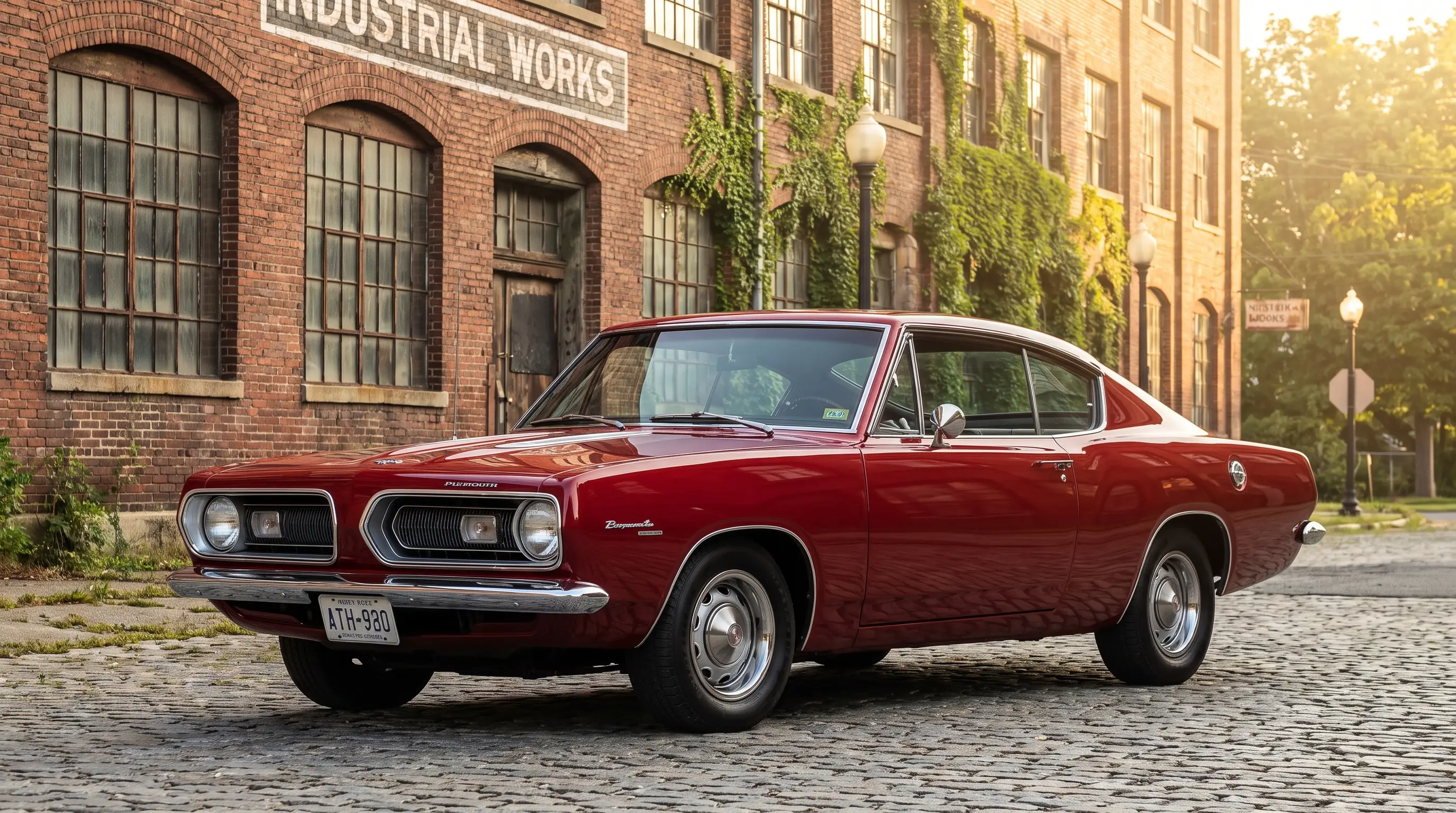
What the factory records actually show
Production for the redesigned second generation Barracuda ramped up across three model years, 1967 through 1969, split across the fastback, notchback, and convertible body styles Plymouth introduced with the new platform. Total production for the full run exceeded 140,000 cars across all three years and body styles combined: about 62,534 for 1967, roughly 45,412 for 1968, and about 31,987 for 1969, a figure that trailed the Mustang's output by a wide margin but still represented a serious commitment from Plymouth to this segment.
The breakdown by body style is where a lot of casual claims fall apart under scrutiny. The convertible, in particular, gets treated in casual conversation as though it were nearly as common as the fastback, when the documented production numbers show a considerably smaller run across every year it was offered. That gap between perception and paperwork is exactly the kind of thing a fender tag or broadcast sheet settles quickly, and exactly the kind of thing that gets misquoted at car shows for decades if nobody bothers to check.
How to read the factory codes correctly
Every Barracuda from this generation left the factory with a fender tag encoding the specific options, colors, and drivetrain the car was built with. These codes are not decorative. They are the primary source document for confirming what a given car actually was when it rolled off the line, and they matter more than any verbal history a seller might offer about a car's background.
Misreading these codes is a common source of confusion among buyers who are new to the hobby, and it is worth taking the time to cross reference a claimed build against the documented code structure rather than accepting a seller's interpretation at face value. A code that looks similar to a rare combination is not the same thing as the rare combination itself, and the difference between the two can represent a significant gap in value.
Engine codes deserve the same scrutiny as body style and color codes. A fender tag confirms what left the factory, and any deviation from that documented configuration, whether an engine swap performed decades ago or a color change during an earlier restoration, needs to be understood as exactly that: a documented deviation, not a fabrication or a flaw by itself. Plenty of well cared for cars carry non original engines installed long before current ownership, and honest disclosure of that history matters more to serious buyers than the presence of the deviation itself.
Researchers who have spent real time with Chrysler's archival production data know that the record keeping from this era, while more thorough than many assume, was not always perfectly consistent across every assembly plant. Cars built at different plants sometimes show minor variations in how certain codes were recorded, which is one more reason a single fender tag should be read in the context of broader documented patterns rather than treated as an infallible standalone source.
Correcting the common misconceptions
One misconception worth addressing directly involves the assumption that low production numbers automatically mean high value. Rarity is one input into a car's collector value, but condition, documentation, and originality all weigh just as heavily, and a rare body style or engine combination in poor condition with no supporting paperwork does not command the premium casual conversation often assumes it should.
Another common error involves conflating regional sales figures with total production figures. Some regions of the country historically favored certain body styles or colors more heavily than others, and a car being locally uncommon in one part of the country does not mean it was uncommon in Plymouth's total national production run. Researchers who rely only on local anecdotal rarity claims often overstate a given car's actual scarcity relative to the full documented production record.
A third misconception worth naming directly is the tendency to treat every surviving example as though it represents the same proportion of original production that it did the day the car left the factory. Attrition was not uniform across body styles or engine combinations. Cars that were driven hard, raced, or simply used up as daily transportation for years before anyone thought to preserve them do not survive at the same rate as cars that were parked early and treated as collectibles from the start. That means today's visible population at shows and in sale listings does not perfectly mirror the original production ratios, and researchers who ignore that distinction end up drawing conclusions the paperwork never actually supports.
| Body style | Relative production volume |
|---|---|
| Fastback | Highest volume of the three body styles (roughly 29,500 in 1967, about 22,575 in 1968) |
| Notchback | Moderate volume, often underappreciated today (roughly 29,000 in 1967, about 19,997 in 1968) |
| Convertible | Lowest volume, strongest documented scarcity (4,228 in 1967, 2,840 in 1968) |
Why documentation matters more than folklore
Every car club and every regional swap meet has its own set of oral traditions about which cars are rare and which are common, and those traditions are not always wrong, but they are not always right either. Primary source documents, fender tags, broadcast sheets, and Plymouth's own factory production records, remain the most reliable way to settle a question about how many of a specific configuration actually left the factory.
For the fuller context on how this generation's platform, styling, and engine options came together across all three model years, the whole picture lays out the complete story in one place. And if this deep dive into production numbers has you ready to go look at an actual car rather than just a spreadsheet, you can shop classic Barracuda listings and see what documentation is actually available on cars currently for sale.
"People love a round number. Production totals are rarely round, and the real figures, once you actually go dig them up, usually tell a more interesting story than whatever got repeated at the last swap meet."
- Tom Ramirez
1967 Barracuda production numbers, and the two model years that followed, deserve more careful handling than they usually get in casual conversation. The factory left behind a real paper trail for anyone willing to go find it, and that paper trail consistently tells a more precise and more interesting story than the folklore that has grown up around this generation over the last five decades.
Sources and notes
Related Reading

About the author
Tom Ramirez
Corvette researcher and historian based in Bowling Green, Kentucky. Two decades documenting Corvette production history from original factory records.
Related Listings - Plymouth Barracuda

Comments
Be the first to comment on this article.