
Every fish story needs an origin, and the barracuda name origin behind Plymouth's 1964 fastback is one of the odder footnotes in Detroit history. Plymouth did not sit down and decide it wanted a predatory ocean fish for a badge. The name arrived late, almost as an afterthought, on a car that had already been engineered, tooled, and scheduled for launch under a completely different identity.
Car Features
9 min read
How the Barracuda Got Its Name
The Barracuda's name arrived late and almost by accident, chosen under deadline pressure rather than a grand marketing plan.
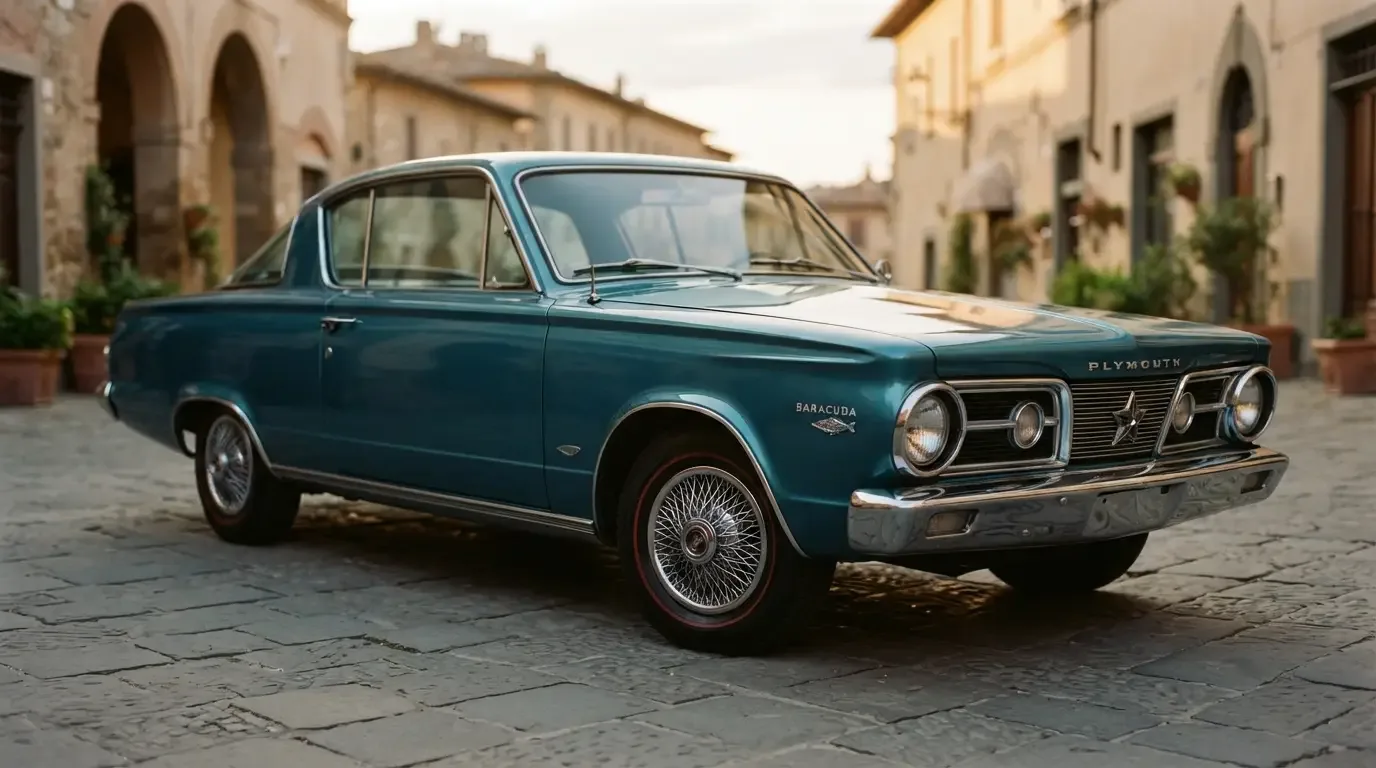
A car looking for a name
Plymouth's compact fastback started life inside Chrysler as a project built off the existing Valiant platform, developed on a shoestring budget compared to what Ford was spending on its own upcoming pony car. Internally the car had gone through a string of working titles. None of them had staying power, and none of them said what the marketing department wanted the car to say: fast, sleek, a little dangerous. Plymouth needed something that suggested speed and predatory grace, not just another trim level bolted onto a Valiant.
The naming process at Chrysler in this period ran through the company's advertising partners as much as through Highland Park itself. Copywriters at the agency handling the Plymouth account kicked around dozens of options, most of them forgettable, before landing on animal names that implied motion and aggression. Chrysler designer John Samsen is the name most consistently credited with the suggestion, and the record backs that up better than most naming legends do. Plymouth's own executives were reportedly leaning toward "Panda" before Samsen's pitch for something with more bite won out.
Why a fish, and why this fish
Automakers had been raiding the animal kingdom for names since the 1950s, but most of that plundering went toward cats, birds, and horses, animals associated with speed on land or in the air. A barracuda is none of those things. It lives underwater, it is not fast in the way a cheetah is fast, and it has no obvious connection to a car at all. What it does have is a reputation. The barracuda is a solitary ambush predator, all teeth and sudden motion, an animal people fear out of proportion to the actual danger it poses to swimmers. That reputation, more than any literal connection to automobiles, is what made the name work. It promised aggression wrapped in sleekness, exactly the impression Plymouth wanted buyers to take away from that long glass fastback.
There is also a practical angle that gets left out of the legend. Plymouth needed the name fast, since the car itself was rushed to market. Ford's competing pony car was coming, Chrysler knew it, and there was no time for a lengthy naming study with focus groups and market testing. A short, punchy, one-word name that could go straight onto badges and into ad copy without further debate had real value in 1964, and "Barracuda" fit that requirement as well as it fit the aggressive image Plymouth was chasing.
"People assume every classic car name came from some grand design meeting. Half the time it came from an ad agency working against a deadline, and the Barracuda is a textbook case of that."
- Tom Ramirez
The fastback glass that made the name stick
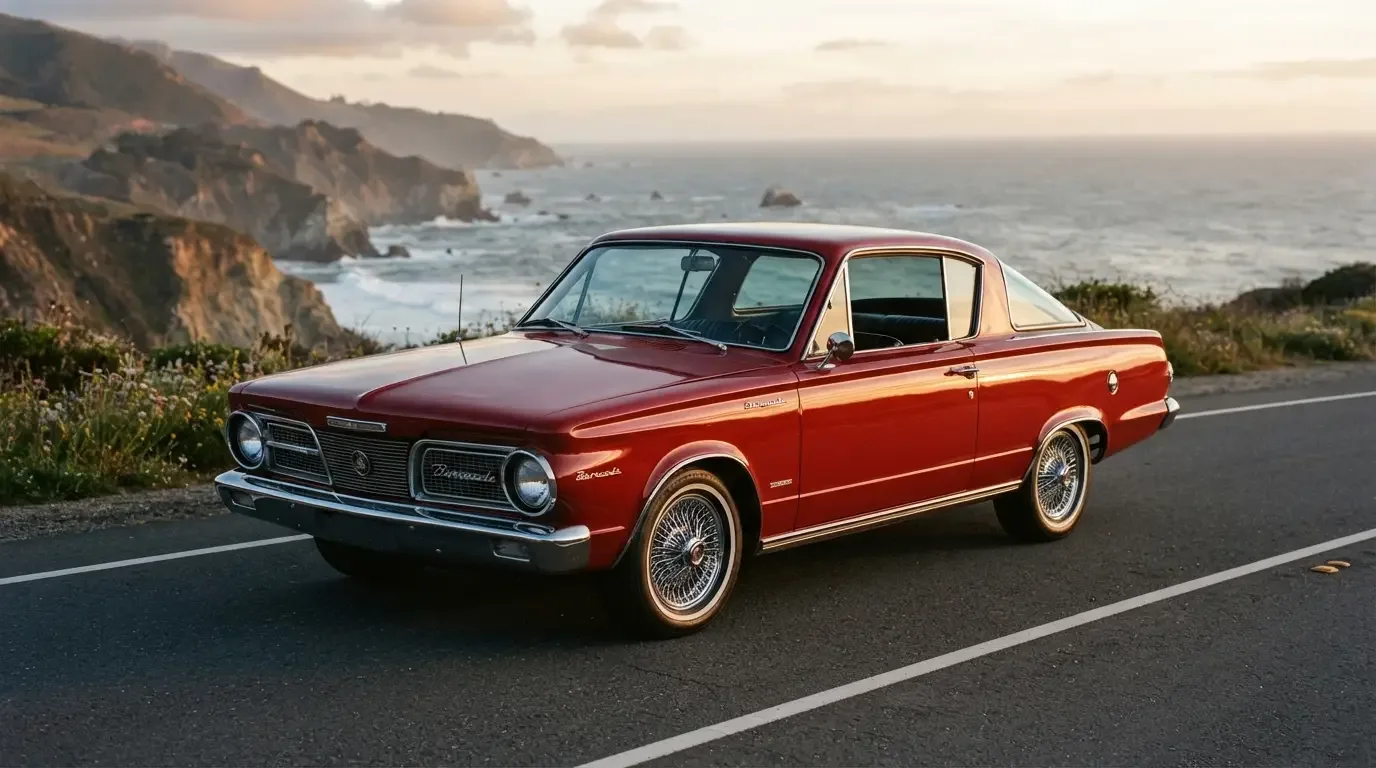
Names only earn their keep if the car backs them up, and the Barracuda's signature feature did exactly that. The wraparound rear glass, a single curved piece that ran from the roofline down over the trunk, was unlike anything else Plymouth built at the time and unlike most of what the rest of the industry was building either. That glass gave the car a fluid, almost liquid profile from certain angles, which reinforced the aquatic name in a way no marketing department could have planned with total precision. Buyers walking around the car in a showroom saw a shape that matched the word on the fender, and that alignment between name and form did more for the Barracuda's identity than any print ad could have.
The glass was also, in fairness, an engineering flex more than a styling one. It was reportedly the largest piece of curved automotive glass in production at the time, and getting it to seal properly and survive daily use took real work from Chrysler's glass suppliers. The visual payoff mattered more to buyers than the manufacturing story, but the two reinforced each other. A car with a name that suggested something unusual needed a shape that looked unusual too, and the fastback glass delivered.
How the name aged compared to the car it was attached to
What is easy to forget now is that the Barracuda name outlived several very different cars. The badge stayed in production from 1964 through 1974, moving from a Valiant-based economy fastback to a full pony car on its own platform to, eventually, a genuine muscle car wearing 426 Hemi power under the hood. Few automotive names have covered that much ground, from mild to genuinely wild, without being retired and replaced along the way. That continuity says something about how well the original name choice worked. Plymouth never felt the need to rename the car as it grew teeth, because the name already implied teeth from day one.
It is worth reading the whole picture of that first generation to see how quickly the car built on the promise its name made, since the styling, engine options, and market reception all moved in the same aggressive direction the badge suggested.
For collectors and casual admirers alike, the name origin is a small but telling detail. It shows a company under pressure to compete making a fast decision that happened to be a good one, and it shows how a single word, chosen without much fanfare, ended up carrying a decade of automotive history on its back. Few nameplates from the era have aged as gracefully, and fewer still match their name to their character as consistently as the Barracuda did across a full ten years of production.
Other names that almost made the cut
Chrysler's internal paperwork from the naming process, to the extent it has survived and been discussed publicly, points to a handful of other candidates that got serious consideration before "Barracuda" won out. Names built around speed and motion were common in the mix, the kind of word a copywriter reaches for when the brief says "sporty" and the deadline is measured in days rather than months, but "Panda" is the one alternative that shows up consistently in later retrospectives as the front-runner before Samsen's pitch changed course. None of the other candidates tested as well internally, and none had the same aggressive, slightly dangerous quality that made "Barracuda" stand out from a list of otherwise interchangeable options.
It is worth remembering that naming a car in 1964 was a far less scientific process than it would become in later decades. There was no extensive trademark search across dozens of countries, no focus group testing with hundreds of consumers, no waiting months for legal clearance. A name could be proposed, checked for basic trademark conflicts, and approved within a period of weeks, which is roughly the timeline Chrysler was working under once it became clear Ford's competing car was going to beat Plymouth to the punch on marketing buzz if not to market itself.
The name's afterlife beyond the car itself
Few automotive names have carried as much independent cultural weight as the Barracuda eventually did. By the time the second and third generations arrived with genuine muscle car credentials, the name had become shorthand in enthusiast circles for a specific kind of understated aggression, a car that looked fast and, in its later performance forms, actually was. That reputation fed back into how the earliest cars are remembered too, even though the 1964 through 1966 models were considerably milder than what came later. The name did some of that retroactive work on its own, coloring how people think about the whole lineage rather than just the cars that earned the reputation directly.
Plymouth also leaned on the name in advertising copy throughout the car's production run, frequently invoking imagery of the fish itself, sleek, fast, and solitary, in print ads and brochures. That consistency in messaging across a full decade of production helped cement the association in buyers' minds well beyond what a single launch campaign could have accomplished on its own.
What the name means for buyers today
Anyone shopping the classic market benefits from knowing this backstory, because it explains why early Barracudas are priced and discussed the way they are. The name carries weight independent of any single model year, and that weight shows up in auction results and private sales alike. Sellers and buyers alike still invoke the fish imagery when describing what a good Barracuda should feel like on the road, decades after the original ad copywriters first reached for that same comparison.
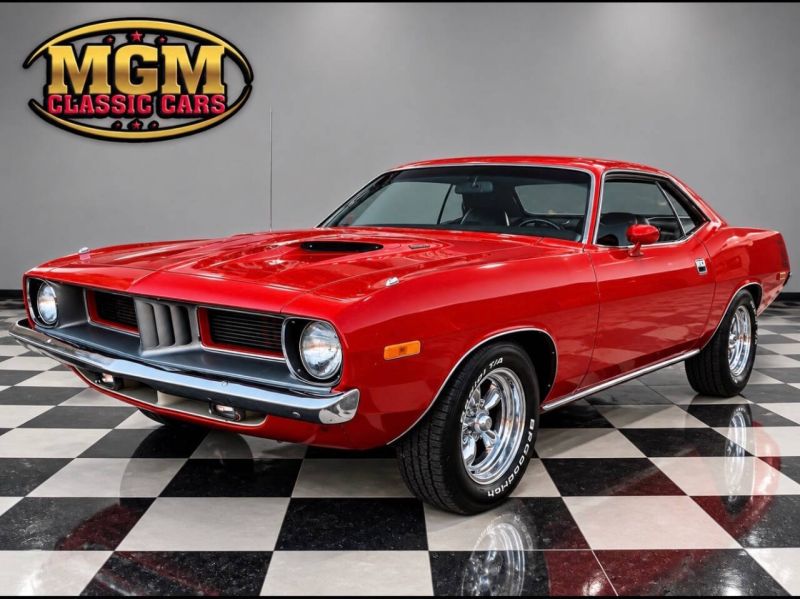
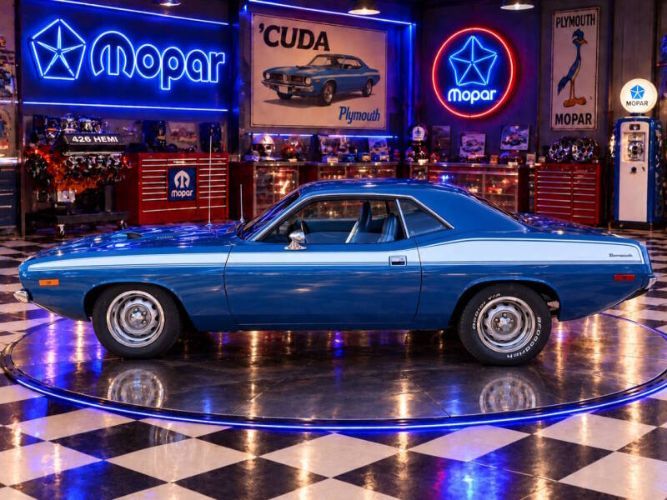
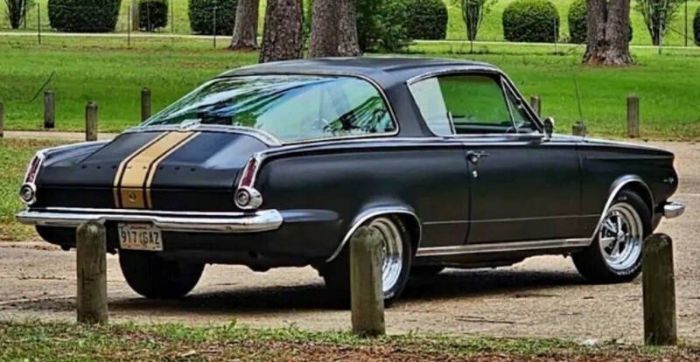
If you want to see what that history translates to on the ground today, you can shop classic Barracuda listings and compare how the earliest cars, the ones that first wore this unusual name, are holding their value against the later, more powerful generations. The name origin story is a small piece of the puzzle, but it is one that keeps coming up whenever serious collectors start talking about why this particular nameplate has stayed interesting for sixty years running.
Sources and notes
Related Reading

About the author
Tom Ramirez
Corvette researcher and historian based in Bowling Green, Kentucky. Two decades documenting Corvette production history from original factory records.
Related Listings - Plymouth Barracuda
Comments
Be the first to comment on this article.