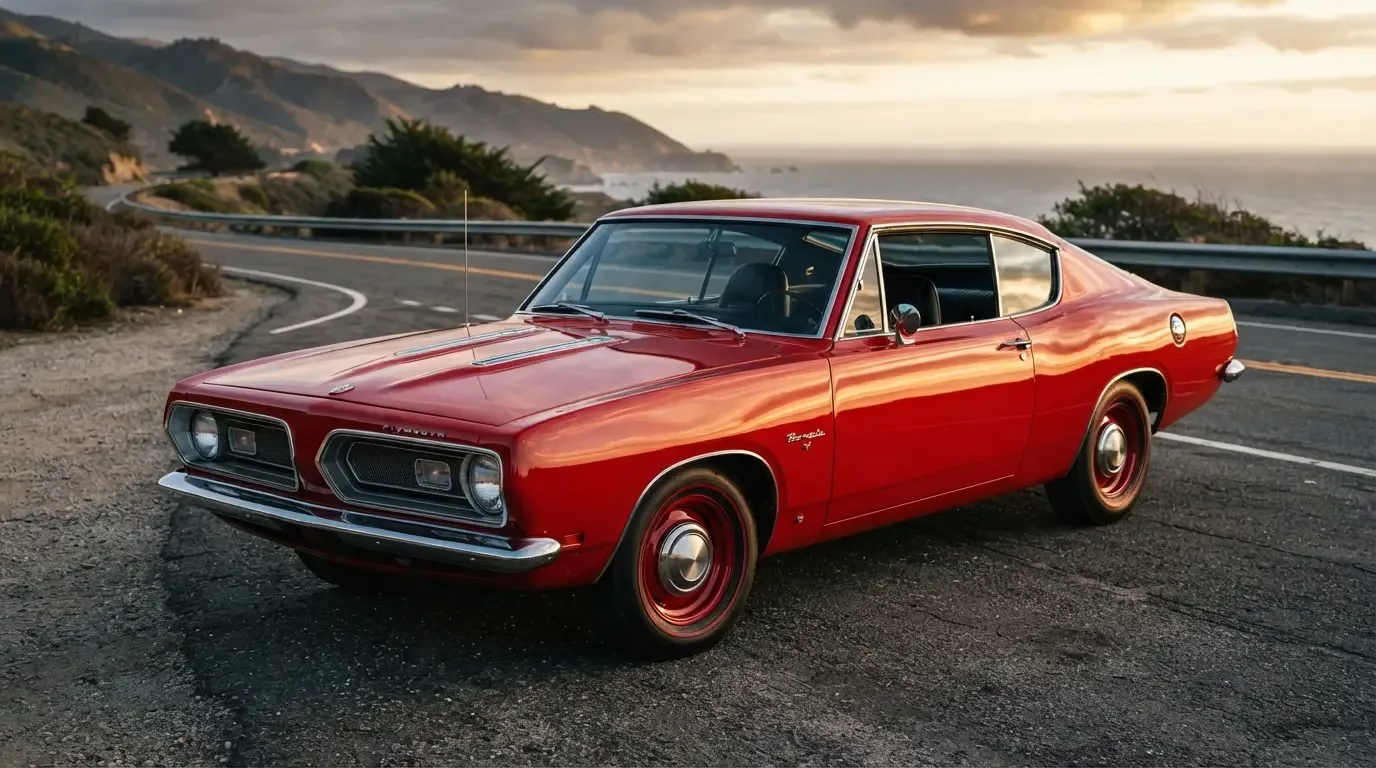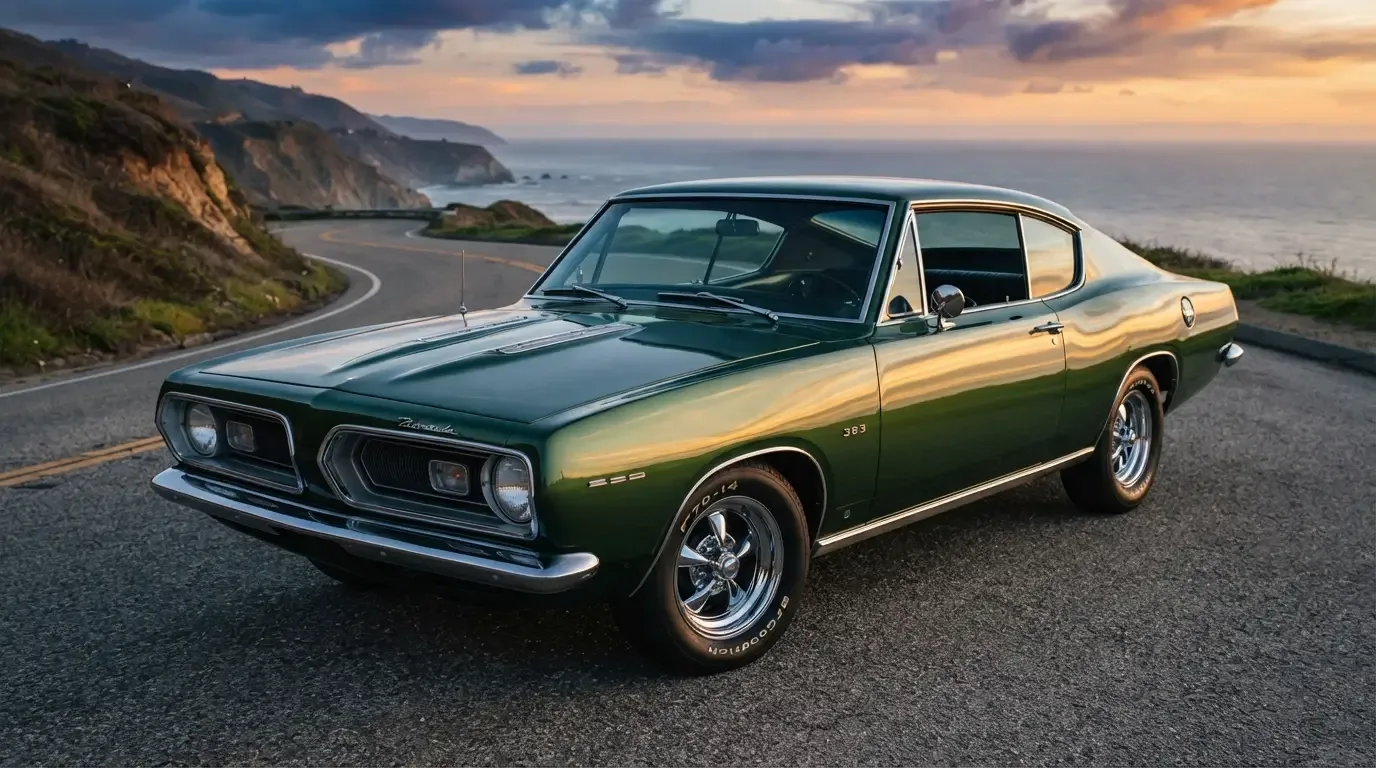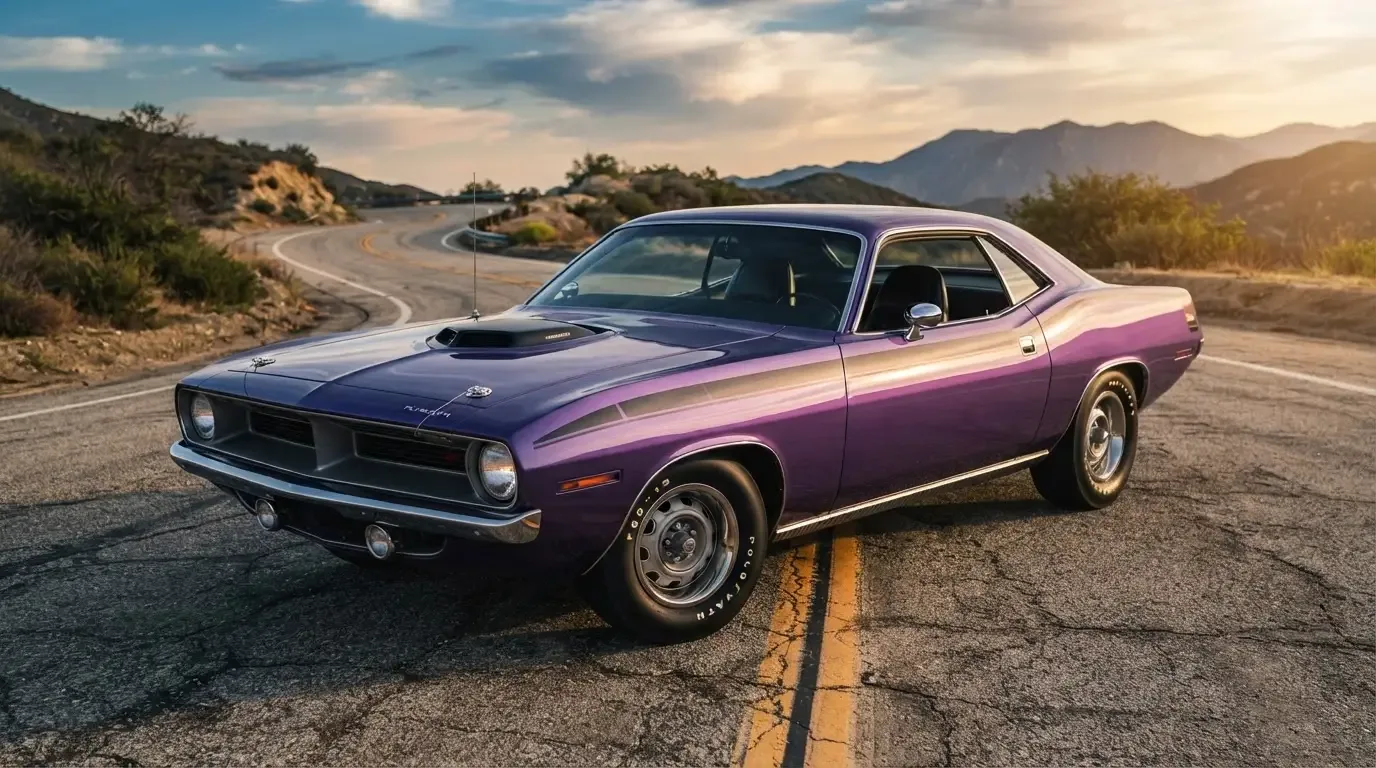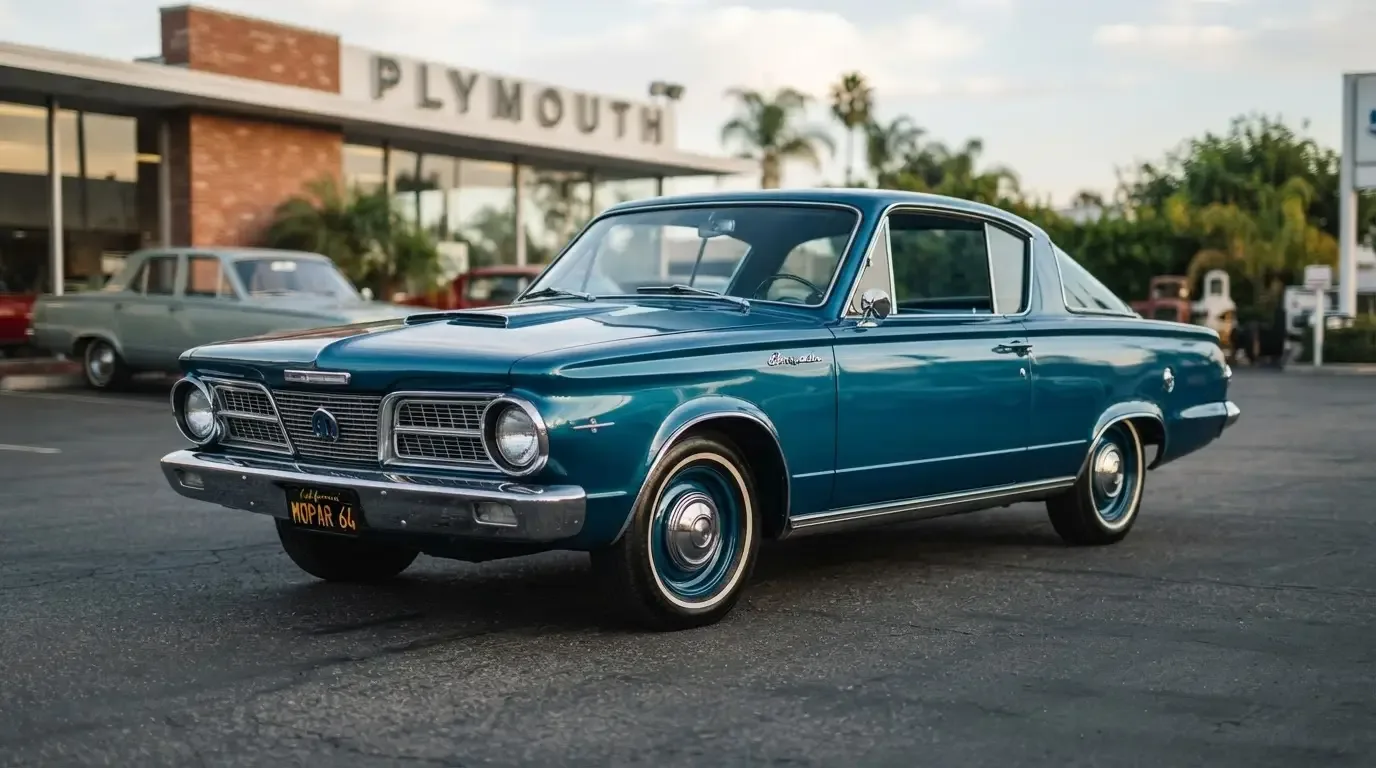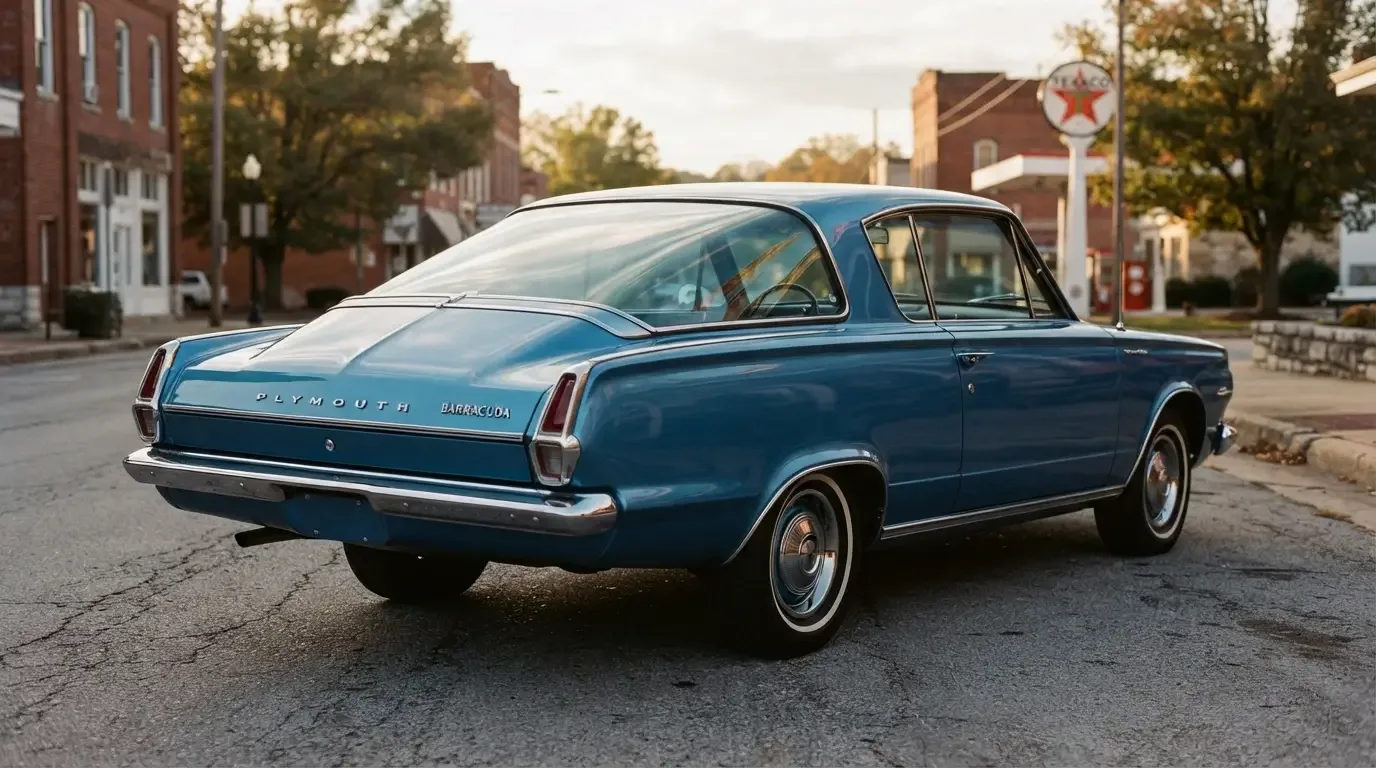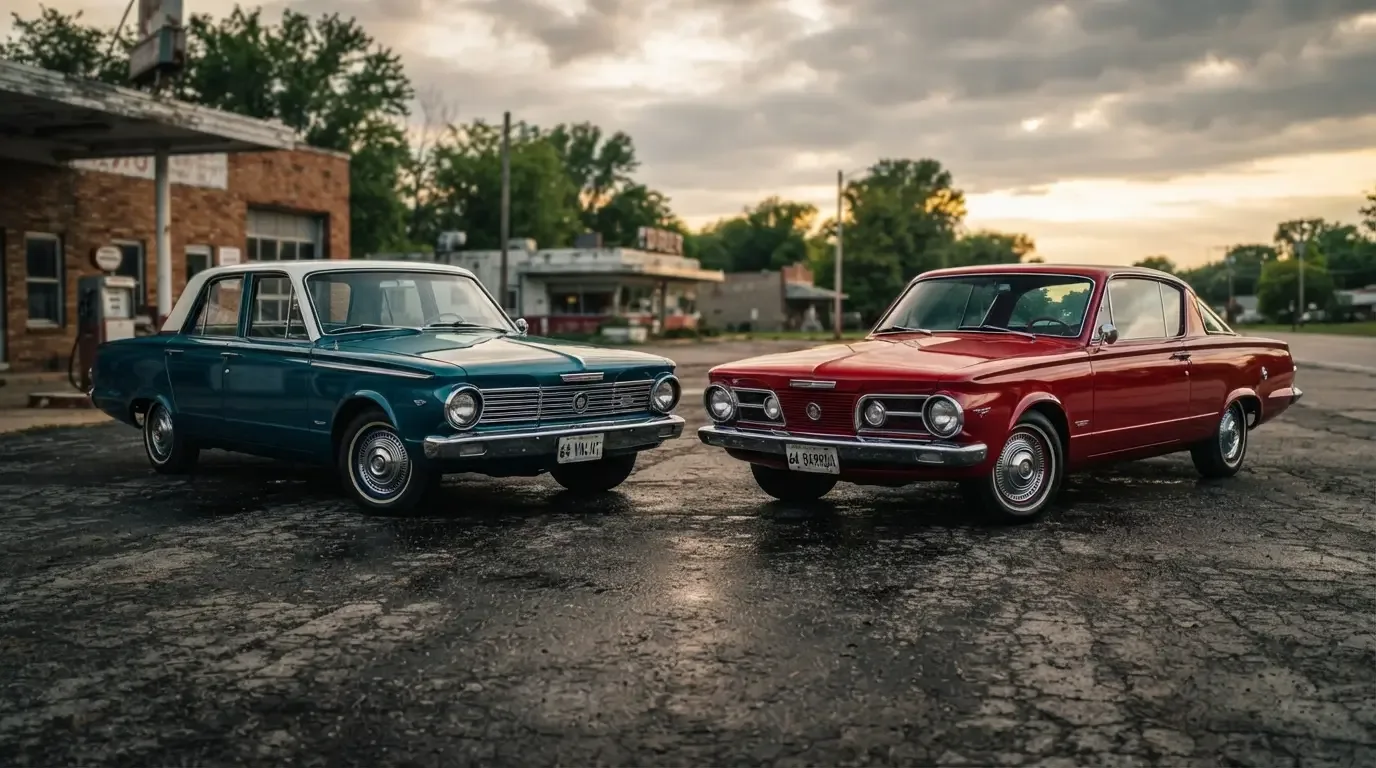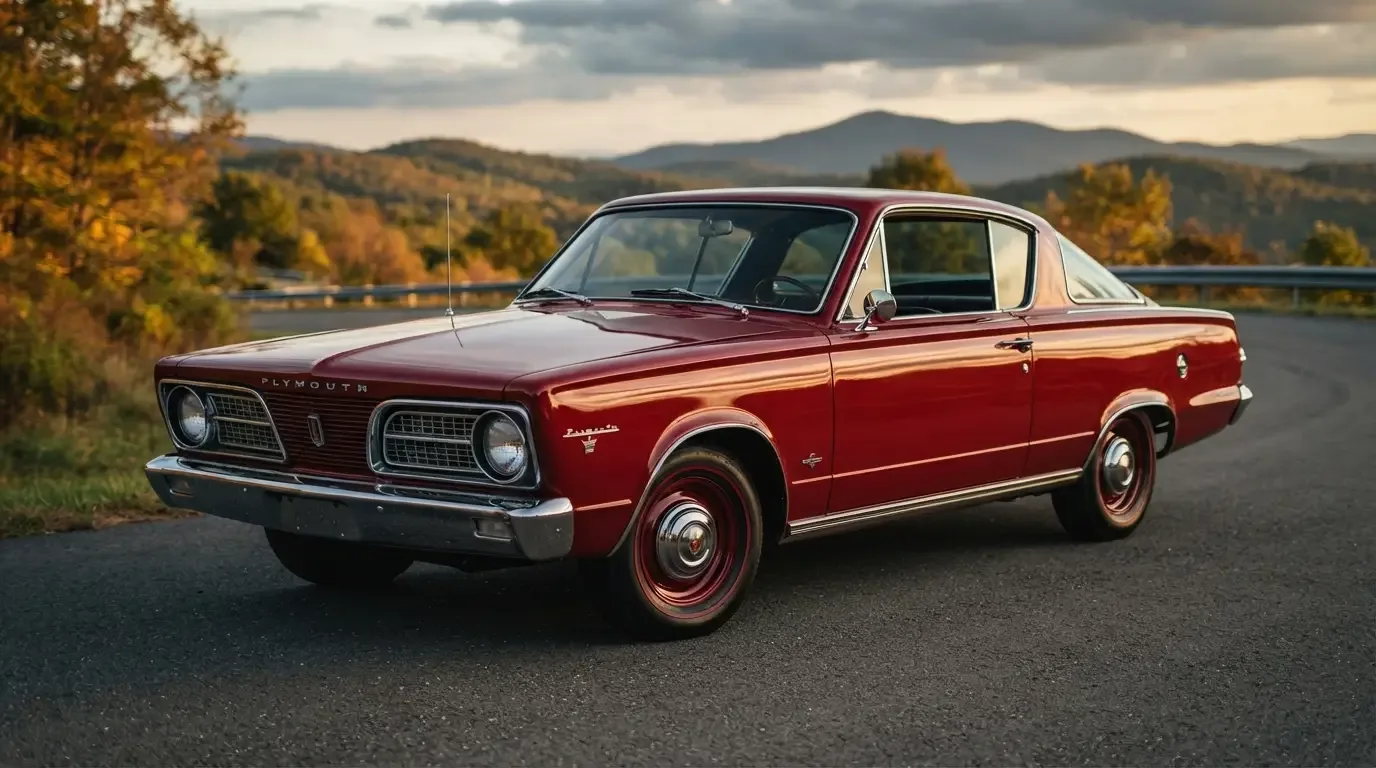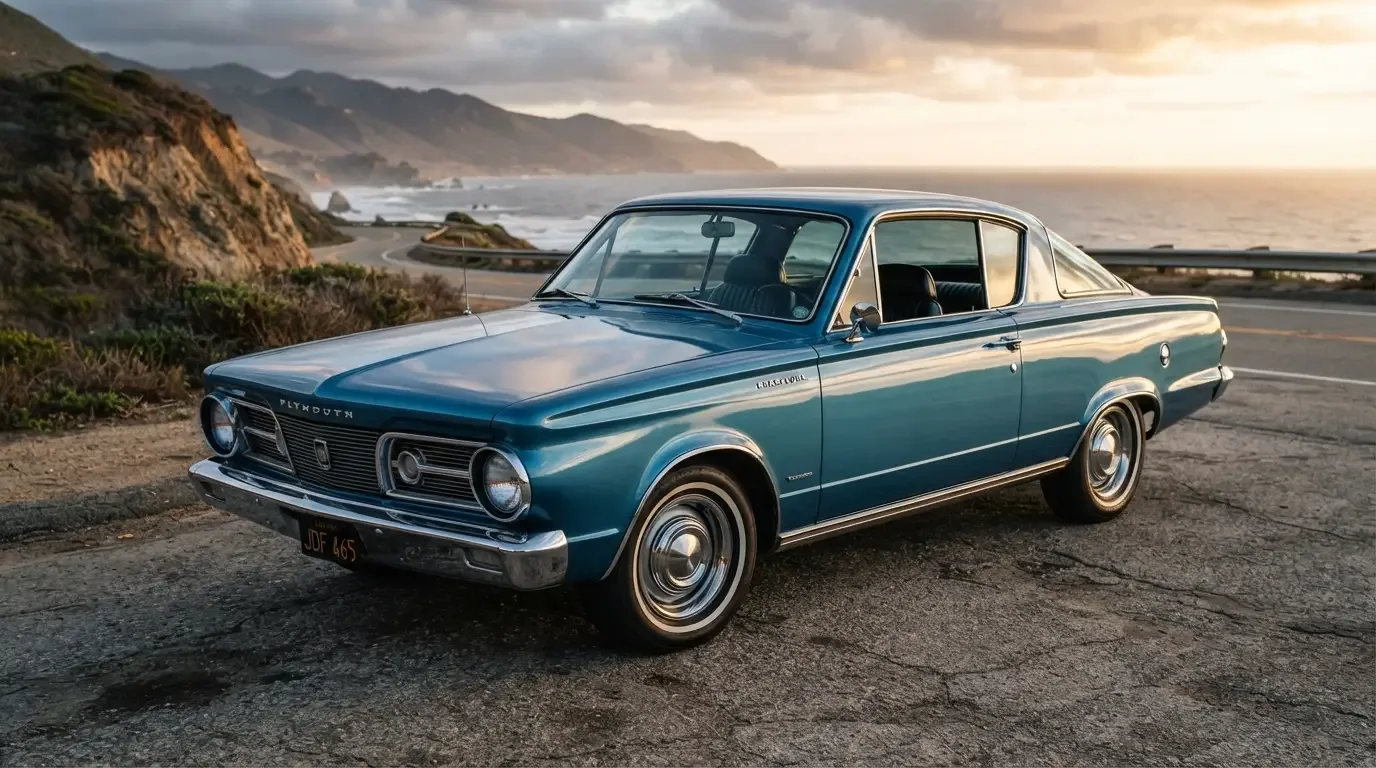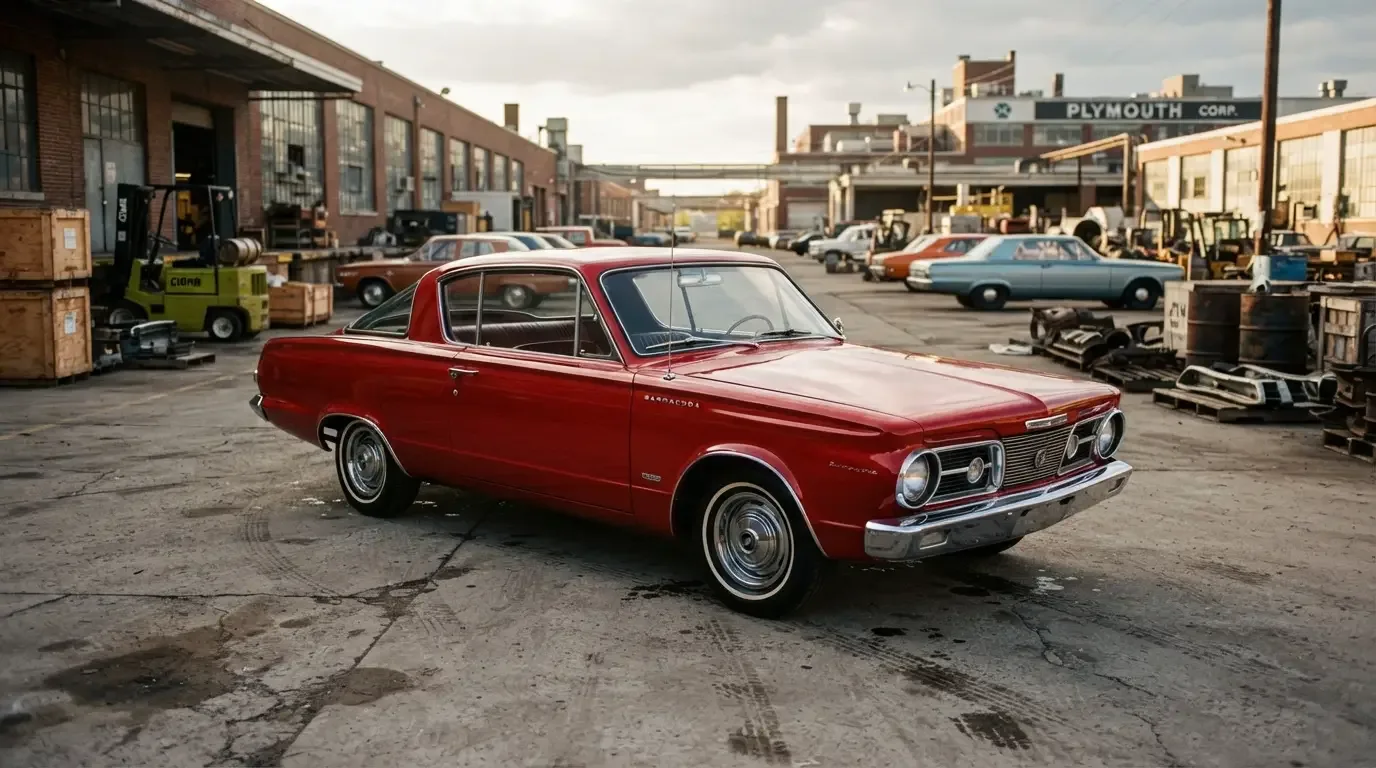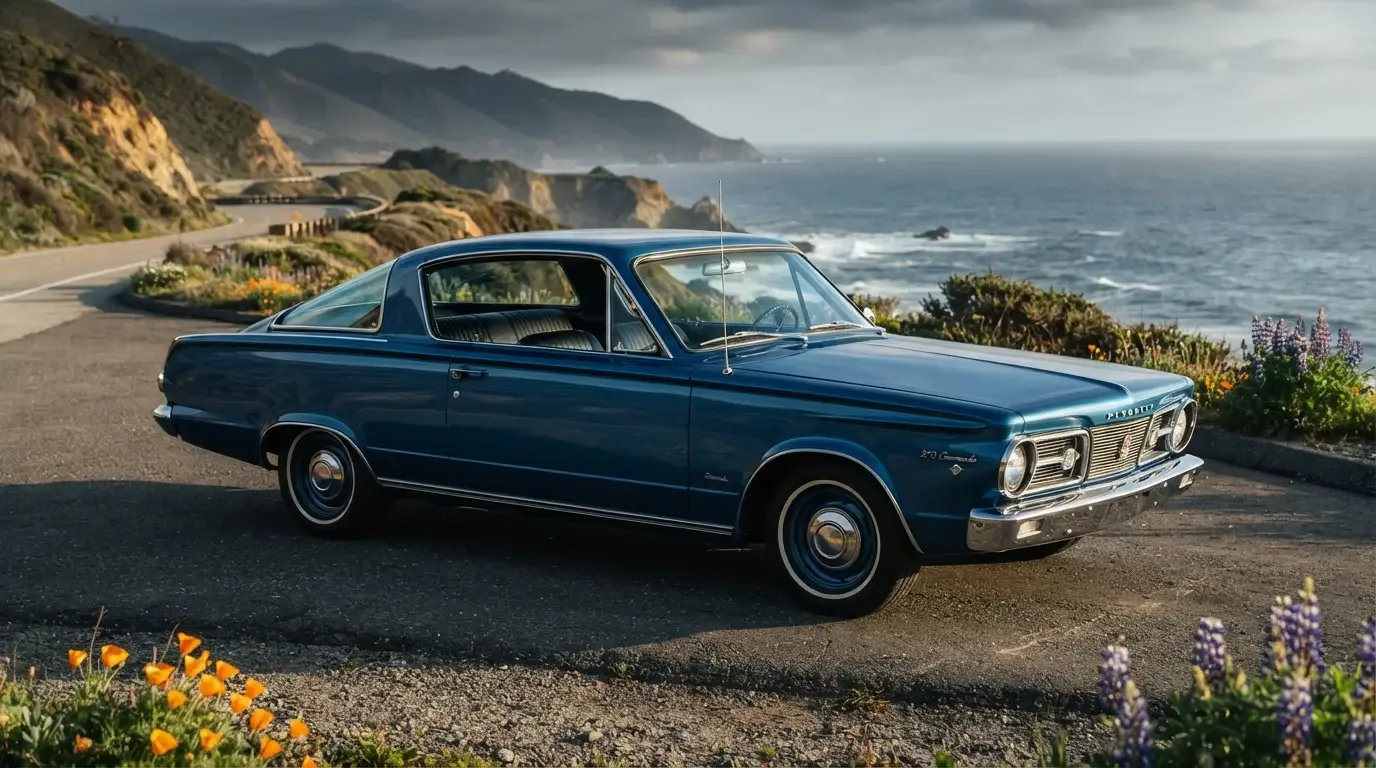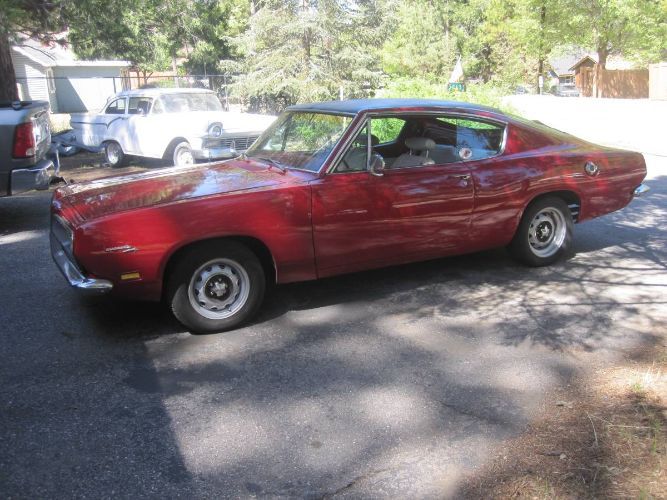
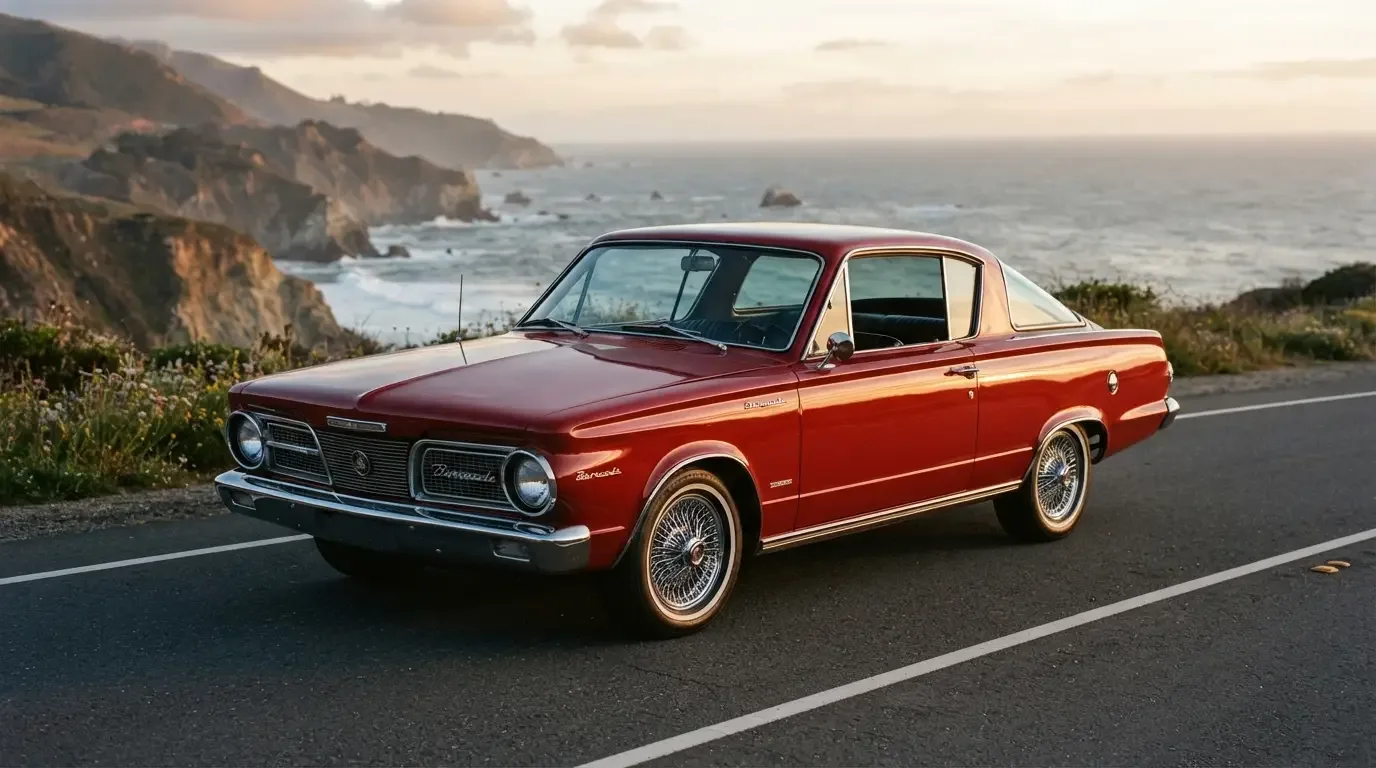
On April 1, 1964, Plymouth put a car on showroom floors that would spend the next sixty years being described as an afterthought. It was not one. The 1964 Plymouth Barracuda arrived sixteen days before the Ford Mustang, and while the record books remember the Mustang as the car that invented a class, the object itself tells a more careful story. Look at an early car today and the argument is settled by the glass: a single curved rear window of roughly 14.4 square feet, the largest piece of automotive glass fitted to a production car up to that point. That window is the artifact. Everything else is context.
A fastback grafted onto a compact
The car began as a project inside Chrysler to answer a market Plymouth could see forming but could not yet name. The starting point was the Valiant, the company's compact A-body, and the Barracuda wore Valiant badges on its first cars because the engineering and the tooling budget demanded it. What the designers did with that humble base is the interesting part. Rather than commission an entirely new body, the team led by the studio under Irv Ritchie fitted a dramatic fastback roofline to the existing Valiant hardtop, and the defining feature was that vast wraparound backlight supplied by Pittsburgh Plate Glass.
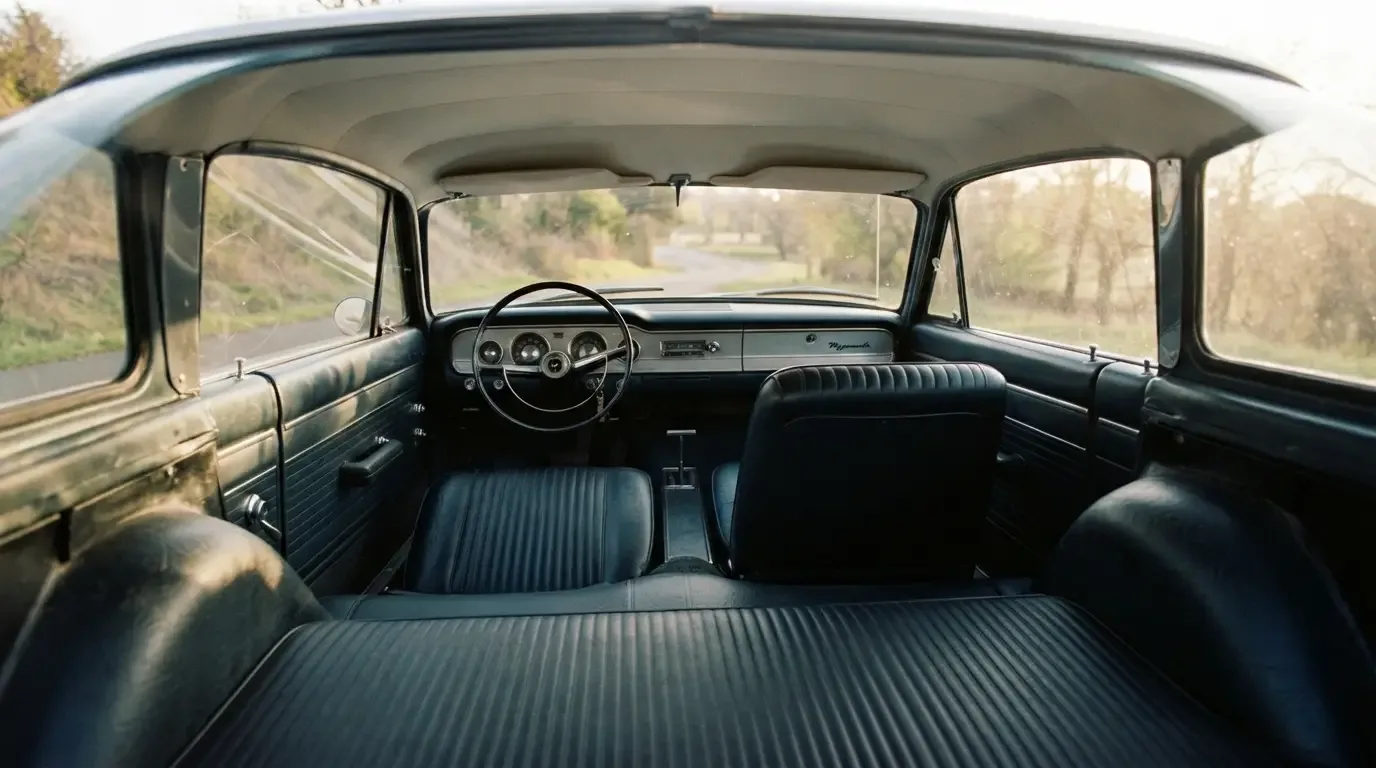
The result was a car that read as far more expensive than it was. Fold the rear seat down and the Barracuda offered a flat load floor stretching more than seven feet, a genuinely usable cargo space hidden behind a sporting profile. For a buyer in 1964 that combination of practicality and style at a modest price was unusual, and it explains why the earliest cars sold to a broader audience than the young enthusiasts the marketing implied. If you want the full arc of how this model grew from a badge-engineered compact into a muscle car icon, the wider plymouth barracuda history traces the whole line.
What was under the hood
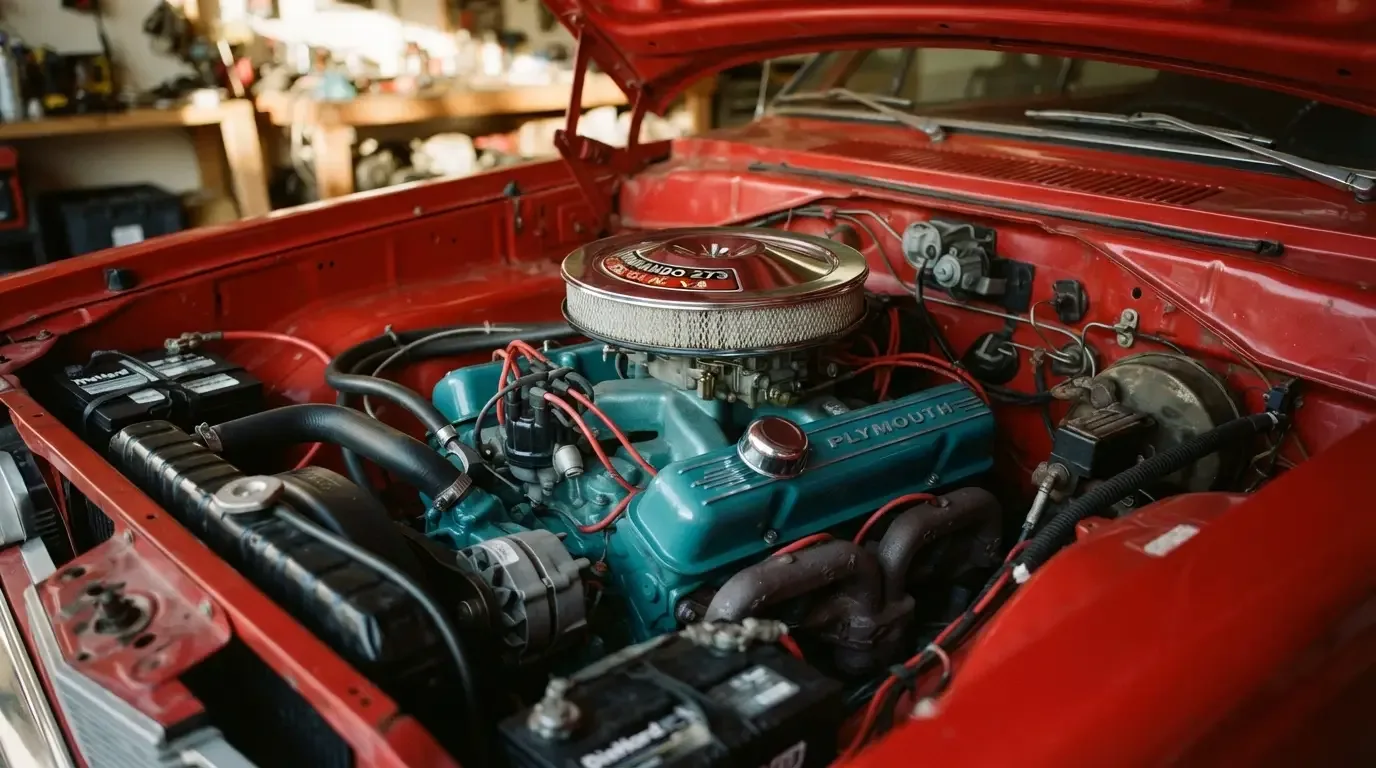
The powertrain choices in these first years were modest by the standards of what the name would later signify. The base engine was the 170 cubic inch slant six, with the larger 225 slant six available for buyers who wanted more torque without the expense of a V8. The engine that mattered to the car's future was the 273 cubic inch LA-series V8, a lightweight small block that gave the Barracuda credible performance for the first time. In standard tune the 273 produced 180 hp, adequate rather than thrilling, but it was the platform on which Plymouth would build.
The transmission choices reflected the same practical breadth: a three-speed manual as standard, a four-speed manual for the sporting buyer, and the TorqueFlite automatic that Chrysler engineers regarded, with justification, as one of the best automatics of the era. A car ordered with the 273 and the four-speed was a different animal from the six-cylinder commuter version, and the gap between those two specifications is worth remembering when you evaluate a surviving example.
The slant six deserves its own note because it shaped how these cars were used. The 225 in particular earned a durability reputation that outlived the Barracuda itself, and a great many first-generation cars spent their working lives as reliable daily transport rather than weekend toys. That history explains the condition of the survivors. A six-cylinder car that covered heavy mileage and was kept running on a budget is common. A low-mileage V8 car that was cherished from new is not, and the difference in preservation between those two populations is one of the first things a researcher assesses. The engine under the hood tells you not just what the car could do, but what kind of life it probably lived.
| Specification | 1964 to 1966 Barracuda |
|---|---|
| Body style | Two-door fastback, A-body |
| Base engine | 170 cu in slant six |
| Top engine (1965 to 1966) | 273 cu in Commando V8, 235 hp |
| Transmissions | 3-speed manual, 4-speed manual, TorqueFlite automatic |
| Signature feature | Wraparound rear glass, roughly 14.4 sq ft |
| 1964 production | 23,443 units |
| 1965 production | 64,596 units |
| 1966 production | 38,029 units |
The Formula S and the turn toward performance
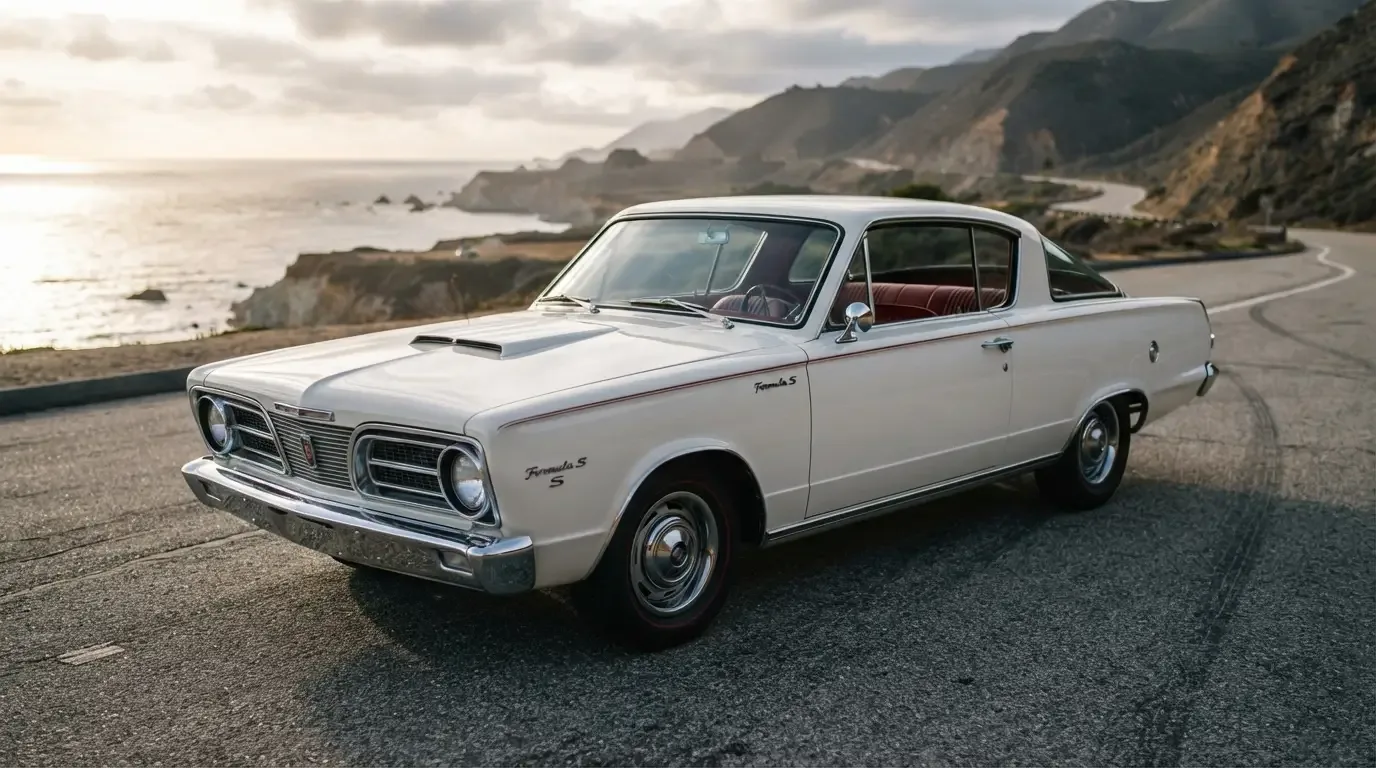
The 1965 model year is where the Barracuda stopped apologizing. Plymouth introduced the Formula S package, and this is the specification collectors chase today. The Formula S paired the Commando version of the 273 V8, rated at 235 hp with a higher compression ratio, a hotter camshaft and a four-barrel carburetor, with a package of chassis upgrades that made the car handle in a way its Valiant roots did not suggest. Heavy-duty suspension, wide-rim wheels shod with Goodyear Blue Streak tires, a front sway bar and a dash-mounted tachometer turned the fastback into a car that could be driven hard with intent.
The Formula S also carried a distinct set of badges and a simulated wood-rim steering wheel on many cars, small details that a concours judge will look for and that a hasty restoration often gets wrong. The package cost extra, it was ordered by a minority of buyers, and that scarcity is precisely why a documented 1965 or 1966 Formula S commands a premium over a base six-cylinder car in similar condition. The specification is the value.
Period road tests treated the Formula S with respect, and that contemporary reception is part of the historical record worth citing. The motoring press of 1965 and 1966 noted that the car handled and stopped better than its Valiant origins suggested, crediting the suspension package and the wide wheels rather than raw power. That reputation matters because it establishes the Formula S as a genuine driver's car of its moment, not a stripe-and-badge exercise. A car that earned honest praise from the testers of its day carries a documented pedigree that a later marketing story cannot manufacture, and it is one reason the Formula S remains the specification that serious first-generation collectors pursue.
"When people ask me what to look for in an early Barracuda, I tell them to stop looking at the paint and start reading the fender tag. The Formula S was a genuine performance package, not a trim level, and the cars that still wear the correct suspension and the original engine are the ones that matter to the record."
- Sarah Whitfield
1966 and the fish finds its own face
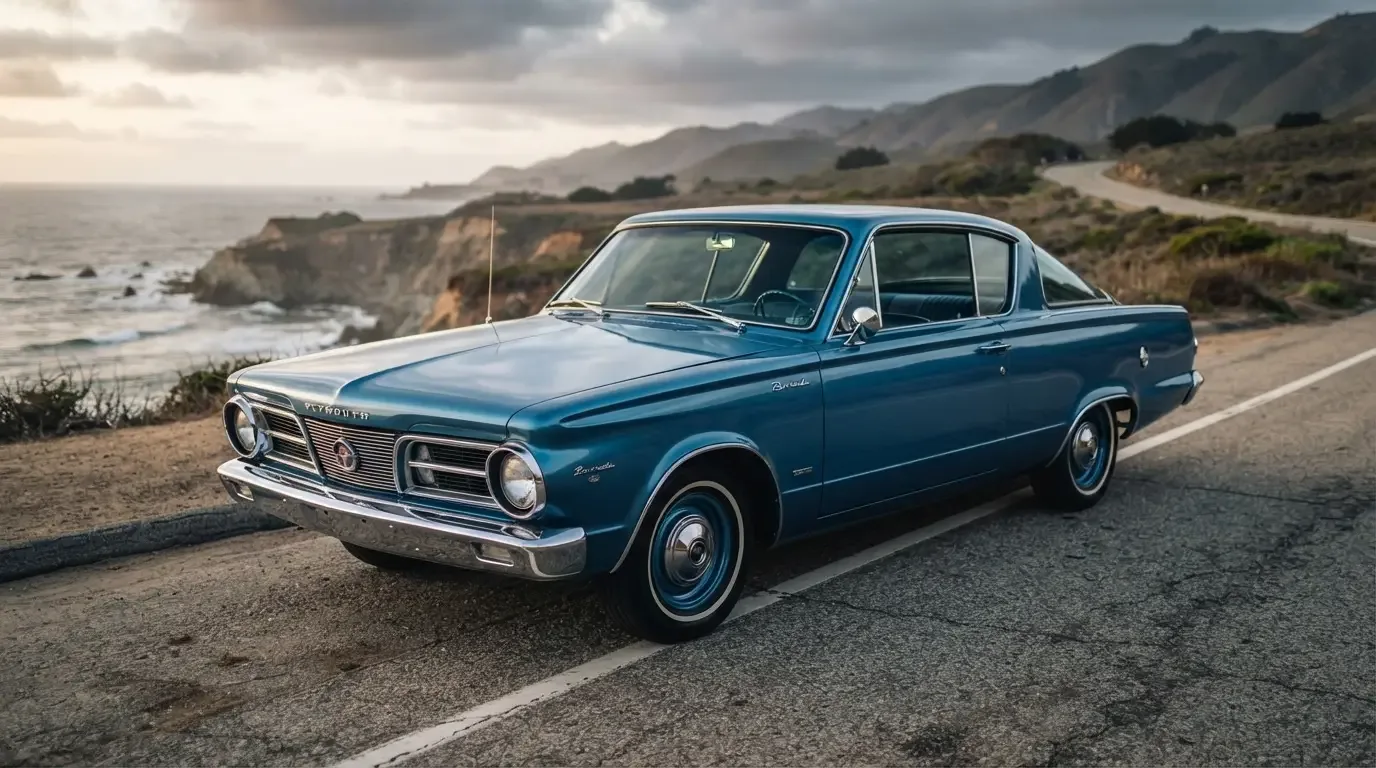
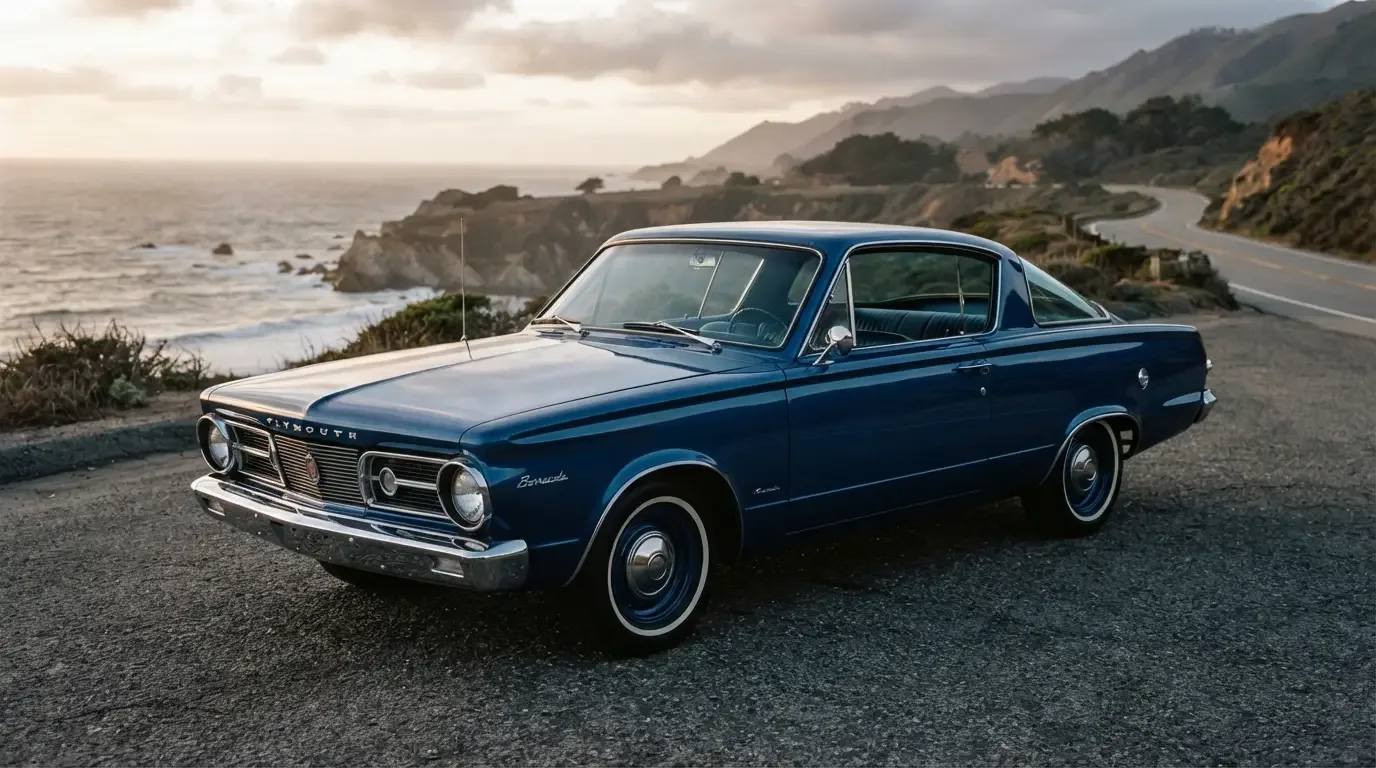
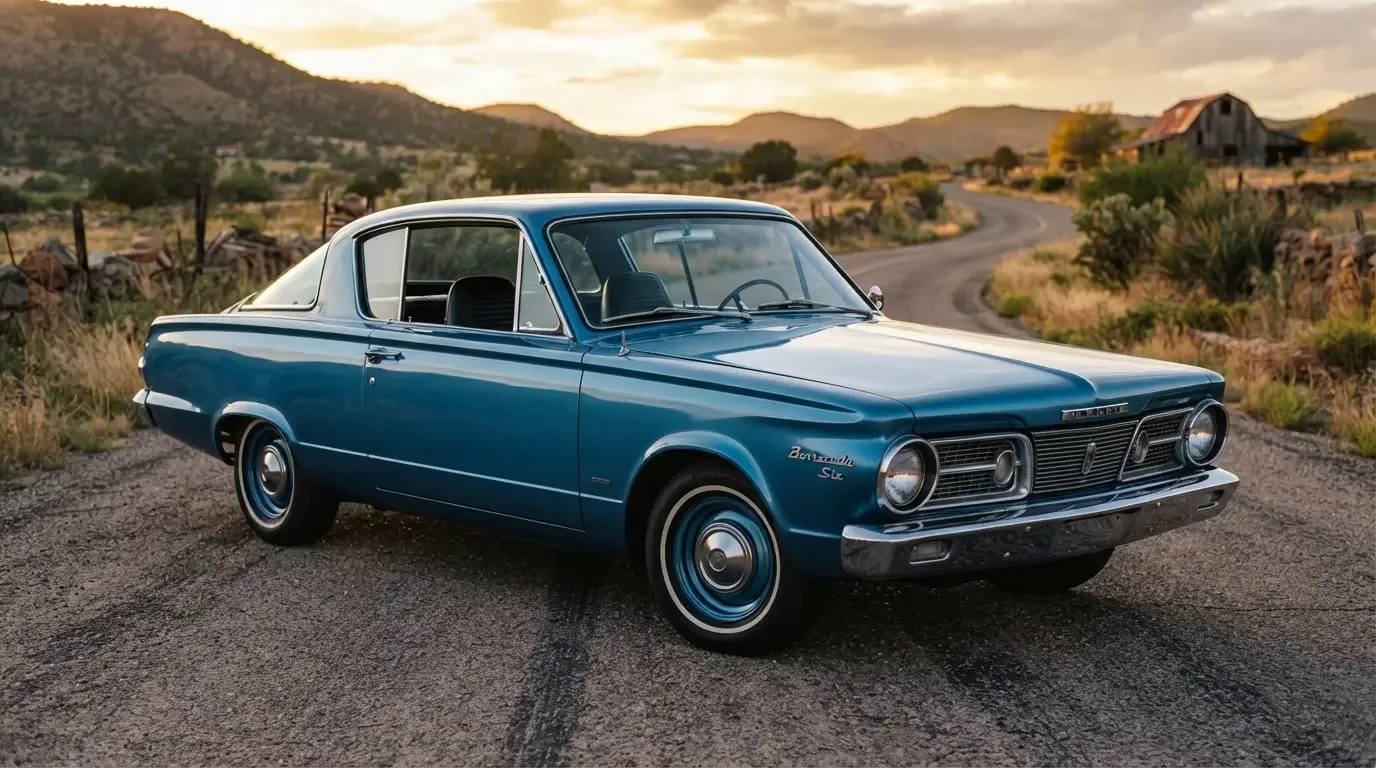
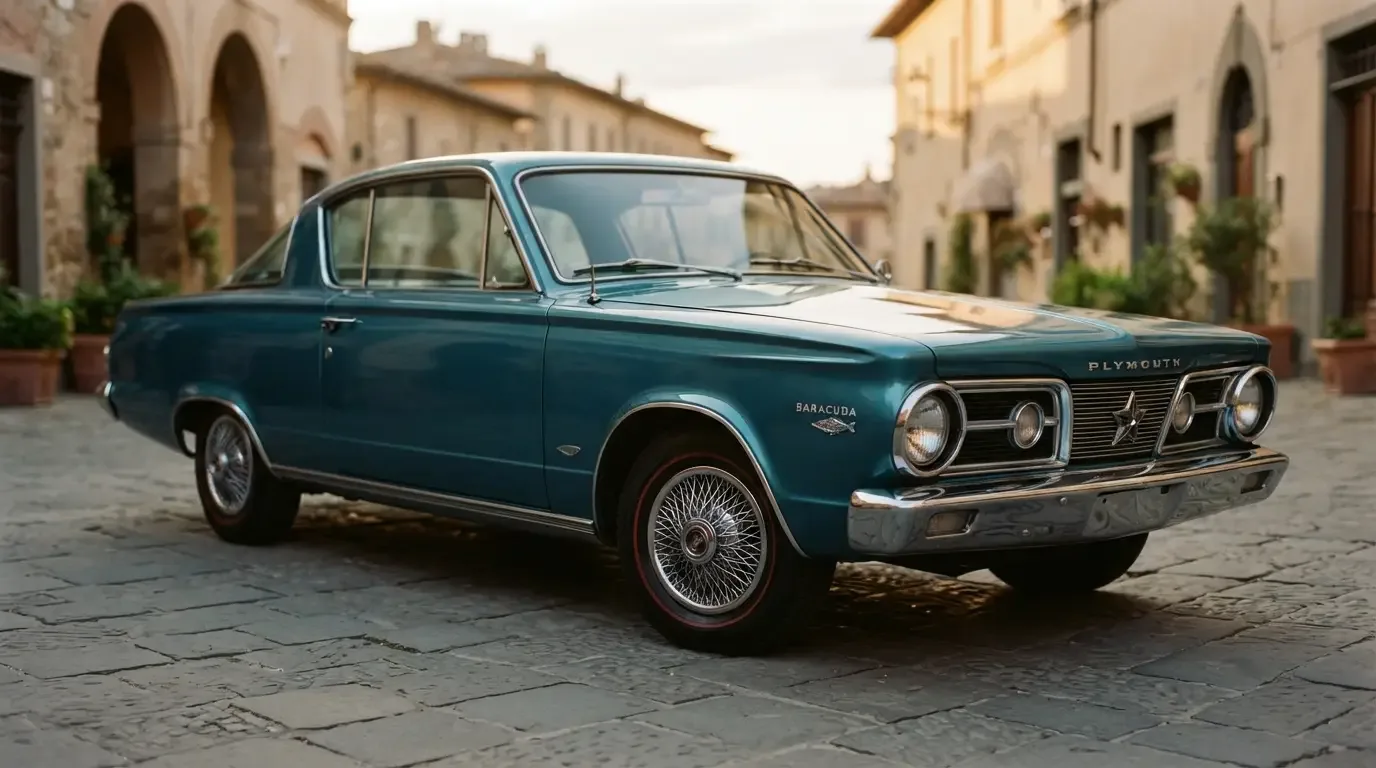
Through 1964 and most of 1965 the Barracuda still could not fully escape the Valiant. The grille, the front sheet metal and much of the trim were shared, and the earliest cars even wore Valiant Barracuda badging. For 1966 Plymouth gave the car a substantial cosmetic revision that finally let it stand alone. The front end received a new grille with a distinct texture, the Valiant script disappeared, and a stylized fish emblem became the car's own signature. The bodyside trim was cleaned up and the interior detailing improved.
These changes matter to a researcher because they make the 1966 cars visually separable at a glance, and because 1966 was the last year of the first-generation body. When the second-generation car arrived it was a complete redesign on a new platform, larger and available in three distinct body styles. Readers who want to see how the story continues can keep exploring the keep exploring chapter, where the fastback gained siblings and the Formula S gained a bigger engine.
The name, the colors and the showroom pitch
The Barracuda name itself is part of the period story. Plymouth had considered calling the car the Panda, a name that would have aged badly, before settling on the fish that gave the model its emblem and its identity. The choice mattered because it let the car break from the Valiant not just visually in 1966 but in the way it was marketed. A Barracuda was sold as a sporting compact with a personality of its own, and the fish motif ran through the badging, the advertising and eventually the interior trim.
The color and trim palette of the first-generation cars reflects mid-1960s taste rather than the loud psychedelia that would arrive at the end of the decade. Buyers chose from restrained metallics and a handful of brighter hues, and the interiors leaned on the fastback's party trick, the fold-down rear seat and the security shelf that turned the cabin into a small cargo hauler. For a young family or a single buyer who wanted style without sacrificing usefulness, that flexibility was a genuine selling point, and Plymouth's advertising of the era leaned on it heavily. The performance image came later. At the start the pitch was versatility with a sporting shape, and the cars sold on that promise.
Understanding that original positioning helps a modern owner value a survivor correctly. These were not stripped-out racers. They were comfortable, practical cars sold to a broad audience, and the ones that survive in original specification are a window into what a value-conscious American buyer wanted from a sporty compact before the muscle car era reached full volume.
How to read a survivor today
Because the first-generation Barracuda shared so much with the Valiant, the cars are mechanically approachable and parts support for the running gear is reasonable. The scarce components are the ones unique to the Barracuda, and the rarest of all is that enormous rear window. A cracked or delaminated backlight is difficult and expensive to replace correctly, and a car wearing a period-correct original pane is worth noting. The interior fastback trim panels, the fold-down seat mechanism and the Formula S specific pieces are the other items that separate a complete car from a project.
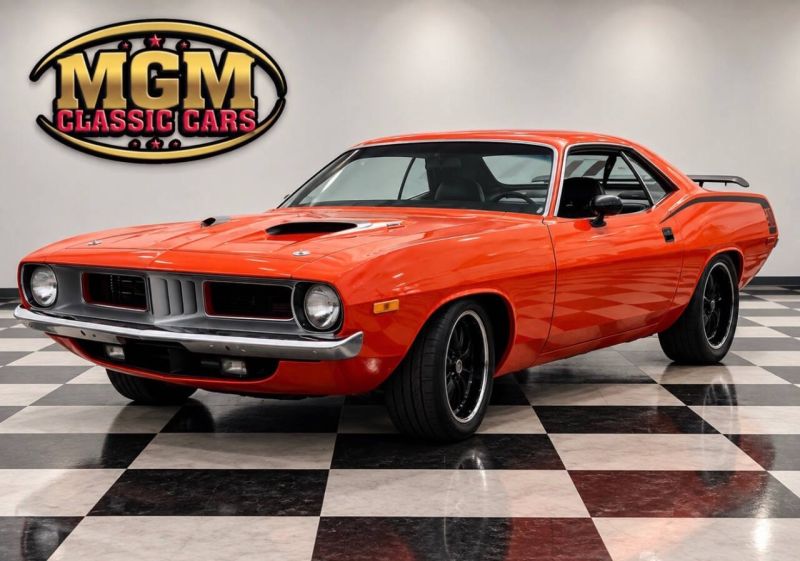
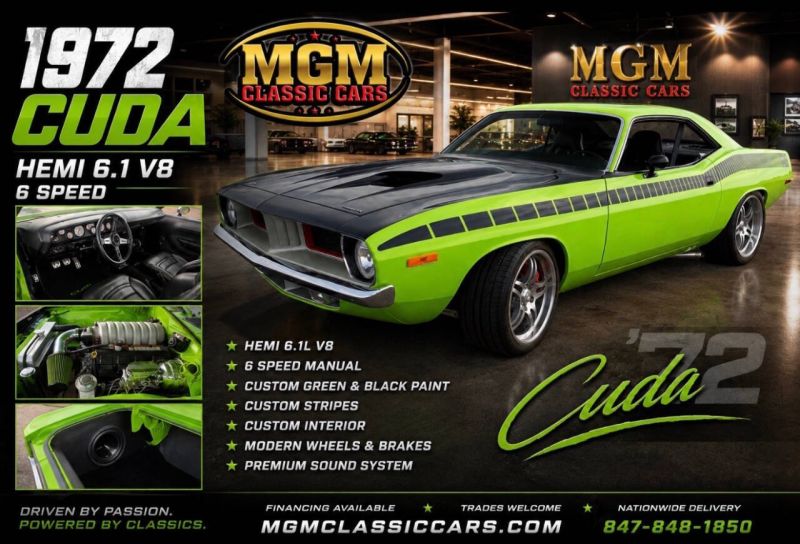
The market has long treated these first cars as the sensible entry into Mopar collecting, priced well below the later E-body Cudas that dominate auction headlines. That gap has narrowed as buyers came to appreciate the historical weight of the earliest cars, and a well-documented 1965 or 1966 Formula S now sits comfortably above a plain six-cylinder example. For anyone weighing a purchase, a browse through the current listings of a classic Barracuda for sale gives a useful sense of where condition and specification land on price.
The car the history books shortchanged
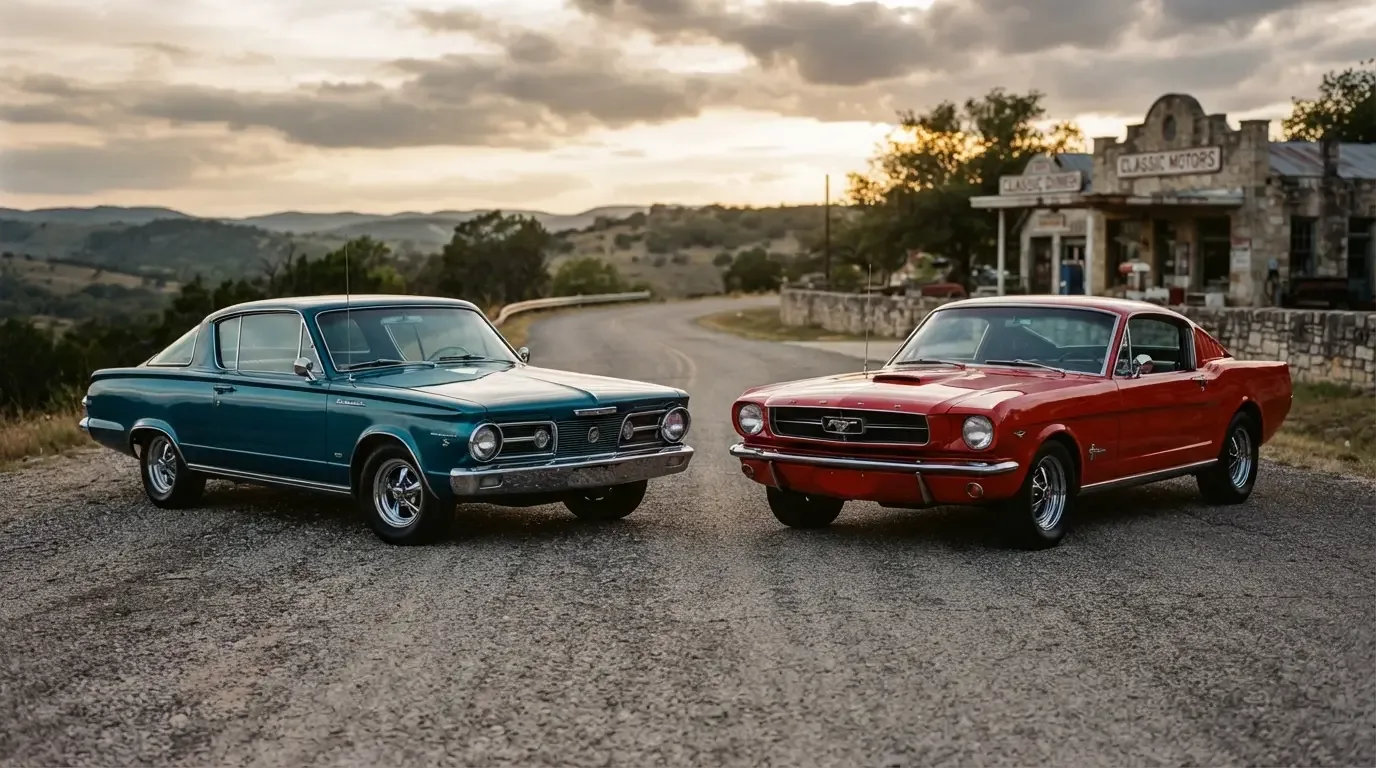
The narrative that the Barracuda merely followed the Mustang is a convenience, not a fact. Both cars were conceived independently to serve the same emerging appetite, and Plymouth reached the market first. What the Mustang had that the Barracuda did not was a marketing campaign of extraordinary scale and a body designed from a clean sheet to look like nothing else. The Barracuda, tied to the Valiant and sold in far smaller numbers, was the quieter answer to the same question.
For the collector and the historian that quietness is now an advantage. The first-generation cars survive in modest numbers, they carry the genuine claim of arriving early, and the Formula S versions offer real period performance for a fraction of the money that a later Cuda demands. The 1964 Plymouth Barracuda is not a footnote to the pony car story. It is the opening line, and the cars that remain are worth reading closely.
Sources and notes
- Plymouth Barracuda - Wikipedia
- 1964 Plymouth Barracuda 273 V-8 Specs - Automobile Catalog
- 1965 Plymouth Barracuda Commando 273 V-8 Specs - Automobile Catalog
- Early Cuda Club - 1964-1966 Production Numbers
- Vintage Car Life Road Test - Curbside Classic
- Fish Story: The Plymouth Barracuda - Ate Up With Motor