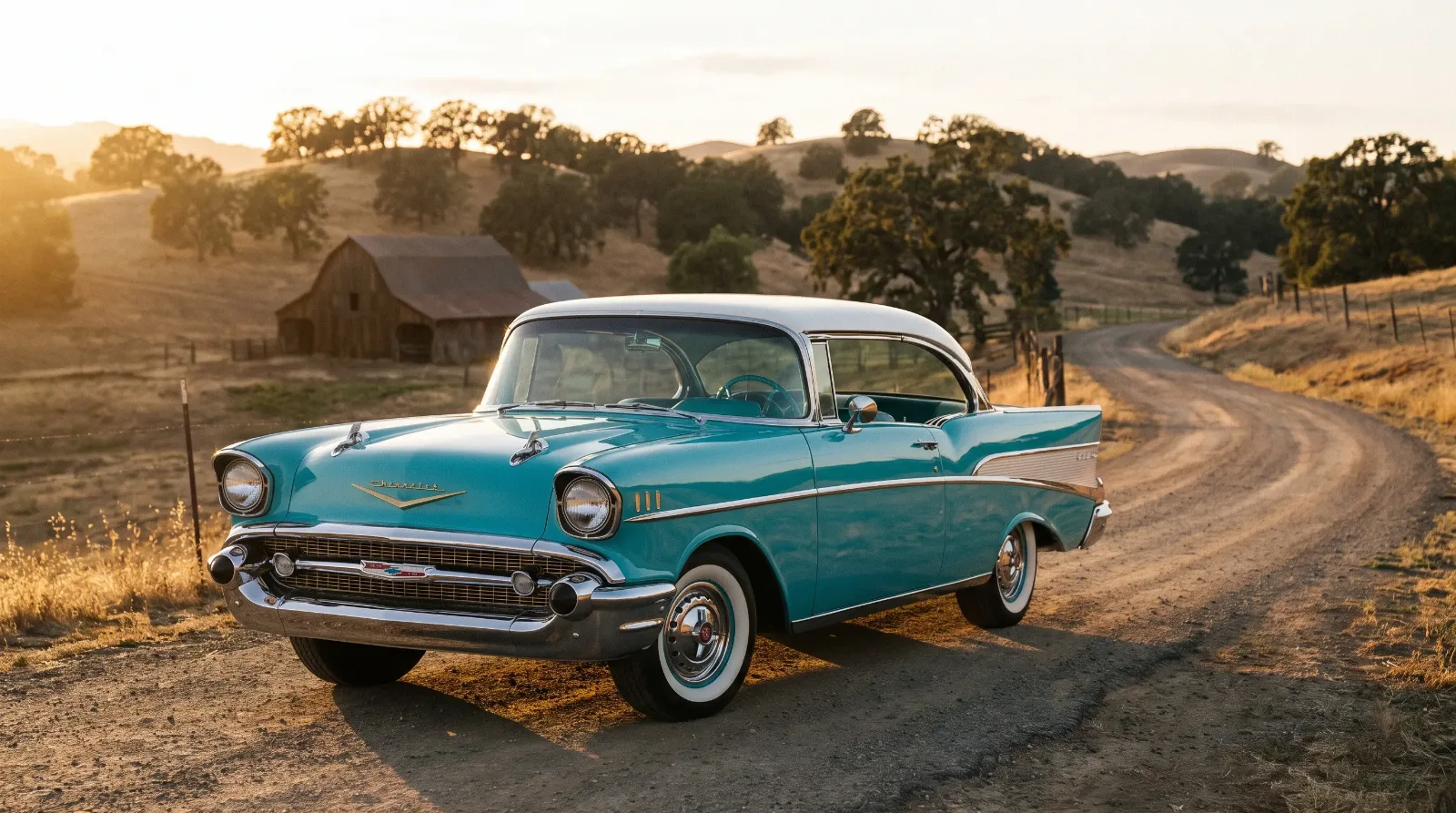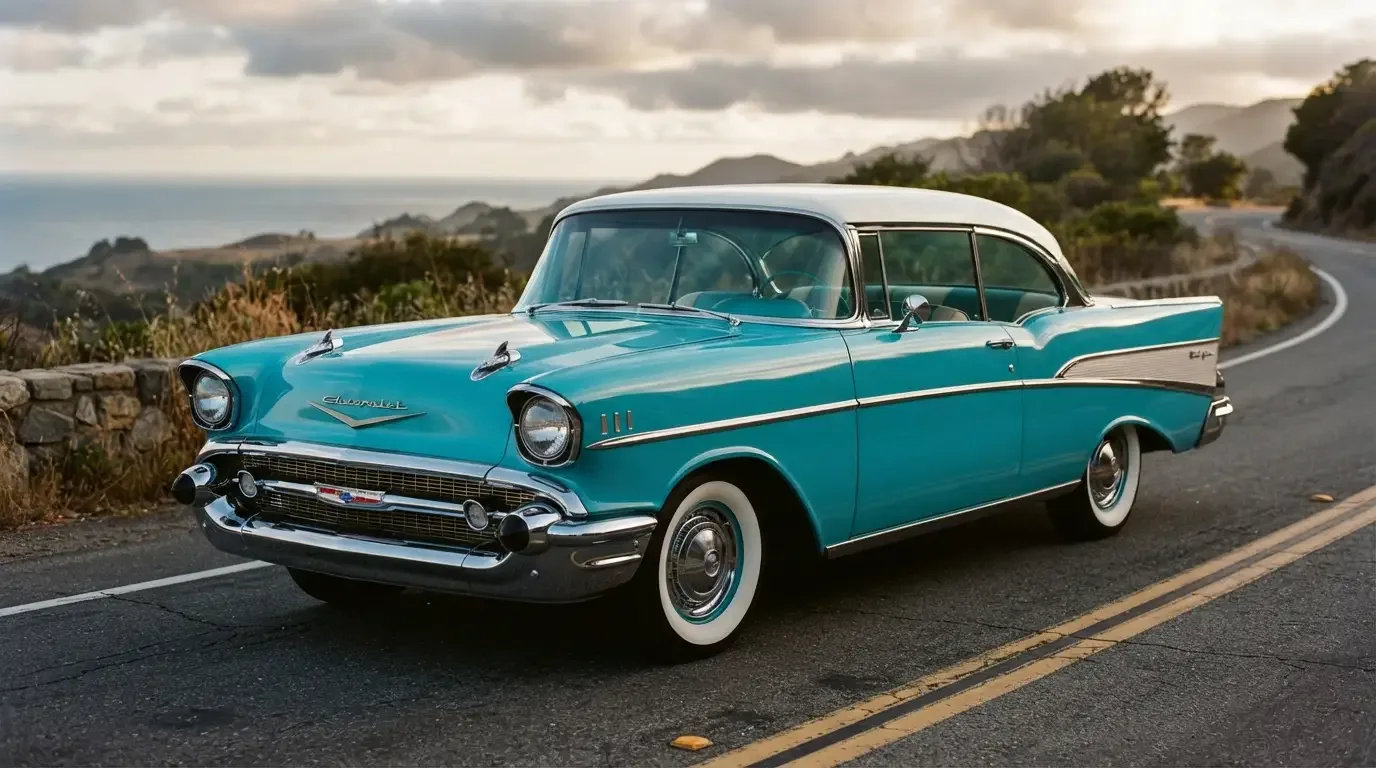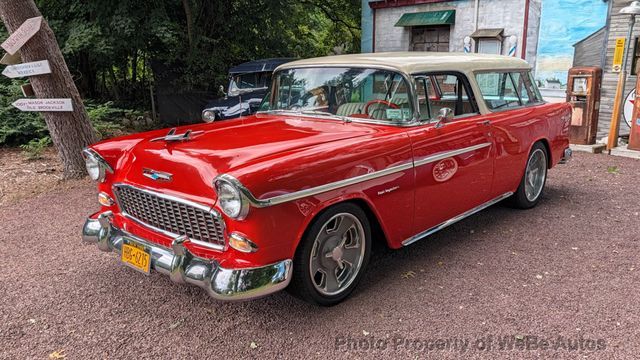
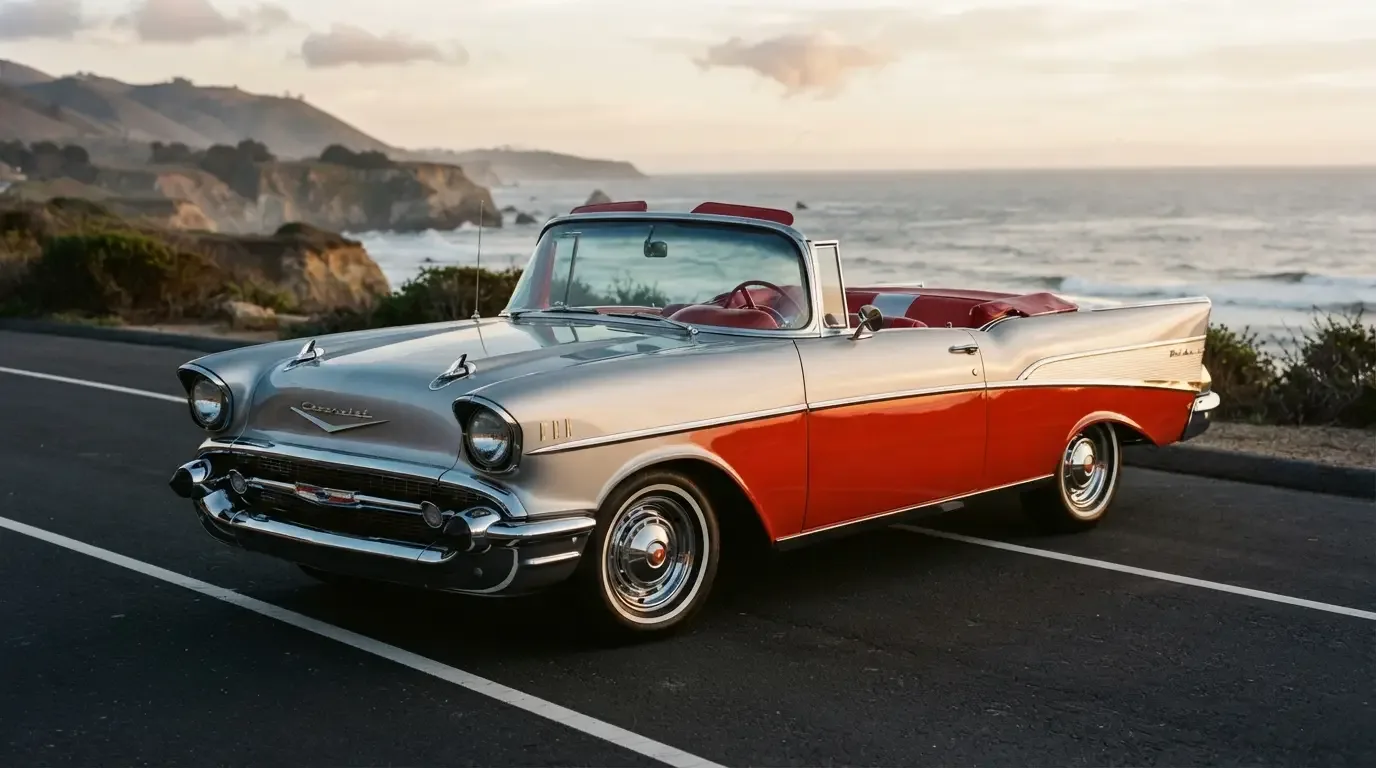
Every Tri-Five collection eventually gets built around one car, and for a lot of collectors that car is a 1957 Bel Air convertible. It is the body style that combines everything Chevrolet was selling that year, the styling, the trim, the engine options, and wraps it in an open top that turns a good-looking sedan into the car people stop to photograph at a gas station. The convertible was never the volume seller in the Bel Air lineup, and that scarcity, paired with how well the shape suits a drop-top treatment, is most of the reason it commands the attention and the money it does today.
A body style built for the top of the range
Chevrolet offered the convertible only within the Bel Air series for 1957, never in the lower 150 or 210 trims, which made it exclusive by design rather than by accident. That decision mattered because it meant every convertible buyer was, by definition, buying into the full Bel Air trim package, the gold anodized aluminum accents, the richer interior materials, and the broadest range of factory options Chevrolet offered that year. Ordering a convertible also meant accepting a structural compromise every open car of the era had to make. Without a fixed roof, the body needed additional reinforcement in the frame and rocker panels to keep flex under control, which added weight and cost relative to the hardtop and sedan versions built on the same platform.
The power top itself was a genuine selling point in 1957, at a time when a power-operated convertible mechanism was still a meaningful piece of engineering to show off on a showroom floor. Buyers who wanted the visual drama of a convertible without paying extra for the powered mechanism could still order it, but most surviving originally-optioned cars carry the power top, since it was the more popular choice among buyers already willing to pay the convertible premium.
Engine and trim choices on the drop-top
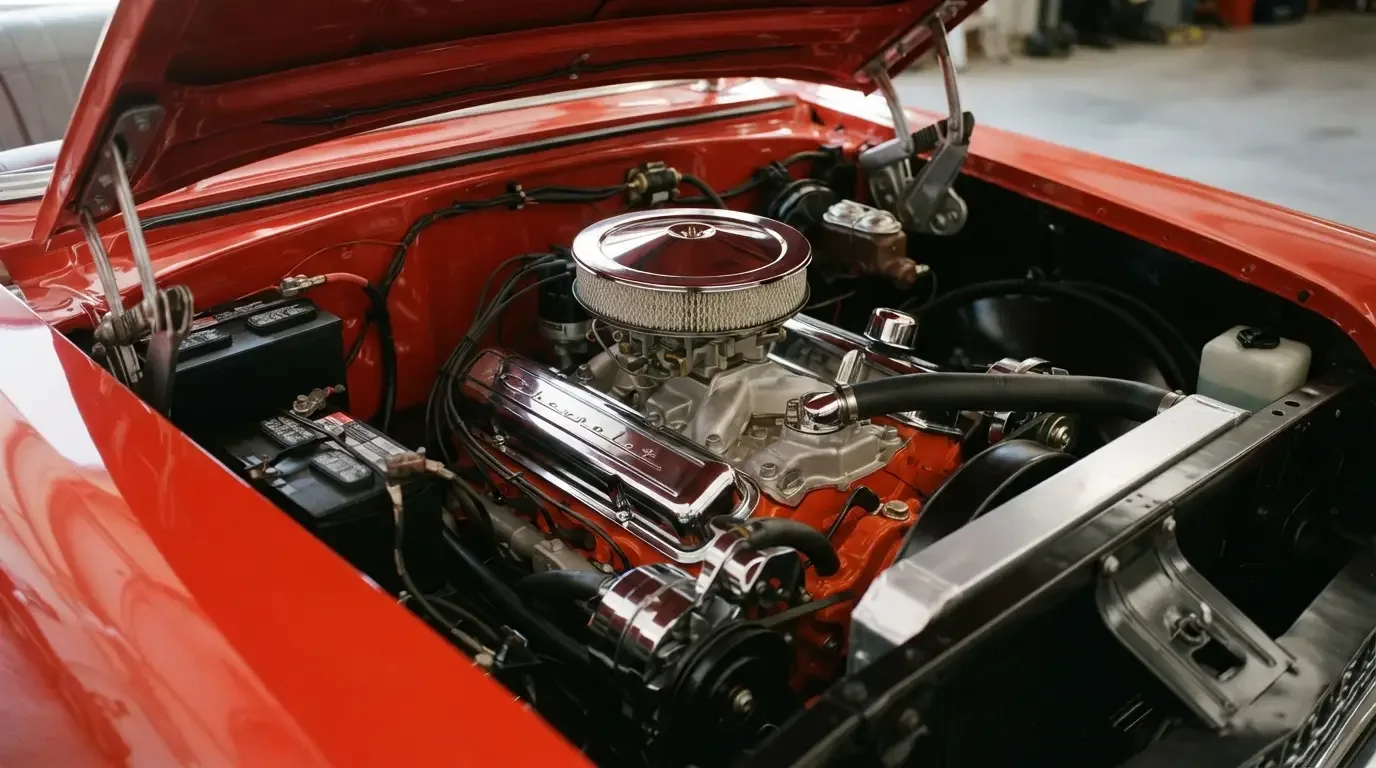
Convertible buyers had access to the same drivetrain spread as Sport Coupe buyers, from the base inline six through the 283 cubic inch V8 in its several states of tune. In practice, most 1957 Bel Air convertibles that survive in collector hands today carry a V8, and a meaningful share carry two-tone or tri-tone paint combinations, since a buyer paying the premium for a convertible body style in the first place was rarely the buyer who wanted the base trim level on top of it. Chevrolet built roughly 47,500 to 48,000 Bel Air convertibles for 1957 depending on which production count is used, a small slice of the more than 700,000 total Bel Airs built that year. Interior trim on the convertible also skewed toward the nicer available combinations, with vinyl used more heavily than cloth given the practical reality of sun and weather exposure on an open car.
| Feature | 1957 Bel Air Convertible |
|---|---|
| Series availability | Bel Air only, not offered in 150 or 210 |
| Top mechanism | Manual standard, power top a popular option |
| Engine range | Inline six through 283 cubic inch V8, multiple states of tune |
| Trim materials | Vinyl-heavy interiors, weather-conscious material choices |
Why the convertible commands what it does at auction
Scarcity is only part of the convertible premium story. The other part is condition risk. Open cars from the 1950s spent decades more exposed to weather, moisture intrusion around the top mechanism, and rust in the rocker and floor structure than closed cars of the same era, which means far fewer 1957 Bel Air convertibles survive in structurally sound, unmolested condition compared to how many were originally built. A convertible that has never needed rocker panel or floor pan repair, with its original frame and top mechanism intact, is a meaningfully different car from one that has been fully rebuilt around a replacement structure, and knowledgeable buyers price that difference accordingly.
The convertible's visual presence also does real work at auction. It is the body style most commonly used in period Chevrolet advertising and promotional photography for the 1957 model year, which means it carries a brand association that sedans and even the Sport Coupe hardtop do not carry to the same degree. That marketing legacy translates directly into modern buyer demand, since a lot of collectors are chasing the specific image they remember from old brochures and calendar art, not just a well-built car.
Buying one today
Anyone shopping seriously for a 1957 Bel Air convertible should expect to spend real time on structural verification before falling for the top-down photographs. Frame condition, rocker panels, and the trunk floor around the top well deserve more attention than the paint or the chrome, since those are the areas open cars from this era are most likely to have suffered. Matching numbers, correct trim codes, and a documented history of ownership all add real value on top of a structurally sound example, and the gap between a rough driver and a well-documented, correctly restored convertible has only widened as fewer clean originals remain in circulation.
Color and trim combinations also carry weight in convertible pricing beyond the mechanical and structural checks. Buyers tend to pay the strongest premiums for factory-correct two-tone or tri-tone paint schemes paired with the gold anodized trim used across the Bel Air series that year, since those combinations photograph best and match what most people picture when they imagine a 1957 convertible. A solid-color car in a less common factory shade can actually be a better value proposition for a buyer who cares more about structural integrity than matching a magazine cover image, since demand tends to concentrate on a handful of well-known color pairings rather than spreading evenly across everything Chevrolet offered that year. Top color and interior material also factor in, with white or black tops over certain body colors carrying more collector recognition than others, even when the underlying mechanical specification is identical across cars.
"A 1957 convertible does not forgive shortcuts the way a hardtop does. If the rockers and the floor are solid and the top mechanism works the way Chevrolet built it, everything else about the car gets easier to trust."
- Tom Ramirez
The convertible story does not start in 1957, it starts with the broader Bel Air redesign that year, and readers who want that context can where this started to see how the whole model year came together before the drop-top ever reached a showroom floor. For buyers ready to move past research into actual shopping, it is worth taking the time to see what a classic Air for sale looks like in current market listings, since photographs alone rarely tell the full structural story on a car this old.
The 1957 Bel Air convertible earned its reputation honestly, through a combination of genuine scarcity, real styling merit, and the simple fact that fewer of them survived the decades in honest condition than any other body style in the lineup. That combination is exactly why it remains the car most collectors picture first when the conversation turns to Tri-Five Chevrolets.