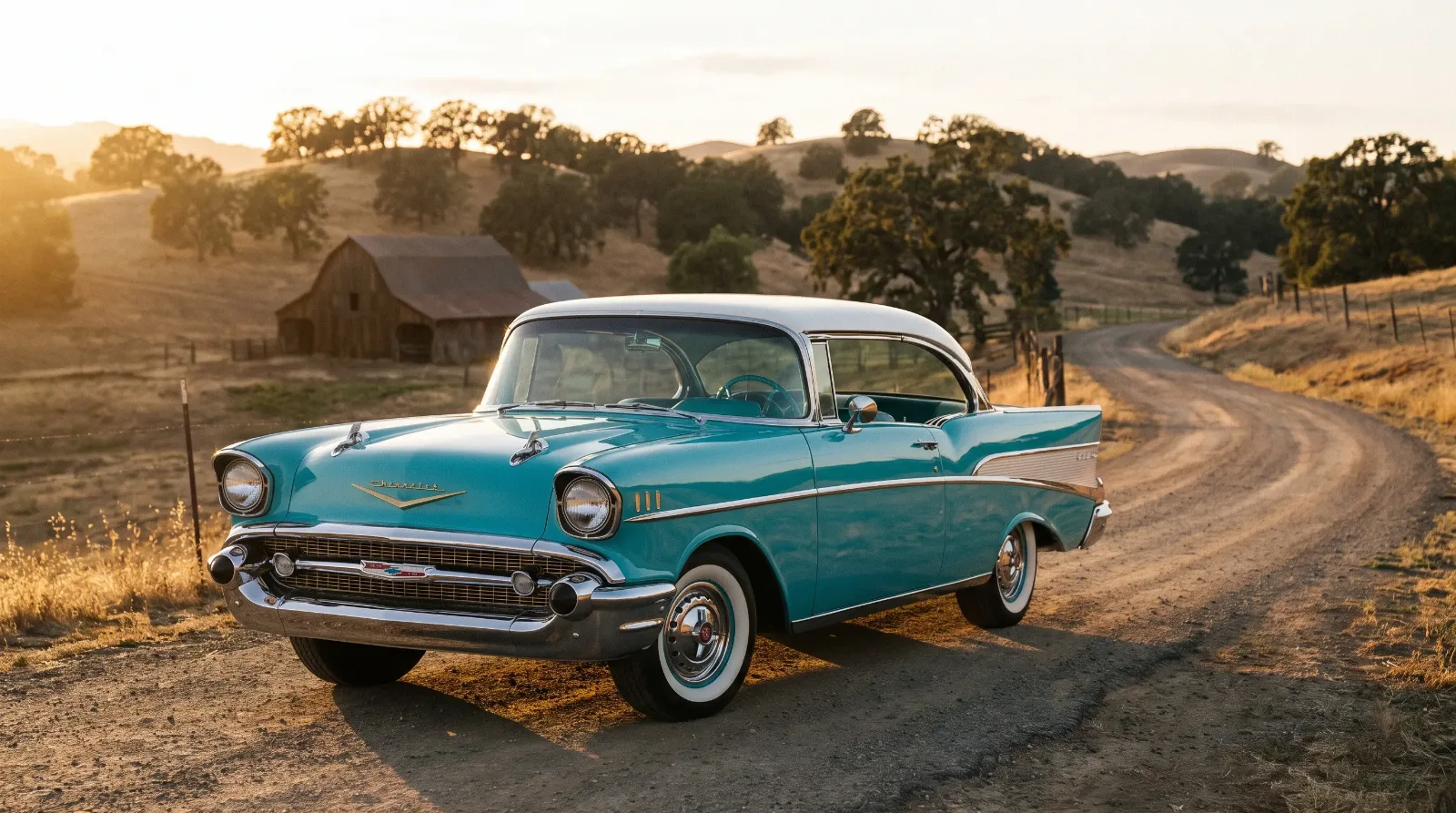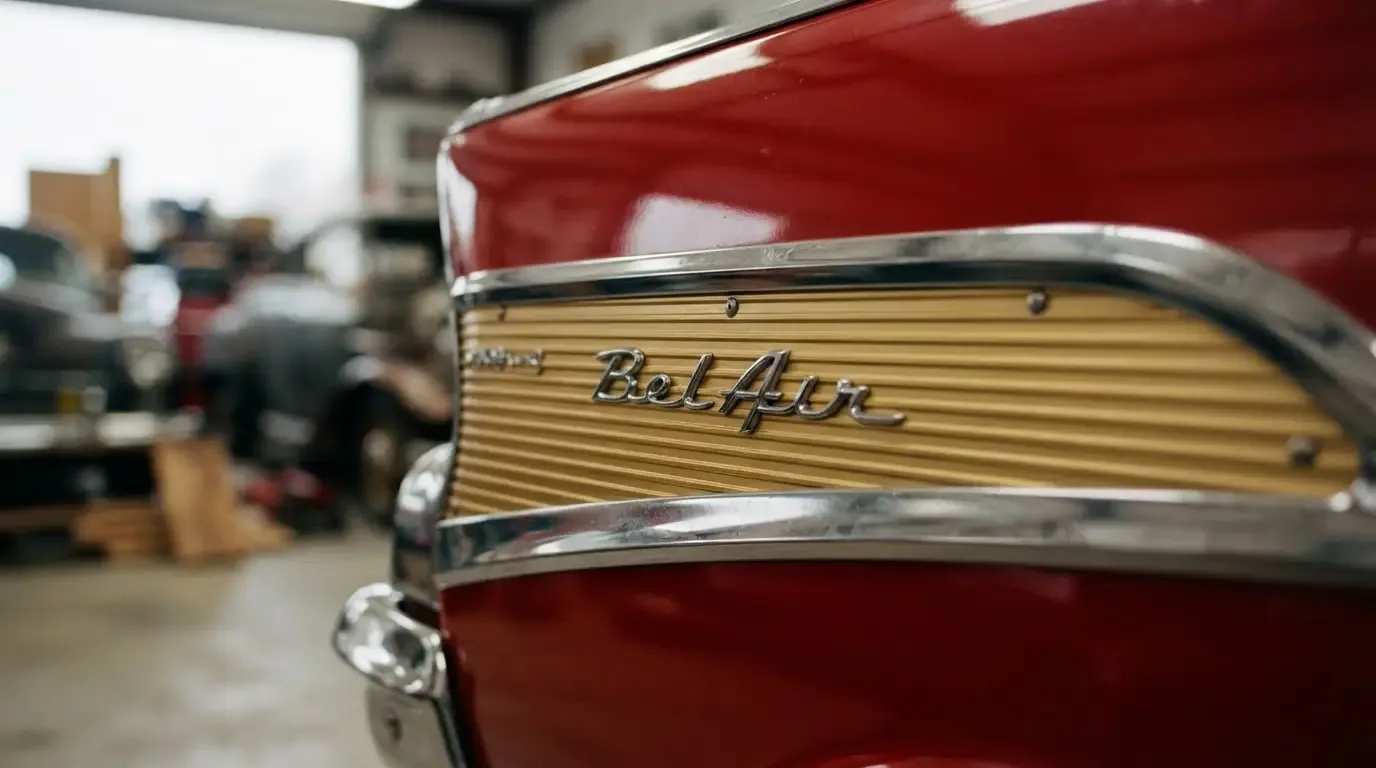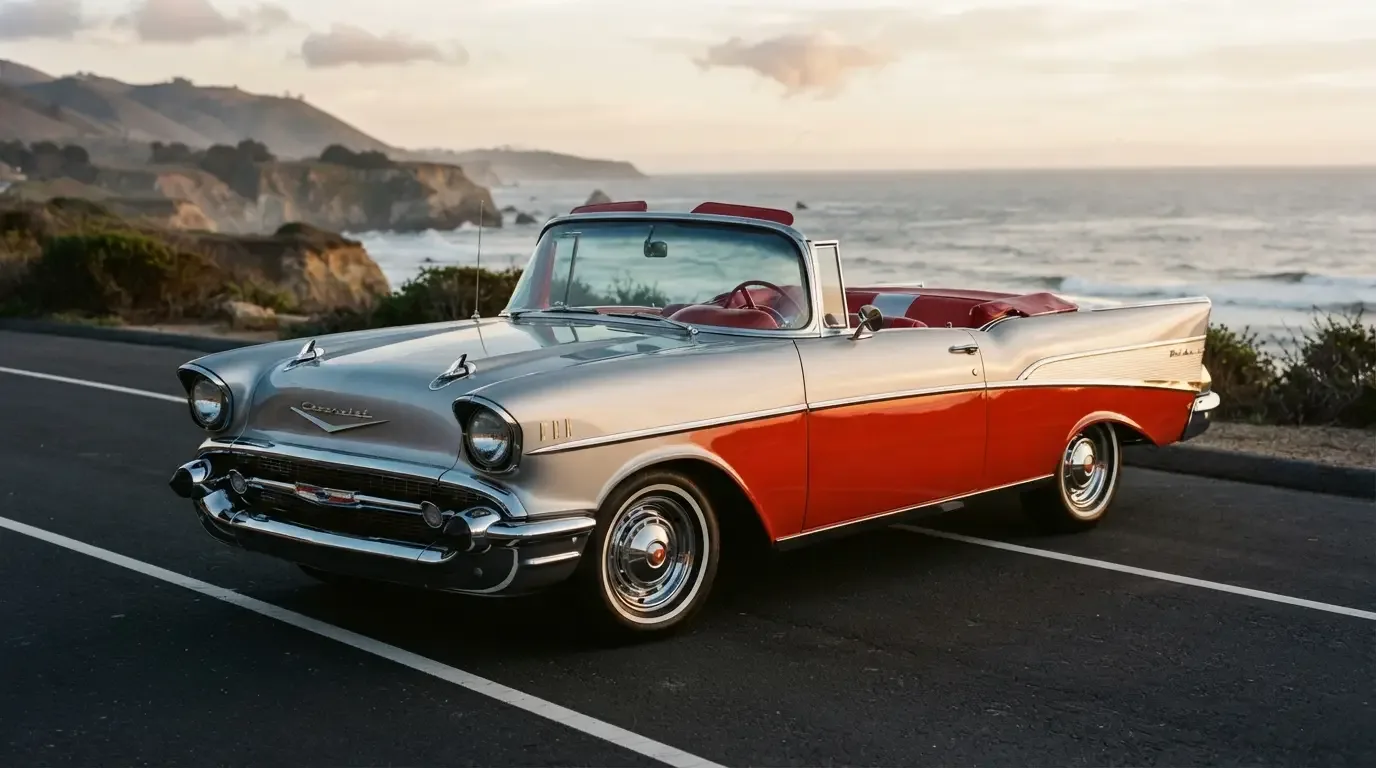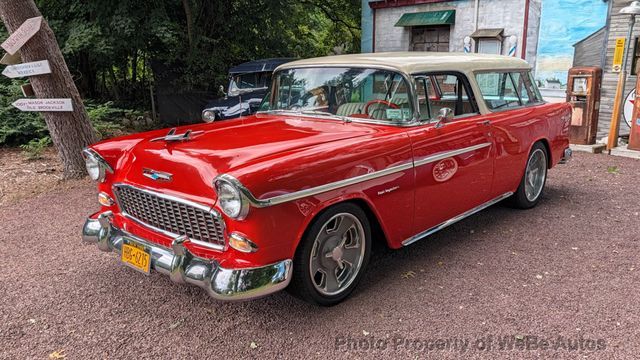
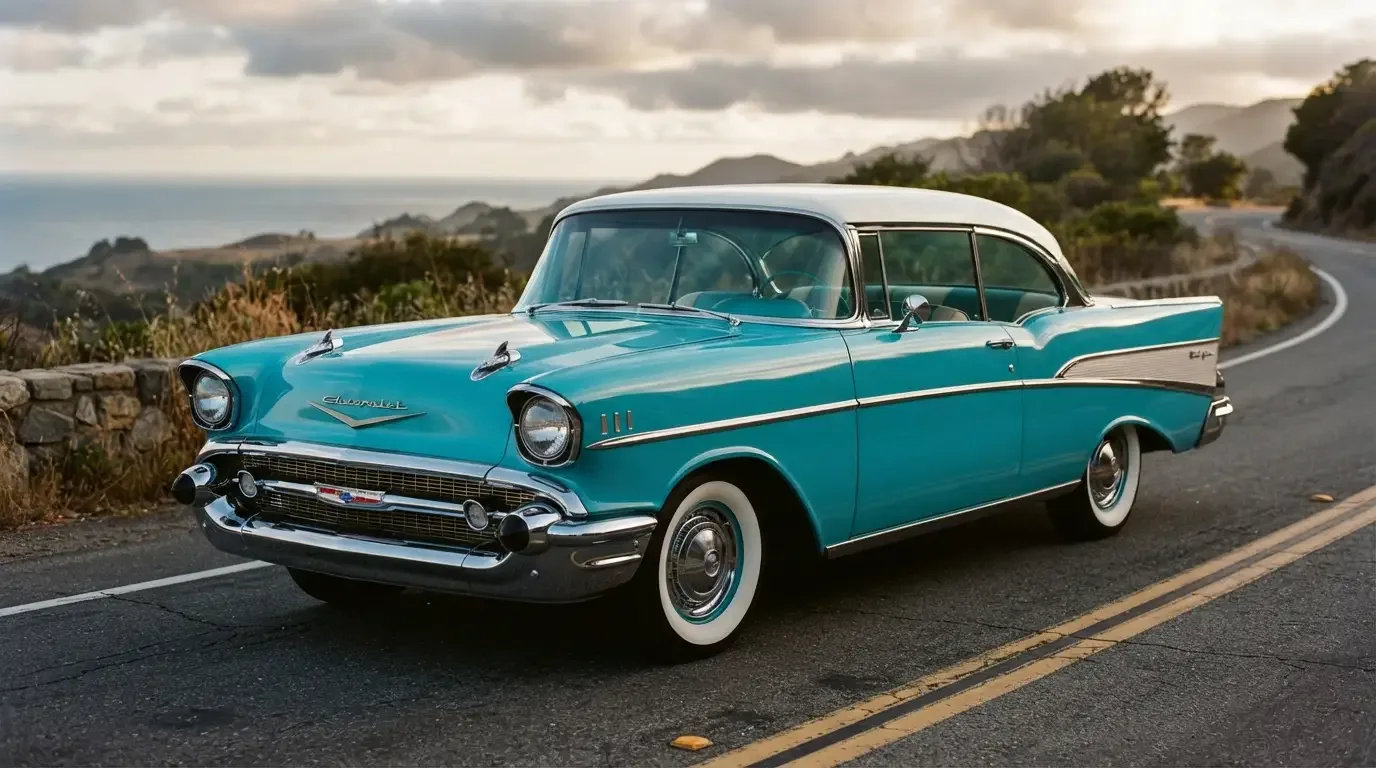
Of all the body styles Chevrolet offered in the Bel Air series for 1957, the Sport Coupe is the one that appraisers and concours judges tend to study longest before they write anything down. It is not the rarest body style, it is not the most powerful, and it was not even the top-selling configuration that year. What it has is proportion. The 1957 Bel Air Sport Coupe is a two-door hardtop, no B-pillar, and that single structural decision changes how the whole car reads from every angle, which is exactly why it has become the default silhouette people picture when someone says "1957 Chevy."
What "Sport Coupe" actually meant on the order sheet
In Chevrolet's 1957 nomenclature, Sport Coupe designated the pillarless two-door hardtop body within the Bel Air series, distinct from the Sport Sedan, which was the four-door hardtop, and from the standard two-door and four-door sedans, which kept the fixed B-pillar. The pillarless hardtop was a body style Chevrolet had been building since 1950 for lower series, but by 1957 it had become the style most associated with the performance and image-conscious end of the buyer base. Ordering a Bel Air Sport Coupe put a buyer at the top of the series with the widest range of factory options, from the 283 cubic inch V8 in its various states of tune down to the base inline six, and from basic vinyl trim up to two-tone cloth and vinyl combinations that read as genuinely upscale for a Chevrolet.
The absence of a center pillar was not just cosmetic. Removing it required additional structural engineering in the door frames, window mechanisms, and roof to keep the body rigid without the pillar's support, and it is part of why hardtop bodies commanded a documented price premium over the sedan versions in period. For readers who want the full context of how the 1957 model year fits into Chevrolet's broader story, more on the 1957 chevy bel air covers the year in detail.
Reading the proportions a judge looks at
Concours judging on a Tri-Five hardtop comes down to details most casual buyers never notice. The door glass on a genuine Sport Coupe should drop cleanly with no frame around the window when lowered, since there is no fixed pillar to anchor a window frame against. The roofline itself carries a lower, flatter profile than the sedan roof pressing, giving the Sport Coupe its characteristic long, low look even though it shares a wheelbase and most sheet metal with the four-door cars. The rear quarter window, which pivots rather than rolls on many original Sport Coupes, is another detail worth checking against factory photographs when verifying originality, since aftermarket and mismatched glass shows up more often than buyers expect on cars that have changed hands several times.
| Detail | Sport Coupe (hardtop) | Standard two-door sedan |
|---|---|---|
| Center B-pillar | None (pillarless) | Fixed |
| Roof profile | Lower, flatter pressing | Taller sedan roof |
| Rear quarter glass | Pivoting on many units | Fixed sedan glass |
| Series placement | Bel Air top trim | Available across 150, 210, Bel Air |
Engine and drivetrain choices buyers actually made
A 1957 Bel Air Sport Coupe buyer chose from a wide spread of drivetrains, from the standard Blue Flame six up through the 283 cubic inch small block V8 in multiple states of tune, including the fuel-injected version that became one of the most talked-about options of the model year. Most Sport Coupes that survive in collector hands today carry a V8, since the performance-oriented buyer who wanted the pillarless hardtop body also tended to want the stronger engine, but documented six-cylinder cars do exist. Chevrolet did not publish a production breakdown specific to six-cylinder versus V8 Sport Coupes, so the exact split is not something that can be stated as a hard figure, but surviving six-cylinder cars are rarer in restored form than the V8 cars that dominate the show circuit, and some researchers value them for that scarcity alone.
Why this body style became the collector benchmark
Part of the Sport Coupe's enduring status comes from how it photographs and how it drives as a two-door without the visual interruption of a pillar, but part of it is simple survival math. Hardtops attracted enthusiast owners from new, and enthusiast owners, on average, tend to preserve or eventually restore a car rather than run it into the ground as daily fleet transportation. That ownership pattern, repeated across decades, means a disproportionate number of well-documented, well-preserved 1957 Bel Airs on the market today are Sport Coupes rather than sedans, which reinforces the body style's reputation as the "real" 1957 Chevy in the collector imagination even though the sedans sold in larger numbers when new.
"Every Tri-Five body style has its defenders, but when I am asked to authenticate a car for a serious buyer, the Sport Coupe is the one where the paperwork trail actually tends to be thickest, because these were the cars people kept."
- Sarah Whitfield
Interior trim on the Sport Coupe followed the same logic as the exterior gold accents, meaning the nicest cloth and vinyl combinations Chevrolet offered that year were reserved for the Bel Air series, and a hardtop buyer typically had the widest color palette to choose from within that series. Two-tone interior treatments, matching or contrasting the exterior paint break, were common enough on Sport Coupes that a plain single-color interior on a documented hardtop can actually raise questions during authentication, since it runs against how most of these cars were ordered when new. Steering wheel color, door panel pattern, and even the dashboard trim insert all varied by exterior color choice, and restorers working from period paint and trim charts treat getting these combinations exactly right as one of the harder parts of a correct Sport Coupe restoration.
Exterior color choice on the Sport Coupe also tracked buyer demographics in ways that still show up in the surviving population today. Brighter two-tone combinations, the kind that show up most often in period Chevrolet advertising, appear disproportionately on Sport Coupes compared to the more conservative single-color choices common on sedans, reflecting a buyer base that skewed toward people actively choosing style over pure practicality. That pattern is part of why a well-preserved, correctly optioned Sport Coupe in one of the more striking factory two-tone combinations tends to draw stronger interest at auction than an equally solid car finished in a more subdued single color, even when the mechanical specification is otherwise identical.
Where the Sport Coupe fits in the bigger picture
The Sport Coupe did not appear in a vacuum. It was the styling and engineering payoff of a redesign effort that reshaped the entire Chevrolet passenger car line for 1957, and understanding that lineage helps explain why the hardtop body carries the weight it does today. Readers curious about how the Bel Air nameplate reached this point should look at where this started for the broader arc of the model's development. For anyone shopping rather than just reading, it is worth taking time to see what classic Airs on the market actually look like in person or in detailed photographs, since body style condition, originality of glass and pillar-less hardware, and drivetrain matching all move price more than color or trim level alone.
The 1957 Bel Air Sport Coupe earned its reputation the slow way, through decades of owners who treated it as worth keeping rather than replacing. That is a harder thing to manufacture than a good design, and it is why the body style still sets the standard other Tri-Five configurations get measured against.
Sources and notes
- Chevrolet Bel Air - Wikipedia
- 1957 Chevrolet - Wikipedia
- Automobile Catalog: 1957 Chevrolet Bel Air Sport Coupe full range specs
- Curbside Classic: 1950 Chevrolet Styleline De Luxe Bel Air
- Mac's Motor City Garage: 1950, The Birth of the Chevrolet Bel Air
- Hagerty: Your Handy 1955-57 (Tri-Five) Chevrolet Buyer's Guide