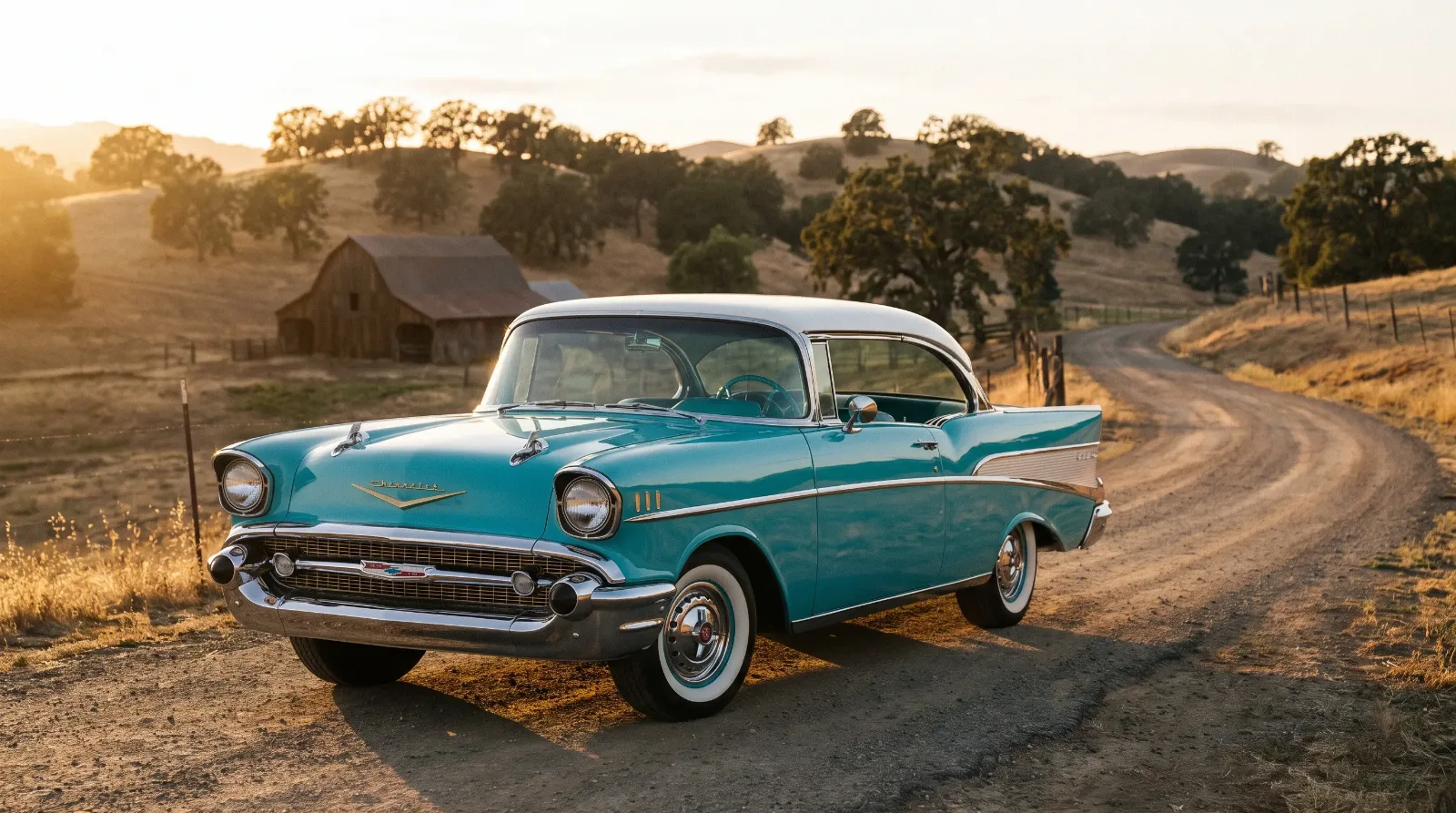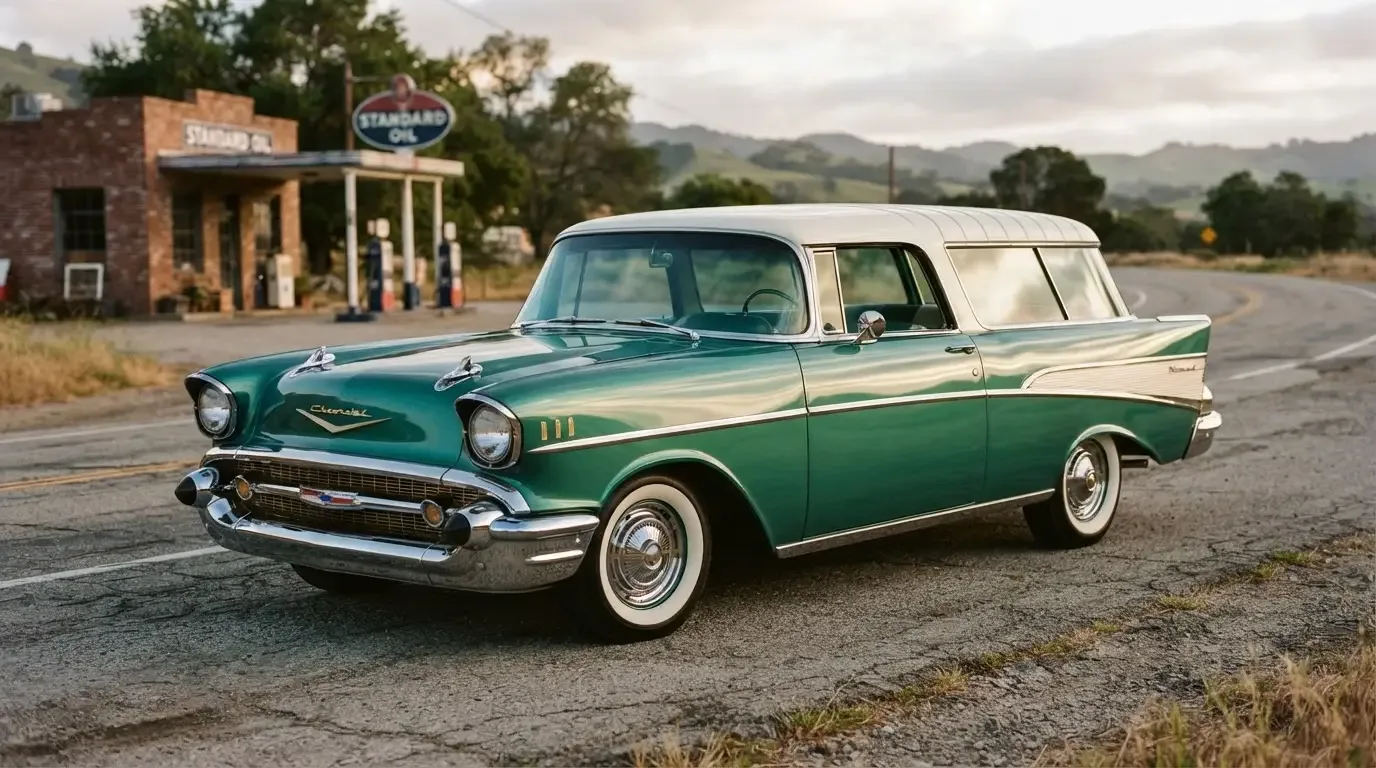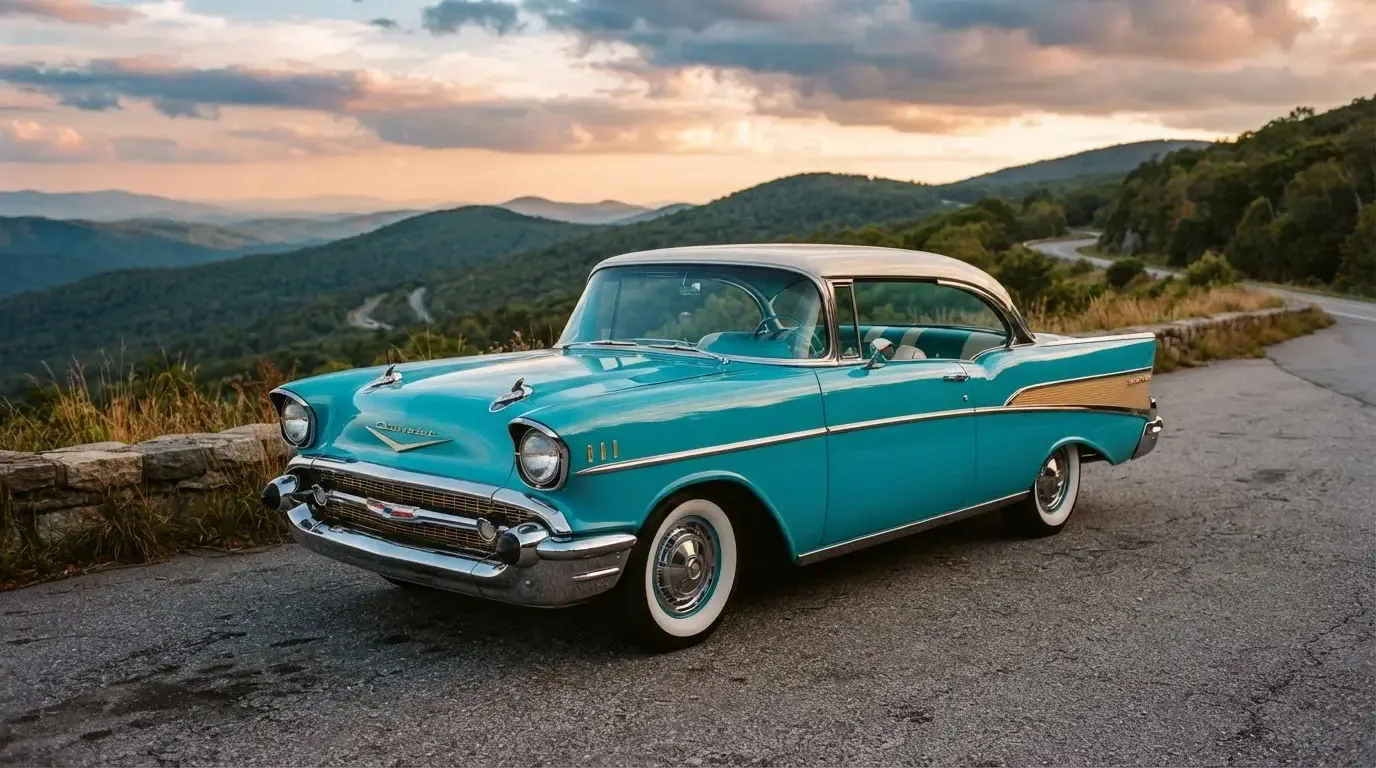
The 1957 Chevy vs Ford fight was not a minor rivalry between two similar cars. It was the closing round of a sales battle that had been building for years, fought on styling, engine specs, and dealer floor traffic, in a market where the two companies were close enough in volume that either one winning a given year became genuine industry news. Chevrolet's Bel Air lineup carried the weight of that fight in 1957, and understanding what actually happened that year means separating the sales results from the reputation the cars built over the following decades, because those two things diverged sharply.
What the rivalry actually looked like by 1957
Chevrolet and Ford had been trading the low-price sales crown back and forth through the mid-1950s, close enough in total volume that dealers, executives, and the trade press tracked the competition month to month. For 1957, Ford fielded a fully restyled lineup of its own, including the new Fairlane series, aimed directly at the same buyers Chevrolet's Bel Air was chasing. Both companies leaned hard on longer, lower styling language that year, both expanded their V8 offerings, and both companies understood that a huge share of buyers in this segment were cross-shopping the two brands directly rather than arriving already loyal to one.
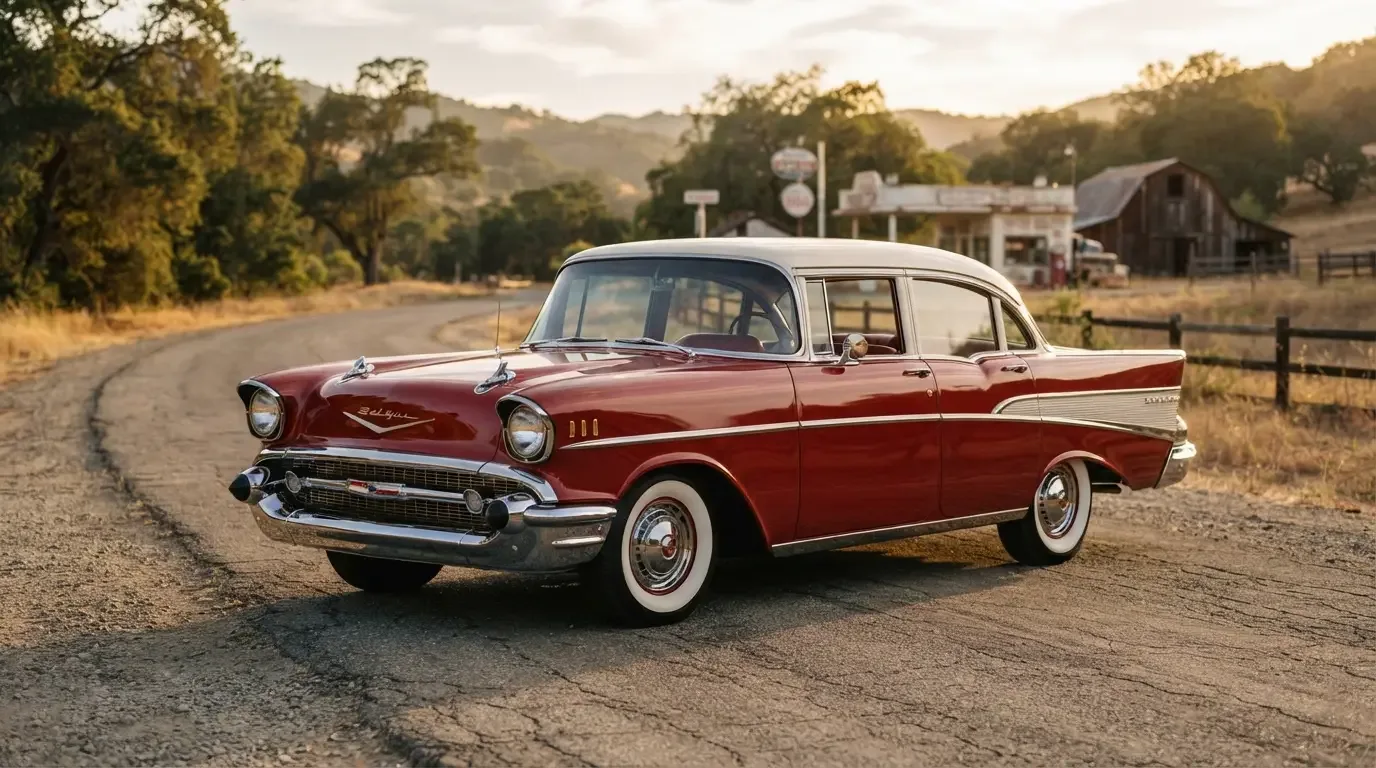
Chevrolet's answer was the redesigned 1957 body, sharper trim hierarchy across the 150, 210, and Bel Air series, and an expanded 283 cubic inch V8 lineup that topped out with the fuel-injected Ramjet variant. Ford's answer leaned on its own new styling and a broader V8 range of its own. The competition played out across showrooms nationwide, and by most contemporary sales tallies, Ford edged out Chevrolet in total 1957 model year volume, a result that surprised plenty of people given how strongly the 1957 Chevrolet is remembered today. The margin was narrow, roughly 1.52 million Fords to roughly 1.52 million Chevrolets, a gap of only a few thousand cars, but it was enough to hand Ford the model year win for the first time since 1935.
Why Ford won the sales count that year
Several factors contributed to Ford's edge. Ford's completely restyled lineup, including the Fairlane's new size and proportions, generated strong showroom interest at a moment when styling freshness mattered enormously to buyers making a purely visual decision between two similarly priced cars. Ford also pushed hard on its own V8 messaging and had built momentum through the mid-1950s that carried into 1957. Chevrolet, despite fielding what many stylists and engineers inside GM considered a stronger overall package, was working against a Ford marketing and dealer push that simply outperformed it that specific year.
| Factor | Chevrolet 1957 | Ford 1957 |
|---|---|---|
| Body styling | Full redesign, Bel Air top trim | Full redesign, new Fairlane series |
| Top V8 offering | 283 cubic inch, Ramjet fuel injection option | Expanded Y-block V8 range |
| Model year sales result | Second in the segment | Edged Chevrolet in total volume |
| Long-term collector reputation | Dominant, especially the Bel Air | Strong but secondary to Chevrolet in Tri-Five era nostalgia |
The gap between the sales result and the legend
This is the part of the story that surprises people who assume collector reputation tracks period sales figures directly. Ford's 1957 lineup sold better that specific year, but the 1957 Chevrolet Bel Air became the far more culturally dominant car in the decades since, showing up more often in period-set films, more often on show fields, and more often as the single car people picture when someone says "classic fifties Chevy." Reputation built after the fact, through decades of enthusiast attention, restoration culture, and pop culture appearances, ended up mattering more to long-term value and recognition than who actually won the sales race in 1957 itself.
Part of that shift comes down to the strength of the Bel Air's styling specifically, with its gold trim hierarchy and distinctive two-tone treatments giving it a visual identity that aged well and photographed better than a lot of its period competition. Part of it comes down to the engine story, since the 283 and its fuel-injected variant gave the Bel Air a performance narrative that outlasted the sales figures entirely. Whatever combination of factors drove it, the practical result today is that a well-preserved 1957 Bel Air commands more collector attention and typically more money than an equivalent 1957 Ford, despite Ford having sold more cars when both were new.
Why this rivalry still matters to buyers
Understanding the actual 1957 sales result matters for buyers today mostly because it corrects a common assumption. People sometimes treat the 1957 Bel Air's dominant collector reputation as evidence that it was also the dominant sales performer when new, and it was not. That distinction is not just historical trivia. It shapes how buyers should think about rarity, since a car that sold in second place to Ford that year was still produced in large enough numbers that survival, not original scarcity, is what actually drives which specific 1957 Bel Airs are hard to find today.
It also reframes how buyers should think about comparing the two brands directly today. A 1957 Ford in equivalent condition to a 1957 Bel Air is, in most cases, a more affordable way to own a genuine period rival with its own strong engineering story, simply because collector demand has concentrated so heavily on the Chevrolet side of the rivalry. Buyers who care primarily about period-correct engineering and styling from that specific model year, rather than about owning the single most recognized car of the era, sometimes find better relative value shopping the Ford side of this old competition, where comparable condition and originality can carry a noticeably smaller price tag attached to a car that was, by the actual sales count, the more successful product when new.
None of this is an argument against the Bel Air's reputation, which was earned honestly through styling, engineering, and decades of cultural presence that Ford's 1957 lineup never quite matched in the years that followed. It is simply a reminder that the two cars were closer competitors when new than their current market positions suggest, and that closeness is worth knowing before assuming the Bel Air's collector dominance reflects an equally lopsided advantage when both cars were sitting on the same showroom floor in 1957.
"Chevrolet lost the sales fight to Ford in 1957 and won almost every argument that happened after that. That gap between the scoreboard and the legend is one of the more interesting things about this specific model year."
- Tom Ramirez
The full context of how the 1957 Bel Air was built, sold, and positioned against Ford's competing lineup is worth reading in detail, and the whole picture covers the broader model year story beyond just the sales rivalry. Buyers interested in owning a piece of that specific competitive era should take the time to shop classic Air listings and see how today's market has settled the argument that the 1957 sales figures never quite did.
The 1957 Chevy vs Ford battle is a reminder that a single year's sales chart and a car's long-term legacy can point in completely different directions. Ford won the count. The Bel Air won the decades that followed, and that is the version of the story most buyers care about today.