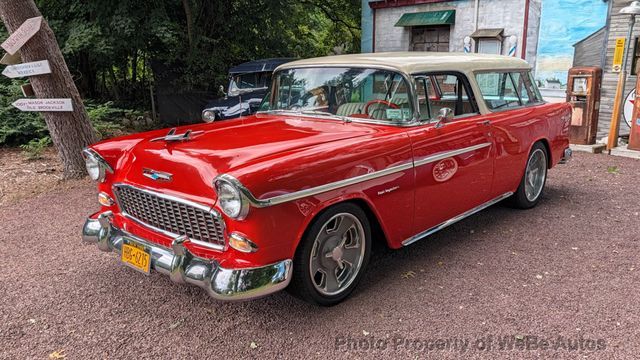
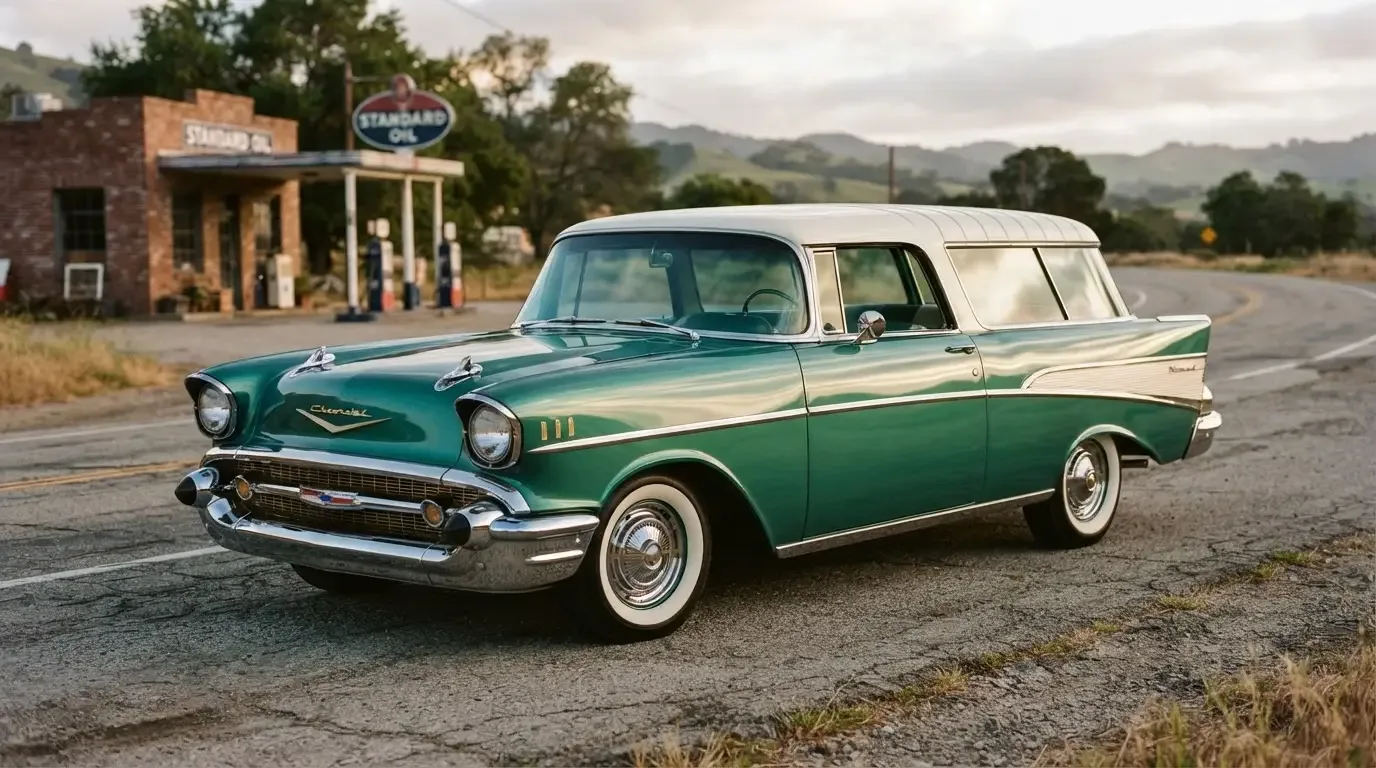
The 1957 Chevy Nomad closed out a short, strange, and genuinely important chapter in Chevrolet's history. It was the third and final year of the two-door Bel Air Nomad wagon, a car that never sold in the numbers Chevrolet hoped for when it introduced the concept, but that left a design legacy far larger than its production totals ever suggested it would. By 1957, the Nomad had settled into its identity as the sportiest, most distinctive wagon in the American market, and then Chevrolet let it go, which is part of why the surviving examples carry the weight they do with collectors today.
How the Nomad concept became a production wagon
The Nomad started life as a Motorama show car in 1954, a two-door wagon built on a Corvette-inspired design language that captured enough attention that Chevrolet greenlit a production version for 1955. That production Nomad kept the show car's defining features, the forward-slanted tailgate, the ribbed roof panels that echoed the Corvette's own detailing, and a wraparound rear window treatment that set it apart from every ordinary Chevrolet wagon on the lot. It was built on the Bel Air platform and carried Bel Air-level trim and price, which made it an expensive, style-first proposition in a segment where most buyers wanted maximum cargo space for minimum money.
That mismatch between what the Nomad offered and what the typical station wagon buyer actually wanted was the car's fundamental commercial problem from the start. A two-door wagon sacrifices rear-seat access convenience that families cross-shopping wagons cared about, and the Nomad's premium pricing put it well above the four-door wagons Chevrolet also offered. Sales never matched the attention the design received in the press, and by 1957, with three model years of underwhelming volume behind it, Chevrolet had already decided the two-door Nomad concept would not continue past that year. Readers who want the fuller context of how the entire 1957 lineup came together, Nomad included, should read the background on the model year.
What changed for 1957 specifically
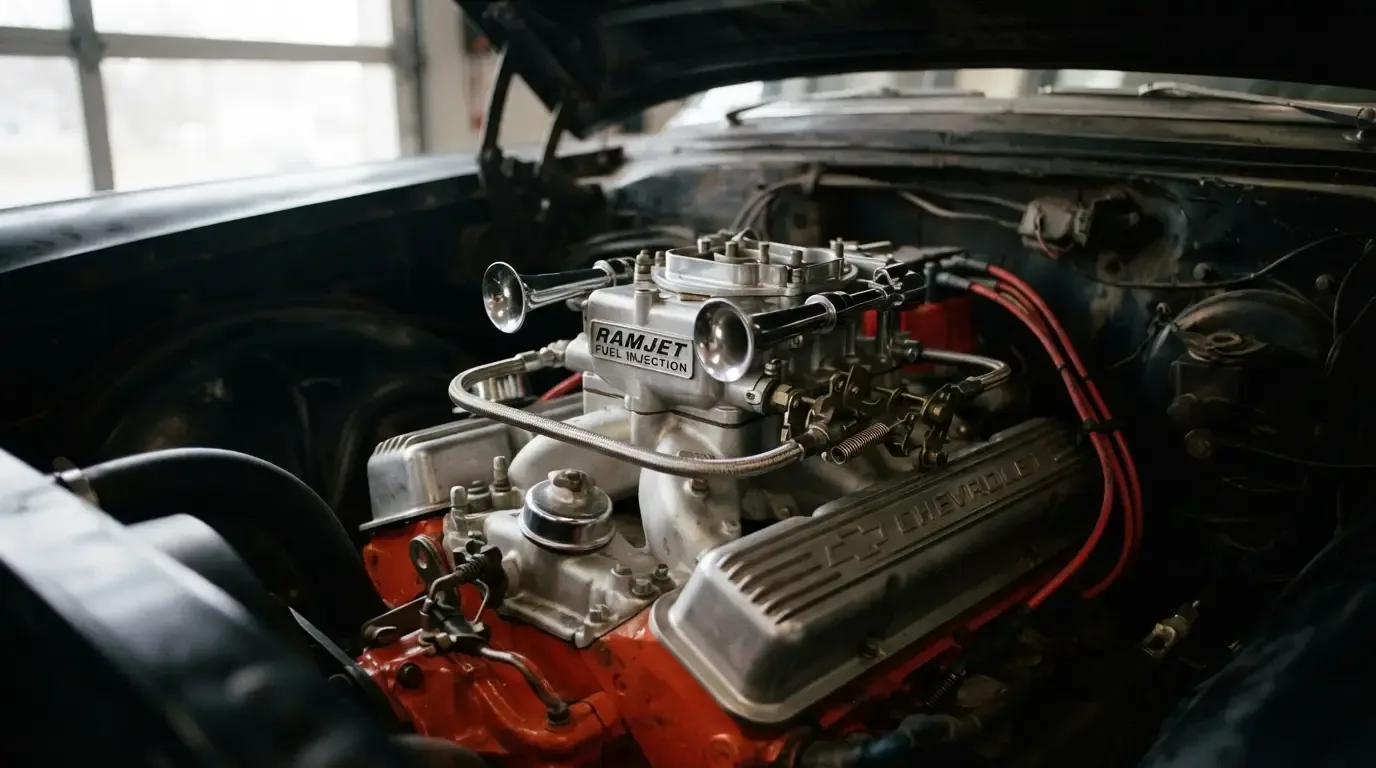
The 1957 Nomad received the same broad styling update that reshaped the entire Chevrolet passenger car line that year, including the more sculpted body panels, the gold anodized trim treatment on the Bel Air series, and the engine lineup expansion that brought the 283 cubic inch V8, including the fuel-injected Ramjet variant, into the range. On the Nomad specifically, this meant a wagon that combined the distinctive two-door body with the strongest engine options Chevrolet had ever offered on the platform, a combination that makes the 1957 model year Nomad the most performance-capable version of the three-year run.
| Nomad model year | Status |
|---|---|
| 1955 | First production year, Bel Air platform introduced |
| 1956 | Continued production, modest styling revisions |
| 1957 | Final two-door Nomad year, strongest engine lineup of the run |
The roof design remained the Nomad's signature detail through all three years, with the ribbed panels running front to back and a more raked windshield angle than the standard wagon body, giving the whole car a lower, sportier stance than its cargo-hauling mission would normally suggest. Chevrolet built 6,103 Nomads for 1957, the smallest single-year total of the three-year run and a fraction of the more than 700,000 Bel Airs built that year across all body styles. What the low production numbers meant in practice is that even when new, a Nomad was a comparatively uncommon sight next to the four-door wagons and sedans that dominated Chevrolet dealer lots.
Why the low volume became a collector asset
Cars that fail commercially for being ahead of their market often end up as the cars collectors chase hardest once the market catches up to the original design intent, and the Nomad is close to a textbook case of that pattern. Its scarcity relative to the standard wagons and sedans of the same era, combined with genuinely distinctive styling that still reads as unusual today, has made it one of the most sought-after Tri-Five body styles despite never having been a sales success when new. That combination of low survival numbers and strong design identity is exactly the recipe that drives sustained collector demand decades after a car leaves production.
The Nomad's cancellation after 1957 also plays into its mystique. Chevrolet did reuse the Nomad name later, on four-door wagons that carried none of the two-door version's distinctive roofline or design pedigree, which has the effect of making the 1955 through 1957 two-door cars feel even more like a closed, finite chapter rather than the start of an ongoing model line. Collectors tend to respond strongly to that kind of finality, since it removes any ambiguity about how many genuine examples of the concept can ever exist.
"I have documented enough of these cars to say the Nomad's story is not really about a wagon that failed. It is about a design so strong it outlived its own poor sales figures by seventy years and counting."
- Sarah Whitfield
Shopping and evaluating a 1957 Nomad today
Because the Nomad shares its underlying platform and much of its front sheet metal with the standard 1957 Bel Air, authentication comes down to the roof, tailgate, and rear structure, along with body and trim tags that confirm the Nomad-specific build. Given how few were built relative to sedans and standard wagons, provenance research matters more here than on almost any other Tri-Five body style, and buyers should expect to pay accordingly for a well-documented, structurally sound example. Roof and tailgate panels are also among the hardest Nomad-specific parts to source correctly if replacement is ever needed, since they were never shared with the standard wagon body, and a Nomad missing its original roof structure loses much of what makes it valuable in the first place regardless of how sound the rest of the car is. Engine and drivetrain matching adds another layer, since a Nomad ordered with the 283 or the fuel-injected Ramjet variant carries a real premium over six-cylinder cars, and confirming that an engine is original to a specific Nomad follows the same casting number and documentation process used across the rest of the Tri-Five line. Interior condition matters more on a Nomad than on most other Tri-Five body styles too, since the wagon's cargo area trim, unique to the two-door body, is another component that was never shared with the standard wagon and is correspondingly difficult to source correctly if it needs replacement. Anyone ready to see what is actually available should find a classic Air and compare how sellers document Nomad-specific body and trim details against known factory records.
The 1957 Nomad closed out a three-year experiment that never made commercial sense on paper and made complete sense as a piece of design history. That contradiction is exactly why it remains one of the most collected Tri-Five Chevrolets on the market today.