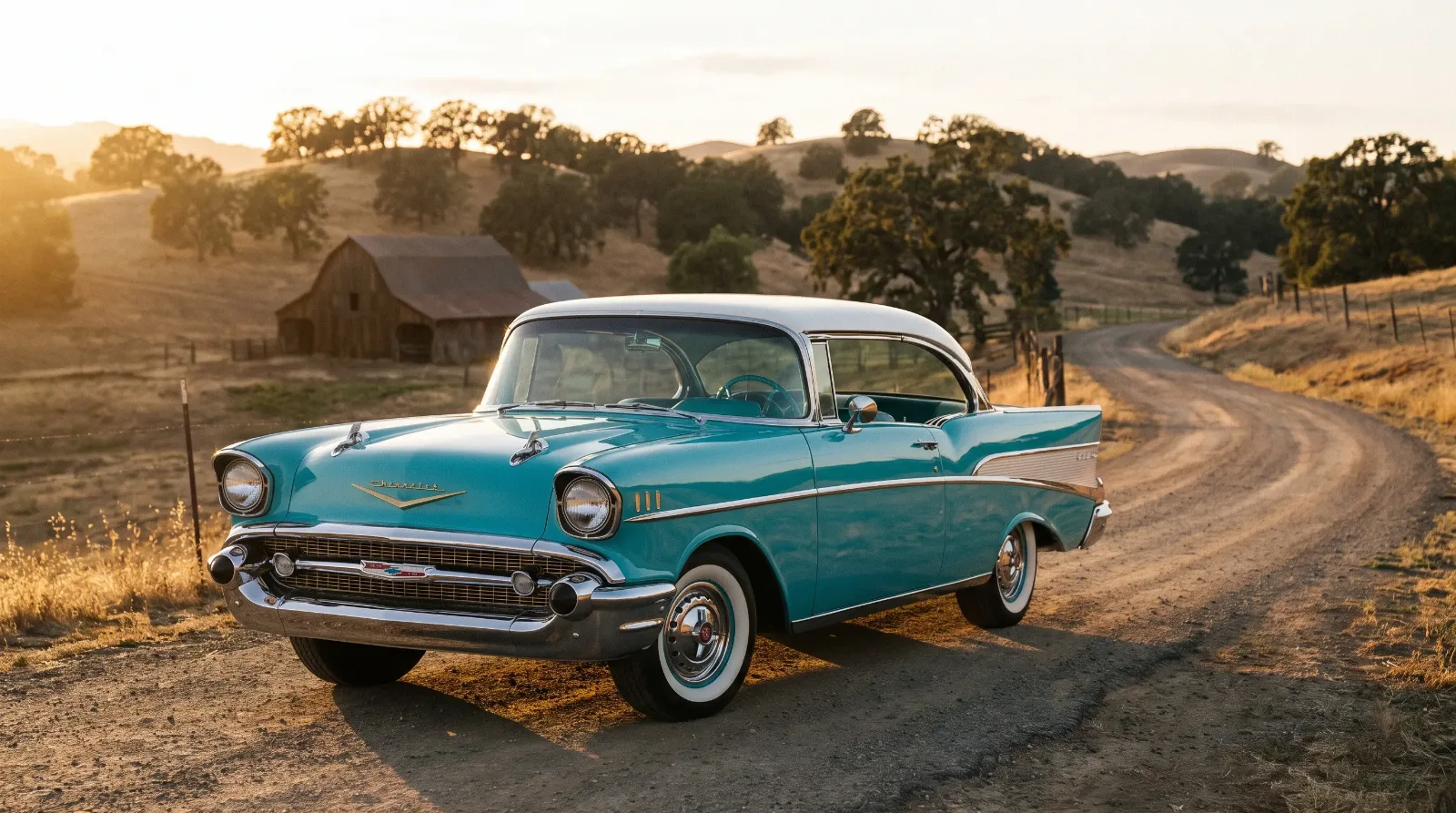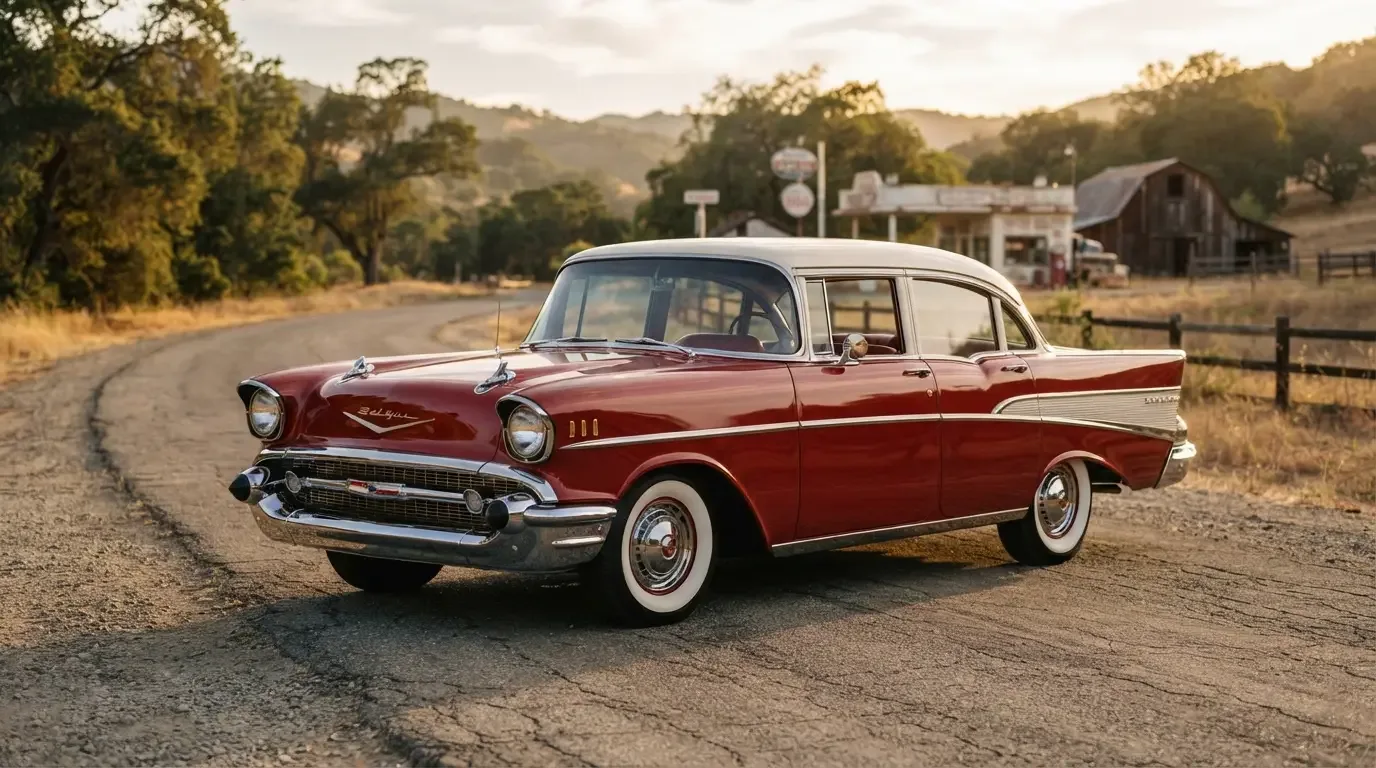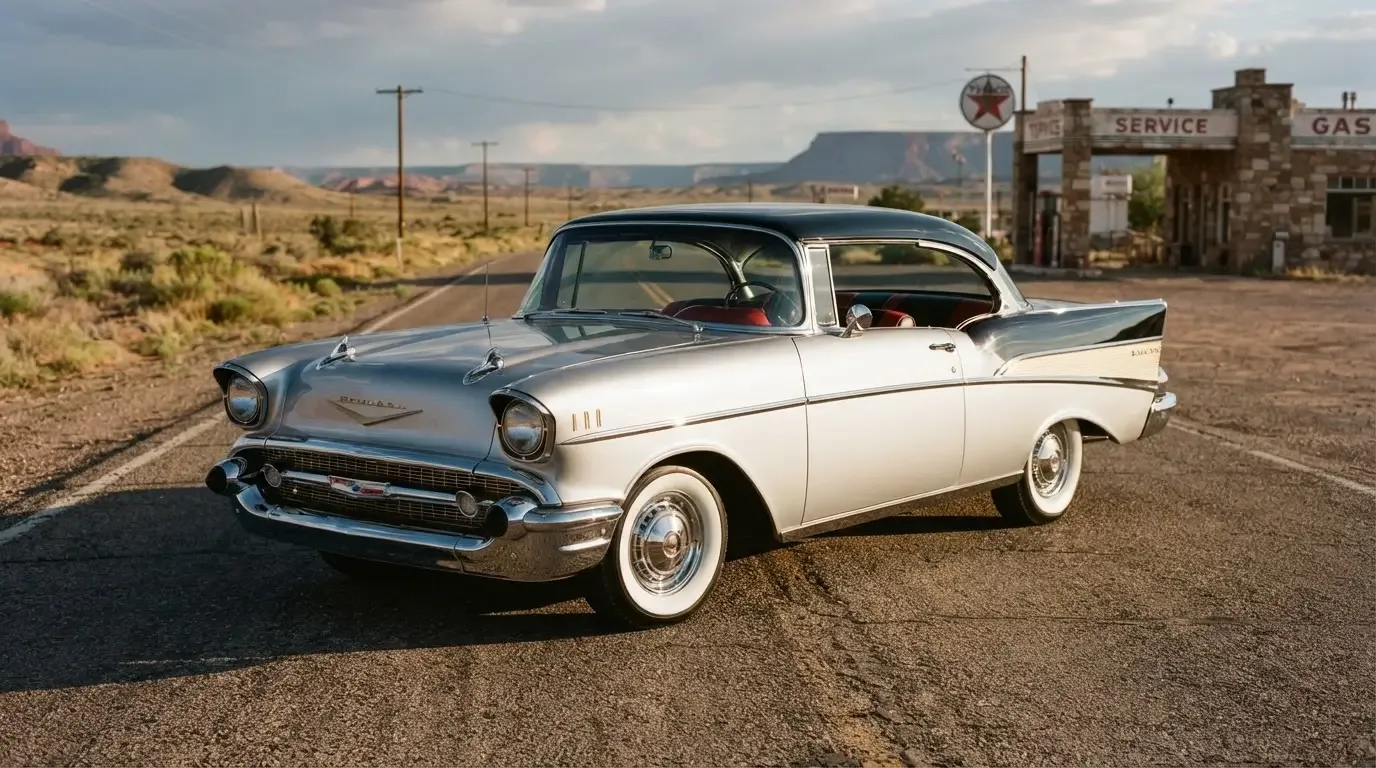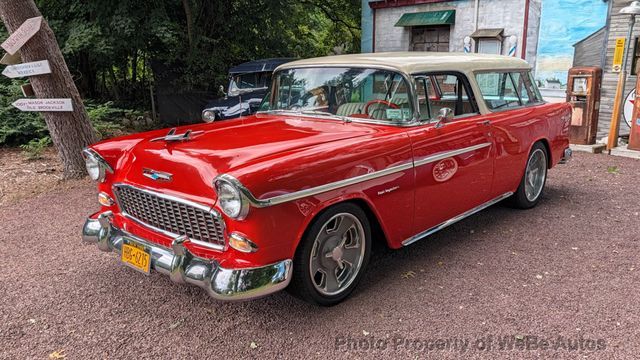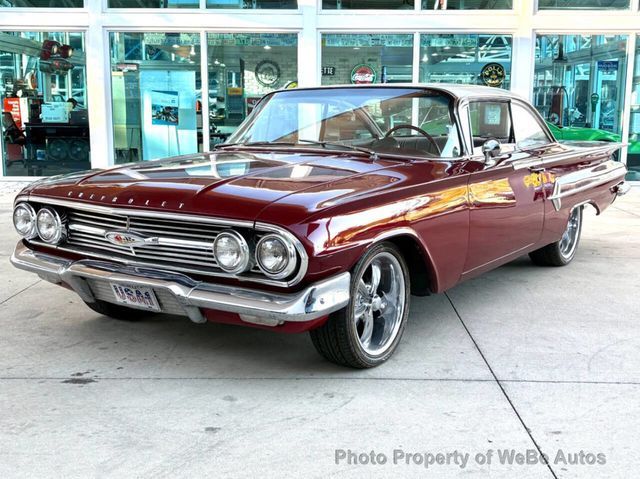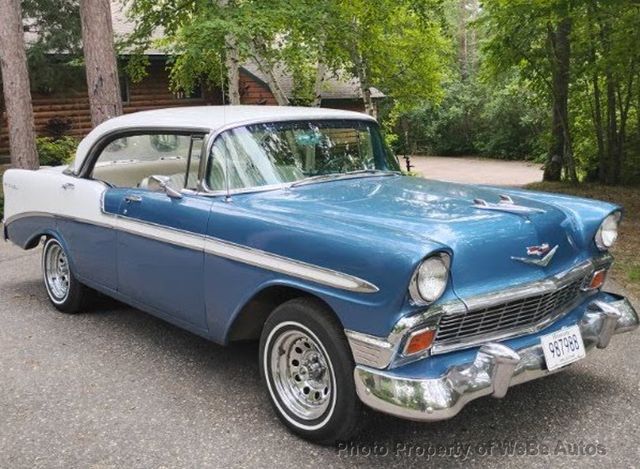
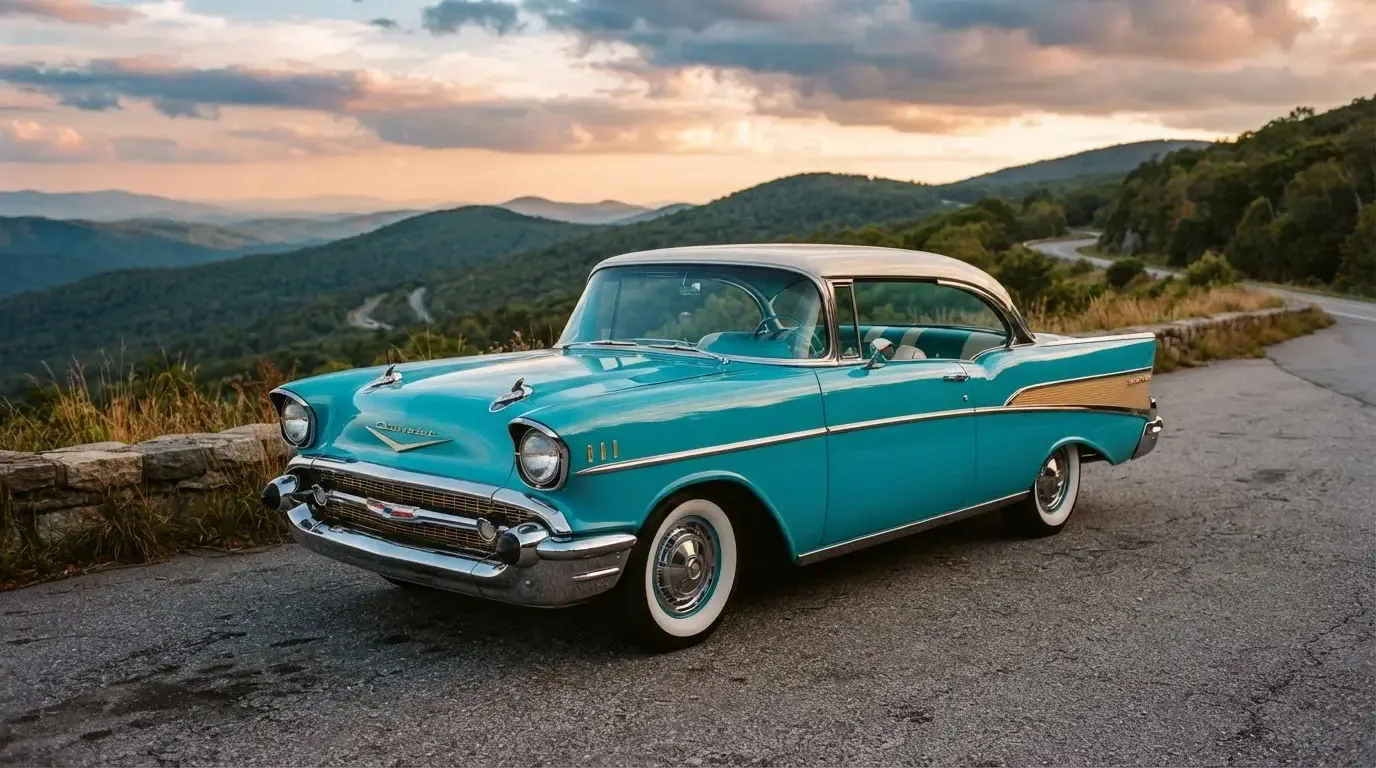
Ask a non-enthusiast to picture a classic 1950s Chevrolet and most people describe the 1957 Bel Air without knowing that is what they are doing. The fins, the two-tone paint sweeping back into a gold-trimmed cove, the chrome grille. That image is so deeply embedded in American car culture that it has effectively become the default answer to "old Chevy," even though 1955 and 1956 offered nearly identical mechanical packages under closely related styling. Figuring out why 1957 became the most famous year of the three requires looking at what actually separated it from its two Tri-Five siblings, and the answer is not any single feature so much as a convergence of several.
The styling reached its final, most resolved form
Chevrolet's Tri-Five design language evolved across three model years rather than arriving fully formed in 1955. The 1955 Bel Air introduced the basic shape and the small block V8 that would define the era, and it is a genuinely important car in its own right, often credited as the more significant engineering milestone of the three years. The 1956 update refined the grille and trim details without a fundamental reshaping of the body. By 1957, Chevrolet's stylists had a full model cycle of feedback and confidence behind them, and the result was the most extreme, most fully realized expression of the Tri-Five look, with taller tailfins, a more sculpted body side, and the gold anodized trim treatment reserved specifically for the Bel Air series. Readers who want the complete account of how that final year came together should read the 1957 chevy bel air story directly.
Styling alone does not fully explain the fame gap, though, since taste is subjective and plenty of collectors genuinely prefer the cleaner 1955 front end or the 1956 grille. What 1957's styling did accomplish was distinctiveness. It is the easiest of the three model years to identify at a glance from a distance, even for people with no real car knowledge, and that visual legibility matters enormously for how a car gets remembered in mass culture over decades.
The engine lineup peaked in 1957
The 283 cubic inch V8, including the fuel-injected Ramjet version that reached the one horsepower per cubic inch figure, arrived for 1957, giving that specific model year the strongest and most talked-about drivetrain lineup of the three-year run. The 1955 and 1956 cars offered the earlier 265 and 265-to-283 transitional engines, both genuinely important, but neither carried the same headline-grabbing performance story that the 1957 fuel-injected 283 generated. That performance narrative gave enthusiasts and the automotive press a specific, quotable reason to single out 1957 above its siblings, on top of the styling argument.
| Model year | Defining contribution |
|---|---|
| 1955 | Small block V8 debut, original Tri-Five body introduced |
| 1956 | Grille and trim refinement, continued small block development |
| 1957 | Final Tri-Five body, tallest fins, gold trim, 283 and fuel injection |
Being the last year mattered more than it should have
There is a psychological factor at work too, one that applies to plenty of final-year models across automotive history, not just this one. Being the last iteration of a design before a full replacement, as 1957 was before Chevrolet moved to an entirely new body for 1958, tends to concentrate nostalgic attention in a way that middle years of a design cycle rarely capture. The 1957 Bel Air was the last chance to buy the Tri-Five look before Chevrolet moved on, and that finality has fed into how the car gets remembered, similar to how the last year of a beloved product generation often becomes disproportionately celebrated relative to its immediate predecessors. It is worth being clear that fame is not the same thing as sales volume here: total Chevrolet production actually declined across the run, from roughly 1.78 million cars in 1955 down to roughly 1.56 million in 1957, and 1955 produced more Bel Airs outright than 1957 did. Chevrolet's 1957 fame rests on recognition and staying power, not on 1957 having outsold its own siblings when new.
Pop culture cemented what styling and engine history started. The 1957 Bel Air's appearances in films, television, and print advertising throughout the decades since its debut reinforced its position as the default image of 1950s American car culture, in a feedback loop where each new appearance made the car more recognizable, which made it more likely to be chosen for the next film or advertisement that needed to signal "classic Americana" quickly and unambiguously.
"I have researched all three Tri-Five years closely enough to say the 1955 is arguably the more important car historically, since it introduced the small block. But importance and fame are different things, and 1957 simply photographs better, badges better, and closes out the story better."
- Sarah Whitfield
What this means for buyers today
The fame gap between 1957 and its siblings has a direct, practical effect on the market. A 1957 Bel Air in a given condition tier will typically command more attention and often more money than an equivalent 1955 or 1956 car, even when the earlier cars carry genuine historical arguments in their favor. Buyers who are shopping on pure fame and recognizability should understand what they are paying the premium for, while buyers more interested in the small block V8's actual debut year might find better relative value looking at 1955 instead. Condition and documentation still matter more than model year alone within any of the three, and a rough 1957 car does not automatically outvalue a clean, well-documented 1955 or 1956 example just because of the fame gap between the years. What the fame premium reliably affects is how quickly a well-presented 1957 sells and how competitive the bidding tends to get once one reaches a public auction, more than it dictates the absolute ceiling on price for an exceptional example of any of the three years. Buyers with patience and a willingness to look past brand recognition often find that a truly exceptional 1955 or 1956 car, properly documented, holds its value just as well over time as a merely good 1957, since serious collectors ultimately price condition and originality ahead of which Tri-Five year happens to be the most photogenic that particular decade. For the full arc connecting all three Tri-Five years, the full story covers how the Bel Air nameplate developed across the whole run, not just its most famous single year. Anyone ready to compare real examples should look at what classic Airs on the market currently offer and weigh the fame premium against condition and documentation.
1957 did not become the most famous Tri-Five year through any one decisive advantage. It won through accumulation, the most resolved styling, the strongest engine story, the psychological weight of being the last of its kind, and decades of pop culture reinforcement stacking on top of each other until the car became shorthand for an entire decade of American design.