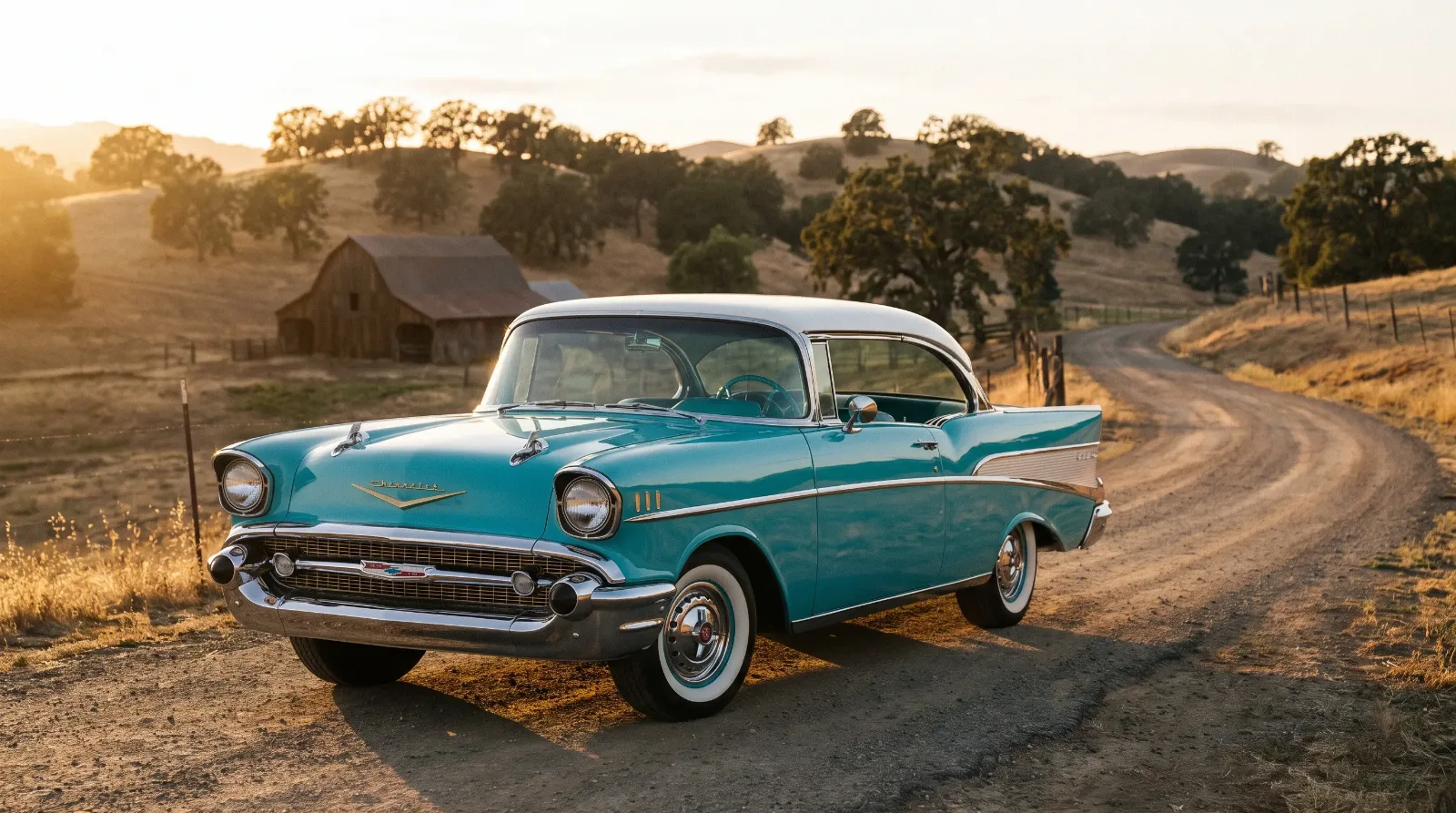
Walk a swap meet or a Tri-Five show field long enough and someone will eventually point at a 1957 Bel Air and say the same thing: "that's the gold one." They mean the trim. The 1957 Bel Air gold trim is one of the small design decisions that ended up doing a lot of heavy lifting for Chevrolet, turning an already handsome car into the one everyone remembers first when the word "Bel Air" comes up. It was not an accident and it was not cheap to make. It was a deliberate hierarchy marker, and it worked so well that seventy years later it is still the fastest way to identify the top of the 1957 Chevrolet full-size line at a glance.
Why Chevrolet needed a hierarchy in 1957
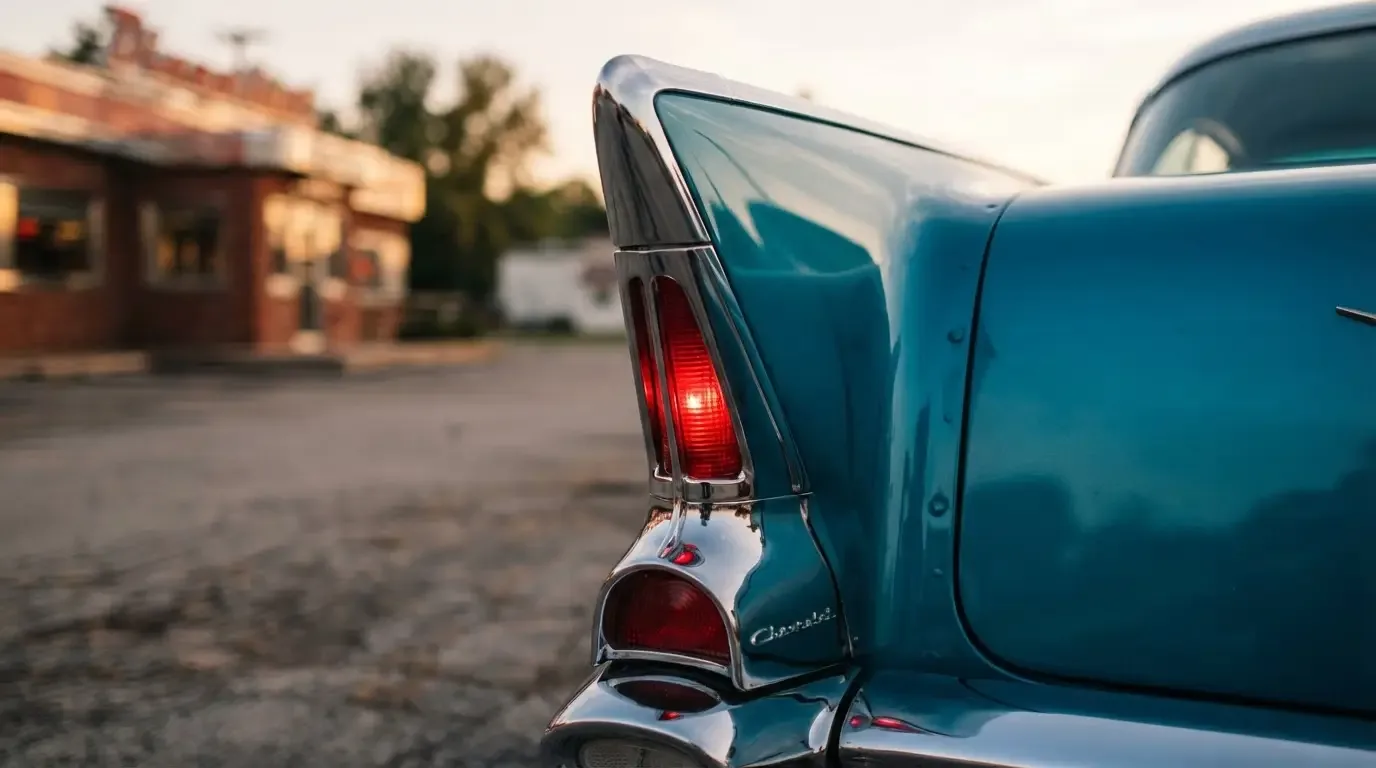
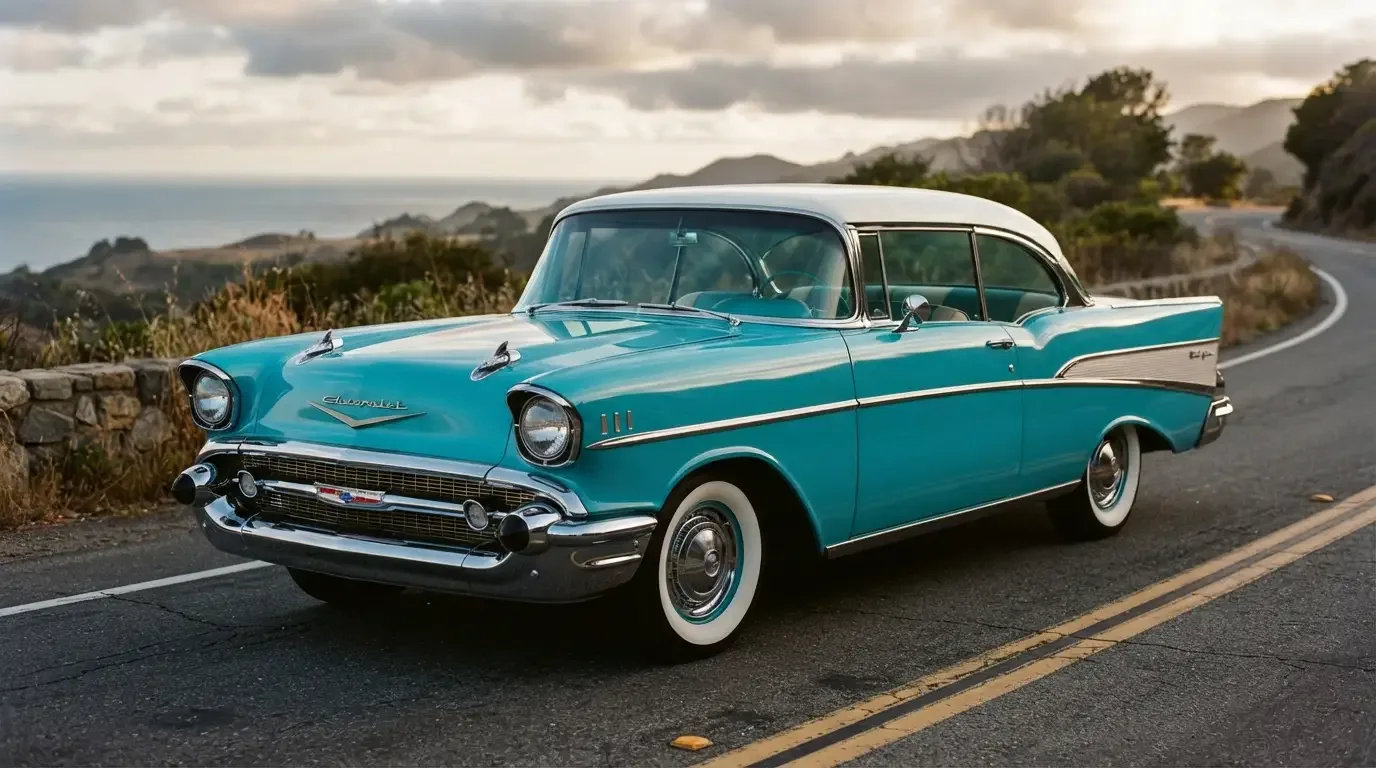
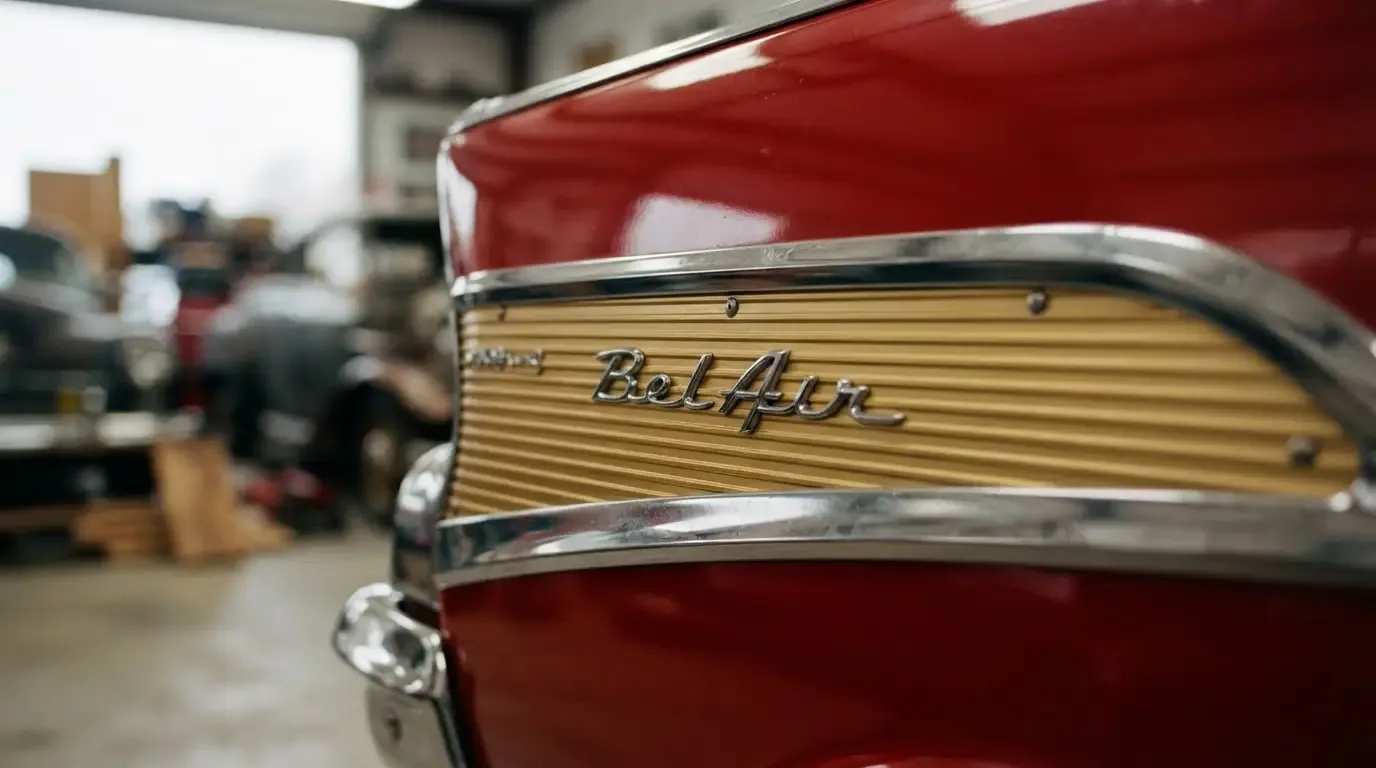
Chevrolet's full-size range for 1957 came in three series: the 150, the 210, and the Bel Air. The 150 was the fleet and taxi-grade stripper, the 210 was the mainstream family car, and the Bel Air was the top trim, the one meant to make a Chevrolet buyer feel like they had bought something closer to an Oldsmobile without paying Oldsmobile money. The problem with a three-tier lineup built on one basic body shell is that the differences have to be visible from across a parking lot, or the whole hierarchy is wasted marketing. Chevrolet's stylists solved that with brightwork. The 150 got minimal chrome. The 210 got more, including a two-tone paint spear on some models. The Bel Air got the works, and the signature piece of "the works" was gold anodized trim used nowhere else in the 1957 Chevrolet line: a gold mesh grille insert, gold chevrons on the front fenders, a gold "Chevrolet" script and V-8 "V" badge, and a gold-filled tailfin insert.
The material choice mattered as much as the color. Anodizing aluminum in a gold tone was a relatively young trick for mass production trim in the mid-1950s, and it let Chevrolet produce a rich, warm accent that read as more expensive than plain chrome without the cost of actual gold plating. It also aged differently than chrome, which is part of why original, unrestored gold trim is treated so carefully by collectors today. If you want the wider context on how the 1957 model year came together, read the background on the year that made the Bel Air name famous.
Where the gold trim actually appears
The gold anodizing shows up in several specific places on a 1957 Bel Air, and knowing them is the fastest way to spot a real one versus a 210 that has been dressed up. The clearest tell is the grille itself: the mesh insert in the Bel Air grille is finished in anodized gold, where a 150 or 210 stays bright silver aluminum. The three chevrons mounted on the forward edge of each front fender are gold as well, as is the "Chevrolet" script on the hood and deck lid and the large "V" badge that rides under it on V8 cars, gold for Bel Air and plain chrome-silver on the cheaper series. The V-shaped insert filling the tailfin trim is also unique to the Bel Air's upgraded trim, and on most cars it carries the same gold finish. The long side spear that runs from the front fender back to the rear quarter, by contrast, is a bright silver anodized aluminum beauty panel on all three 1957 series, not gold, so do not use it alone to identify a Bel Air.
Wheel covers are a common point of confusion at car shows, since reproduction covers vary in finish and some sellers describe a gold-toned center as if it were a documented factory detail. That claim shows up often enough in listings to be worth mentioning, but it is not something that could be confirmed against a factory parts reference for this piece, so treat any wheel cover gold-center claim with some caution rather than as settled fact.
The two-tone and tri-tone connection
The gold trim does not work alone. It was designed to sit inside Chevrolet's two-tone and, on some Bel Air models, tri-tone paint schemes, where the silver anodized side spear acts as the visual seam between the upper and lower paint colors while the grille, fender chevrons, script, and tailfin insert carry the gold accent that marks the car as a Bel Air. This is part of why the 1957 Bel Air photographs so well in period brochures and why it remains the poster car for the era. The color break follows the character line of the body, the spear fills the recess, and the eye reads the whole car as more sculpted than the flatter-sided 210 wearing the same body panels without the insert. Chevrolet's stylists under Clare MacKichan understood that a shape only looks expensive if the trim reinforces it, and the gold anodizing did exactly that.
Buyers who wanted the top-shelf look but skipped two-tone paint still got the gold trim on a solid-color Bel Air, since the trim package was tied to the series and not strictly to the paint order. That is one reason solid-color Bel Airs from 1957, especially in darker colors where the gold pops harder against the body, have their own following among people who find the classic two-tone combinations a bit predictable. Anyone chasing a specific trim configuration should expect prices and availability to vary with how well the original gold anodizing survived, since replating or replacing the inserts correctly is not a simple weekend job.
Condition, originality, and what it means for value today
Gold anodized aluminum does not age like chrome. It can dull, pit, or shift in tone depending on how it was stored and whether it saw regular wax and cover protection over six decades. Restorers and appraisers who evaluate Tri-Five Chevrolets look closely at the gold trim condition because it is expensive and difficult to restore correctly, and reproduction pieces have historically varied in matching the factory tone and finish. A 1957 Bel Air with its original, intact gold trim in good condition is worth a real premium over an otherwise identical car wearing replacement pieces, because the trim is one of the hardest details to get exactly right during a restoration.
This is also where fakery creeps in. Because the gold trim is the single most recognizable Bel Air-specific detail, it gets transplanted onto lesser trim cars or non-Bel Air convertibles to boost apparent value. Anyone shopping seriously should check that the trim, the interior door panel gold accents, and the exterior badging all agree with each other and with the VIN-decoded series, rather than trusting the trim alone as proof of series.
"People ask why a strip of anodized aluminum matters so much to value. It matters because Chevrolet made it matter first, by keeping it exclusive to one series. Everything after that is just the market agreeing with a decision GM's stylists made in a design studio in the mid-1950s."
- Tom Ramirez
A related build worth a look
If the gold trim story has you curious about how the rest of the top-tier 1957 lineup was configured, the Sport Coupe version of the same series is worth a look too, since it carries the same trim philosophy in a hardtop body style that shows the gold accents from a different angle. For anyone actively hunting a Tri-Five with correct trim rather than a reproduction guess, it is worth taking the time to shop classic Air listings and compare how sellers describe and photograph the trim condition before committing to a purchase.
The 1957 Bel Air gold trim is a small detail with an outsized job. It told a 1950s buyer, at a glance across a dealer showroom, that this was the Chevrolet worth the extra money. It still tells a collector the same thing today, just with a different set of stakes attached to getting it right.
Sources and notes
- 1957 Chevrolet - Wikipedia
- Clare MacKichan - Wikipedia
- MotorCities: Remembering the Chevrolet Designs of GM's Clare MacKichan
- Hagerty: Your Handy 1955-57 (Tri-Five) Chevrolet Buyer's Guide
- Classic Industries: 1957 Chevrolet Bel Air Exterior Trim / Grille Components
- National Corvette Museum: Clare MacKichan