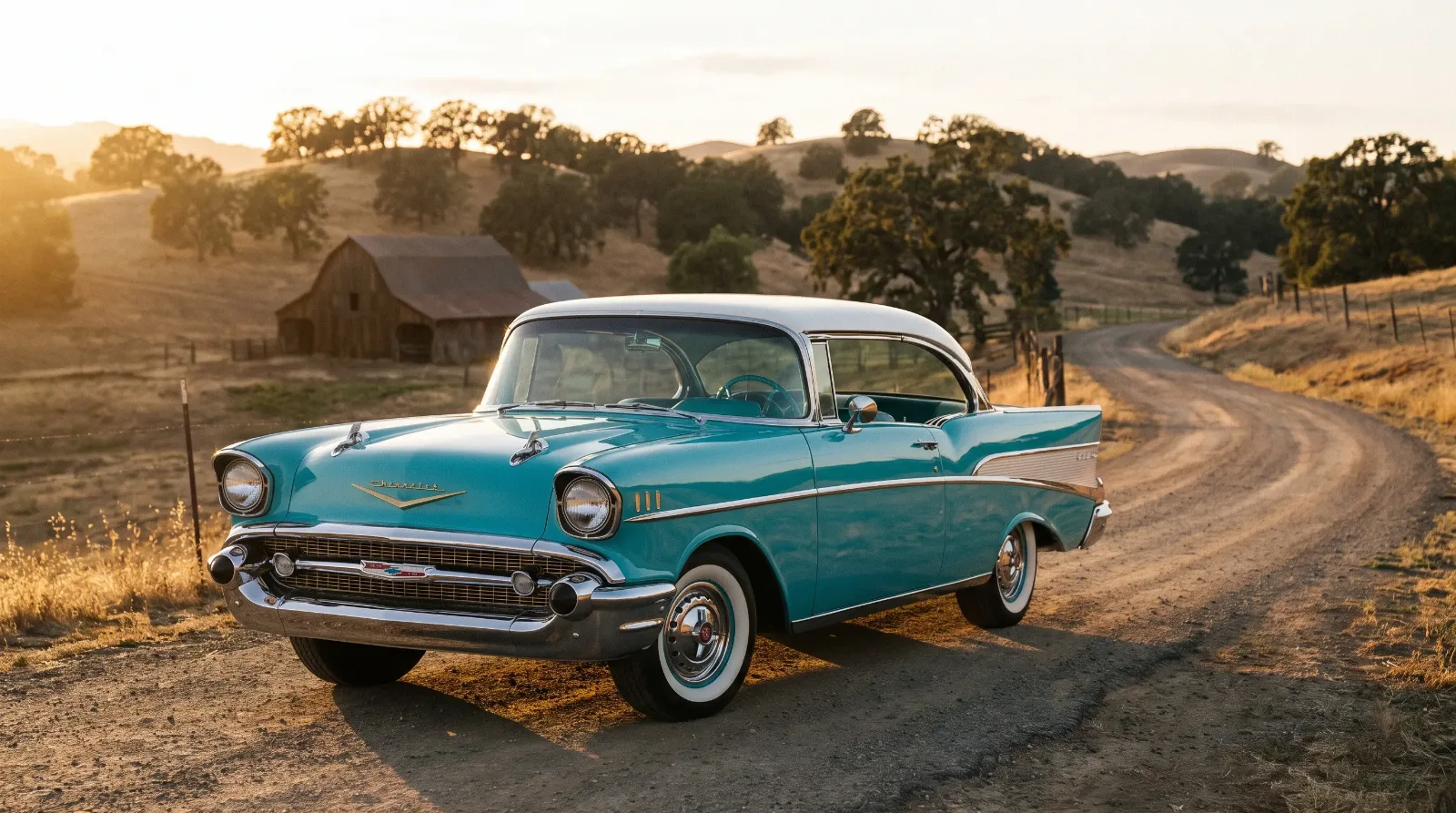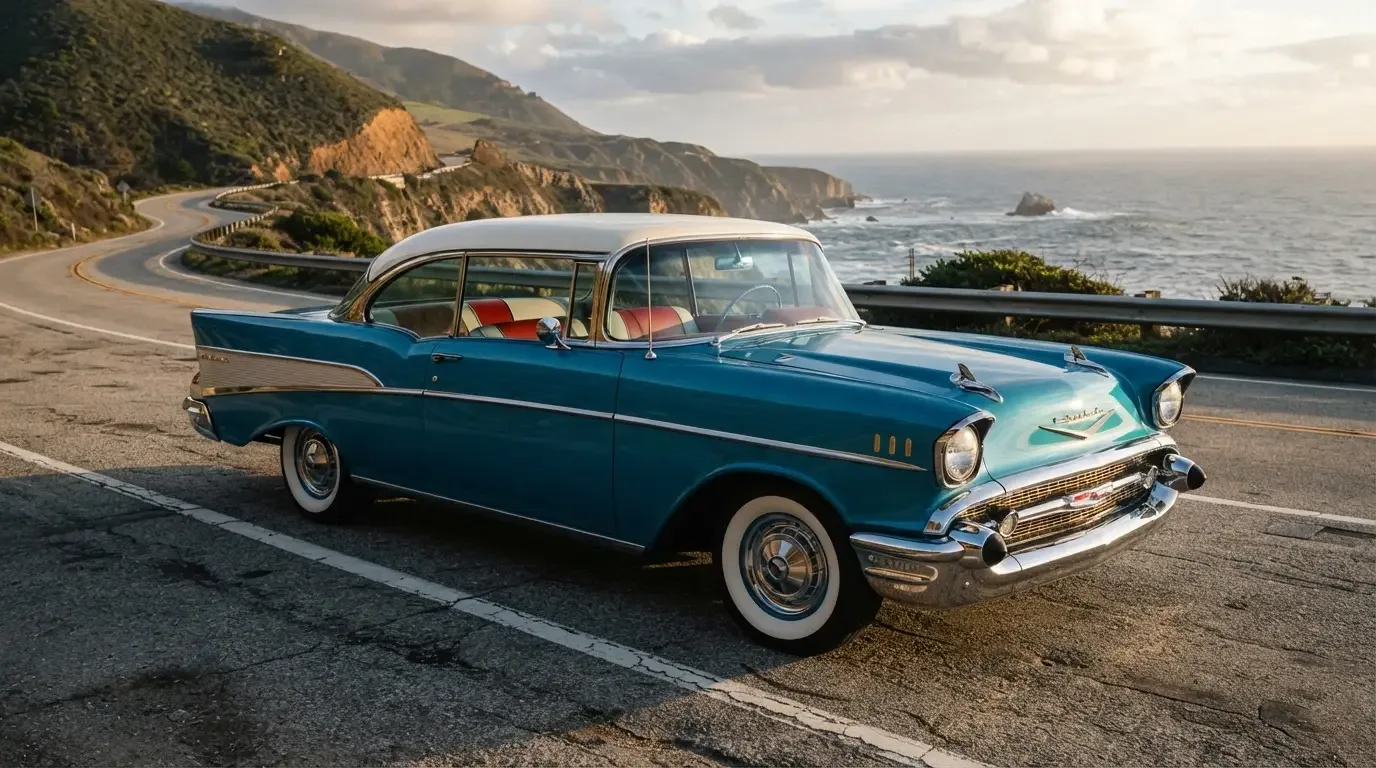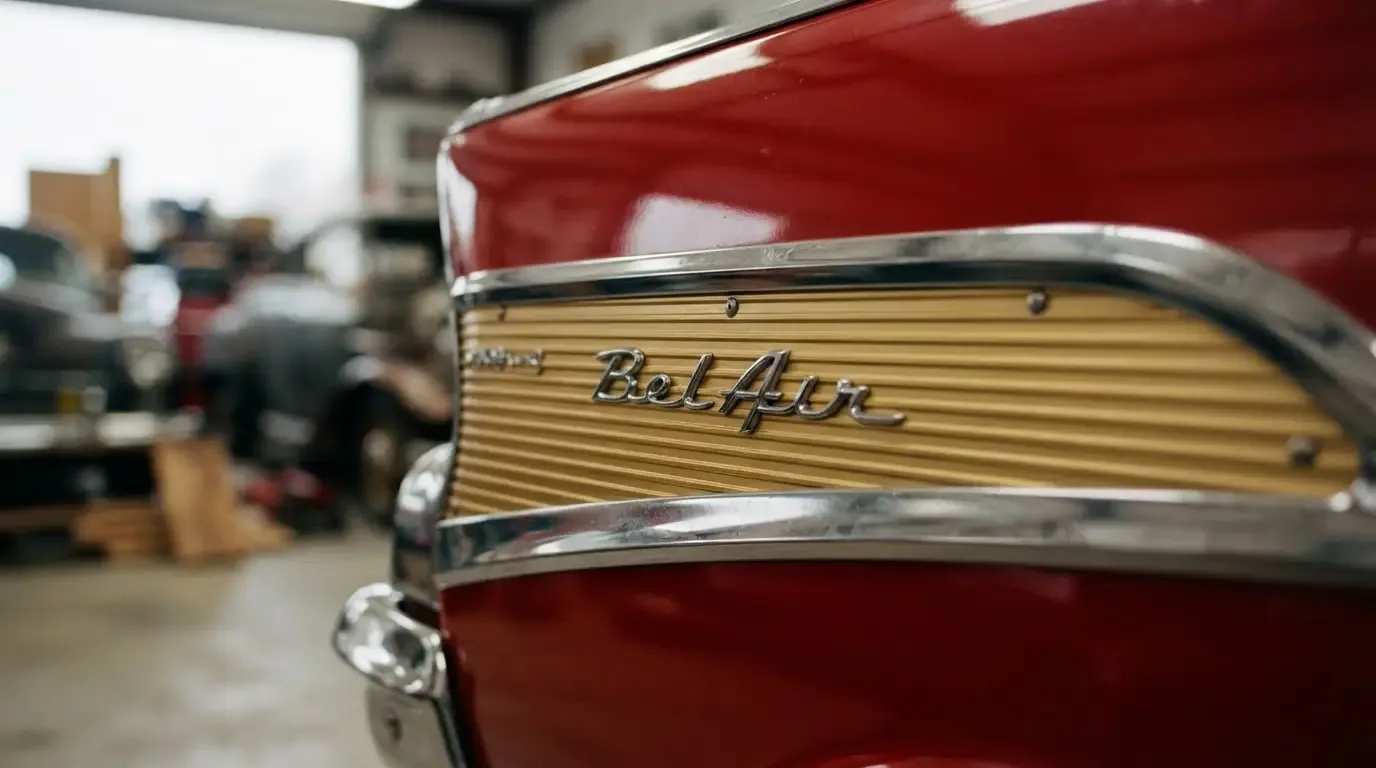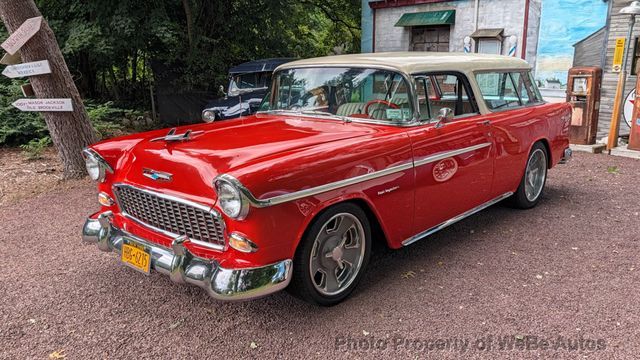
Tailfins are the single most identifiable design element of American automobiles in the 1950s, and the 1957 Bel Air's version of them belongs in any serious accounting of how that trend actually developed, not just in the popular imagination but in the documented design history. Understanding where Chevrolet's fins fit within the broader jet-age styling movement requires looking past the finished product to the design language that produced it.
Where the jet-age styling language came from
Automotive tailfins trace their design lineage to aviation influence, specifically to the vertical stabilizers on military aircraft that captured public imagination during and after the Second World War. General Motors' design studios, led during this period by Harley Earl's influence over the corporation's overall styling direction, had been introducing fin elements gradually across its divisions through the mid-1950s, and by 1957 the trend had matured from a subtle styling cue into a defining visual statement across the American auto industry.
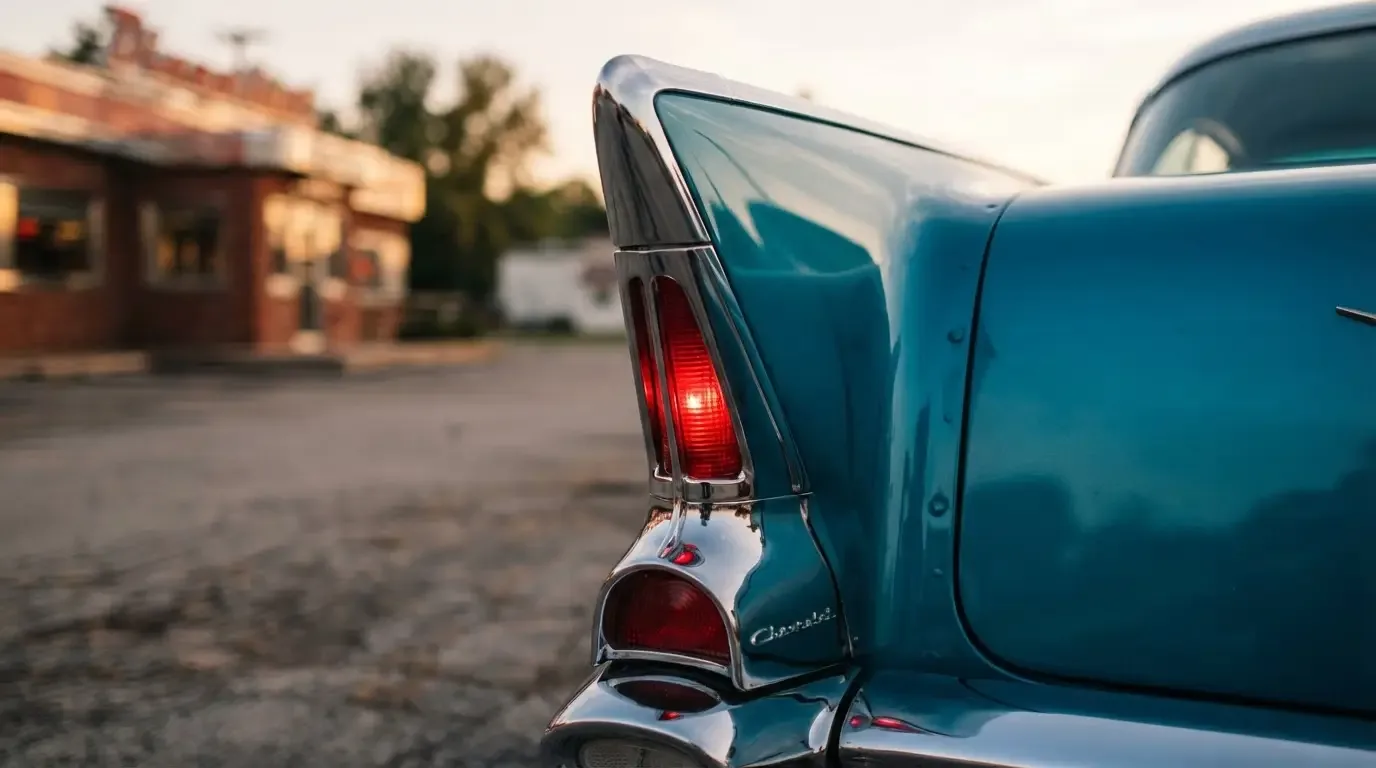
Chevrolet's application of the trend for 1957 was more restrained than some competitors, notably compared to what Chrysler's design studios were producing in the same period, but it was executed with a precision and proportion that has aged better than many of its more aggressive contemporaries. The fins integrate into the Bel Air's overall rear quarter panel rather than reading as an applied afterthought, a detail that period design critics and later automotive historians have both noted as evidence of a more disciplined design process than the fin trend generally receives credit for.
The technical and stylistic execution
The 1957 Bel Air's rear fin treatment worked in concert with a revised grille, quad headlamp bezels on certain trim configurations, and a lengthened rear deck to create a visual proportion distinctly different from the 1956 model it replaced. The change was not purely cosmetic. Chevrolet's design and engineering teams coordinated the sheet metal changes with functional considerations including trunk capacity and rear taillight integration, meaning the fins carried a dual role as both a styling statement and a housing structure for the car's lighting elements.
How 1957 compares to its industry contemporaries
Placed alongside Chrysler and Ford's competing designs from the same model year, the 1957 Bel Air's fins sit in a middle position, more pronounced than Ford's comparatively restrained treatment but considerably more disciplined than Chrysler's most aggressive designs of the period. That middle position has arguably served the car's long-term reputation well. It reads as confidently of its era without appearing as dated or excessive as some contemporaries do when viewed decades later.
| Manufacturer | 1957 fin treatment | Design characterization |
|---|---|---|
| Chevrolet Bel Air | Integrated rear quarter fin | Restrained, proportionally disciplined |
| Ford Fairlane | Minimal fin element | Conservative |
| Chrysler (various) | Pronounced, exaggerated fins | Aggressive, maximalist |
"The fin trend could easily have become a costume the industry outgrew within a decade. Chevrolet's 1957 execution is disciplined enough that it still reads as design rather than decoration."
- Sarah Whitfield
Documenting an original fin treatment
For restorers and researchers working on a 1957 Bel Air, the fin panels and their associated taillight housings are specific enough to the model year that mismatched or incorrectly sourced replacement panels are readily identifiable to a trained eye. Given the car's popularity, reproduction sheet metal is widely available, which is generally good news for restoration feasibility but does mean originality claims for these specific panels deserve the same verification rigor as any other originality claim on a well-known, frequently reproduced classic.
For the broader design and production history of the model year these fins belong to, our complete history covers the full context beyond the styling details addressed here. And for anyone who wants to see how the fin treatment actually reads in person rather than through photographs, you can find a classic Air to inspect directly.
Why the fins still matter to design history
Seven decades on, the 1957 Bel Air's tailfins remain a reference point cited whenever design historians discuss the aviation-influenced styling movement of the American 1950s. That the car has held its place in that conversation, rather than being remembered as a dated period piece, speaks to the genuine skill behind its execution. The fins were a trend. The proportions Chevrolet built around them were a design decision, and that distinction is why this particular car still gets studied rather than merely nostalgized.
The design team behind the details
Chevrolet's styling studio in this period operated within General Motors' broader design hierarchy, and the specific individuals responsible for the 1957 Bel Air's final rear quarter treatment worked from direction set at the corporate level while still exercising real discretion over proportion and detail execution. This layered design process, common across the American auto industry at the time, means a single stylist rarely gets sole credit for an iconic result, and the 1957 Bel Air is a useful case study in how a strong corporate design direction and skilled individual execution combined to produce something more coherent than either element would have achieved alone. Clare MacKichan, chief of Chevrolet's design studio from 1955 through 1957, led the studio that carried the Motoramic shape from the 1955 debut through the 1957 revision, working under Harley Earl's overall corporate design direction at General Motors.
What is better documented is the design process's iterative nature. Clay models and full-size mockups went through multiple revisions before Chevrolet finalized the production sheet metal, a standard practice that allowed engineers and stylists to argue over proportion in three dimensions rather than relying purely on sketches. The fin's final height, angle, and integration into the quarter panel were the product of that iterative process, not a single stylist's unaltered first sketch, which helps explain why the final proportions read as considered rather than arbitrary.
Preserving an original fin profile through decades of repair
Quarter panels take the brunt of parking lot damage and rust over a car's working life, and the 1957 Bel Air's fins, extending further than a conventional rear quarter would, are particularly exposed to both. A significant share of surviving cars have had some quarter panel repair or replacement over seven decades, which makes verifying an original, undamaged fin profile a genuine point of interest for serious collectors rather than a minor cosmetic detail. Subtle profile deviations from a repair, even a well-executed one, are detectable to someone who has studied enough original, unmolested examples to know the correct proportion by eye rather than by measurement alone.
What the taillight integration reveals about a repair
Because the fin structure doubles as the taillight housing, panel work in this area carries functional stakes beyond simple cosmetics. Gap consistency around the lens, correct lens curvature, and proper alignment between the taillight bezel and the surrounding fin sheet metal are all details that a rushed or budget repair tends to get subtly wrong, even when the overall shape reads correctly from a few feet away. Judges scoring originality at serious concours events routinely examine exactly this junction, since it is one of the more reliable places on the car to distinguish careful, period-correct panel work from a repair that prioritized speed over precision. A buyer without judging experience can still learn to check the same details, comparing gap consistency side to side and looking for any wave or ripple in the fin's leading edge that would suggest filler work beneath the paint.