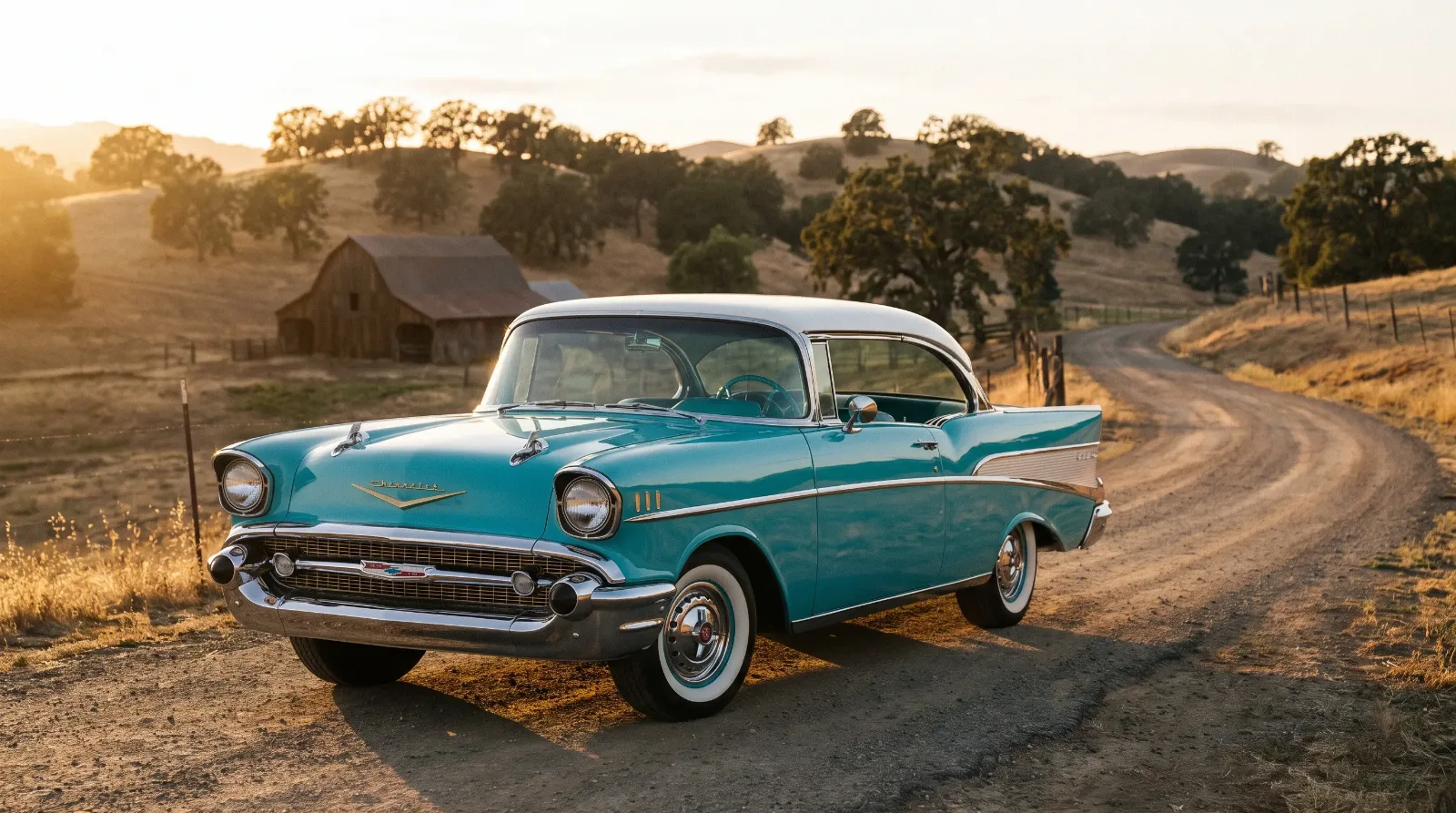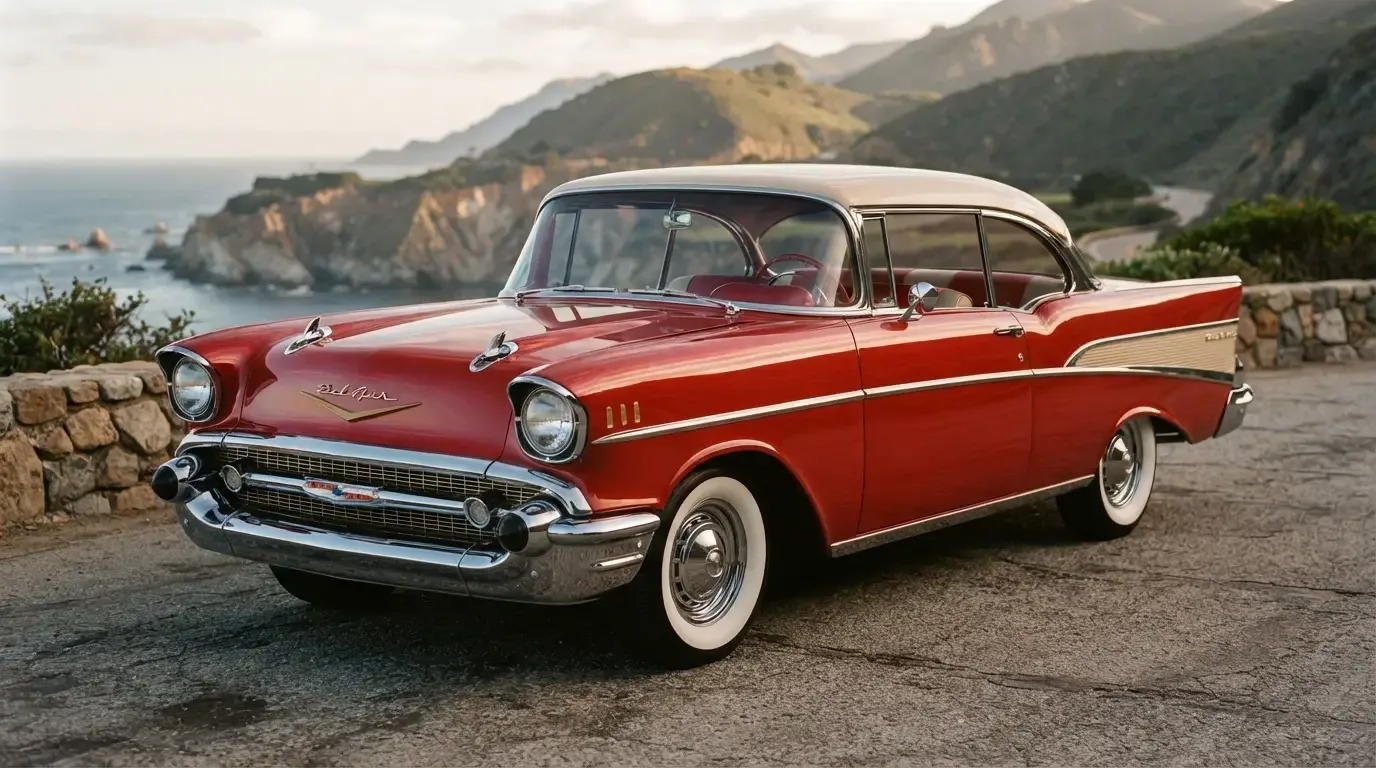
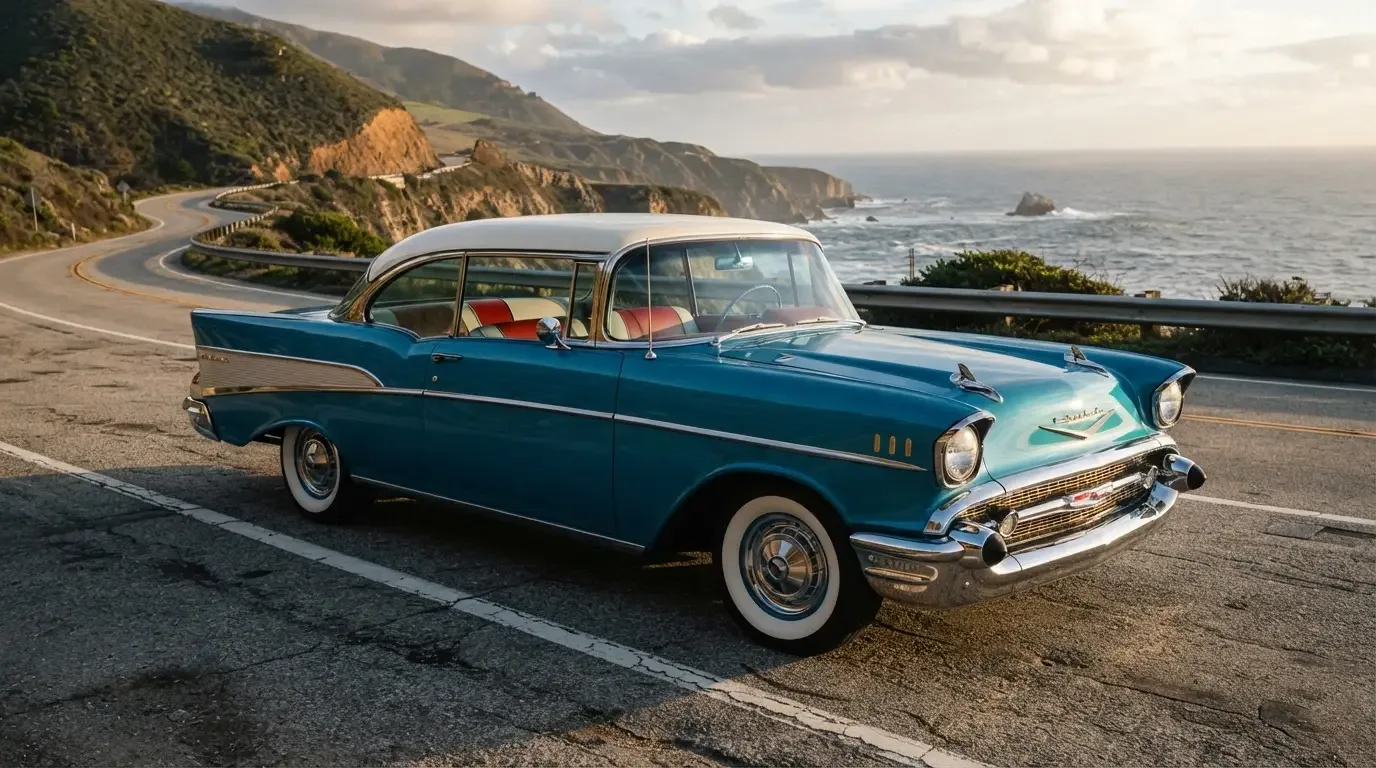
No single model year in American automotive history carries the recognition of the 1957 Bel Air. Ask someone who has never sat inside a classic car in their life to picture a fifties Chevrolet and this is almost always the image that surfaces, tailfins, a wide chrome grille, and a two-tone body that looks like it belongs on a postcard. That level of cultural penetration did not happen by accident, and the production and design record behind it explains why this specific classic earned a place most cars never reach.
The final act of the Tri-Five story
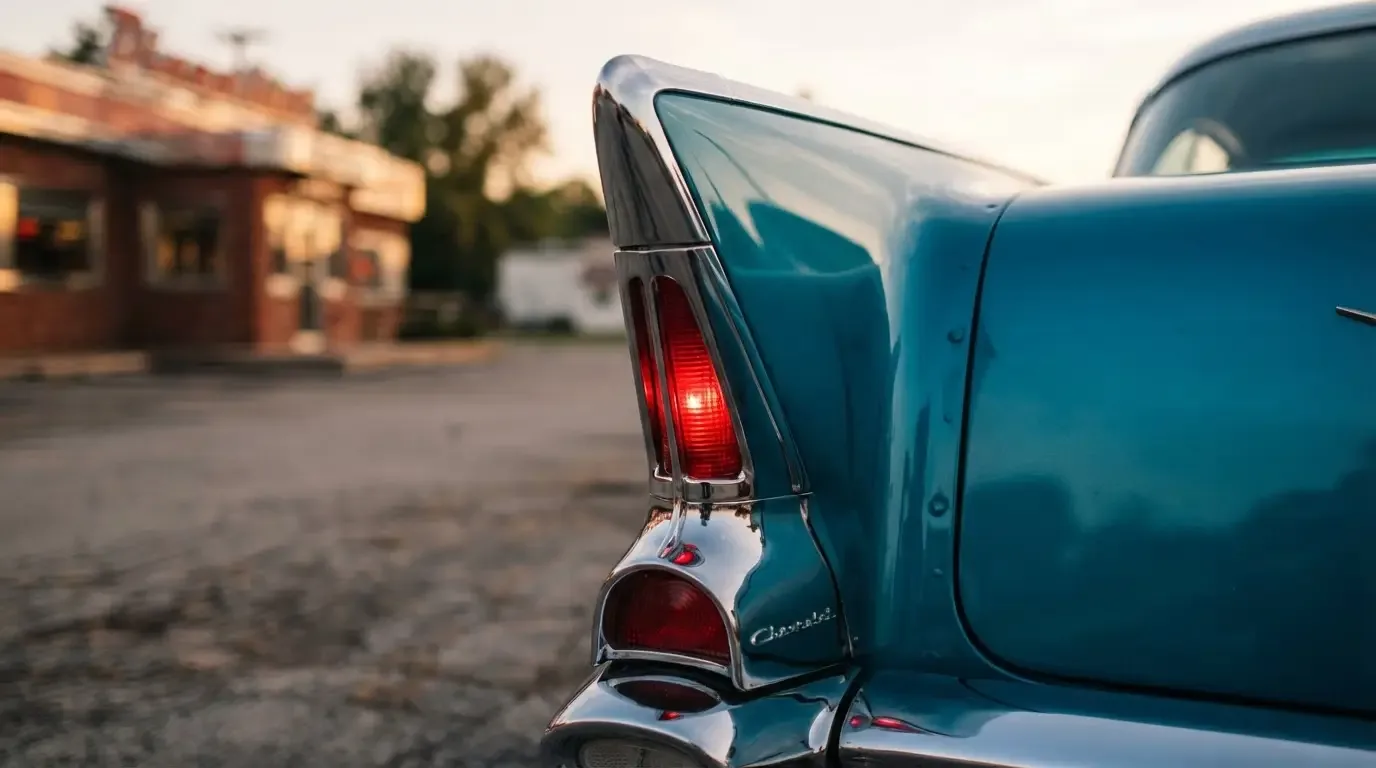
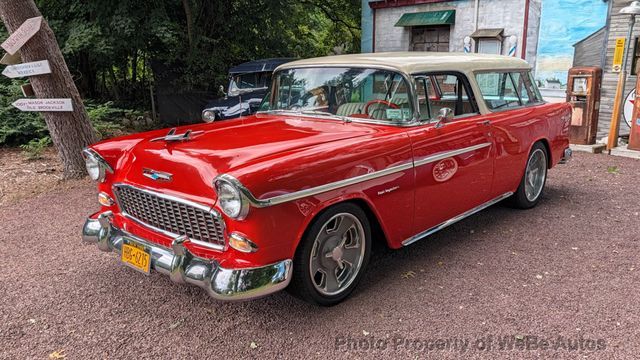
1957 was the third and last model year of Chevrolet's Tri-Five body, following the platform's introduction in 1955 and its refinement through 1956. Rather than a minor styling refresh, Chevrolet gave the 1957 Bel Air a substantially reworked front and rear end treatment, longer and lower in visual proportion, with tailfins that pushed the car's silhouette in a direction the 1955 and 1956 versions had only hinted at. Under the skin, Chevrolet also introduced fuel injection as an available option on the small-block V8, a genuinely significant engineering milestone that put the division ahead of most domestic competitors in production car technology that year.
The combination of a definitive styling statement and a meaningful technical advancement in the same model year is rare. Most manufacturers get one or the other in a given year. Chevrolet got both in 1957, and the car has been the reference point for the entire Tri-Five era ever since, sometimes at the expense of the earlier years' own legitimate claims to significance.
Why this specific year became the cultural touchstone
Part of the 1957 Bel Air's outsized reputation comes from timing that had nothing to do with the car itself. It was the last of its generation before Chevrolet moved to an entirely new body for 1958, which gave the 1957 a natural "end of an era" framing almost immediately. Part of it comes from the styling itself, which photographed exceptionally well and translated cleanly into the die-cast toys, posters, and later pop culture references that kept the car visible to generations who never saw one new.
But underneath the cultural mythology sits a genuinely well-built, well-engineered car. Chevrolet had three full model years to refine the Tri-Five platform by 1957, and it shows in the fit, the drivability, and the overall polish compared to the first-year 1955. The car earned its reputation on more than looks alone, even if the looks are what most people remember first.
The Sport Coupe and the shape that defined a decade
Among the 1957 Bel Air's body styles, the Sport Coupe hardtop is the one that appears most often in the popular imagination, its roofline and side profile becoming shorthand for fifties American car design generally, not just for Chevrolet specifically. The two-door hardtop's lack of a B-pillar gave it a cleaner, more open greenhouse than the sedans, and that detail alone shaped how the car photographed and how it has been remembered.
| Attribute | 1957 Bel Air |
|---|---|
| Model year position | Final year of the Tri-Five body |
| Notable technical option | Fuel-injected small-block V8 |
| Signature styling element | Tailfins and revised grille |
| Most culturally recognized body style | Sport Coupe hardtop |
"By 1957 Chevrolet had three years of practice building this platform, and it shows in how the car drives, not just in how it looks in a photograph."
- Tom Ramirez
Living up to the reputation today
The gap between a 1957 Bel Air's cultural fame and its actual documented history creates real challenges for buyers and researchers. Because the car is so recognizable, it attracts more reproduction parts, more optimistic restoration claims, and more sellers leaning on the model's general reputation rather than a specific car's documented history. A serious buyer needs to separate the nameplate's fame from an individual car's actual condition and provenance, which requires the same disciplined verification any classic purchase demands, regardless of how iconic the year.
For the fuller account of how the 1957 model year came together, 1957 chevy bel air history covers the design and production story in more depth. The styling details specifically, including how the tailfins came to define the year, are covered in a related story worth reading alongside this one.
Where the reputation meets the market
Given how recognizable this model year is, demand has stayed consistently strong across decades in a way many other classic cars cannot claim, and that consistency is itself a data point worth taking seriously if you are considering one as a long-term purchase rather than a short-term flip. If the history here has you ready to look at real examples, there are Airs for sale now that let you compare the legend against an actual car in front of you.
How the fuel-injection option shaped its own legend
The 1957 Bel Air's fuel-injected small-block deserves attention separate from the styling conversation, because it represents a genuinely different kind of milestone. Where the tailfins were a design statement shared, to varying degrees, across the entire American industry that year, mechanical fuel injection on a mass-production American car was a comparatively rare technical achievement. Chevrolet's engineering team worked through significant development challenges to bring the system to market reliably enough for showroom sale, and the option's relative rarity on the production line, owing to its cost and complexity compared to standard carburetion, has made surviving fuel-injected examples a distinct and closely studied subset of the model year's overall production.
Collectors and historians researching a specific 1957 Bel Air's claimed fuel-injection equipment treat verification with particular seriousness, since the option's rarity creates real financial incentive for later, incorrect claims. Matching casting numbers, factory documentation, and known production patterns for the option remain the standard verification path, the same disciplined approach that applies to any high-value factory option on a car this widely reproduced and represented in the current market.
The legacy beyond the collector world
Outside the collector market entirely, the 1957 Bel Air's silhouette has become genuine design shorthand, appearing in film, television, advertising, and product design for decades after the car left production. That level of visual recognition, extending well beyond people who follow classic cars at all, is unusual even among genuinely significant collector vehicles, and it has helped sustain demand for well-preserved examples across generations of buyers who came to the car through pop culture rather than through any personal connection to the era it was built in.
What buyers new to the model year should expect
Someone entering the market for a 1957 Bel Air for the first time, drawn in by exactly this reputation, should expect a more competitive buying environment than for less famous classic cars generally. Strong examples move quickly, and the seller pool includes both serious, well-documented offerings and less scrupulous listings leaning heavily on the model's fame to gloss over an individual car's actual shortcomings. Bringing the same documentation discipline used for any other significant purchase, verifying body tags, engine casting numbers, and ownership history rather than accepting the model year's reputation as a substitute for a specific car's paperwork, remains the difference between buying the legend responsibly and simply buying into it.