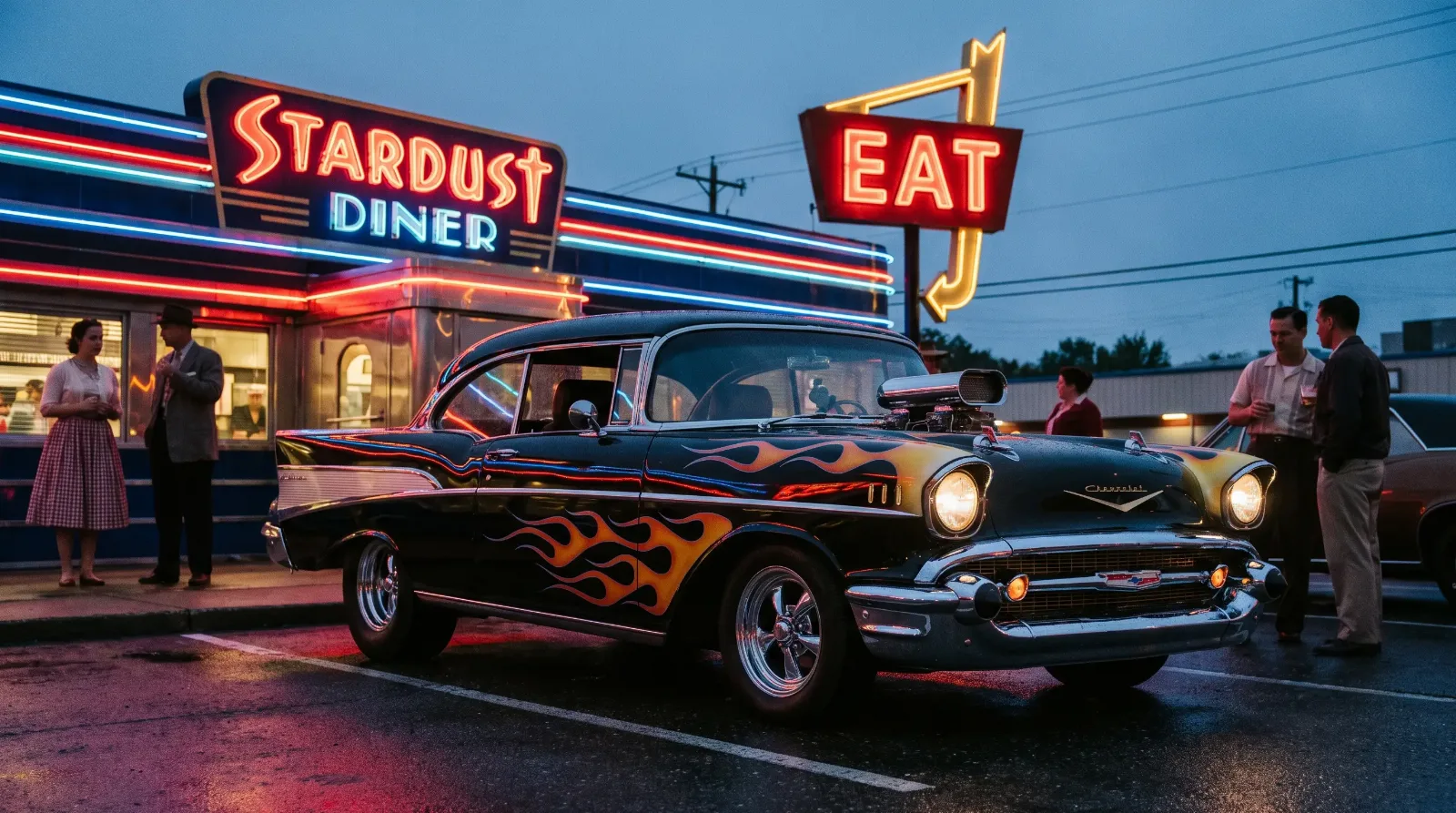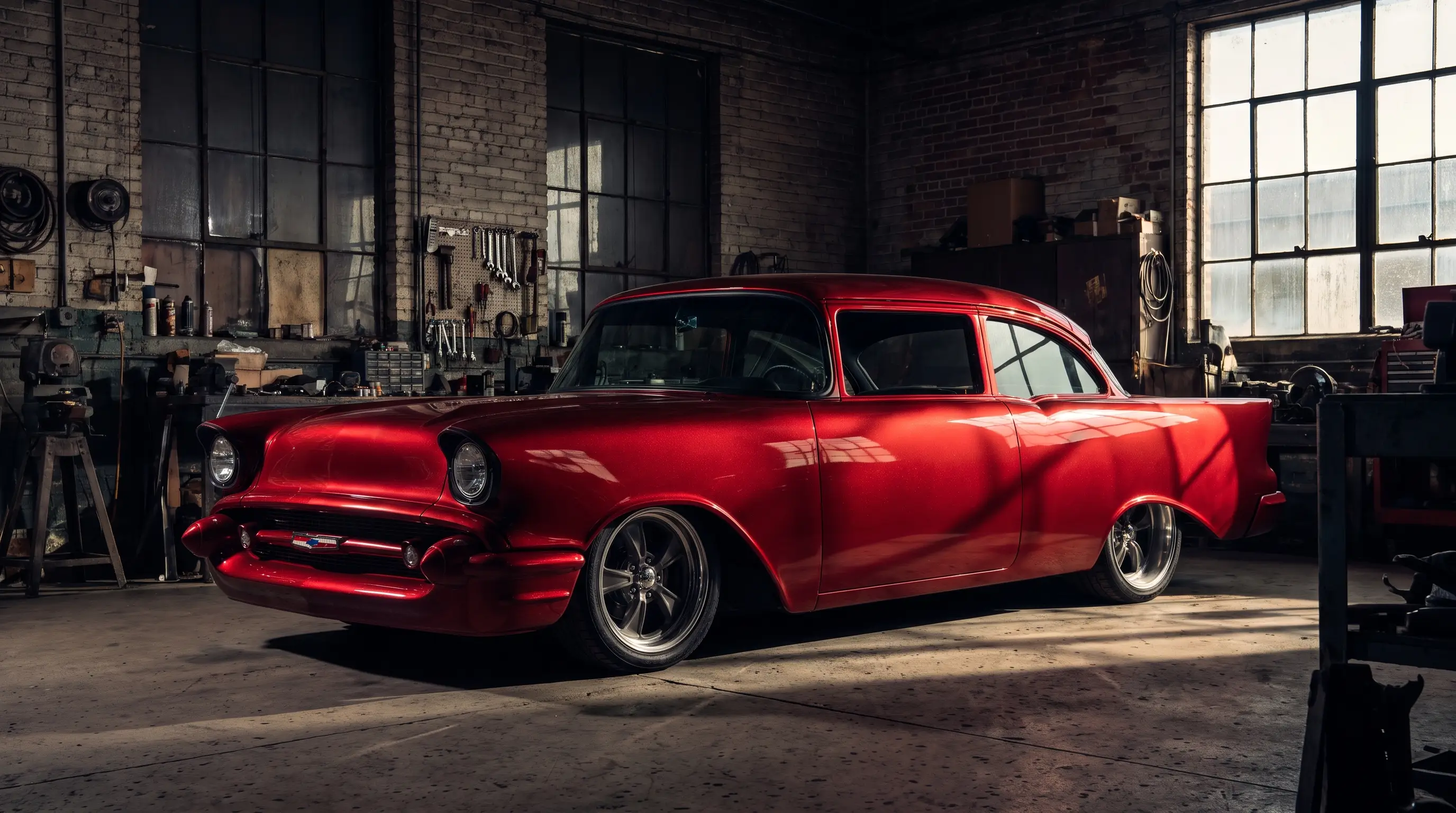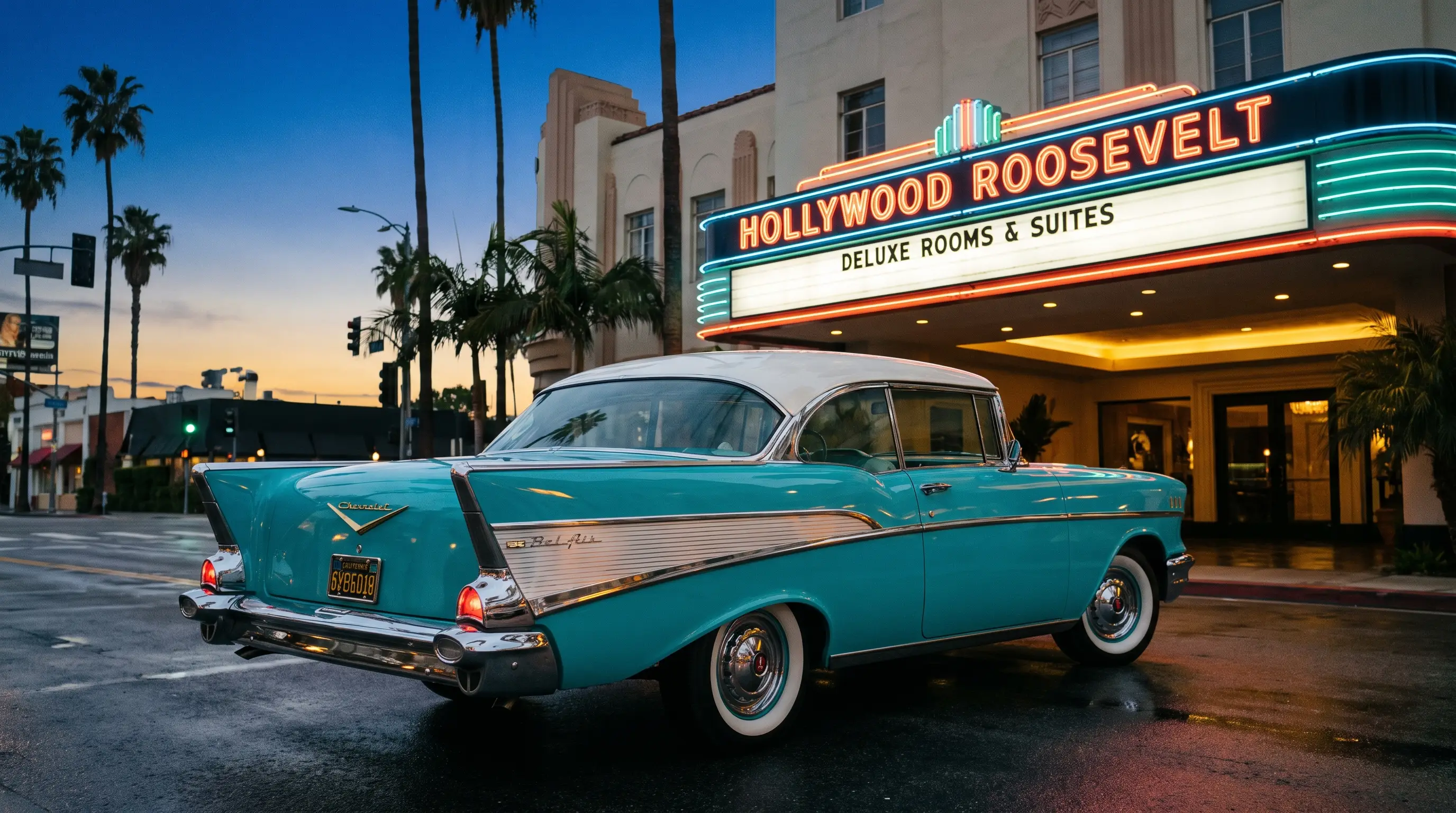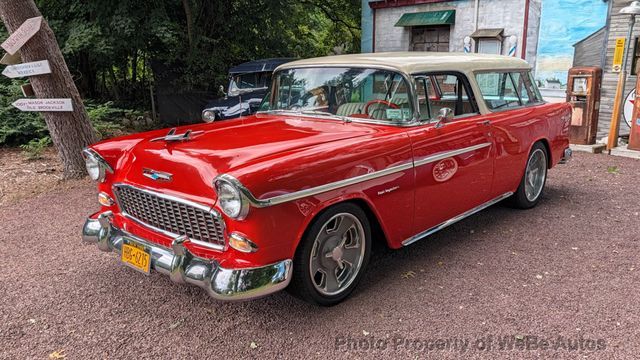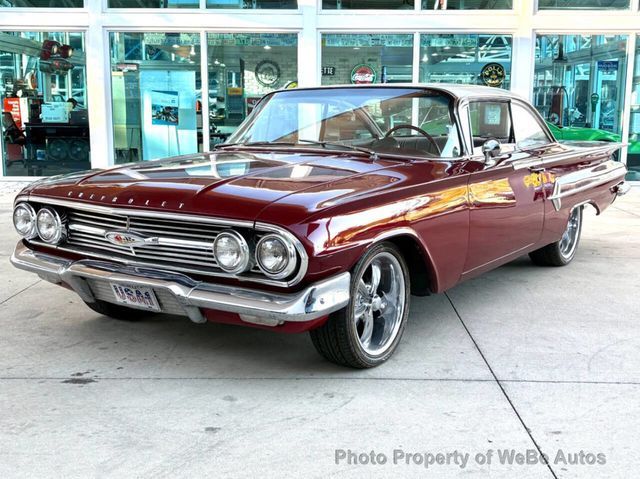
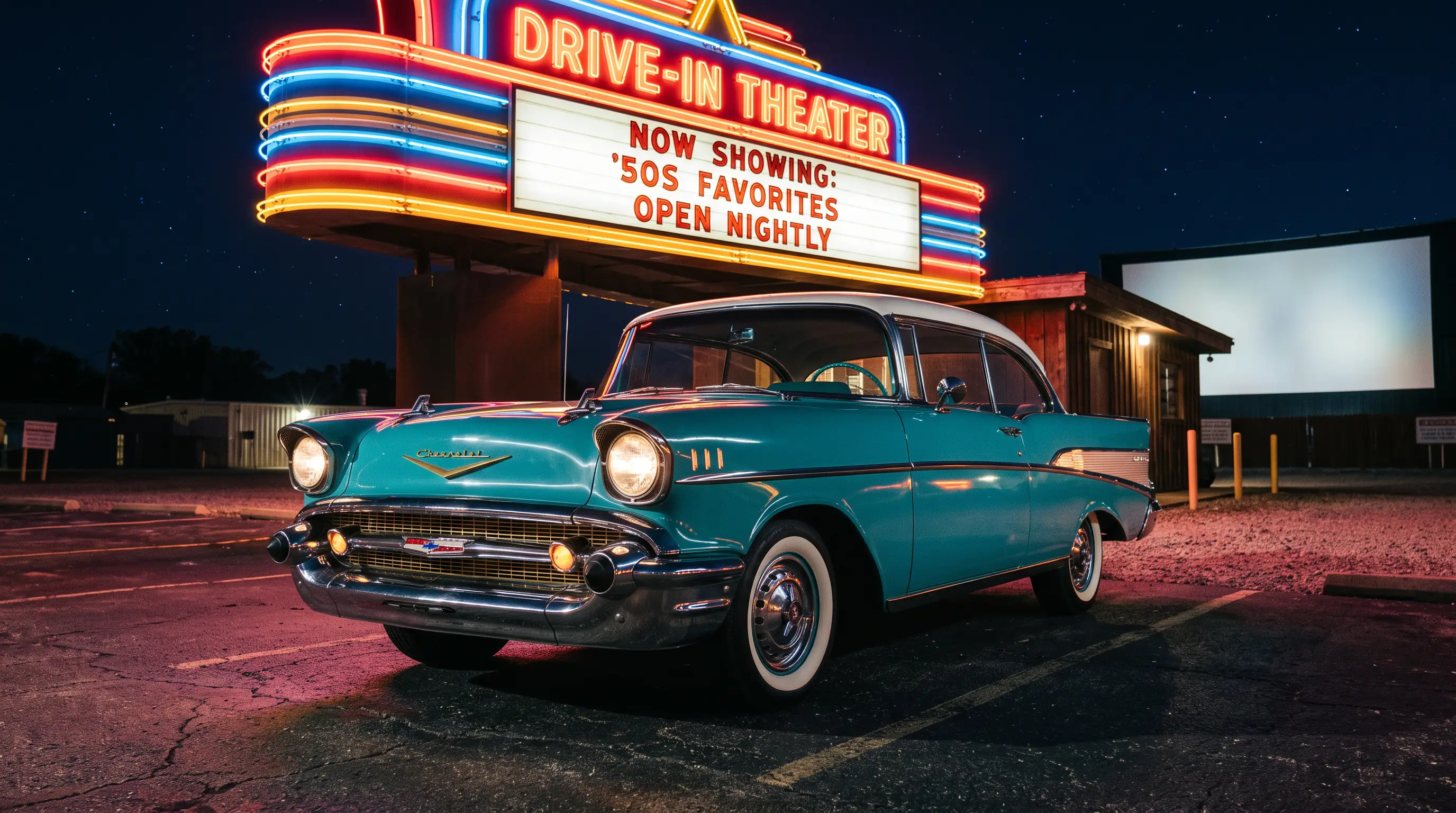
The parking lot at the A&W on a Friday night in 1958 was its own kind of theater, and the Bel Air diner drive in scene needed at least one two-tone hardtop parked under the neon to feel complete. Chevrolet's Bel Air did not just sell well in that decade. It became furniture for the American drive-in, the car idling under the speaker box while a carhop balanced a tray on the window frame. Ask anyone who was there and they will not start with horsepower. They will start with the sound of a radio through an open window and the particular hush that falls over a lot full of teenagers when a new car rolls in.
A car built for the parking lot
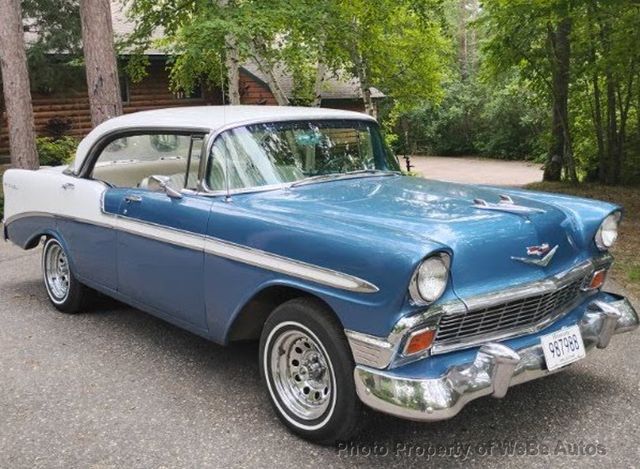
Drive-ins, whether they served burgers or movies, were built around one simple fact: people wanted to be seen sitting in their cars. The Bel Air, especially the 1955 through 1957 Tri-Five models, gave them something worth being seen in. The two-tone paint jobs, the wraparound glass, the way the chrome caught the sodium lights over the lot, all of it was designed for exactly this kind of slow, deliberate arrival. A Bel Air pulling into a drive-in did not need to be driven fast. It needed to be driven slow enough for everyone to notice.
The car's proportions helped. Low doors, a wide bench seat, a dashboard laid out like a jukebox. Teenagers who could not yet afford their own car borrowed a parent's Bel Air for exactly one purpose: to park it somewhere public. The car was the invitation. The drive-in was the party.
The drive-in as showroom
Car dealers understood this before anyone wrote it down as strategy. A new Bel Air parked at a popular drive-in on a Saturday night did more informal advertising than a newspaper ad. People walked the rows between cars, checking hood ornaments and trim levels the way they might browse a lot today. A friend's father with a new Bel Air Sport Coupe was a minor local celebrity for exactly as long as it took the next new model to show up.
This informal showroom effect was not lost on Chevrolet, which leaned into youth culture advertising through the back half of the 1950s. The company knew where its cars were being seen and by whom. Drive-ins, hangouts, and the strip downtown were doing the marketing work a dealership showroom never could.
Curb service and chrome
The drive-in restaurant added its own ritual on top of the car culture already built around the Bel Air. Carhops on roller skates, trays that clipped onto a rolled-down window, root beer in frosted mugs handed through the driver's side. None of it worked without a car that looked good sitting still with the engine off. The Bel Air's horizontal grille and its long, level beltline gave it a resting pose that suited an evening spent not going anywhere.
Interior trim mattered here too. Cloth and vinyl combinations in the Bel Air were bright by the standards of the day, turquoise and coral and cream, colors that photographed well under a drive-in's floodlights and looked sharp next to a paper bag of onion rings. The car was built to be looked at from outside and enjoyed from inside, and the drive-in was the one place both things happened at once.
"You did not go to the drive-in to eat. You went to be parked next to somebody in a Bel Air and hope they noticed yours too."
- Nora Beckett
Movie screens and rearview mirrors
The drive-in movie theater told a slightly different version of the same story. Instead of curb service, it was a giant screen and a speaker hung on the window, but the car itself still did most of the work. Couples on dates angled the Bel Air's bench seat toward the screen and left the radio off, letting the tinny speaker carry the film's dialogue into a cabin that smelled like new vinyl and popcorn brought from home. The car became a private room in a public lot, windows fogging slightly by the second reel.
Hollywood noticed the pairing and used it right back. Films set in the late 1950s and early 1960s regularly placed a Bel Air at the drive-in as visual shorthand for the era, a habit that only deepened once nostalgia pictures started looking backward at the decade. For a full account of how one specific Bel Air became a movie icon in its own right, our 1957 bel air american graffiti retrospective covers that ground in detail. The car did not need a plot to matter. It only needed to be parked in frame.
Why the diner scene still needs a Bel Air
Modern diners that lean into a 1950s theme still reach for the same car, whether it is a real Bel Air parked out front or a die-cast model on a shelf behind the counter. The pairing has outlived the original drive-in boom by decades because it was never really about fast food or double features. It was about a specific kind of American evening, unhurried and social, built around a car that looked right standing still.
That association has kept surviving Bel Airs valuable to collectors who care about context as much as condition. A car with real drive-in and cruise history, photographs, local newspaper clippings, carries a story that a repainted trailer queen cannot match. a related story traces some of the people who owned Bel Airs during this exact stretch of car culture, and it is worth reading alongside this one.
None of this happened by accident. Chevrolet built a car with the right proportions, the right chrome, and the right resting pose for a decade that spent its evenings parked in a lot somewhere, radio on, engine off. If you are chasing that feeling today rather than just reading about it, there are Airs for sale now waiting for a driveway, and eventually, a parking lot of their own.
What survives when the buildings do not
Most of the original drive-in restaurants and theaters are gone now, torn down for strip malls or simply left to crumble behind chain-link fencing. A handful survive as genuine operating businesses, and an even smaller number have been restored specifically to lean into their 1950s roots, complete with carhops in period uniforms and speaker posts that no longer connect to anything but still look right sitting in the lot. Those surviving locations have become informal pilgrimage sites for Bel Air owners, a place to park the car exactly where it was meant to be parked, decades after the original crowd went home.
Photographers and local historians have done real work documenting what remains, cataloging surviving drive-in structures before they disappear entirely. That documentation matters for more than sentimental reasons. It gives collectors and researchers a physical backdrop to match against period photographs, a way of confirming that a faded snapshot of a Bel Air parked under a specific sign was taken exactly where family legend claims it was.
Restaurant chains built after the drive-in era have occasionally tried to recreate the feeling with modern buildings styled to look vintage, carhops on roller skates included. The cars in the parking lot rarely match the theme, mostly because a genuine Bel Air owner is unlikely to risk a restored car in a lot full of distracted teenage drivers backing out of angled parking spaces. The real thing still tends to show up only at organized, controlled events, cruise nights and car club meetups rather than a Tuesday night drive-through run.
The drive-in itself has mostly disappeared, replaced by drive-through windows and streaming services. But the image survives, a Bel Air under neon, a tray on the window, a screen glowing somewhere past the hood. It is one of the few pieces of 1950s Americana that never needed explaining. You saw the car, and you understood the whole evening.