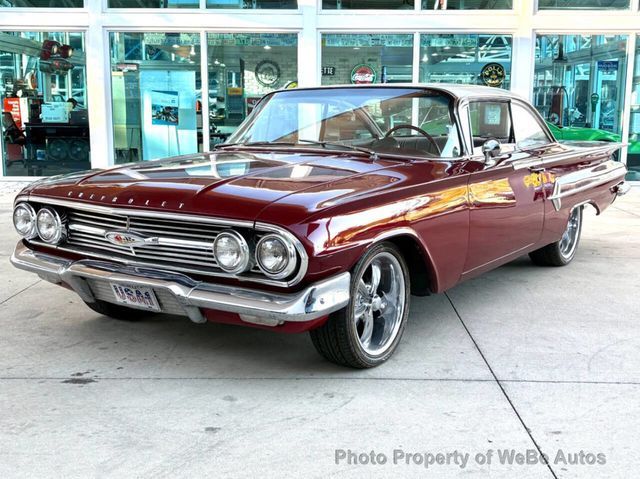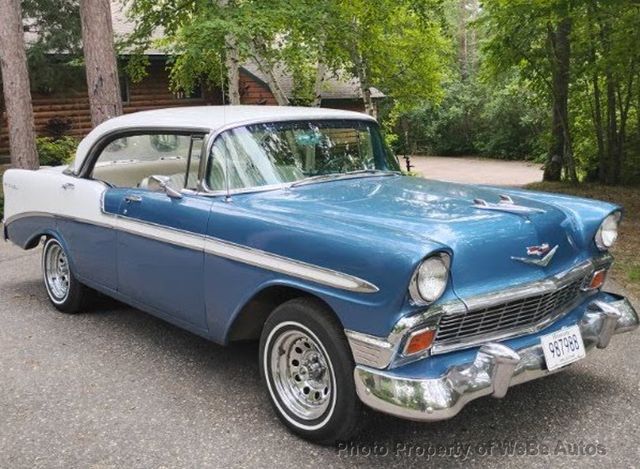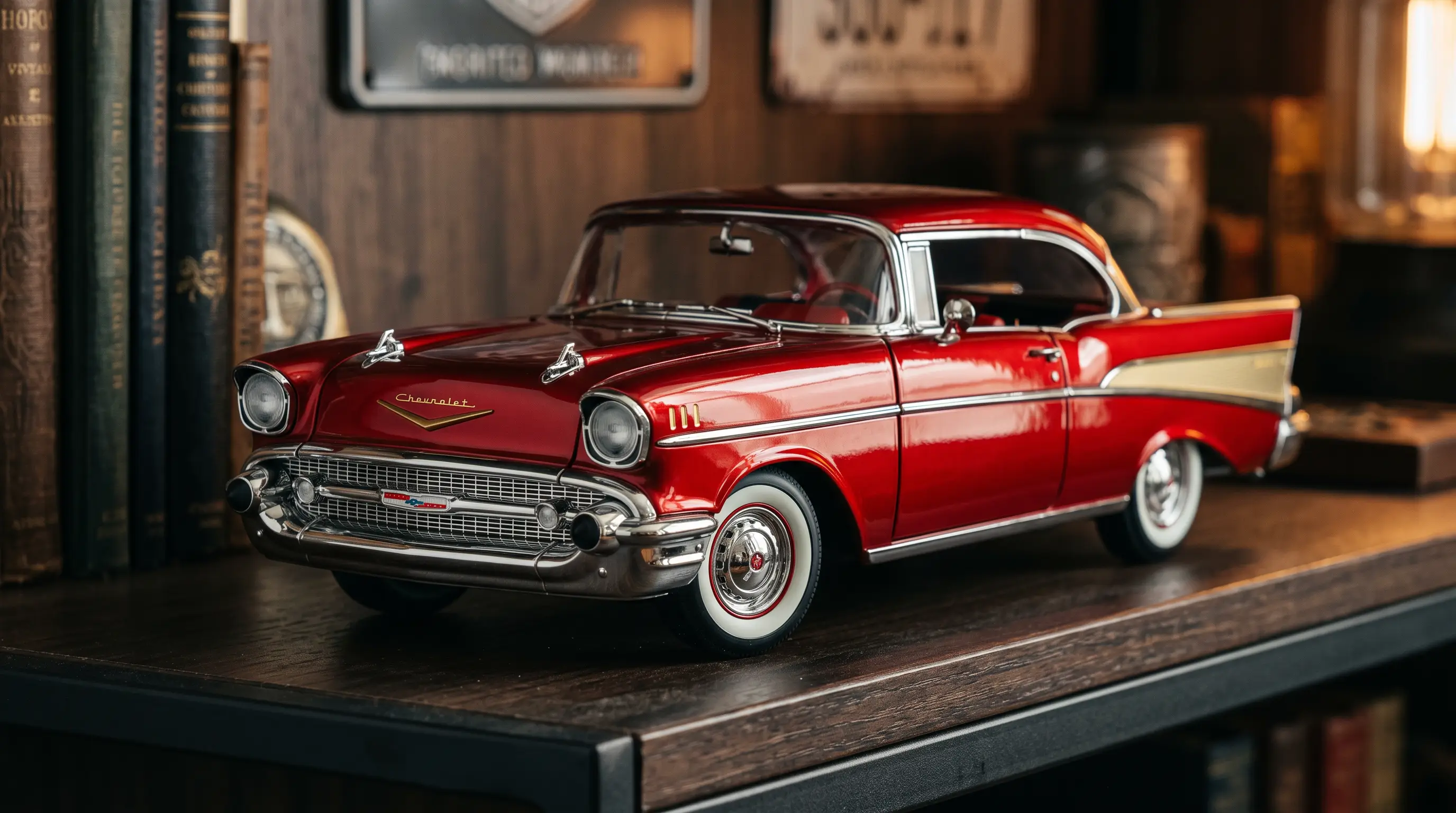
There is a particular kind of childhood memory built entirely around a shoebox of tiny cars, and somewhere in nearly every one of those boxes sits a Bel Air. The Bel Air Hot Wheels connection runs deeper than a single casting or a single year. It is one of the few real cars that made the jump from driveway to toy box and then back again, decades later, when the kid who lost that toy in the carpet grew up and bought the full-sized version instead.
A shape that survives being three inches long
Not every car translates well into a die-cast toy. Some designs need their full size to read correctly, and shrinking them to palm size flattens out everything that made them distinctive. The Bel Air is not one of those cars. Its long hood, its low roofline, its confident, level stance all survive the transition to a three-inch casting almost untouched. Toy designers noticed this early, and Bel Air castings have appeared across nearly every major die-cast line since toy cars started chasing real automotive design instead of generic shapes.
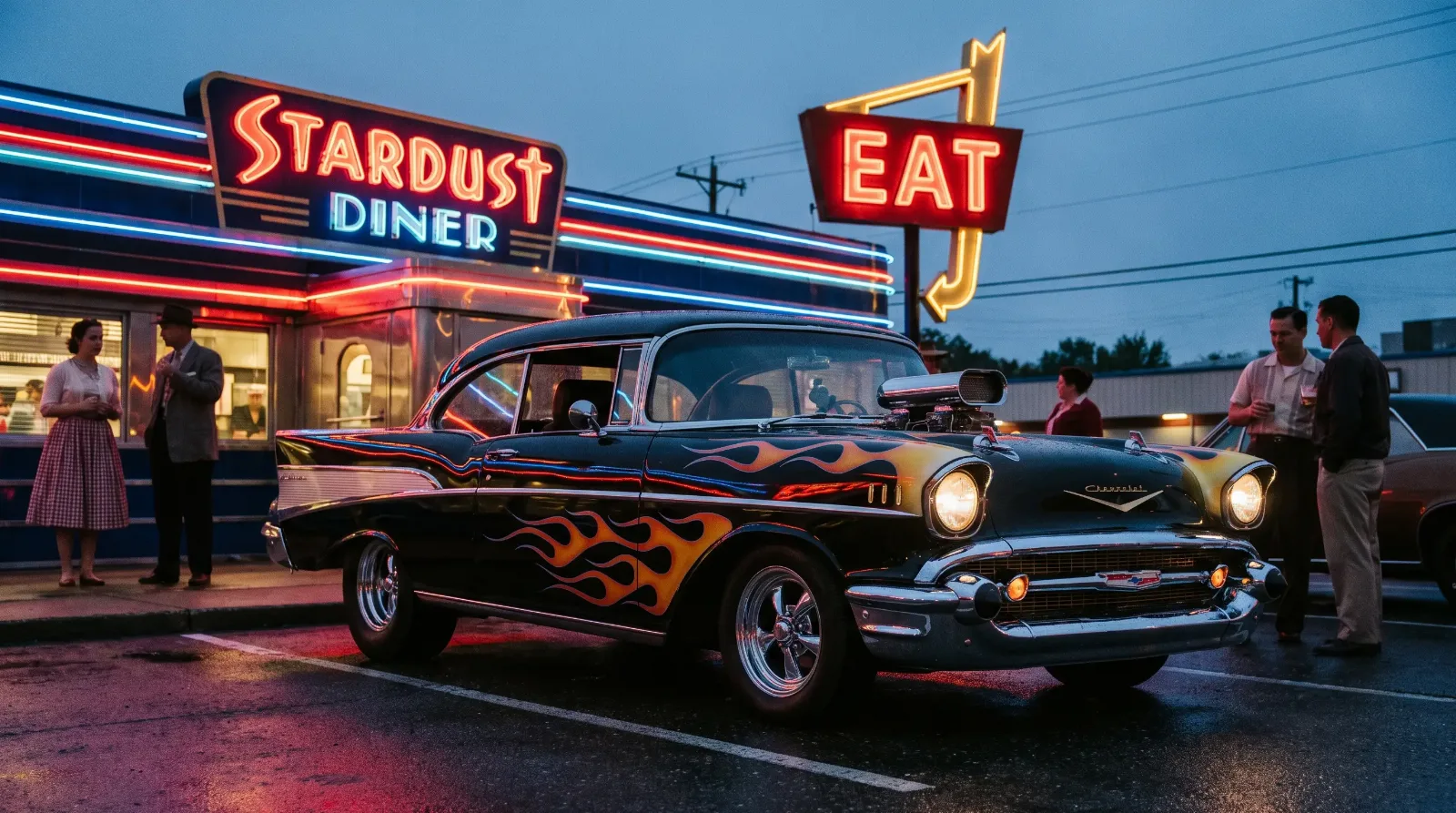
Hot Wheels in particular leaned into the Tri-Five Bel Air's silhouette, releasing multiple versions over the decades, from stock-bodied castings to lowered, chopped, and flamed customs that took the car's basic shape and pushed it toward hot rod fantasy. Both approaches worked precisely because the underlying proportions were strong enough to survive any amount of stylizing.
The toy as a gateway, not a substitute
Plenty of adults now restoring or buying real Bel Airs will tell you, unprompted, that a toy version was their first experience with the car. A parent's hand-me-down die-cast, a birthday present, a prize from a cereal box, something small and cheap that planted an idea long before a driver's license was possible. The toy did not replace the desire for the real thing. It built it, one afternoon of pushing a tiny car across a linoleum floor at a time.
This is not a small or sentimental detail in the collector market. Toy exposure genuinely shapes which cars people grow up wanting, and manufacturers have understood that for decades. A generation that grew up with a Bel Air in its toy box became, twenty or thirty years later, a generation with disposable income looking for exactly that car at auction.
Custom castings and the hot rod fantasy
Beyond stock reproductions, toy makers have used the Bel Air as a canvas for pure imagination, dropping the ride height to an impossible degree, widening the rear haunches, adding flame jobs and superchargers no factory Bel Air ever wore. These fantasy versions are not meant to be accurate. They are meant to be fun, and the fact that the Bel Air's basic shape can absorb that much exaggeration and still read clearly as a Bel Air says something about how strong the original design was.
Collectors of these customized castings often cross over into the full-size hobby eventually, drawn by the same shape that hooked them as kids, just scaled up and requiring considerably more garage space. The line between toy collector and car collector is thinner than either side usually admits.
"I do not think I ever chose the Bel Air. It chose me first, in a toy box, long before I could reach the pedals of a real one."
- Nora Beckett
What the toy box says about the real car
There is something worth noticing in how long this pairing has lasted. Toy lines rotate through casting after casting each year, most forgotten within a season or two. The Bel Air keeps coming back, reissued, recolored, reimagined, because the shape still sells and the nostalgia still runs deep among the parents buying the toys for their kids. A car does not earn that kind of staying power in a toy aisle without earning it on the road first.
For a fuller sense of how the Bel Air built the cultural weight that made it worth shrinking down into a toy in the first place, the whole picture lays out that broader history. The toy version is really just one small, colorful branch of a much bigger story.
The scale model world beyond the toy aisle
Above the impulse-buy die-cast tier sits a more serious hobby entirely, built around detailed scale model kits and precision die-cast replicas aimed at adult collectors rather than kids pushing cars across a carpet. Companies producing these higher-end models research factory paint codes, interior fabric patterns, and trim details with the same rigor a restoration shop would apply to a real car, and a well done 1:18 or 1:24 scale Bel Air can command a genuine collector's price of its own, entirely separate from the toy market it descended from.
This serious modeling world overlaps constantly with full-size restoration culture. Owners restoring a real Bel Air sometimes commission or purchase a matching scale model of their exact car, a small tabletop record of a much larger project. Model builders, in turn, often reach out to real owners for reference photographs of details too obscure to appear in factory literature, a mounting bracket, a wiring routing, the precise shade of a two-tone paint break. The toy and the real machine keep feeding each other information, decades after the original casting first hit a store shelf.
There is also a quieter economic argument for why manufacturers keep returning to the Bel Air specifically. Licensing a real car's likeness costs money, and companies are naturally selective about which vehicles are worth that investment repeatedly across different product lines, from cheap blister-pack castings up through premium scale replicas. The Bel Air's consistent presence across nearly every tier of this market, from a dollar toy to a museum-quality replica, reflects a confidence that the name and the shape will keep selling regardless of price point.
Trade shows and hobby conventions have become another meeting point between the two worlds. Die-cast manufacturers now routinely display upcoming Bel Air castings alongside full-size restored examples at the same events, a pairing that would have seemed unnecessary decades ago but now reads as an obvious marketing decision. Attendees walk from a table of tiny painted castings to a driveway of real, running Bel Airs without much sense of contradiction, because both objects are, in a real sense, telling the same story about the same car.
If the toy box got you here and you are finally ready for the version that will not fit in a pocket, you can shop classic Air listings and see what is actually available today. The shoebox was always just a warm-up.