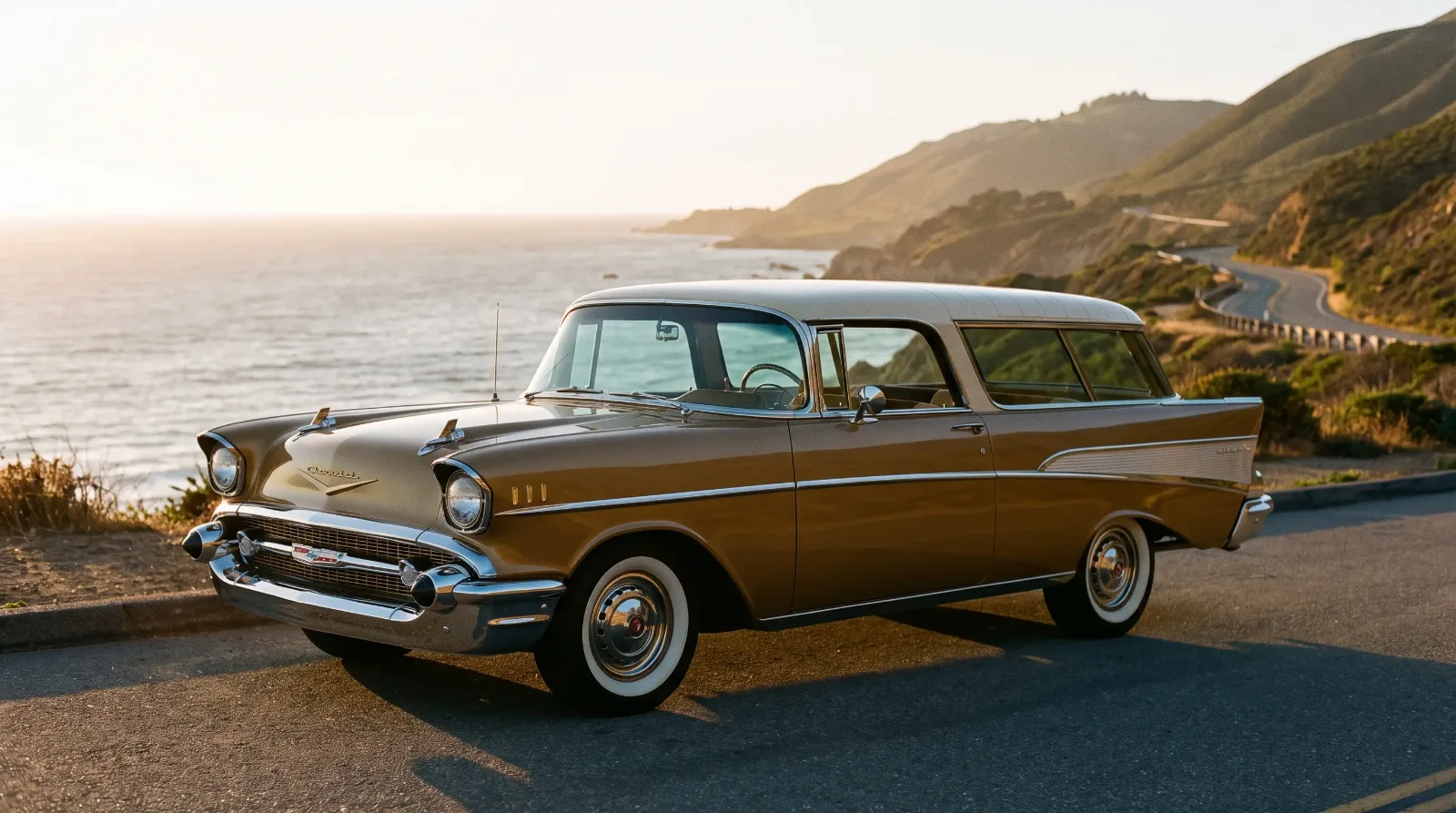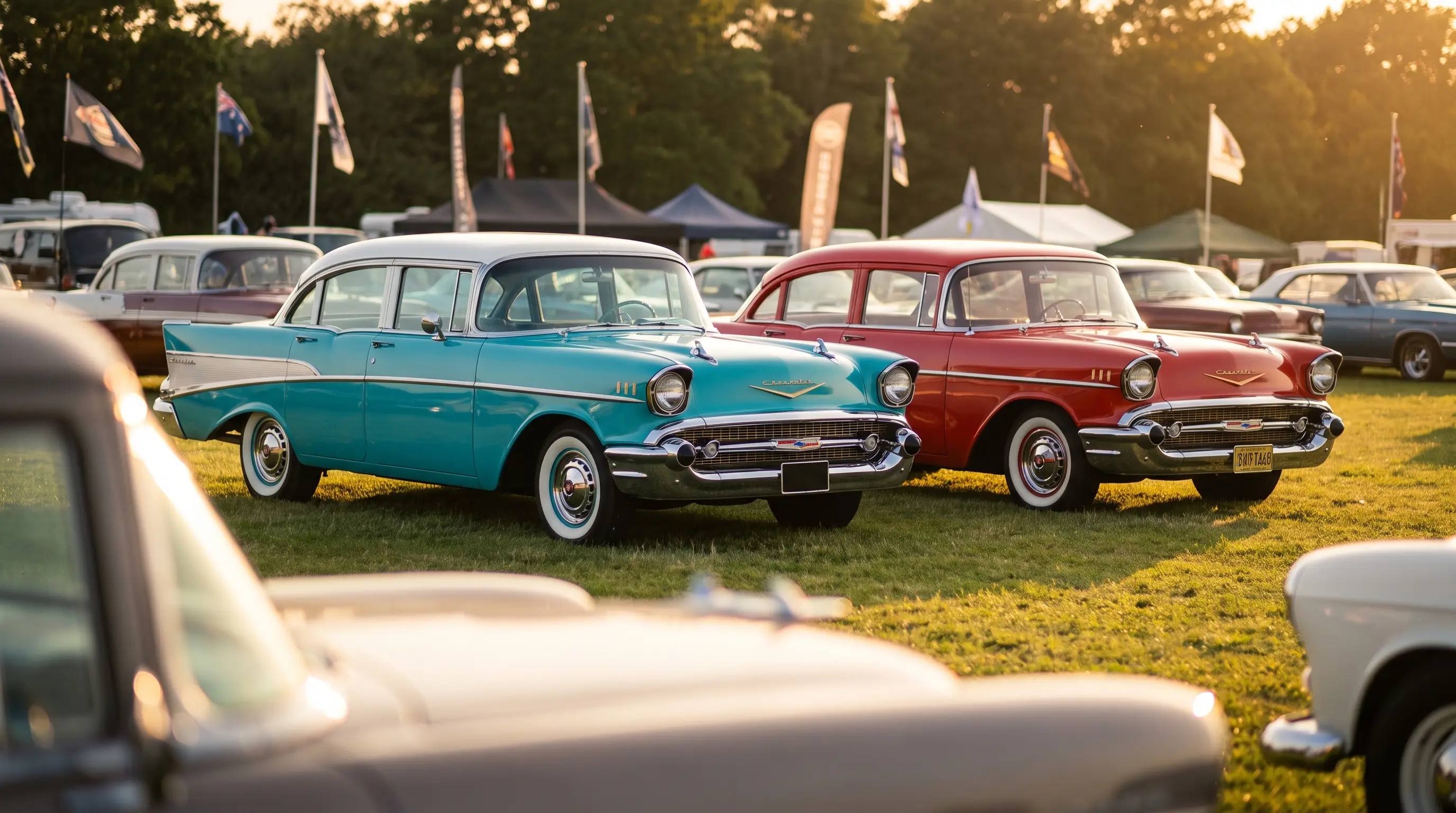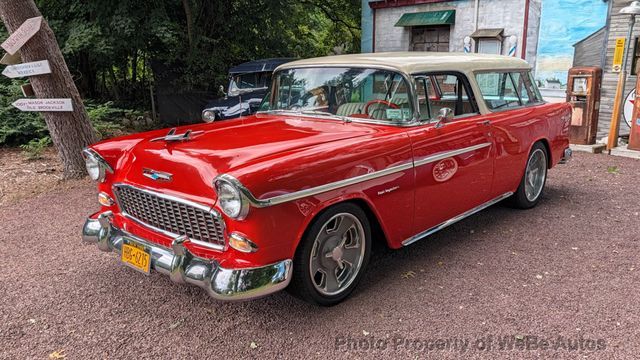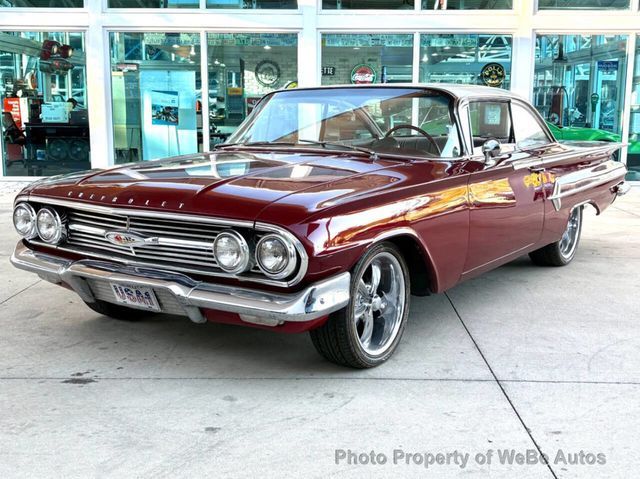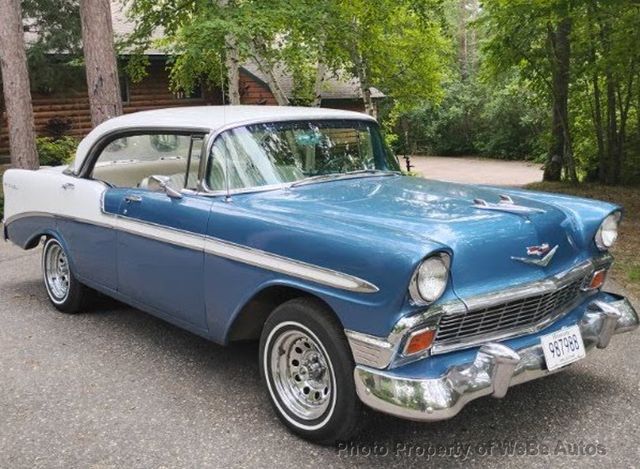
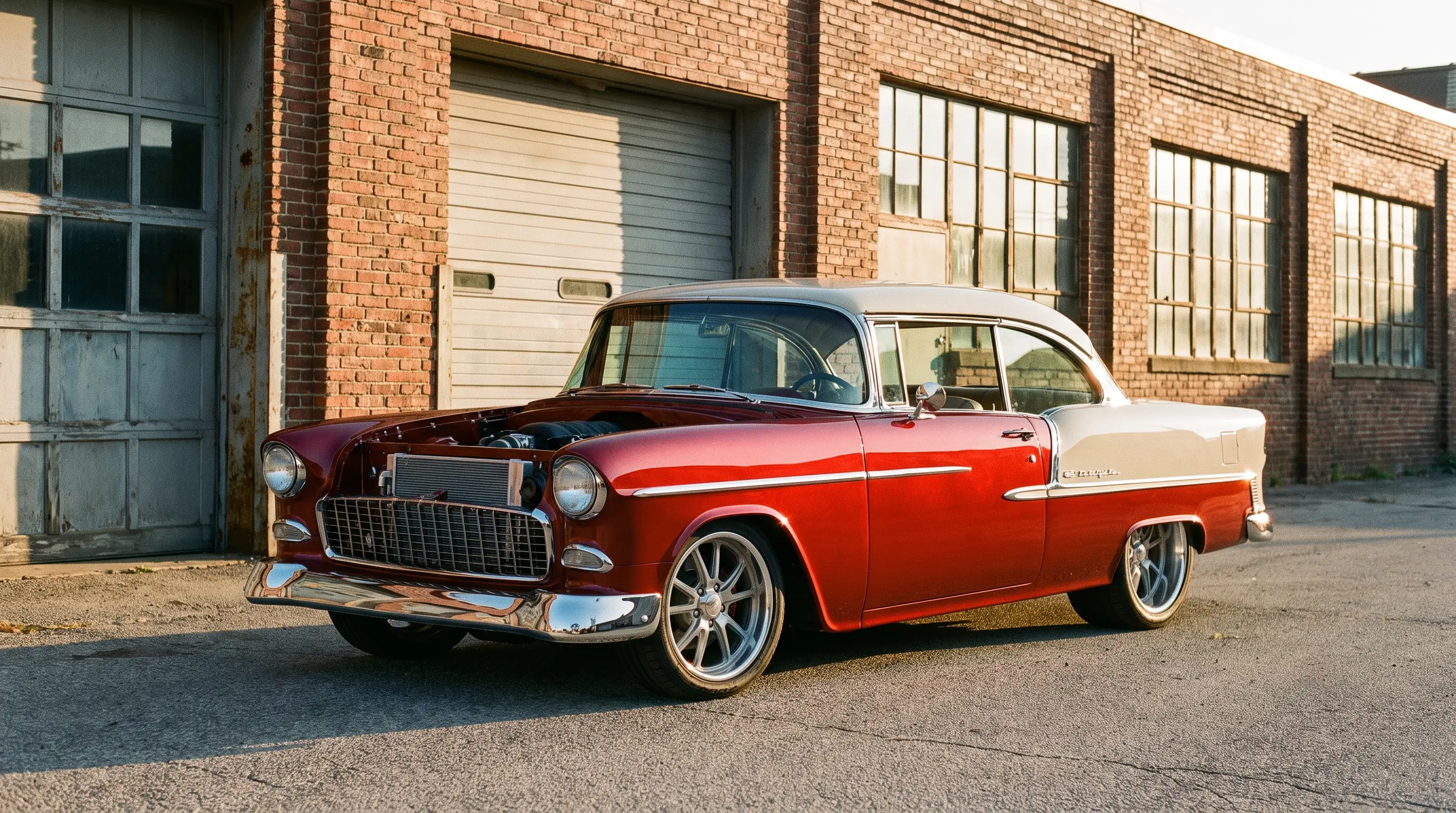
We had a member bring his 1957 Bel Air to a meeting a few years back with air conditioning, disc brakes, and a fuel injected engine that never came anywhere near a factory Chevrolet parts bin, and half the room could not decide whether to admire it or mourn it. That split reaction is the entire tri five restomod movement in miniature. Nobody in our club agrees on where the line sits between preserving history and improving on it, and this particular corner of the hobby has been having that argument for longer than most of us have owned our cars.
What restomod actually means on this platform
A restomod, in the simplest terms, keeps a car's original body and general appearance while modernizing what is underneath, the chassis, the drivetrain, the brakes, sometimes the climate control and interior electronics. The goal is a car that looks period-correct at a glance but drives like something built decades later. Tri five Chevrolets became one of the most common platforms for this treatment because the original body shape is widely admired on its own merits, which means builders do not need to change the styling to make the car appealing, only the mechanicals underneath it.
That distinction matters because it separates restomod work from the hot rod and custom traditions that also draw heavily on this platform. A restomod builder generally wants the car to read as stock from twenty feet away and reveal its modern upgrades only once you look closer or drive it. Compare that to a period gasser build, which announces its modifications with a raised nose and a straight axle, and you can see how differently these communities approach the same starting point.
What actually gets modernized
In practice, the restomod treatment on a tri five Chevrolet tends to follow a fairly predictable pattern across the builds our members have brought through. Suspension is almost always first, since the original chassis, while adequate for its era, does not handle like anything built in the last few decades. Brakes come next, with disc conversions being close to universal on serious builds because stopping power is not a place most builders want to stay period-correct. Engine choices vary more widely, ranging from built-up versions of the original small block family to modern fuel injected crate engines that trade some historical purity for genuinely different levels of reliability and drivability.
Popular modern crate engine swaps on this platform, GM's LS-family V8s in particular, typically land somewhere between roughly 400 and 500-plus horsepower depending on the specific engine and build, with the high end pushing past 500 for something like an LS7. Whatever the specific number a given build lands on, the philosophy behind the swap is usually the same: keep the shape everyone recognizes, give it the performance and reliability people expect from a modern car. It is a compromise, and like most good compromises, it satisfies almost nobody completely while still producing cars that a lot of people genuinely want to drive.
Why the debate in our club never really ends
Purists argue that a heavily restomodded tri five stops being a historical artifact and becomes something closer to a new car wearing a vintage costume, and I understand the argument even when I do not fully agree with it. There is something lost when the original engineering gets swapped out wholesale, a disconnect from exactly how the car drove when it was new, which is part of what makes an original, unmolested example valuable in its own right. Restomod advocates counter, reasonably, that a car nobody wants to actually drive because the original mechanicals feel dated is a car headed for a garage corner rather than a road trip, and a road trip is a better use for a car than a garage corner.
Both sides are right, honestly, which is exactly why the debate persists rather than resolving. What I will say from decades of watching this platform specifically is that the tri five body handles the restomod treatment better than almost any other classic shape I have seen, because the proportions were strong enough to begin with that lowering the stance and cleaning up the details tends to improve the look rather than fight it. For the fuller history of how this platform got such a strong original design to work from, read the background on how the 1955 through 1957 lineup developed in the first place.
"I do not think a restomod is a lesser car than an original. I think it is a different answer to the same question, which is how do you keep something this good on the road for another seventy years."
- Wayne Coburn
What a good restomod build costs versus what it saves
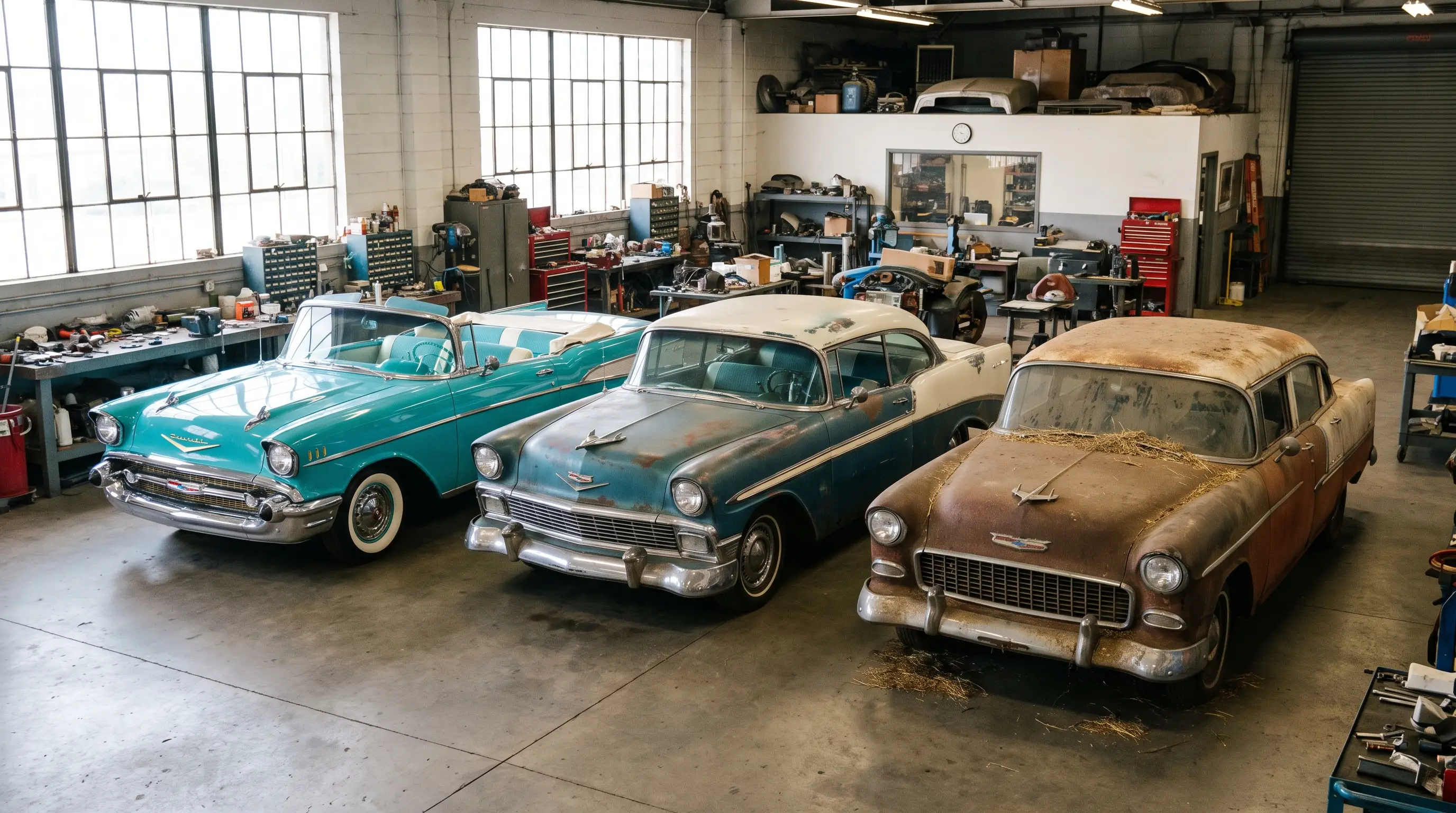
Members considering their first restomod project always ask the same question at the start, and it is a fair one: is it cheaper to do this yourself or buy a car somebody else already finished. The honest answer is that a self-built project rarely comes out cheaper once you total the hours and the inevitable mistakes along the way, but it comes out more personal, tuned to exactly what you wanted rather than what a previous owner prioritized. A finished build purchased outright usually costs less than replicating the same work from scratch, since the seller absorbed the learning curve and the labor costs that a first time builder has to pay for directly out of pocket.
Either path is legitimate, and our club has plenty of members who chose each one happily. What matters more than which path you pick is being honest with yourself about your skills, your patience, and your timeline before you commit to either one, because a half finished restomod sitting under a cover for years helps nobody, least of all the car.
Buying into the restomod scene
If a restomod tri five appeals to you more than a numbers-matching original, the market has grown enough to support real choice at every price point, from partially updated cars with a single suspension upgrade to complete builds with modern drivetrains, wiring, and climate control throughout. Quality varies enormously, so a careful inspection matters even more on a restomod than on a stock car, since you are evaluating both the original bones and the quality of whatever modern work has been layered on top.
Whether you land on a restomod or decide the original engineering is the whole point for you, the search usually starts the same way, by finding a solid base car to work from or a finished build somebody else already sorted out. Keep an eye on where you can find a classic Air, since good candidates for either path move quickly once serious buyers spot them, and the tri five market has never been forgiving toward hesitation.