
Everybody remembers the Bel Air. Almost nobody outside serious collector circles remembers that Chevrolet sold two other full size trims right alongside it for the entire 1955 through 1957 run, and that those two trims, the 150 and the 210, actually outsold the car that gets all the magazine covers in several of those years. The chevy 150 210 tri five story is the story of the siblings who did the unglamorous work while the famous one got the attention, and it deserves more than the footnote it usually gets.
Car Features
6 min read
The 150 and 210: The Bel Air's Cheaper Siblings
The Bel Air gets the fame, but the 150 and 210 outsold it in several tri five years and quietly built a collector following of their own.
Three trims, one platform
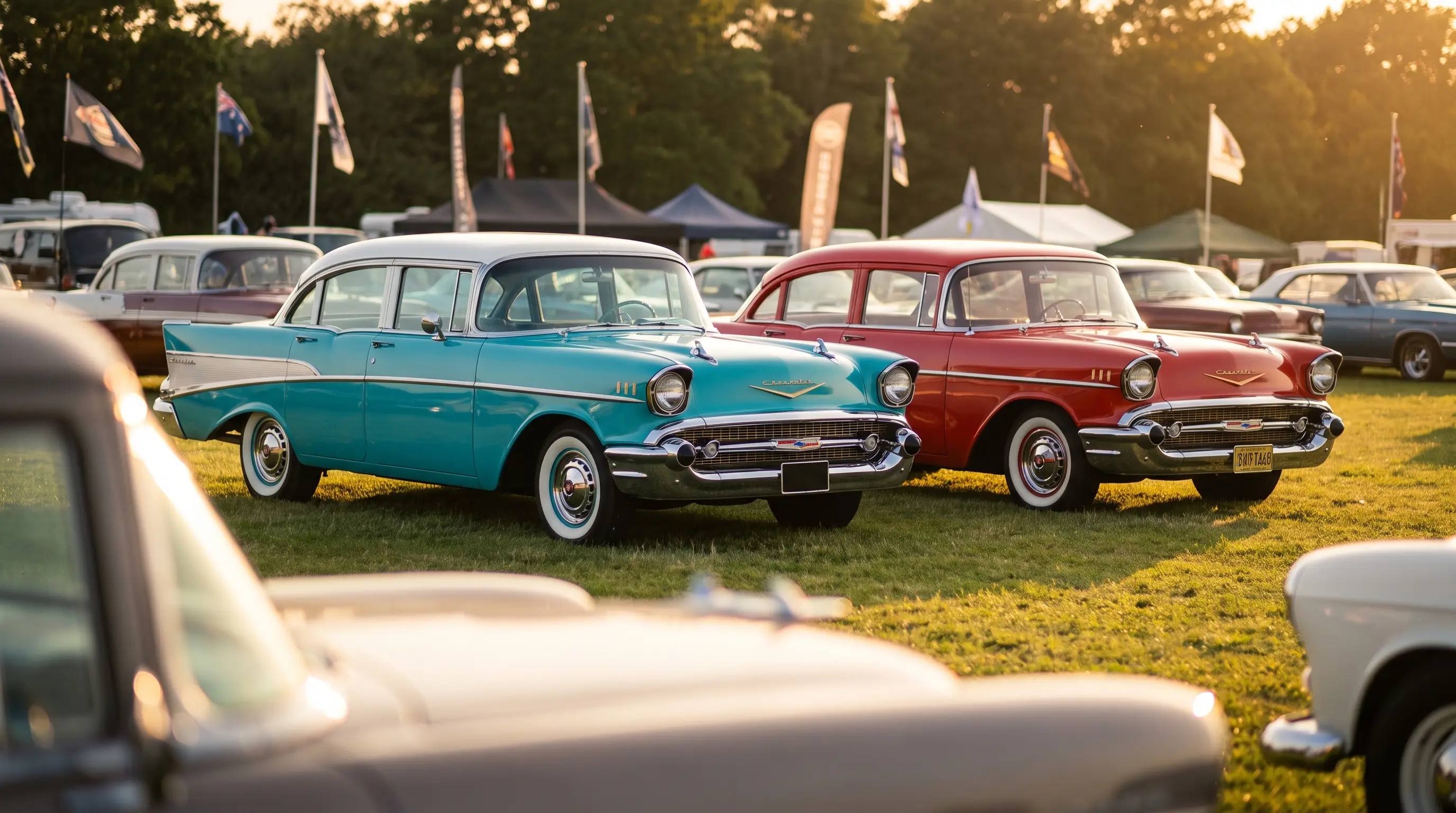
Chevrolet structured its 1955 through 1957 full size lineup in a straightforward hierarchy. The 150 sat at the entry level, stripped of most trim and chrome, aimed at buyers who wanted a Chevrolet at the lowest possible price and did not care about looking fancy doing it. The 210 sat in the middle, adding chrome trim, better interior materials, and a wider range of body styles including some genuinely handsome two door hardtops. The Bel Air topped the range, with the most chrome, the nicest interiors, and the styling flourishes that turned it into the trim everyone remembers.
All three shared the same chassis, the same body shell dimensions, and the same engine options, including the small block V8 that defined the era mechanically. The differences were almost entirely cosmetic and material, chrome trim here, better upholstery there, an extra body style option on one and not the other. A 150 and a Bel Air from the same model year are mechanically nearly identical cars wearing very different outfits.
Why the 150 and 210 mattered more than people assume
Volume tells the real story. In several years of the tri five run, the 150 and 210 combined outsold the Bel Air by a wide margin, because most buyers in the mid-1950s were not shopping for the flashiest trim, they were shopping for an affordable, reliable family car. Fleet buyers, taxi companies, and budget-conscious families gravitated toward the 150 specifically because it delivered the same underlying mechanical goodness at a lower price point. The 210 split the difference, giving buyers who wanted a little more style without the Bel Air's premium a genuinely appealing middle option.
That sales reality gets lost today because collector attention overwhelmingly favors the Bel Air, but it matters for understanding the era honestly. Chevrolet's tri five success was not built on one glamorous trim level, it was built on a full lineup that worked at every price point, and the 150 and 210 did the heavy lifting that let the Bel Air exist as the aspirational top of the range in the first place.
The collector market's quiet reversal
Here is where the story gets interesting for anyone shopping this market today. Because the 150 was built in such stripped-down form, with less chrome and less brightwork to source and restore, and because its lighter weight made it a natural choice for performance builds, certain 150 body styles have developed genuine collector followings of their own, sometimes commanding prices that would have astonished the original buyers who chose it specifically because it was cheap. The 210, meanwhile, sits in an interesting middle position, less common than the Bel Air in collector circles but offering a lot of the same visual appeal for buyers willing to shop outside the most obvious trim level.
For a full picture of how these siblings fit into the platform's overall reputation, our tri five chevy retrospective covers the broader story of how Chevrolet built and marketed the entire 1955 through 1957 lineup, Bel Air included. Understanding the full trim hierarchy actually makes evaluating any individual tri five car easier, because you can place a given example correctly instead of assuming every tri five Chevrolet you encounter is automatically a Bel Air.
"The Bel Air gets the magazine covers because it earned them, but the 150 and 210 are why Chevrolet could afford to build a car nice enough to earn them. Do not skip the siblings just because nobody put them on a poster."
- Patrick Walsh
Telling the trims apart at a glance
Once you know what to look for, spotting the difference between a 150, a 210, and a Bel Air becomes second nature, and it is a skill worth building before you shop this market seriously. The 150 carries minimal side trim, often just a simple horizontal spear rather than the more elaborate chrome sweeps found on the higher trims, and its interior door panels and dashboard trim are noticeably plainer. The 210 splits the difference with additional chrome trim and a wider color and upholstery selection, while still stopping short of the full brightwork treatment. The Bel Air gets the most side trim, the fanciest interior materials, and, depending on year, unique badging that sets it apart at a glance even from ten feet away.
None of those differences touch the engine bay or the chassis, which is worth repeating because it surprises people every time. A buyer choosing between a well kept 210 and a rougher Bel Air is not choosing between different mechanical experiences, only between different levels of cosmetic finish and, generally, different price tags. For a lot of buyers focused on driving rather than showing, that tradeoff favors the less celebrated trims every time.
What this means if you are shopping the market
If you are hunting for a tri five project and assumed Bel Air was your only real option, it is worth widening the search. A clean 210 hardtop offers real style at a friendlier price point than an equivalent Bel Air, and the mechanical experience underneath is essentially identical since they share the same drivetrain options. A 150, particularly in two door form, is worth a serious look if performance and modification are more your priority than chrome trim and badge prestige, since builders have been drawn to exactly that combination for decades already.
Buyers exploring modified or restomod builds on this platform might also want to look at a related story covering how the restomod scene approaches these cars, since a lot of that movement draws on lighter trim levels just as often as it draws on the Bel Air. Whichever trim ends up calling to you, the shared mechanical foundation across all three means you are never locked out of good parts support, and when you are ready to look seriously, keep track of where classic Airs for sale now tend to surface, since good examples across all three trims move quickly once serious buyers spot them.
The Bel Air earned its fame honestly. But the tri five story only makes full sense once you give the 150 and the 210 their due, because without them doing the unglamorous volume work, there is no top of the range for the Bel Air to sit at in the first place.
Sources and notes
Related Reading
Have a
Chevrolet Bel Air
for Sale?
Reach thousands of serious classic car collectors across the US.
Sell It Here →
Are You a Classic Car Dealer?
List your full inventory and connect with targeted classic car buyers.
Join as a Dealer →

About the author
Patrick Walsh
Automotive journalist covering classic car shows, events, and the enthusiast community across North America.
Related Listings - Chevrolet Bel Air
Comments
Be the first to comment on this article.