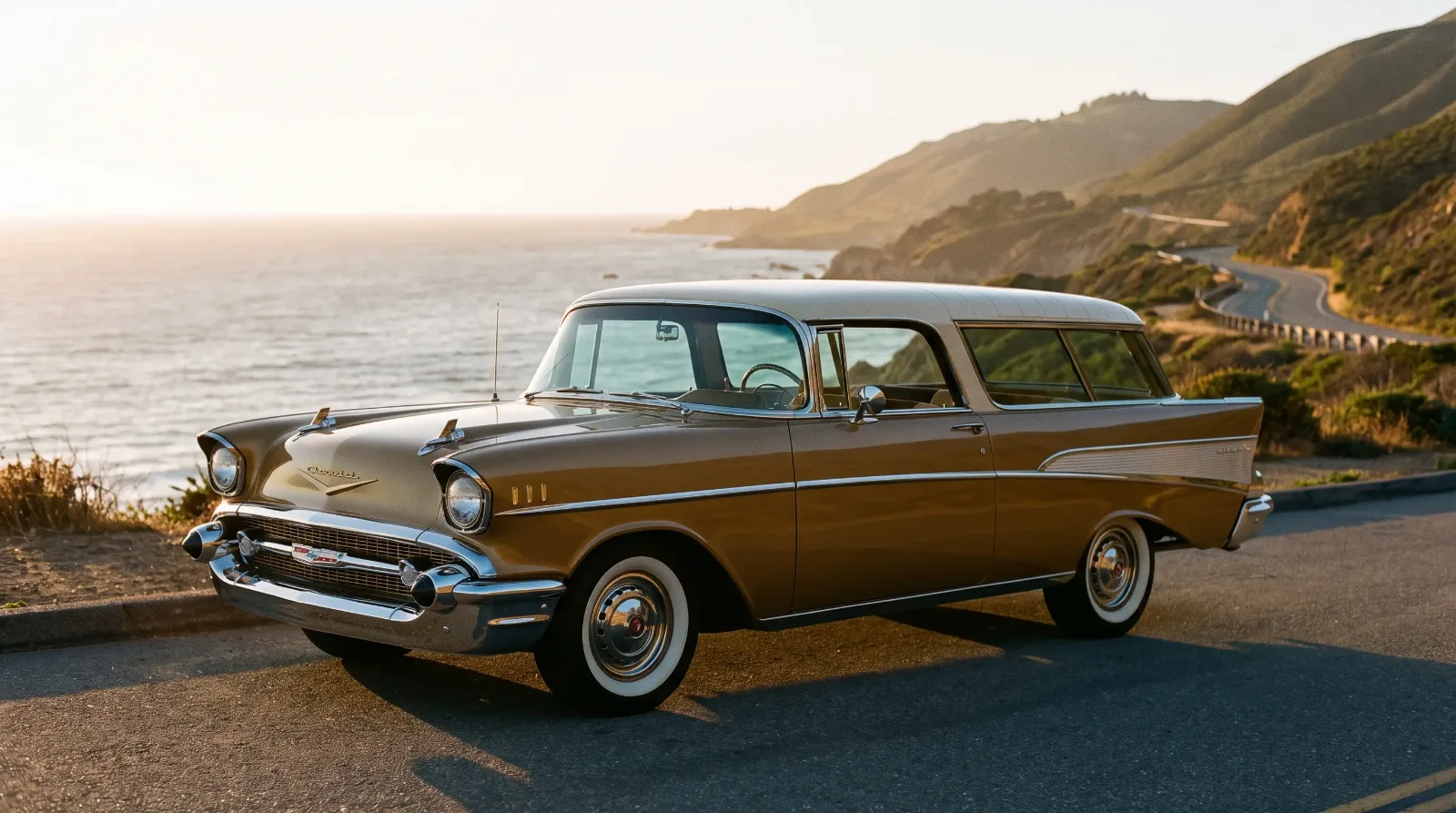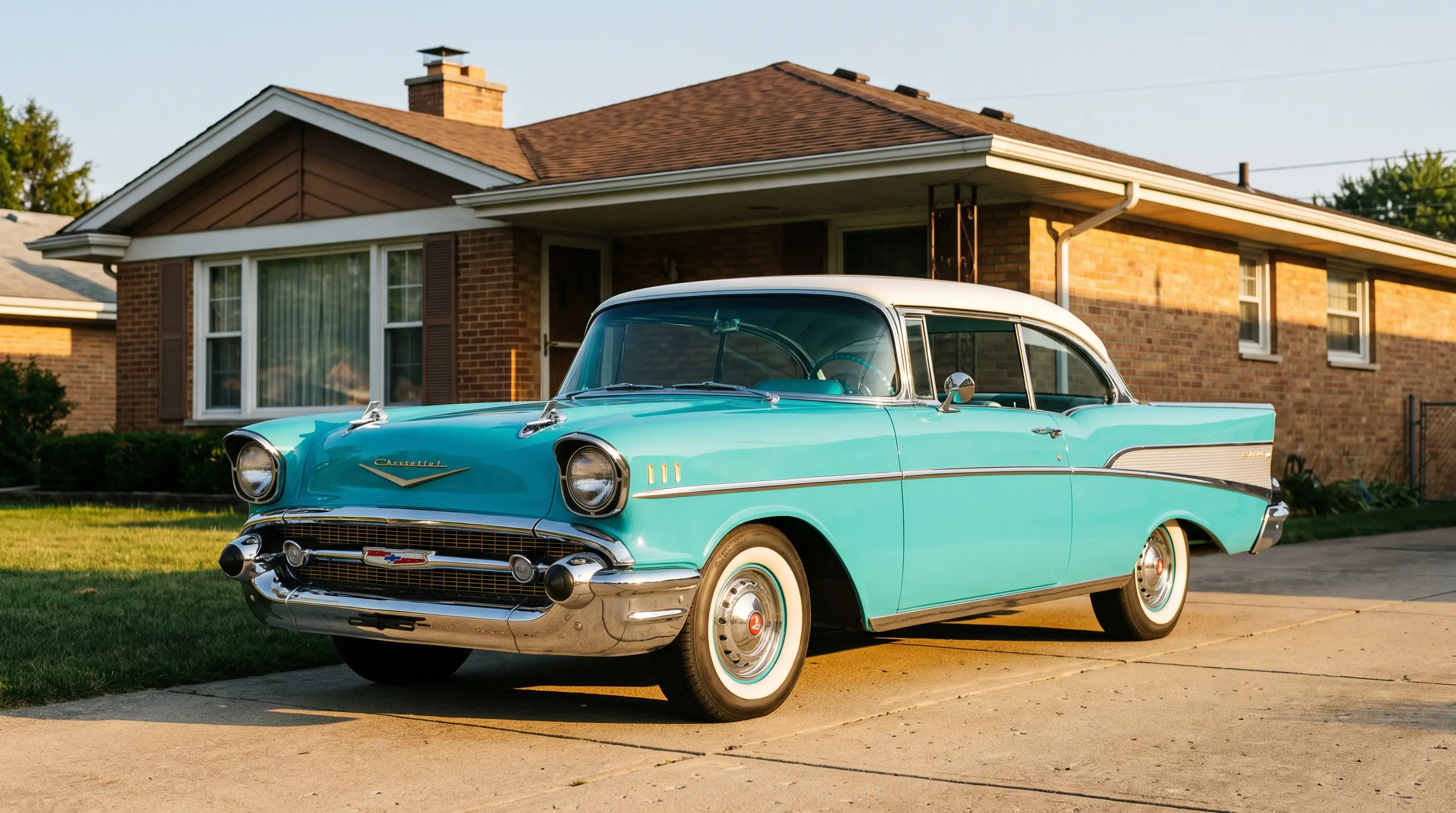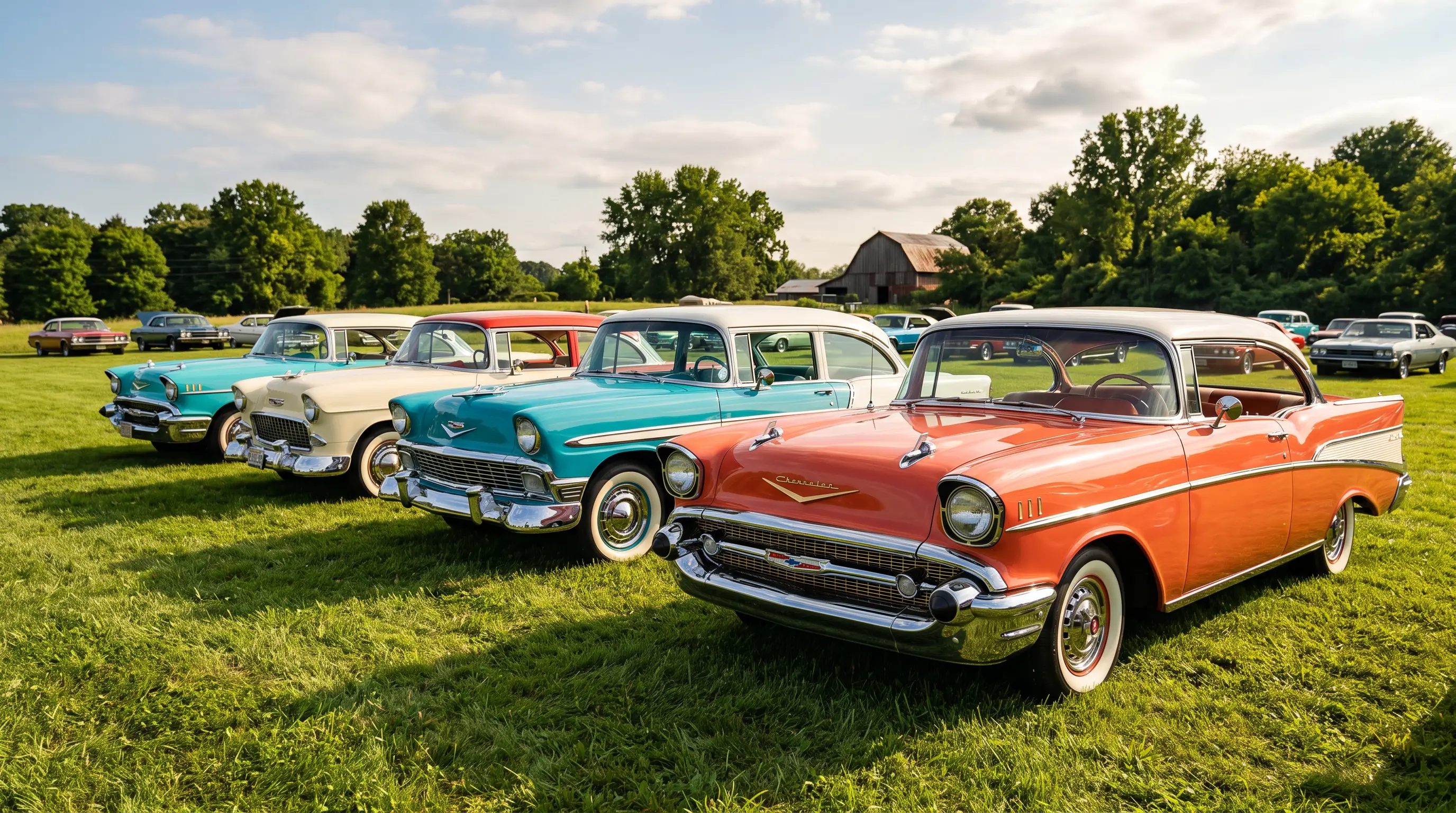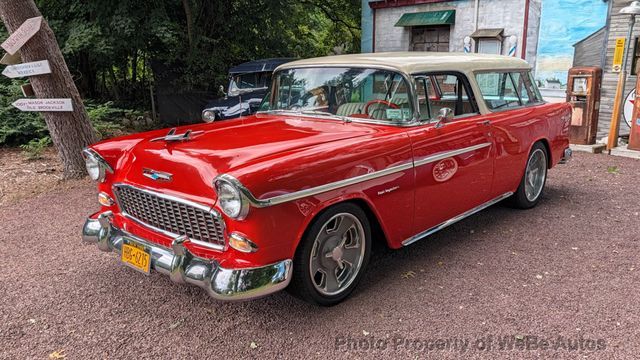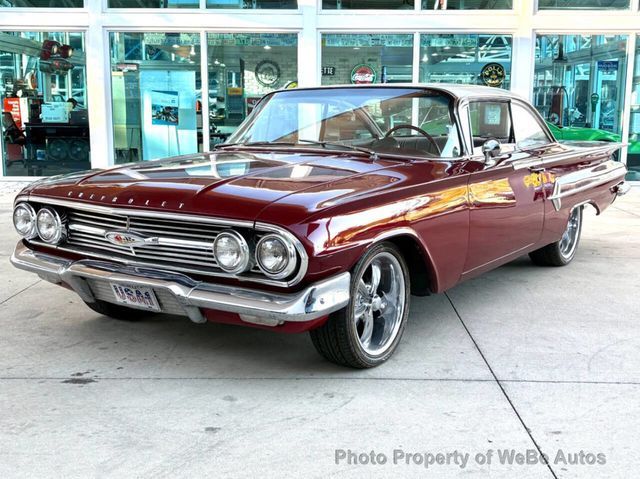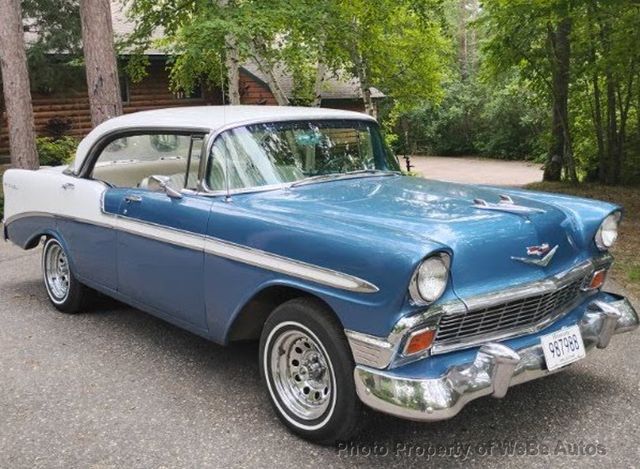
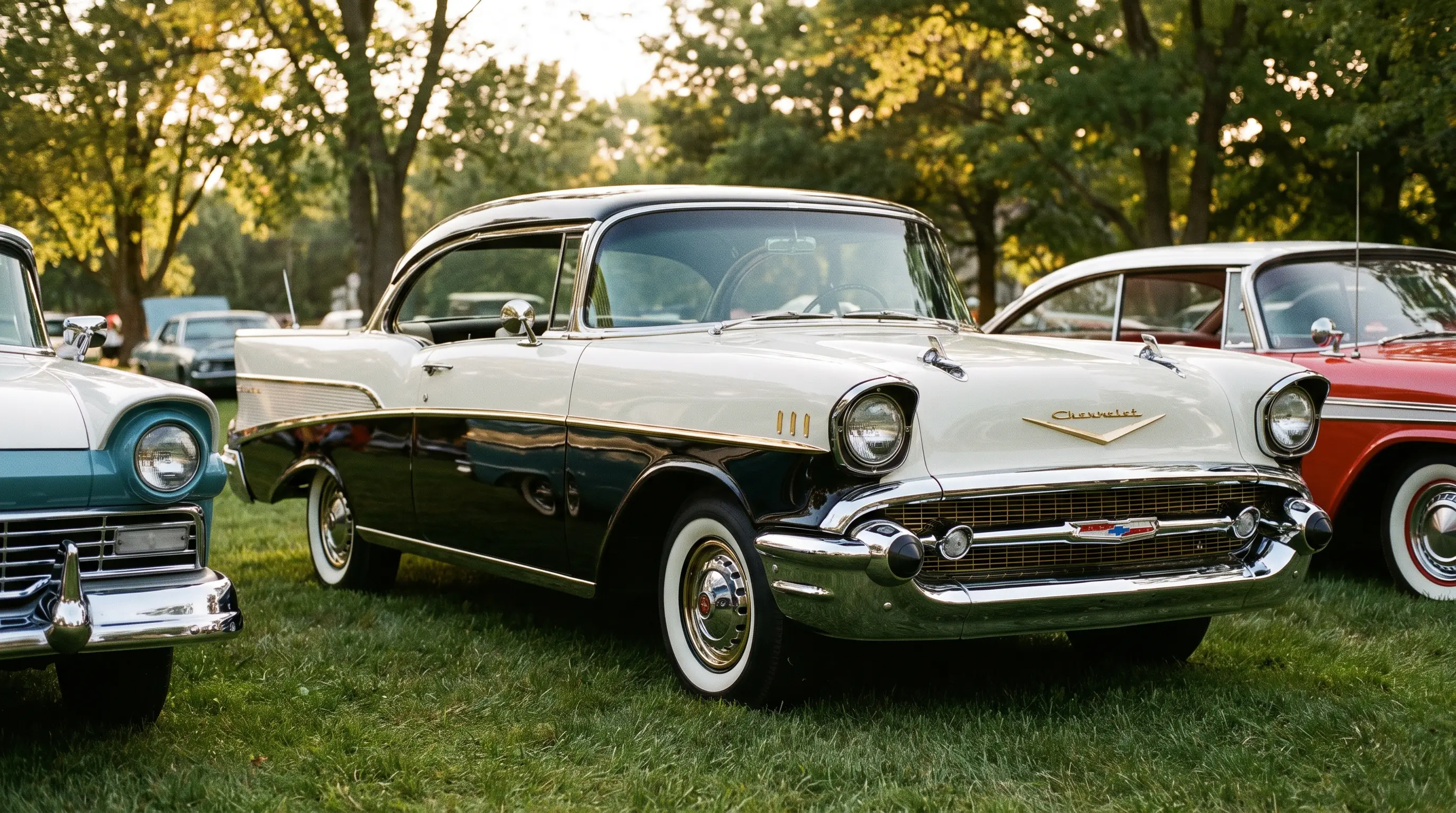
Sit at any tri five club meet long enough and somebody will bring up the old argument, the one about tri five vs Ford Plymouth bragging rights back when these cars were new instead of restored. I have heard it argued over folding tables at swap meets in three different states, usually by men old enough to remember buying one of the three cars new, and the argument never really ends, it just gets passed to the next generation with the same three names attached.
Three brands, one battle, and Chevy won on paper
In 1955 Ford, Chevrolet, and Plymouth were fighting over the same buyer, the same price range, and roughly the same customer who wanted a reliable family car with a little style. Chevrolet's answer was the Bel Air with the new small block V8. Ford's answer was the Fairlane with its Y block V8. Plymouth came at it differently with the Belvedere and, once it landed, the Fury.
By the numbers Chevrolet won that fight decisively. Sales figures across the mid 1950s show Chevrolet outselling Ford in most of those years and both brands leaving Plymouth well behind, and that gap only widened once the Bel Air's V8 reputation spread by word of mouth in machine shops and used car lots. But sales numbers do not settle bar arguments, and the tri five vs Ford Plymouth debate has never really been about who sold more. It is about which car was better, and that question depends entirely on who you ask.
What the Ford guys will tell you
Ford loyalists point to the Fairlane's ride quality, which a lot of period reviewers rated as smoother than the Chevrolet, and to Ford's reputation for solid build quality in those years. The Thunderbird halo effect helped Ford's whole 1955 to 1957 lineup too, giving Fairlane buyers a little of that two seater glamour by association even though the Fairlane itself was a completely different, more practical car.
Where Ford could not keep pace was under the hood. The Y block V8 was a fine engine, but it never developed the same speed shop following as the Chevrolet small block, and it never got as cheap or as easy to hot rod. That single difference shaped how each car aged in the culture. Chevys ended up in more garages with the hood up because parts and knowledge were everywhere, while Fords stayed more original longer simply because fewer people were tearing into them for speed.
What the Plymouth guys will tell you
Plymouth's case is the most interesting one, because for one specific year they actually had the fastest of the three. The 1956 Fury, with its 303 cubic inch V8 tuned specifically for that model, out muscled anything Chevrolet or Ford offered off a showroom floor that year. Mopar fans have never let anyone forget it. The trouble for Plymouth was volume and staying power. The Fury was a low production specialty model, not a mainstream seller, and Plymouth as a whole never built the cultural momentum Chevrolet did with the tri five nameplate. Great engineering in a small batch does not outlast a huge production run that ends up parked in thousands of garages for the next sixty years.
Why the Chevy still owns the argument today
Walk any car show today and count the tri fives against the Fairlanes and the Belvederes parked nearby. The count will not be close, and that imbalance is really what settles the argument in most people's minds, whether or not it is fair. Survivorship matters. A car that got hot rodded, raced, driven daily, and then finally restored by the third or fourth owner leaves behind a much bigger footprint of surviving, documented, club supported examples than a car that quietly rusted away in driveways because nobody wanted to rebuild the Y block.
Parts availability sealed it. A tri five owner today can source reproduction sheet metal, trim, and drivetrain parts from a dozen suppliers without much trouble. A Fairlane or Belvedere owner from the same years has a thinner catalog to work from, and that gap pushes new collectors toward the Chevy almost by default, which then reinforces the Chevy's dominance at every swap meet and every show for another generation.
"I owned a 56 Fairlane before I ever owned a tri five, and it was a fine car. But when the water pump needed a rebuild kit, the Chevy guys had six places to call and I had one. That is the whole story right there."
- Wayne Coburn
How the styling argument plays out
Styling gets its own separate debate at every meet, and it is a fairer fight than the mechanical one. The 1957 Chevy's fins and twin headlight treatment get the most magazine covers of the era, but plenty of Ford fans will tell you the Fairlane's cleaner, less busy lines have aged better and look less dated in a modern parking lot. Plymouth's Forward Look styling under Virgil Exner pushed further into fin territory than either Ford or Chevrolet for 1957, and depending on who is judging, that either makes the Fury the boldest looking car of the three or the most over the top.
What nobody argues about is that all three companies were reacting to each other in real time during those years, each one trying to out style the last year's rival rather than working from some grand five year plan. That back and forth is part of what makes the mid 1950s such a rich stretch to study, because you can trace a styling cue from one brand to the next almost model year by model year, each one answering the last.
The rivalry lives on at every show field
None of this settles the argument, and it should not. Part of the fun of tri five ownership is having something to argue about with the Ford and Plymouth guys parked two rows over, and every one of them has a grandfather or an uncle who swears their brand was the real winner in 1956. That is the whole appeal of a good rivalry, it survives the facts. For readers who want the deeper history behind why the tri five held its ground so well against both rivals, the full story covers the model's rise from showroom fight to collector favorite in more detail.
If the argument has you leaning toward finally owning a piece of that history instead of just debating it, there is always classic Air for sale to go look at in person, which settles more arguments than any spec sheet ever will. Sit in one, listen to the V8 idle, and decide for yourself which side of the folding table you belong on.