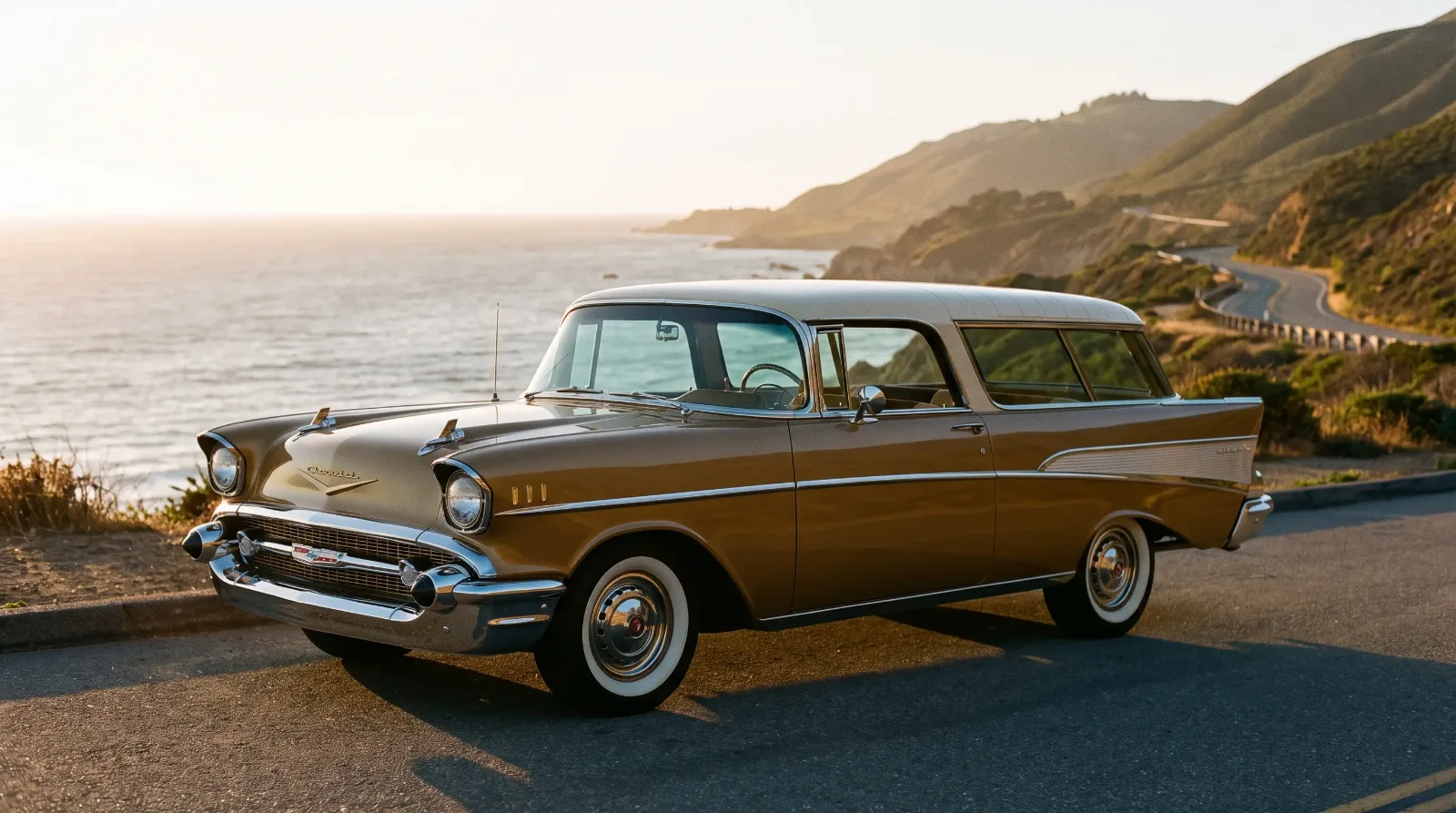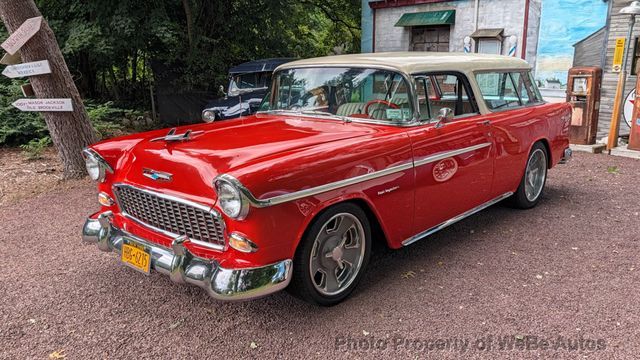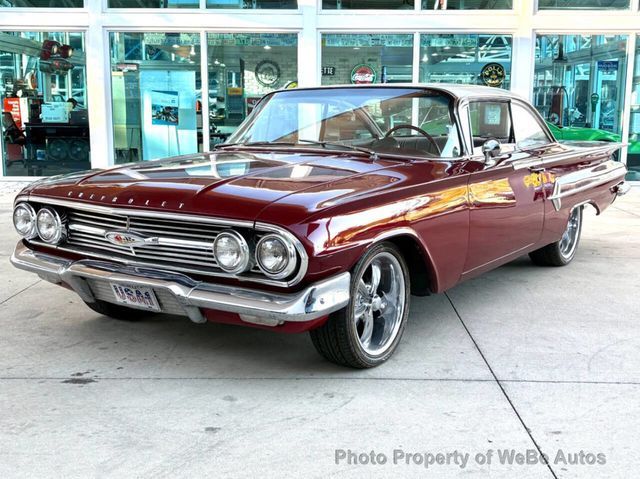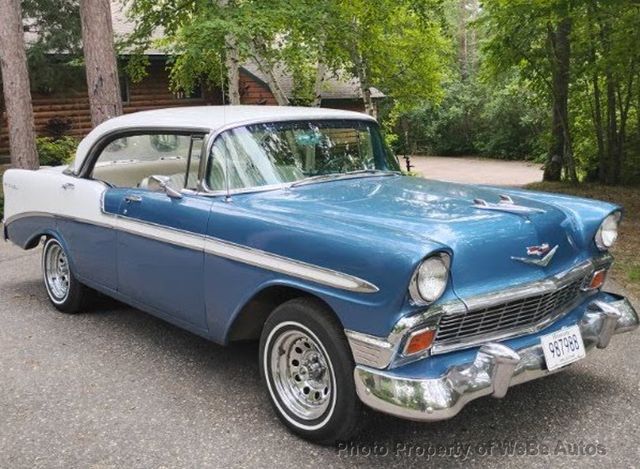
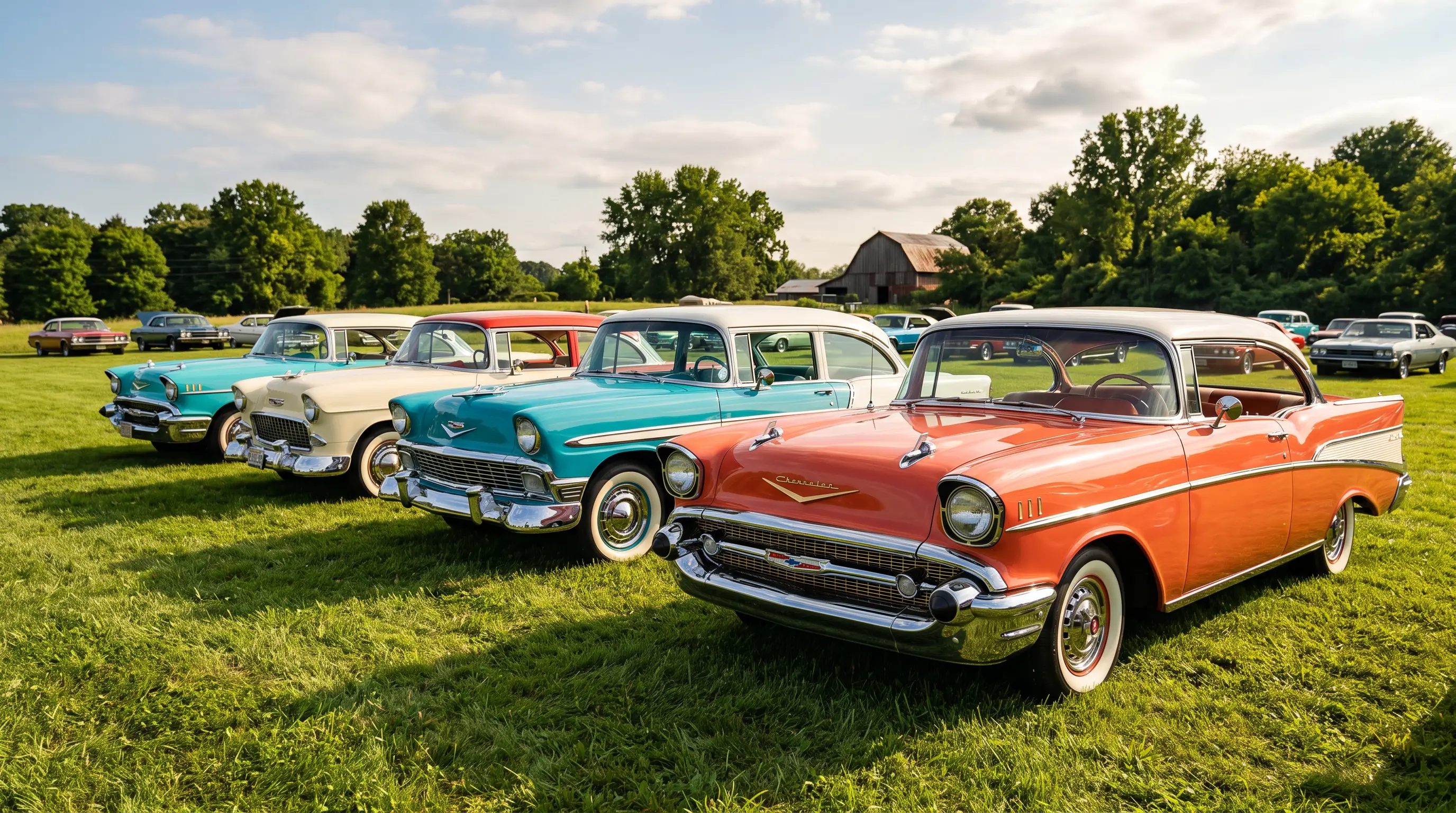
You do not get far into tri five Chevy club life without somebody handing you a coffee and a lecture about the wrong kind of brake hardware. That is how it works. The tri five chevy club scene is less a hobby and more a running education, and most of what you actually learn about these cars comes from other owners, not from any book.
Local first, national second
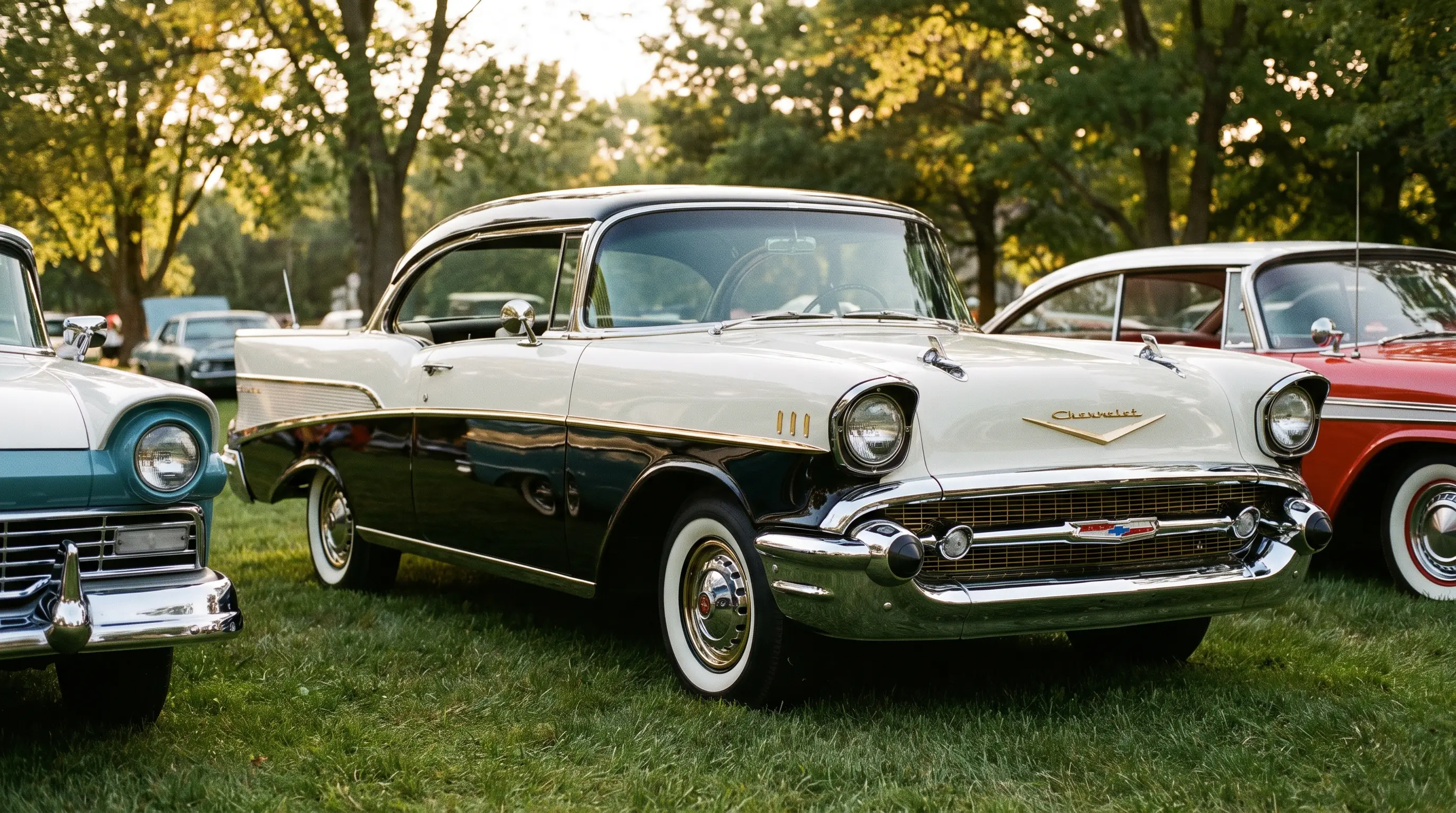
Most people's first exposure to organized tri five ownership is a local car show, not a national club roster. Somebody rolls up in a clean 1957 hardtop, somebody else has questions, and twenty minutes later there is an informal conversation happening in a parking lot about master cylinder bore sizes and where to find a good rechrome shop. That informal network, repeated at shows across the country every weekend, is the real backbone of tri five ownership, even more than the formal clubs with dues and newsletters.
The formal side matters too. National and regional tri five and full size Chevy clubs run judged shows, keep production and options reference data, and publish technical bulletins that save members from repeating mistakes other owners already made and wrote up. A club newsletter from thirty years ago solving a wiring gremlin still solves that same gremlin today, because the car has not changed even if the internet has.
What club membership actually gets you
New owners usually join for the show field and stay for the parts network. A functioning club roster is a phone book of people who have already solved the problem you are stuck on, whether that is sourcing a correct dash bezel or figuring out which reproduction quarter panel actually fits without three hours of trimming. That knowledge transfer is worth more than most people expect when they first pay their dues.
Judged shows are the other half of the draw. Concours style judging on tri five Chevys has gotten detailed enough that owners chasing top scores need to know things like correct paint codes, correct hose clamp styles, and correct decal placement, information that is genuinely hard to find outside a club environment where somebody has already done the archival digging.
The community solves problems the manual never covers
Factory service manuals tell you torque specs and clearances. They do not tell you which reproduction wiring harness has the connector shaped wrong, or which vendor's fuel sending unit reads inaccurately once installed. That kind of practical, hard won knowledge lives in club forums, in swap meet conversations, and in the memory of members who have been rebuilding these cars since the parts were still available new.
I have fixed problems on my own tri five faster because somebody at a regional meet mentioned offhand that a particular vendor's gasket set does not seal correctly on early production heads. That is not information you find in a parts catalog. It is information you find standing next to somebody else's open hood, and the club structure is what puts you next to that hood in the first place.
"Half the value of club membership is the show trophy. The other half is the guy two spaces down who already made the mistake you are about to make and is happy to save you the trouble."
- Mike Sullivan
Swap meets do more work than most people realize
Every club calendar builds around a handful of swap meets and drive-in events each year, and those events are where the theoretical knowledge from a newsletter turns into an actual box of correct parts on a folding table. A tri five owner hunting a specific trim piece or a date-coded part can walk a swap meet field and find three vendors who specialize in nothing but that one model year, something that simply does not exist for a lot of other 1950s cars. That specialization is a direct result of decades of sustained club interest keeping demand steady enough for small vendors to stay in business.
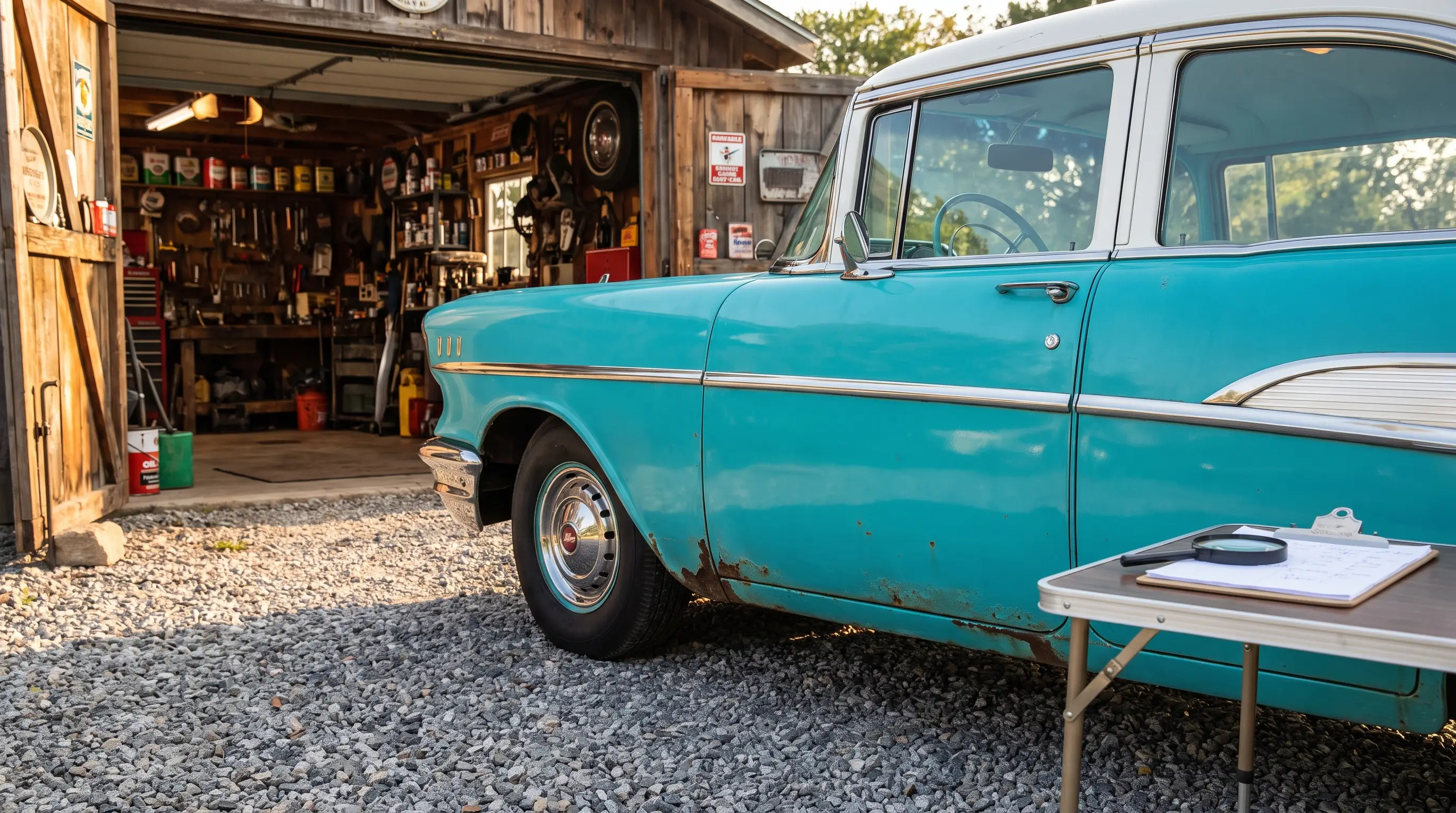
Those same events double as informal appraisal clinics. Bring a car with a question mark on it, park it near the show field, and within an hour somebody who has restored a dozen tri fives will have walked around it, pointed out what is original and what has been replaced, and probably told you what a fair price for a similar car would be. That kind of instant, experienced feedback loop is hard to replicate anywhere else in the classic car hobby.
Where the community is headed
The tri five club world is aging in an obvious way, with a lot of longtime members who bought these cars new or bought them cheap as teenagers in the 1960s now in their seventies and eighties. What keeps the clubs alive is a steady trickle of younger owners drawn in by the styling and the culture, even though they never lived through the original era. Those newer members bring fresh energy and, often, fresh money for restorations, while the older members bring the institutional memory that keeps the cars correct instead of just good looking.
That mix, old knowledge and new enthusiasm, is what keeps a tri five chevy club functional decades after the cars themselves stopped being ordinary transportation. It also means the clubs are slowly changing shape, with online forums and group chats supplementing the printed newsletter without fully replacing it, since a lot of the older membership still prefers a phone call to a message thread when something under the hood is not behaving.
Whatever form the communication takes, the underlying function stays the same: a network of people who have already fixed the problem you are about to have, and who are, more often than not, glad to talk your ear off about it over coffee at the next show. Readers curious about how that community grew out of the car's original popularity can find our complete history of the tri five years, which covers a lot of the same ground the old timers cover at a swap meet table, just with footnotes.
If a weekend at a local show has you thinking about joining the ranks instead of just watching from the sidelines, it is worth taking the time to browse classic Air listings before you commit, since the right club connections can make a project car search a lot less painful than doing it alone. Ask around before you buy. Somebody at the next show has already been through exactly what you are about to go through.