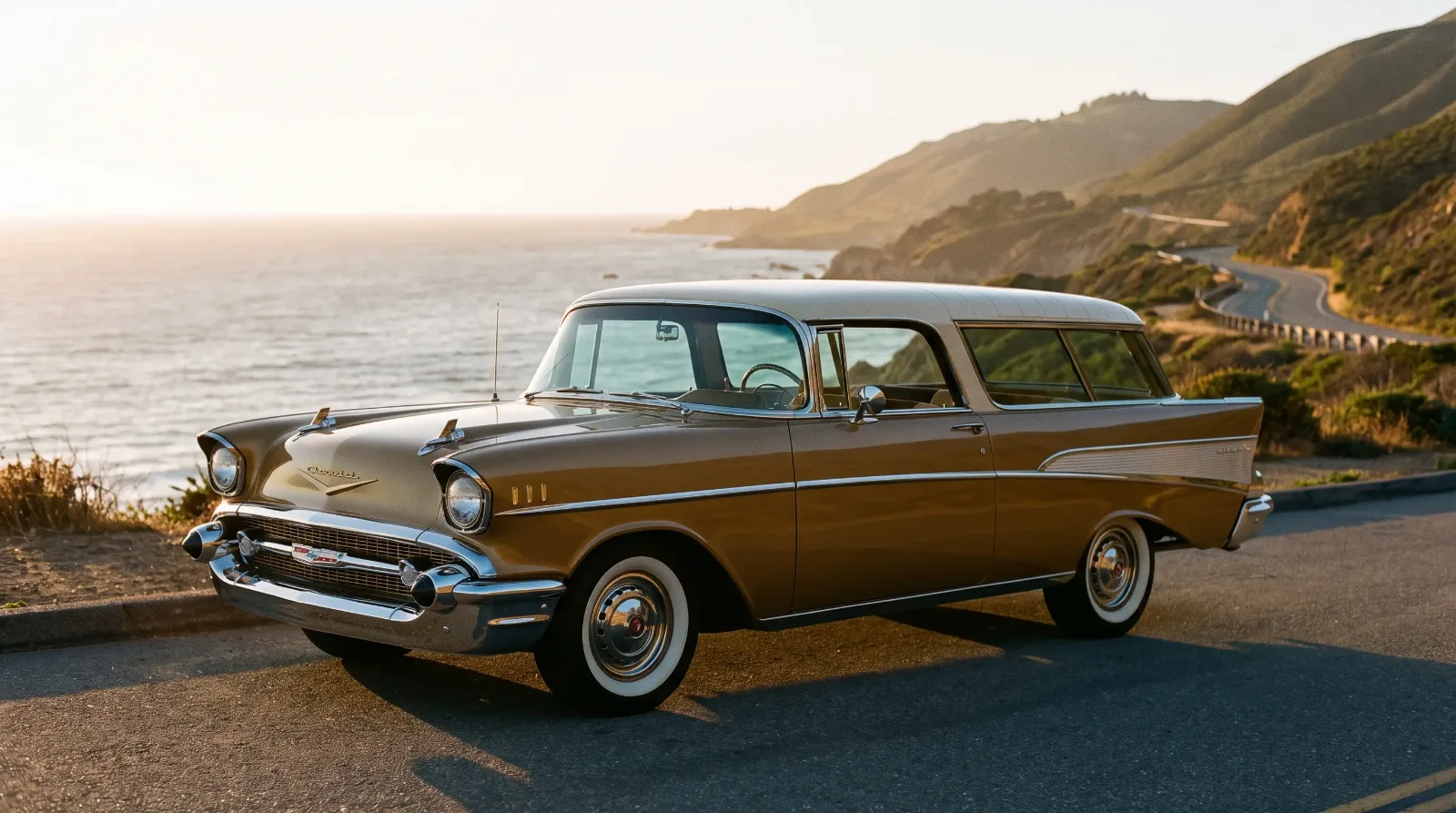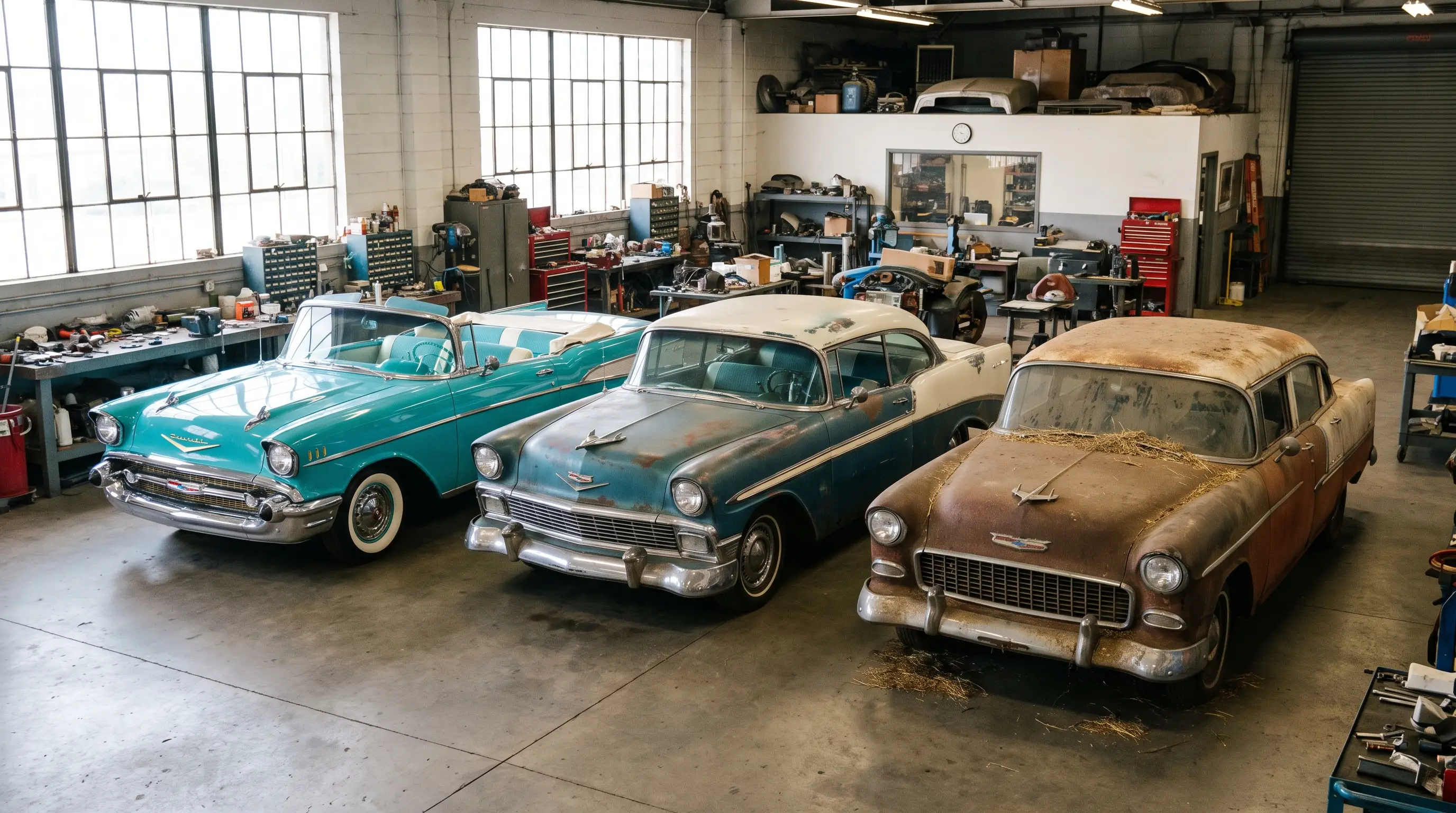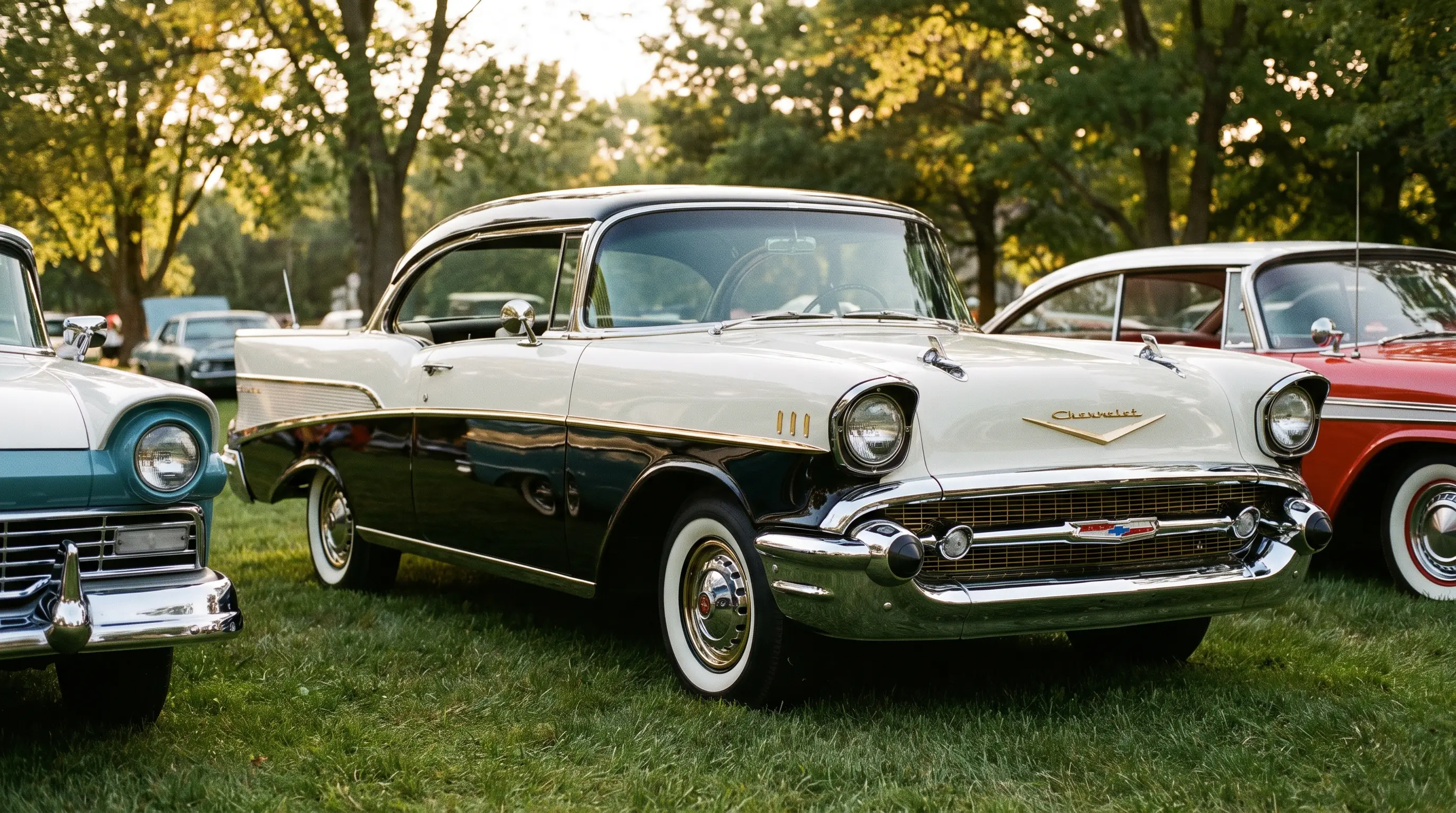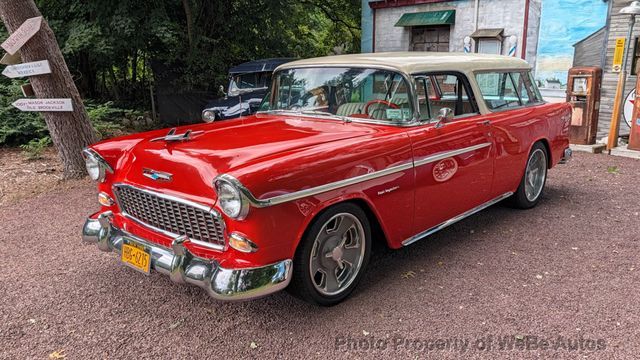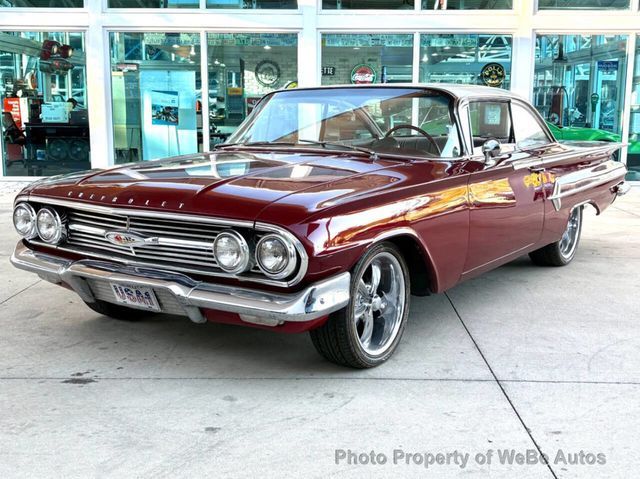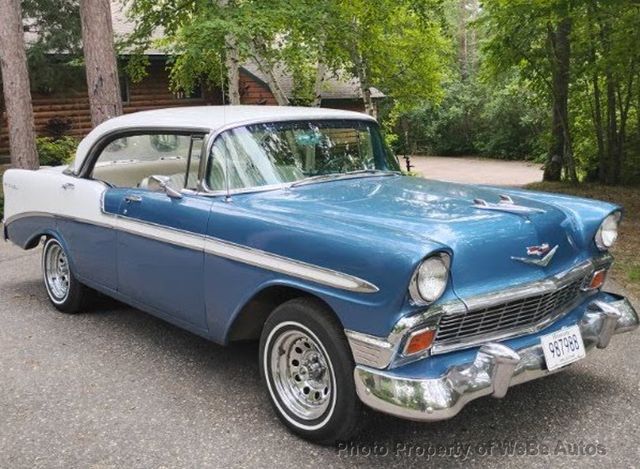
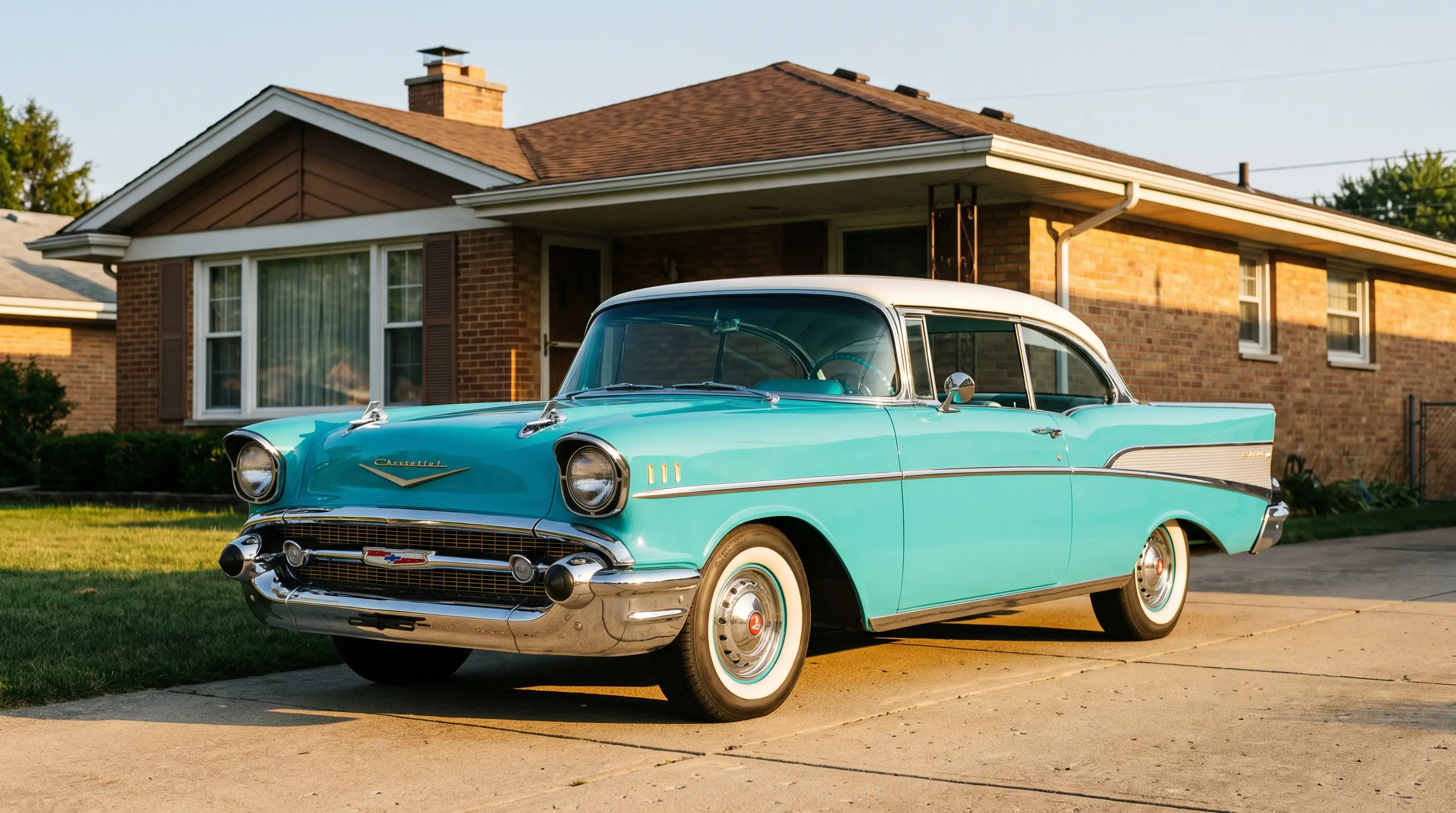
A machinist in Dayton bought a 1956 Chevrolet Bel Air two door sedan new because it was what he could afford, not because he loved it. Forty years later his grandson bought a rusted out version of the same car at a farm auction because it was what he could afford, and he loved it plenty. That is the tri five everyman classic story in one family, repeated in ten thousand garages across the country, and it is the reason this three year run of cars means more to more people than almost anything else Detroit ever built.
A car built for the middle, not the showroom
Chevrolet did not design the 1955, 1956, and 1957 Bel Air to be a legend. It was built to outsell Ford, full stop, and the way it did that was by giving a working family buyer style and a V8 option at a price a schoolteacher or a machinist could stretch to. The Bel Air trim was the nice one in the lineup, sitting above the One-Fifty and Two-Ten, but it was never a luxury car. It was the good version of a car everybody could reasonably want, and that positioning is exactly why it became the tri five everyman classic decades later.
Compare that to a Corvette from the same era, built in the low thousands per year for buyers with disposable income, or a Cadillac aimed squarely at people who had already made it. The Bel Air sold in the hundreds of thousands per year because ordinary families bought it as their one car, the car that took the kids to school and the family to church and, for a few lucky teenagers, out to the drive in on a Friday night.
Why it stuck around in driveways longer than most
Cars that get bought by working families in huge numbers usually get driven hard, traded in, and crushed within a decade or two. The tri five Chevys should have followed that path. Instead a critical mass of them survived because the small block V8 that came in these cars turned out to be cheap, simple, and endlessly rebuildable, which meant a teenager in 1968 could buy a tired ten year old Bel Air for beer money and keep it running with basic tools and a parts store three blocks from home.
That accessibility is the hinge the whole legend swings on. A Duesenberg or a prewar Packard needed money and specialized knowledge to keep alive. A tri five Bel Air needed a Saturday afternoon and a socket set. People who could never afford to collect a rare European car could afford to keep a Chevy running, and thousands of them did, which is why there are still so many tri fives around today compared to other cars from the same decade.
From used car lot to hot rod culture
By the mid 1960s the tri five had aged out of "recent used car" and into "cheap first car," and that is when the culture around it really formed. Drag strips filled up with tri fives because the small block V8 responded so well to cheap modification. Cruise nights filled up with them because they were affordable and looked good doing nothing but sitting at a light. The car that started as a rational choice for a family became the irrational choice a generation of young men made when they wanted something fast and something theirs. For a deeper look at how that early affection turned into the modern collector market, the tri five chevy story traces the shift from used car lot to show field in more detail, and the arc of that story runs through almost every tri five owner's family history in some form.
That dual identity, family car and hot rod, is unusual. Most cars settle into one lane. The tri five kept both, which meant it had fans among people who wanted a restored, factory correct family car and fans among people who wanted a chopped, dropped, big block monster, sometimes within the same extended family.
"Everybody has a tri five story that starts with somebody's dad or somebody's uncle. That is not an accident. That is what happens when a car sells in the hundreds of thousands to regular people instead of the thousands to rich ones."
- Patrick Walsh
The advertising told the truth for once
Chevrolet's own sales pitch for the era leaned hard on the word value, and unlike a lot of period car advertising, it was not really exaggerating. The Bel Air was pitched next to Fords and Plymouths in the same price class, and buyers cross shopped all three the way people cross shop midsize sedans today. The difference was that Chevrolet paired mainstream pricing with styling that dated well and an engine that earned a reputation almost immediately. A neighbor who bought a Ford in 1956 was not making an obviously wrong choice, but a neighbor who bought the Bel Air ended up with the car that got remembered.
That memory compounds. Every decade that passed, the tri five picked up more nostalgia from people who grew up around one, whether it was their own car or a relative's, while contemporaries from other brands faded from public memory except among specialists. By the time the collector market matured in the 1980s and 1990s, the tri five had a built in audience of buyers who already loved it before they ever thought about restoring one.
What the everyman label means for today's buyers
The everyman reputation still shapes the market today, even as prices for the best examples climb well past what any actual everyman could afford. Parts support remains the best of almost any classic Chevrolet, restoration shops know these cars inside and out, and a buyer entering the hobby for the first time can find a project, a driver, or a show car in nearly any budget range, which is not true of most 1950s collector cars.
The Bel Air's place inside the larger Chevrolet story is covered in more depth in the full story, which traces how the nameplate evolved before and after the tri five years. But the tri five years remain the emotional center of that story for most owners, because they are the years when the car was still, at heart, something anyone's family might have parked in the driveway. For buyers who want to see what that means in practical terms today, there are always classic Airs on the market spanning every condition and budget the hobby has to offer.
That range, from rough driver to concours restoration, is the clearest proof the everyman label still holds. A car built for everybody stayed a car for everybody, sixty years and counting.