
The buick riviera 1971 interior and comfort package is where this car actually earns its personal luxury coupe title, dramatic sheet metal aside. I have pulled apart enough of these dashboards and door panels to know that Buick spent real money inside this cabin, and it shows in ways a photo of the exterior never captures. Sit in one, close the door, and the boat-tail shape stops being the story.
Car Features
7 min read
Riding in the Boat-Tail: Inside the 1971-73 Riviera
The buick riviera 1971 interior and comfort package delivered a cockpit-style dash, real leather options, and factory hush that a builder learns to appreciate up close.
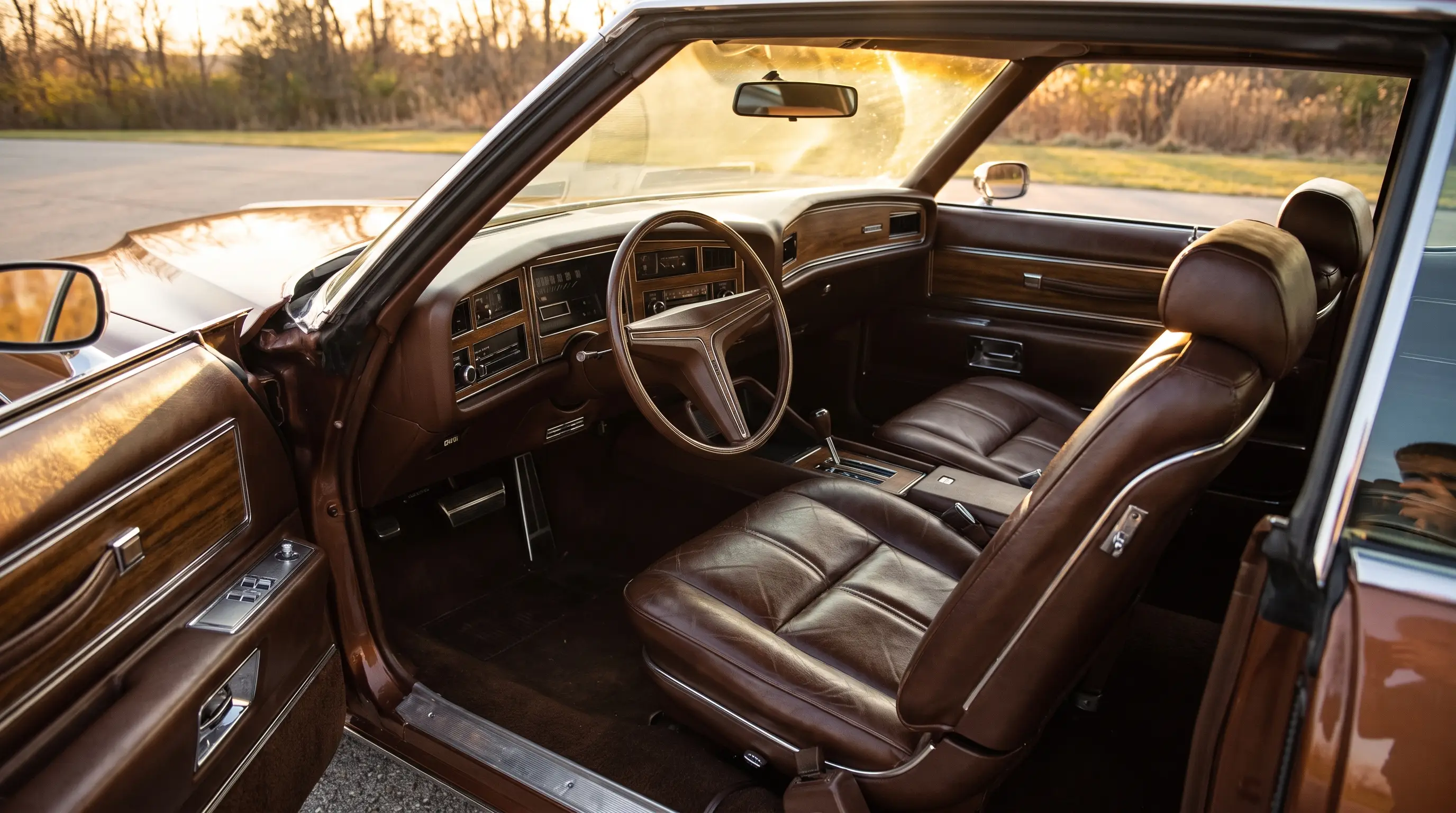
The cockpit dash and why it matters
Buick wrapped the driver in a dash that curved around toward the door, a design language they called a cockpit layout at the time. Gauges sat close and legible, and the whole panel felt aimed at the driver rather than laid flat across the car the way a lot of contemporary domestic dashboards were. Restoring one of these dashboards teaches you fast that the plastics and trim pieces used here were higher grade than what Buick put in its mainstream full-size sedans of the same year. The padding is thicker, the woodgrain applique is better executed, and the switchgear has real heft to it when you work the climate controls or the optional power features.
For the broader design story of how this generation came together, the full story covers the exterior side of that same 1971 redesign.
Seating and the console that splits the cabin
Bucket seats with a floor console were common on cars ordered with the sportier trims, and that console housed the shifter along with additional storage that a bench-seat competitor simply could not offer. Bench seat configurations were available too for buyers who wanted three-across seating up front, though the console layout is what most surviving cars in good condition tend to have, since it was the more popular configuration with buyers chasing the personal luxury image this car was selling. Upholstery choices ran from cloth to genuine leather, with leather commanding a real price premium new and commanding one again today when you find it original and undamaged.
From a builder's perspective, factory leather in usable condition is one of the harder things to source correctly for a full restoration. Reproduction leather exists, but matching the factory grain pattern and stitch spacing takes real research, not just ordering a generic kit off a catalog page.
Sound insulation and the ride Buick actually promised
Buick's advertising for this car leaned hard on quiet, isolated comfort, and the engineering backs that promise up. Extra sound deadening in the floor pan and firewall, along with rubber body mounts tuned specifically for this application, kept road noise and vibration down at a level competitive with the more expensive Cadillac and Oldsmobile personal luxury coupes it was chasing. Optional air conditioning, when it was ordered and still functions correctly today, moves a genuinely useful amount of cold air for a system this age, though most surviving cars need a full system rebuild before that factory-level performance comes back.
Climate and comfort options aside, the ride itself on the longer wheelbase platform is genuinely smooth. This is not a car that beats you up over broken pavement. It floats, in the good sense of that word, exactly the way a personal luxury buyer in 1971 expected a car in this price bracket to float.
"Buyers judge the boat-tail by the rear window. I judge it by whether the dash pad is still soft and the door panels still line up flush. That is where the real money went."
- Jim Vasquez
Trim levels and how the cabin varied by year
Across the three boat-tail model years, Buick made small but real adjustments to interior trim without ever abandoning the core cockpit dash concept. Switchgear finishes, woodgrain applique patterns, and available upholstery colors shifted year to year in ways that matter to a concours-focused restoration but are easy to miss on a casual viewing. A 1971 dash bezel is not automatically interchangeable with a 1973 unit without checking part numbers first, something I have learned the frustrating way after assuming two years shared more than they actually did. Buyers restoring toward factory-correct condition should treat each model year as its own reference point rather than assuming the whole boat-tail generation used identical interior parts throughout its run.
Options like a tilt steering wheel, AM/FM stereo, and a rear defroster were all available across this generation and add real usability for a car intended as a daily comfortable driver rather than a static show piece. None of them are dealbreakers if missing, but they do affect both period-correct restoration decisions and simple day-to-day livability if you plan to actually drive the car.
Woodgrain, chrome, and the small details that age poorly
The woodgrain applique used across the dash and door panels is a simulated finish rather than real wood veneer, applied over a substrate that can delaminate or fade unevenly after decades of sun exposure through that big wraparound windshield. Once it starts peeling at an edge, it rarely stops on its own, and matching factory grain patterns for a proper repair or replacement panel takes genuine research rather than ordering the first reproduction piece that comes up in a parts search. Chrome trim around the gauge cluster and console holds up better over time as long as the car was garaged, but pitting and clouding are common on cars that spent years outdoors, and re-chroming small interior trim pieces correctly is a specialty job, not something every plating shop handles well.
None of this is a reason to avoid a car with worn trim. It is a reason to price that wear into your offer honestly rather than discovering the true cost of a full interior refresh after you already own the car.
What this means when you are shopping one now
Interior condition on these cars swings the value conversation more than most buyers expect walking in. A rough exterior with a straight, original interior is often the smarter buy over a fresh repaint hiding a gutted or mismatched cabin, because interior trim, especially wood appliques and correct upholstery patterns, gets harder and more expensive to source correctly every year. When you are looking at classic Riviera for sale listings, ask for close photos of the dash pad, door panels, and seat stitching before you ever worry about paint.
Sources and notes
Related Reading
Have a
Buick Riviera
for Sale?
Reach thousands of serious classic car collectors across the US.
Sell It Here →
Are You a Classic Car Dealer?
List your full inventory and connect with targeted classic car buyers.
Join as a Dealer →
#classic car buying
#interior restoration
#personal luxury coupe
#Buick Riviera
#boat-tail
#1971 Riviera

About the author
Jim Vasquez
Southern California hot rod and custom car builder with roots in the traditional kustom kulture scene.
Related Listings - Buick Riviera




Comments (1)
C
carshow_cathy
10 hours ago
Soft dash pad check is exactly where judges start.