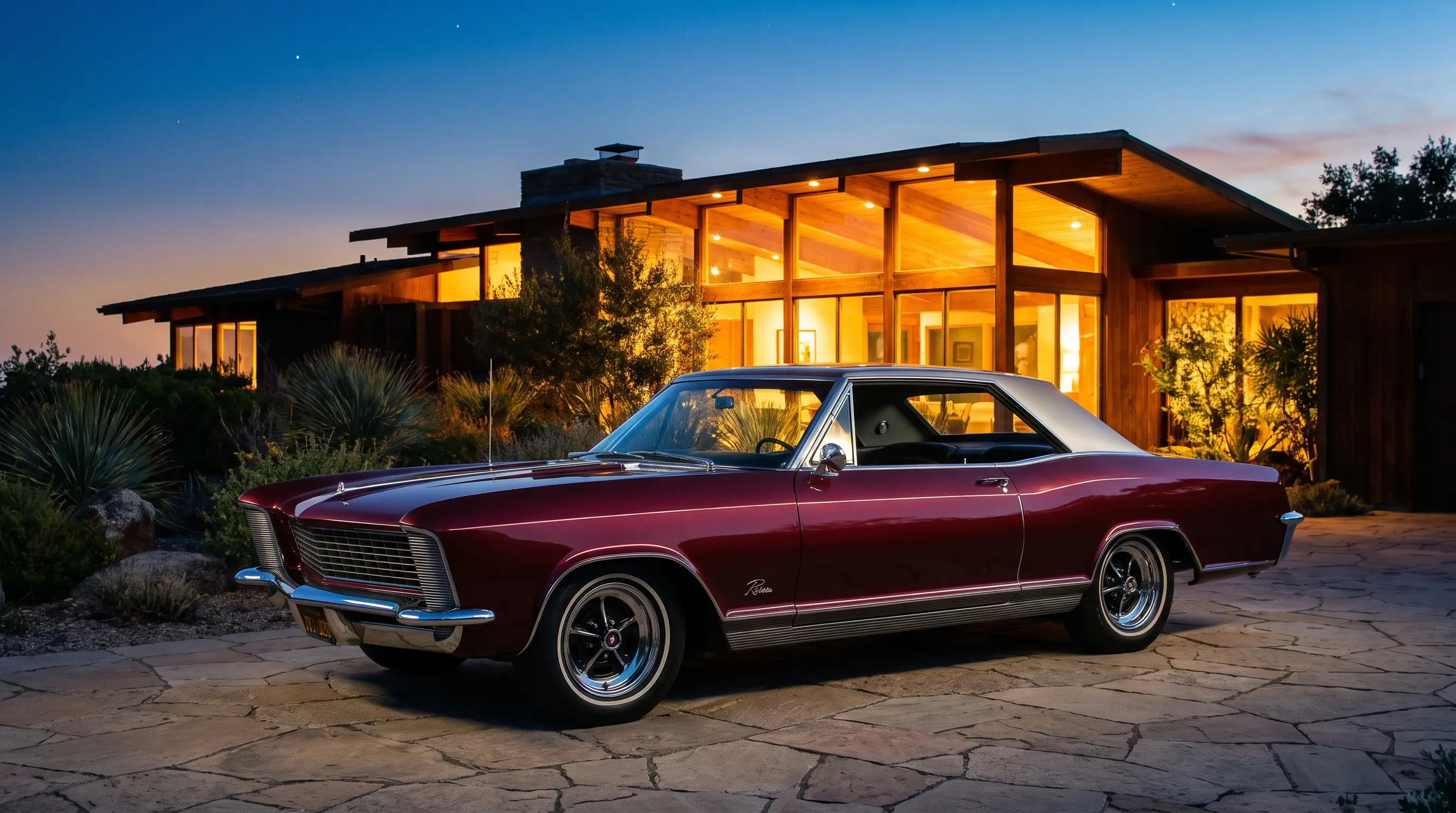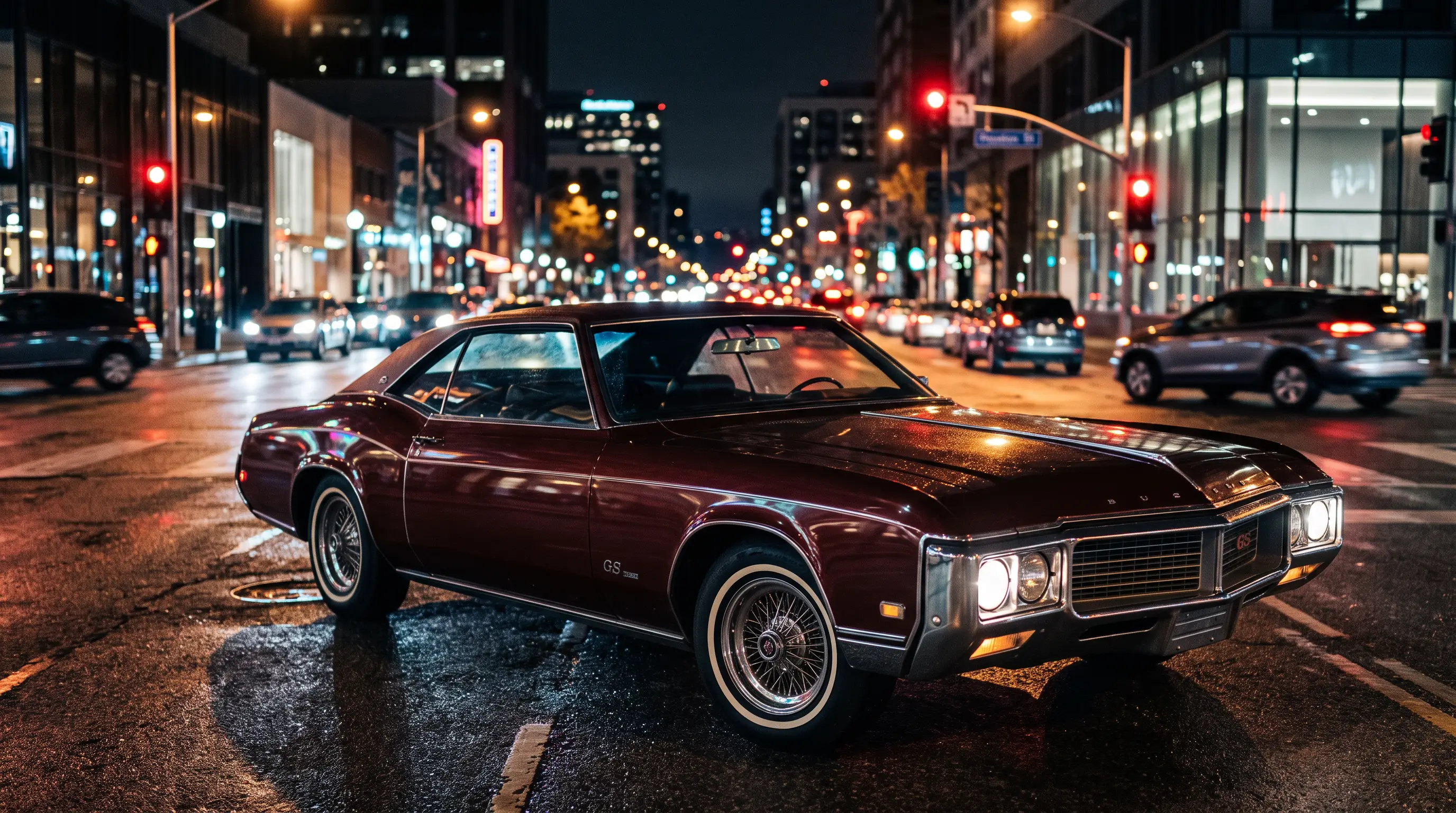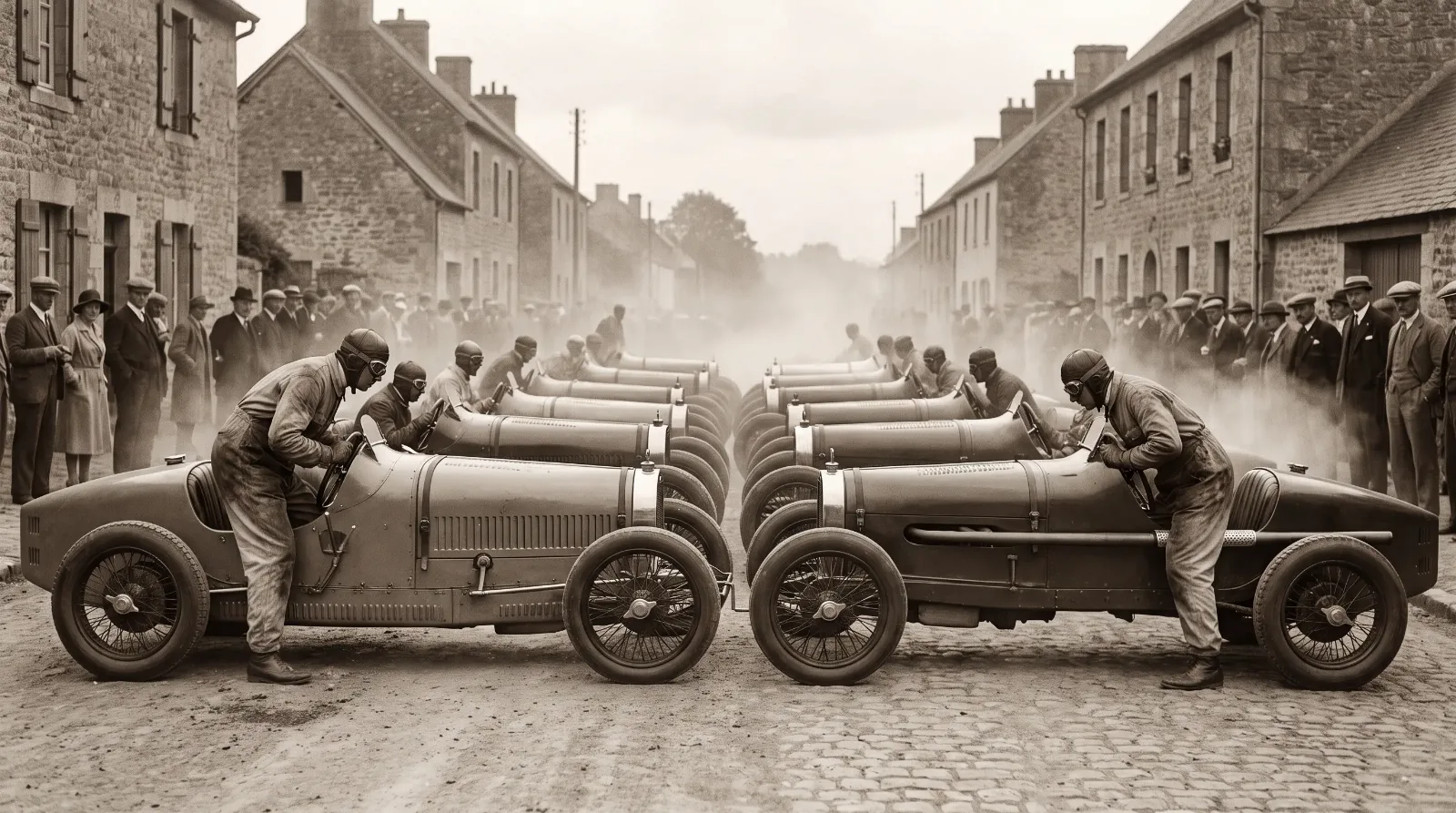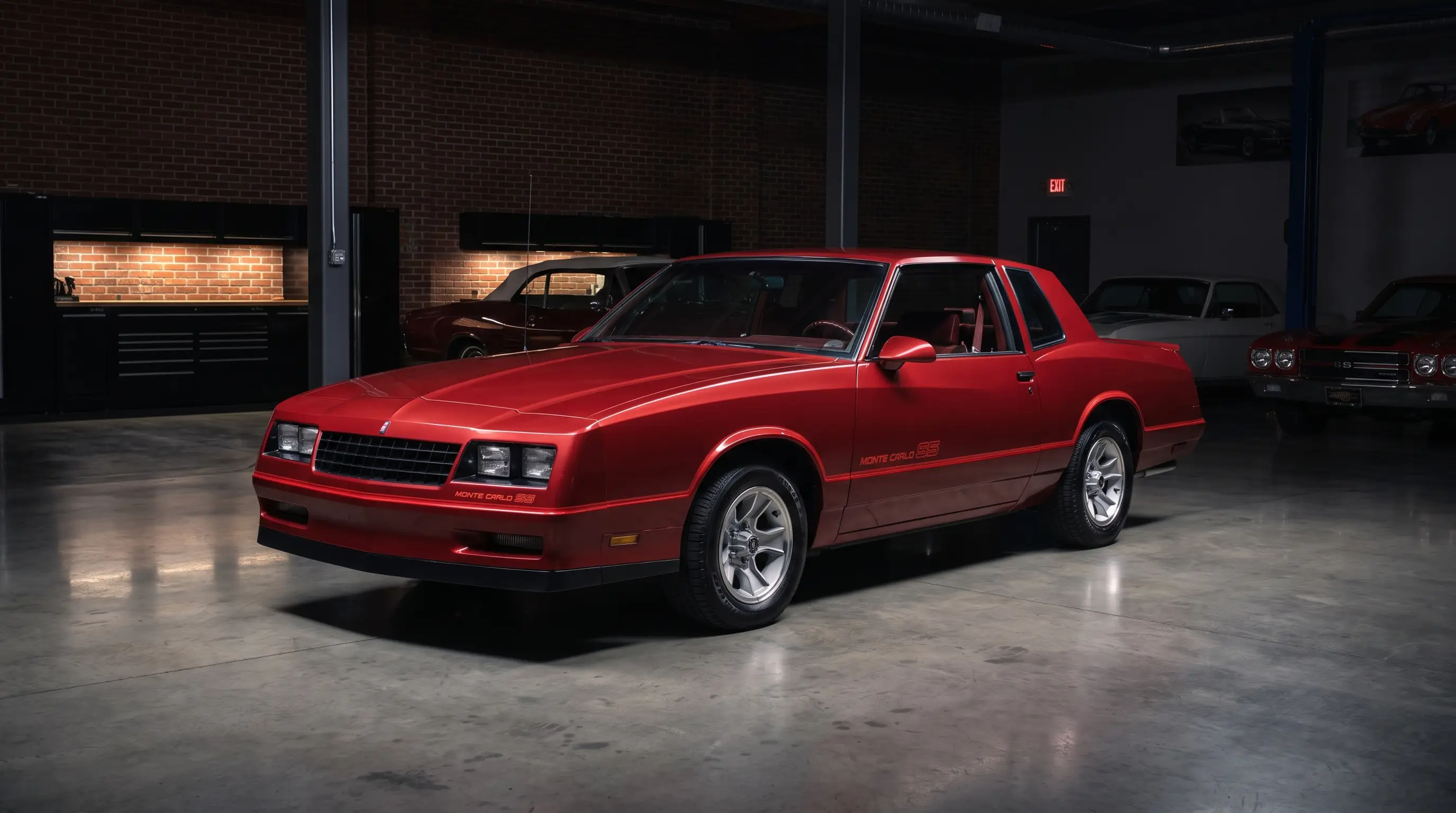
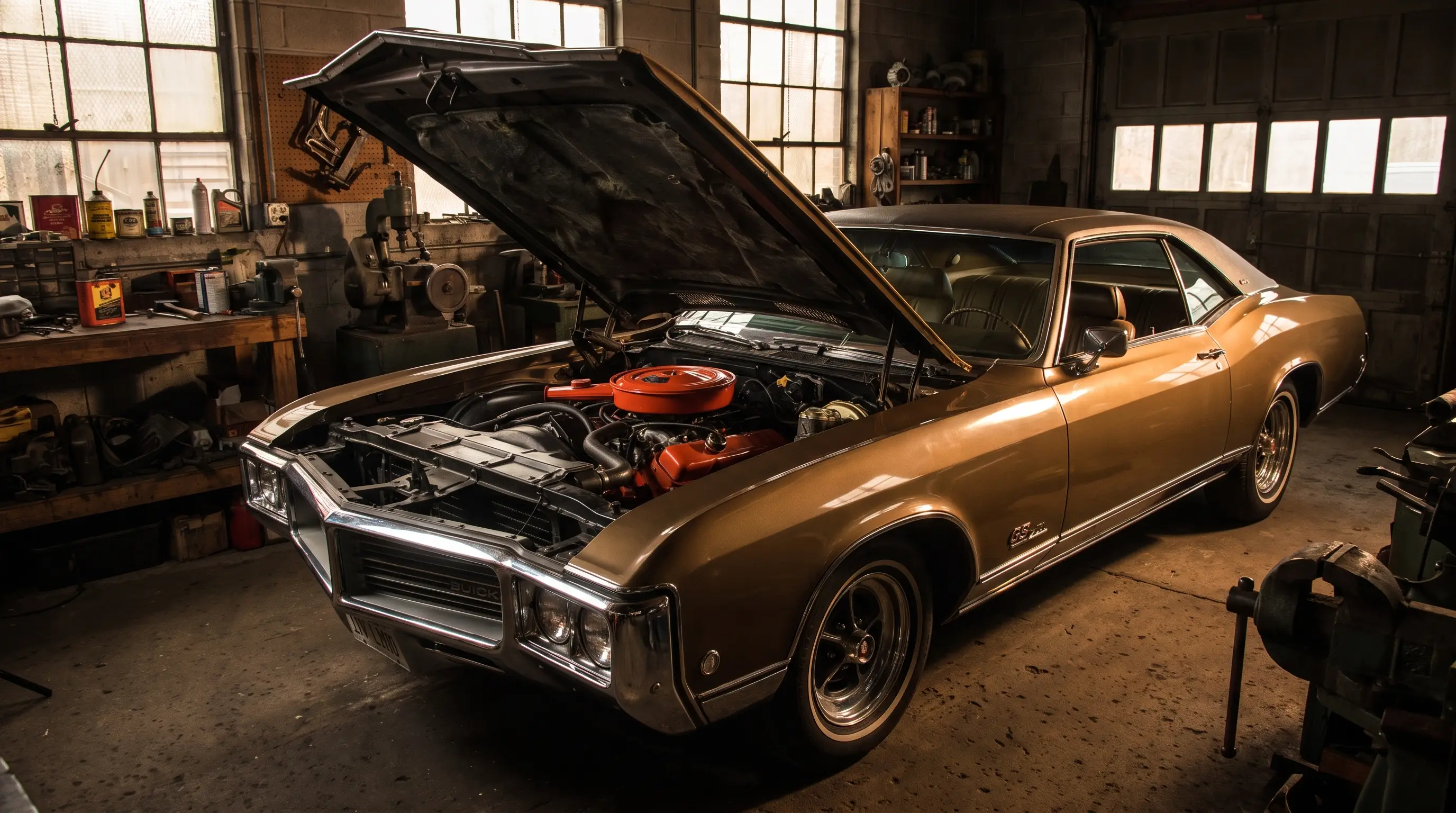
Three engine families. Roughly a decade. One straight line from a low revving relic to a big block torque machine. That is the buick riviera gs nailhead to 455 arc in one sentence, and the details behind it explain why the later cars still get talked about differently than the earlier ones.
The nailhead started it
Buick's nailhead V8 got its nickname from unusually small valves for its displacement, arranged in a way that looked like nail heads when you looked straight down into the head. That design limited how well the engine could breathe at high rpm, but it did not limit torque. The nailhead made its power low in the range and made it early, and that is the character trait that defined the first Riviera GS models built around it in the mid 1960s. It was never going to win a horsepower argument against a fresher design. It was going to win the argument that mattered on the street, the one about how fast the car felt from a stop.
Buick eventually hit the practical ceiling of what the nailhead architecture could deliver as buyer expectations and competitor engines kept climbing. The valve breathing limitation that gave the nailhead its distinct low end character also capped its upside, and Buick needed a new architecture to keep pace with where the performance car market was heading by the late 1960s.
The 430 bridged the gap
The replacement engine, displacing 430 cubic inches, arrived with a modern head design that fixed the nailhead's breathing limitation while keeping Buick's torque first philosophy intact. This was not a ground up reinvention of what Buick's engines were supposed to feel like. It was a refinement, more capable, more flexible, but still built around the same core idea that made the nailhead cars respected in the first place: strong torque, low in the range, delivered without drama.
The 430 had a short run before Buick bored and stroked its way to an even larger displacement, but that short run mattered. It proved the torque first philosophy could survive a full architectural redesign without losing what made it work. Riviera GS models built around the 430 carry that transitional character, modern enough to breathe better than the nailhead cars, still faithful enough to feel unmistakably like a Buick underneath.
The 455 finished the arc
By 1970, Buick had grown the displacement again, landing on the 455 cubic inch big block that became the final and most powerful chapter of this engine arc in the Riviera GS lineup. The numbers speak plainly here. Buick's 455 in Stage 1 trim was rated at 360 horsepower, with a torque figure of 510 lb-ft, one of the highest torque ratings coming out of Detroit in that specific year regardless of displacement class. That is not a marginal improvement over the nailhead. That is the same philosophy pushed to its practical limit.
What connects all three engines, nailhead, 430, and 455, is not displacement or horsepower. It is the decision Buick made early and never abandoned: build torque first, and let horsepower be whatever number falls out of that decision. Every Riviera GS across this entire decade drove differently at the top end and felt remarkably similar at the bottom end, because that bottom end feel was the actual design target the whole time.
What the arc means for buyers today
Shopping across three engine generations means shopping across three different maintenance realities, not just three different power figures. Nailhead parts availability is thinner than parts for the later big blocks, since Buick built the 430 and 455 in larger numbers and for longer stretches of the muscle car boom. That does not make a nailhead car a bad buy. It makes it a car that demands more patience and more research before you commit, since sourcing period correct components takes longer than it does for the more common 455.
The 455, by contrast, benefits from a larger surviving population and a stronger aftermarket support network built around Buick's most produced big block. That practical reality pushes a lot of first time GS buyers toward 455 cars by default, and it is not a bad instinct. But buyers who understand the full arc, and who value the nailhead's specific mechanical character enough to accept the tradeoff, often end up with a rarer and in some ways more historically interesting car for their trouble.
Why the arc matters more than any single engine
Collectors sometimes argue about which engine is the best Riviera GS, and the honest answer depends entirely on what you are optimizing for. The nailhead has character and history on its side. The 430 has a genuine transitional story most buyers overlook. The 455 has the numbers, plainly, and Stage 1 examples carry a specific mechanical case for being the strongest of the three. None of that makes the earlier engines lesser cars. It makes them earlier chapters of the same continuous idea, executed with the technology Buick had available at each specific point in the decade.
Here is the blunt version. If you want the purest, most old school expression of Buick torque, buy the nailhead and accept the parts hunt. If you want the strongest number on paper backed by a documented Stage 1 build, buy the 455 and pay the premium that comes with it. If you want the sweet spot between rarity and modern breathing, the 430 is the quiet answer most buyers skip past without giving it a fair look. All three get you the same core idea. None of them get you there the same way.
If you want the full context on how the Gran Sport package tied this entire arc together across model years, the whole picture covers exactly that history in detail.
"Three engines, one idea. Torque first, every time. That's the whole story, and everything else is just displacement."
- Dan Reeves
| Engine | Era | Defining trait |
|---|---|---|
| Nailhead V8 | Early to mid 1960s | Small valves, strong low end torque, breathing limited at high rpm |
| 430 cubic inch | Late 1960s | Modern head design, improved breathing, same torque philosophy |
| 455 cubic inch | 1970 onward | Peak displacement and torque, Stage 1 as the top of the arc |
Numbers aside, the only way to really understand this arc is to drive examples of each. Spec sheets tell you the theory. A stoplight tells you the truth, and the truth across all three engines has always been the same: Buick built torque first and let everything else follow from that one decision. If you want to compare them for yourself, go shop classic Riviera listings and see what is actually available across these engine years right now.