
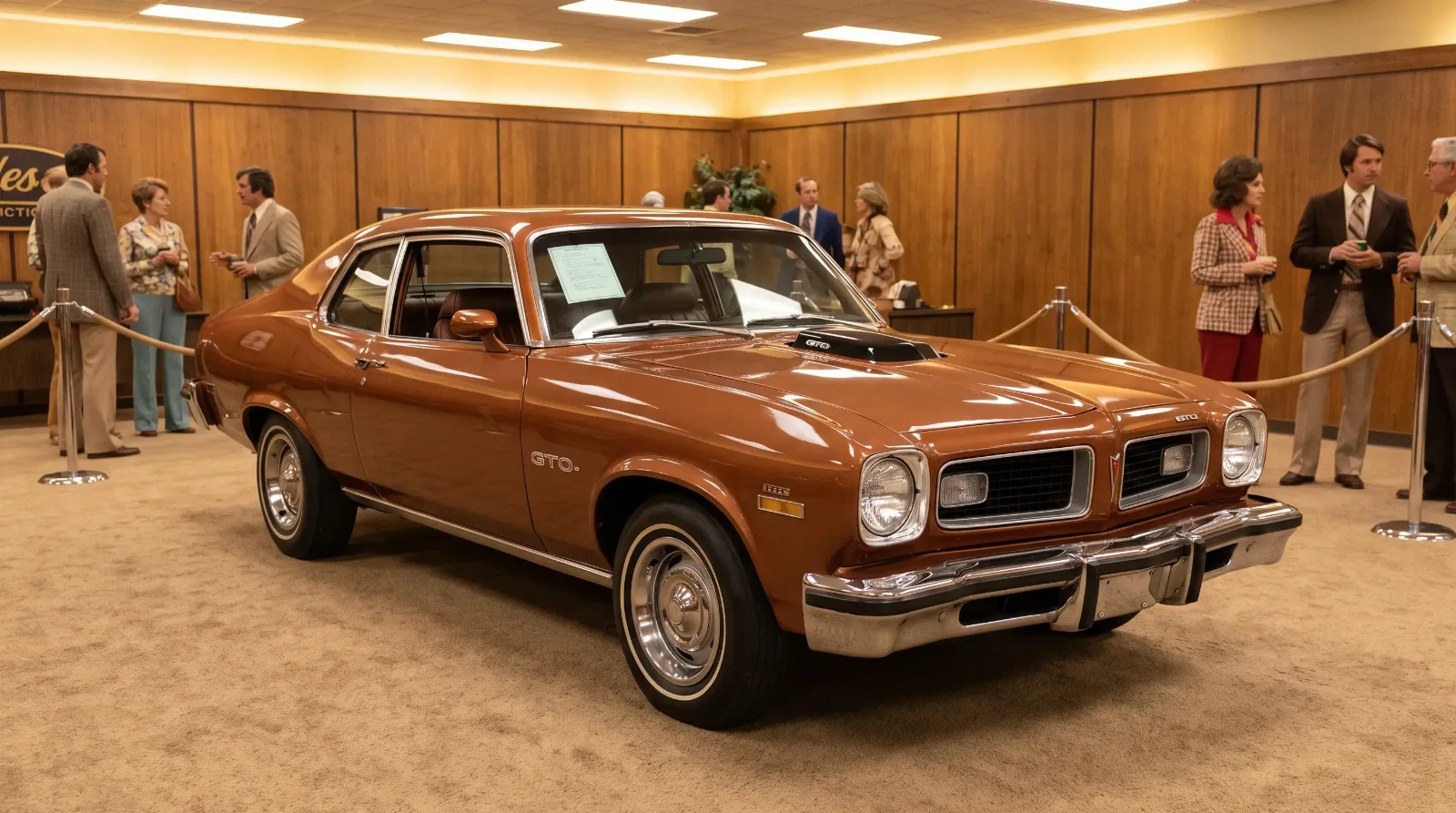
Picture a young buyer walking into a Pontiac showroom in the fall of 1973, budget tight, insurance agent's warning still ringing in his ears, looking for something with a little life left in it. He is not walking toward the LeMans-based cars anymore. Pontiac has moved the GTO badge onto a smaller car this year, something built on the Ventura platform, the same bones underneath a Chevy Nova. He is standing in front of the last new GTO Pontiac would ever build, though nobody in that showroom knew it yet.
Car Features
7 min read
The Last Goat: Buying a New GTO in 1974
A smaller body, a Pontiac-built 350, and an oil crisis backdrop made the 1974 GTO an unlikely, honest send-off for the nameplate.
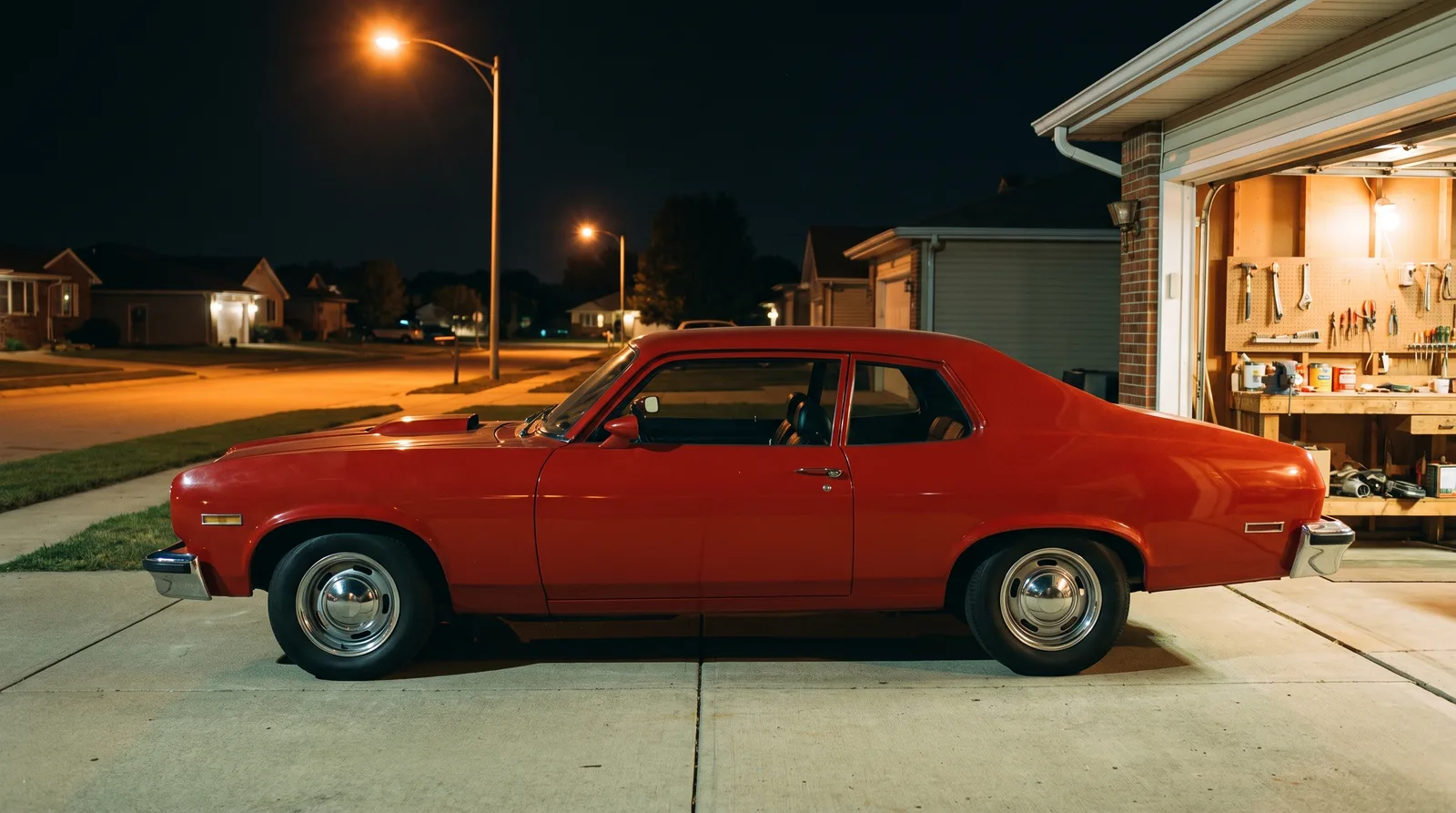
A smaller car for a smaller moment
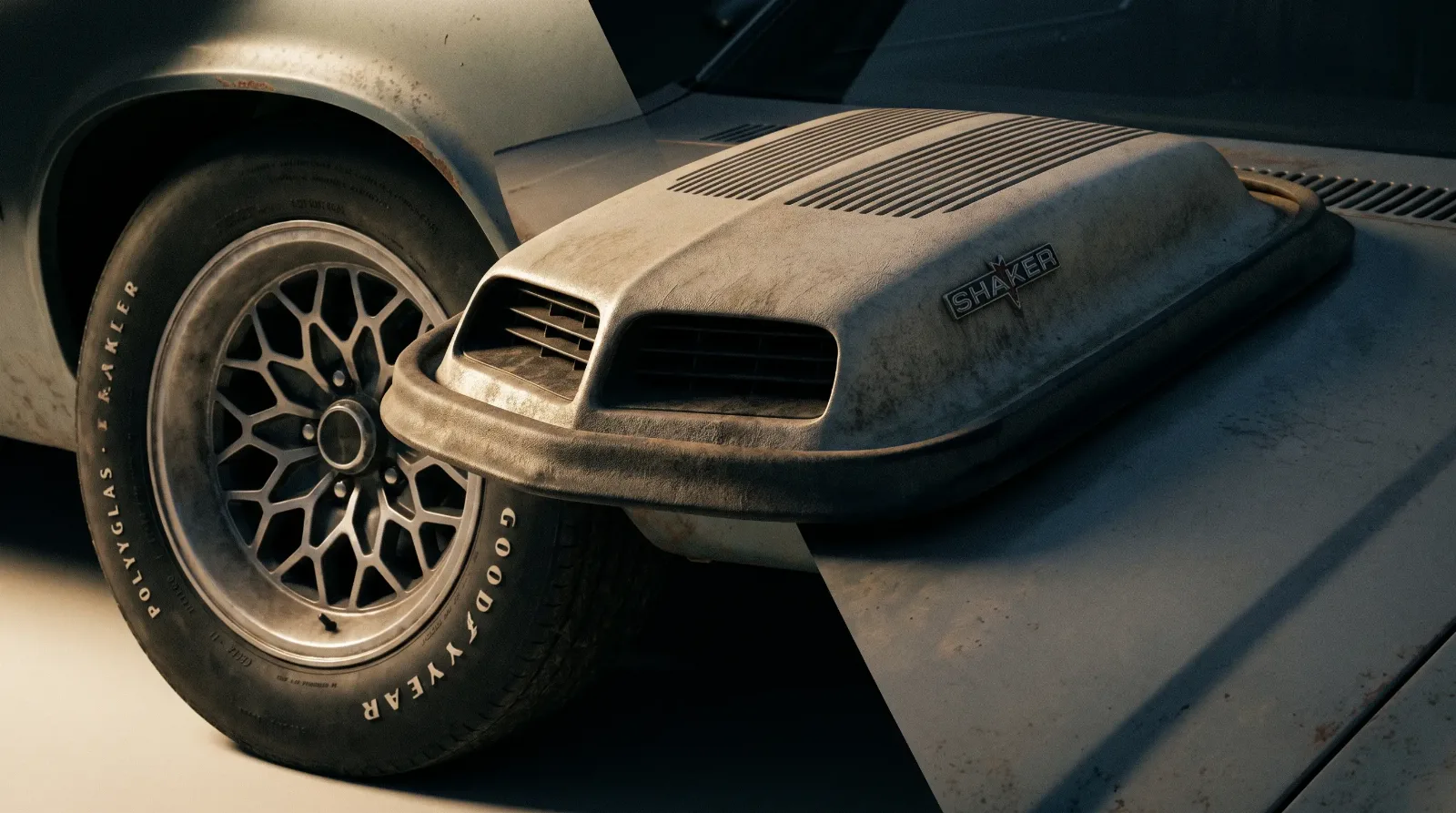
The decision to move the GTO option onto the compact Ventura for 1974 marked the end of the GTO as buyers of the 1960s would have recognized it. Gone was the mid-size Colonnade body that had carried the option the year before. In its place sat a much smaller, lighter platform, a car closer in size and mission to the compacts that Detroit was starting to lean on as fuel prices climbed and buyer tastes shifted away from big engines wrapped in big sheet metal. The base engine was Pontiac's own 350 cubic inch V8, a genuine Pontiac unit rather than a Chevrolet-sourced motor despite the Nova-derived body underneath it, rated at 200 net horsepower under the SAE measurement standard that had replaced the more generous gross ratings of the muscle car era.
A buyer standing at the order desk in late 1973 was choosing a car that looked, on paper, more modest than any GTO before it. But Pontiac had not abandoned the visual language that made the badge recognizable. A shaker-style hood scoop sat proud of the hoodline, functional dual exhaust tips poked out beneath the rear bumper, and the honeycomb wheel option carried over from the Colonnade-era cars gave the smaller Ventura-based GTO a family resemblance that dealers leaned on hard in their advertising.
What the paperwork actually looked like
Ordering a 1974 GTO meant starting from a Ventura order form and checking the GTO option box, along with whatever engine, transmission, and axle ratio combination the buyer wanted. The price premium over a base Ventura was real but not enormous, which is part of what made the package attractive to a buyer who wanted some visual and mechanical distinction without the full financial weight, insurance included, of stepping up to a genuinely large-displacement performance car. A four-speed manual remained available for buyers who wanted to row their own gears, though by 1974 more GTO buyers were opting for the automatic than Pontiac's marketing team from a decade earlier would probably have guessed.
Color and trim choices leaned into the same disco-adjacent palette showing up across the entire American car industry that year, oranges and golds and deep greens that read as thoroughly of their moment now but felt current on a 1973 showroom floor. Buyers picking up their new GTO were not walking away with anything close to the raw presence of a 1969 Judge in Carousel Red, but they were getting a genuinely quick, tidy, easy-to-park car that still carried a name with real cachet, even in its diminished state.
What it actually felt like to drive one home
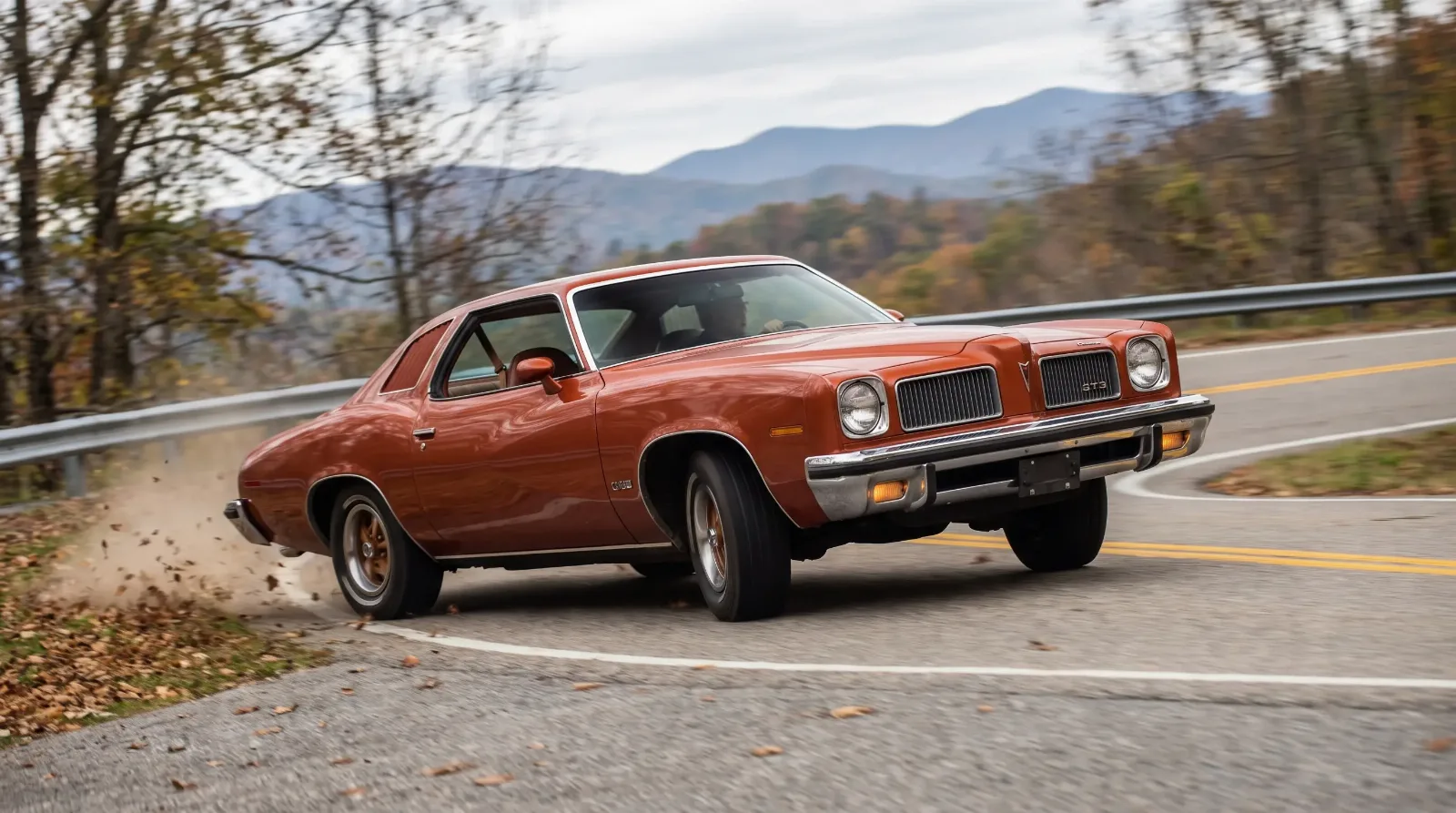
The lighter Ventura body worked in the 1974 GTO's favor in ways the option's critics rarely acknowledge. Weight had been the enemy of every muscle car by this point in the decade, and a compact-based GTO with a genuine V8 under the hood felt noticeably livelier off the line than its mid-size Colonnade predecessor, even with a lower-output engine doing the work. Buyers who test drove both back to back in 1973 sometimes came away preferring the smaller car's responsiveness, a reaction that would have seemed strange to anyone shopping a GTO a decade earlier, when bigger and heavier had always meant more serious.
Fuel economy, an afterthought for most of the GTO's history, mattered to this buyer in a way it never had before. The 1973 oil embargo hit that October, just weeks after the 1974 model year launched, and gas lines and rationing fears were fresh in every car shopper's mind that fall and winter. A smaller, lighter GTO that still delivered genuine V8 performance while sipping less fuel than the outgoing Colonnade car was not a compromise to this buyer. It was, for a brief and strange moment, exactly the right car for the exact wrong time to be selling a performance nameplate at all.
The salesman's pitch, and what it left out
A Pontiac salesman working the floor in late 1973 had a genuine challenge selling this car, because the pitch required threading a needle between two contradictory messages. He needed to invoke the GTO name's decade of reputation, the drag strips, the songs, the magazine covers from 1965 and 1966, while also explaining why this particular GTO was smaller, lighter, and built on a compact platform shared with a Chevrolet. Dealer brochures from the period leaned hard on continuity, showing the shaker hood and honeycomb wheels in close-up shots that made the car look larger and more aggressive than it read in person, a common enough trick of automotive photography but one that mattered more than usual for a car whose actual proportions had shrunk so much from the nameplate's glory years.
What the pitch generally left out was any real acknowledgment of how different the ownership experience would feel. A buyer trading in an earlier GTO for this new one was stepping down in outright power and physical presence, even if the smaller car felt quicker in everyday driving thanks to its lighter weight. Salesmen who were honest about that tradeoff tended to find a receptive audience among buyers who had already made peace with the muscle car era ending and just wanted something fun and V8-powered they could actually afford to insure. Salesmen who oversold the continuity sometimes lost buyers to disappointment once the smaller car's real character became apparent on a test drive.
Driving away from the end of something
Nobody signing a purchase order in that Pontiac showroom in late 1973 or early 1974 knew they were buying the last classic GTO Pontiac would ever build. The badge simply would not appear on Pontiac's order sheets again for decades. That buyer drove home in a car that was smaller, lighter, and less powerful than the GTOs that made the name famous, and also, in its own quiet way, a genuinely honest response to the moment it was built for. What happened to the name after that buyer's new car aged into a used car, and how long it sat dormant before Pontiac brought it back, is a story worth its own telling. Read on.
"I think about that buyer standing at the order desk more than I think about the car itself. He was choosing the last of something and had no way of knowing it, and there is a quiet kind of sadness in that if you sit with it long enough."
Nora Beckett
Sources and notes
Related Reading
Have a
Pontiac GTO
for Sale?
Reach thousands of serious classic car collectors across the US.
Sell It Here →
Are You a Classic Car Dealer?
List your full inventory and connect with targeted classic car buyers.
Join as a Dealer →

About the author
Nora Beckett
Automotive features writer and photographer who tells the human stories behind the cars, from show fields to cross-country road trips.
Related Listings - Pontiac GTO
Comments
Be the first to comment on this article.