
The last two GTOs are worth less than almost any others from the classic run, and that fact tells you most of what you need to know about how the market reads them. The 1973 and 1974 cars are the ones the hobby quietly skips. As an appraiser I find that both fair and overdone. Fair, because these cars gave up the things that defined the GTO. Overdone, because at their prices they are among the most honest ways to own a real one. Let me give you the value first and the caveats after, which is the only responsible order.
Car Features
10 min read
1973-1974 Pontiac GTO: Insurance, Emissions, and the End of the Line
The 1973 Colonnade and 1974 Ventura-based GTO closed out the classic run. An appraiser's take on why they died and what they are worth today.
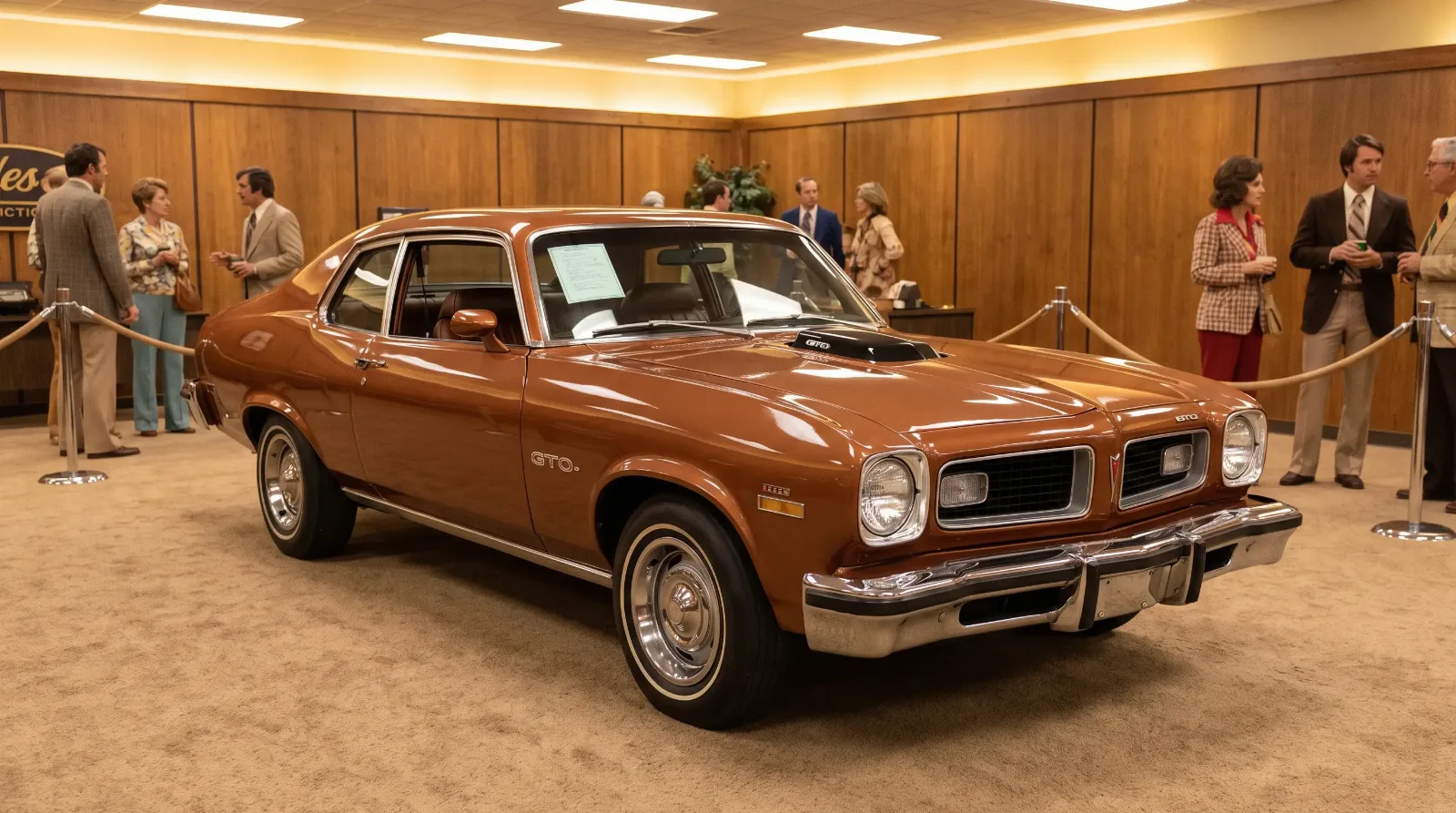
Here is the short version of the verdict: a 1973 or 1974 GTO is an affordable, genuine entry into the badge, with limited upside and a small but real collector following. Now the detail behind that. For the full arc that led here, there is the Pontiac GTO story.
1973: the Colonnade car
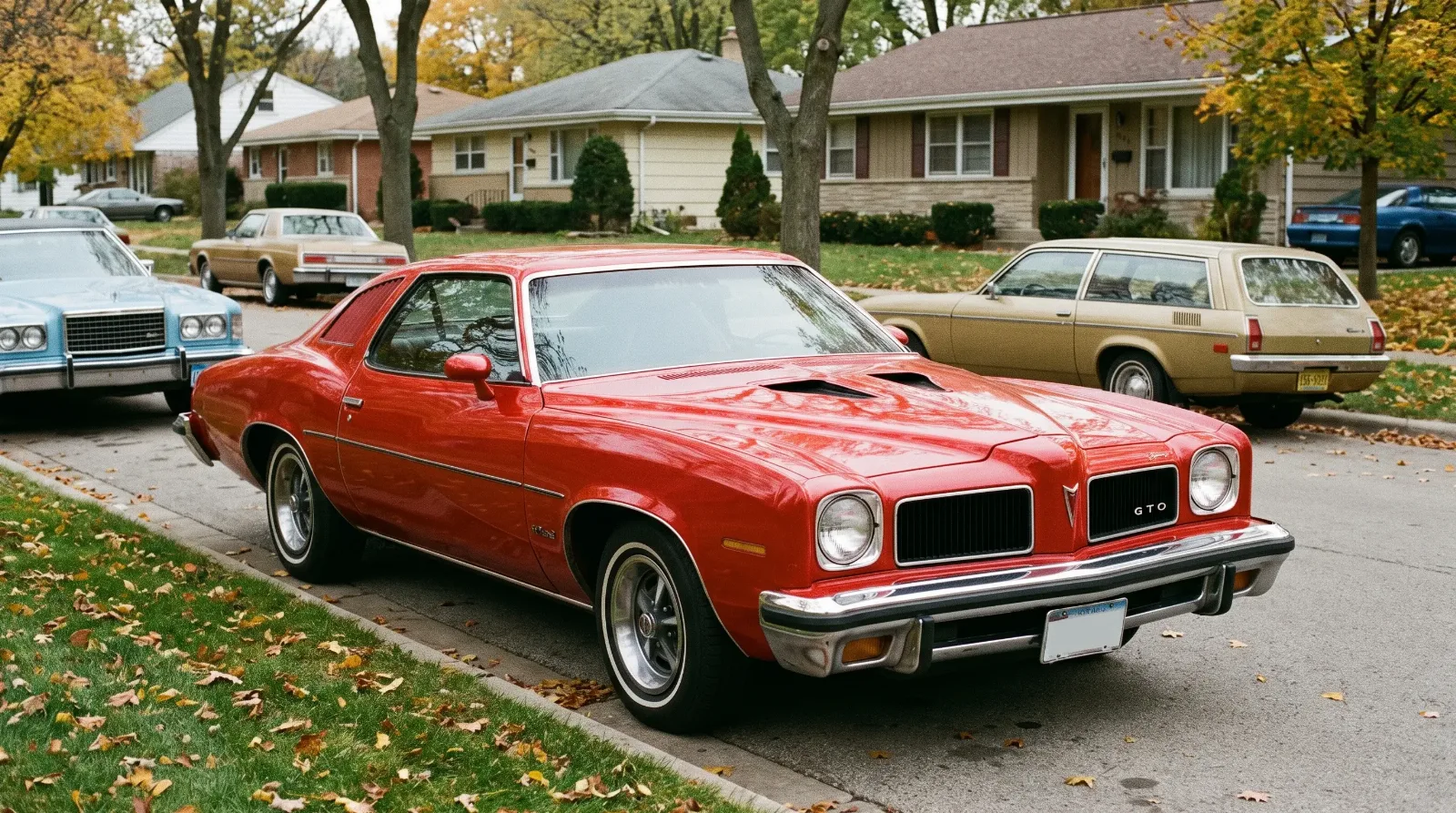
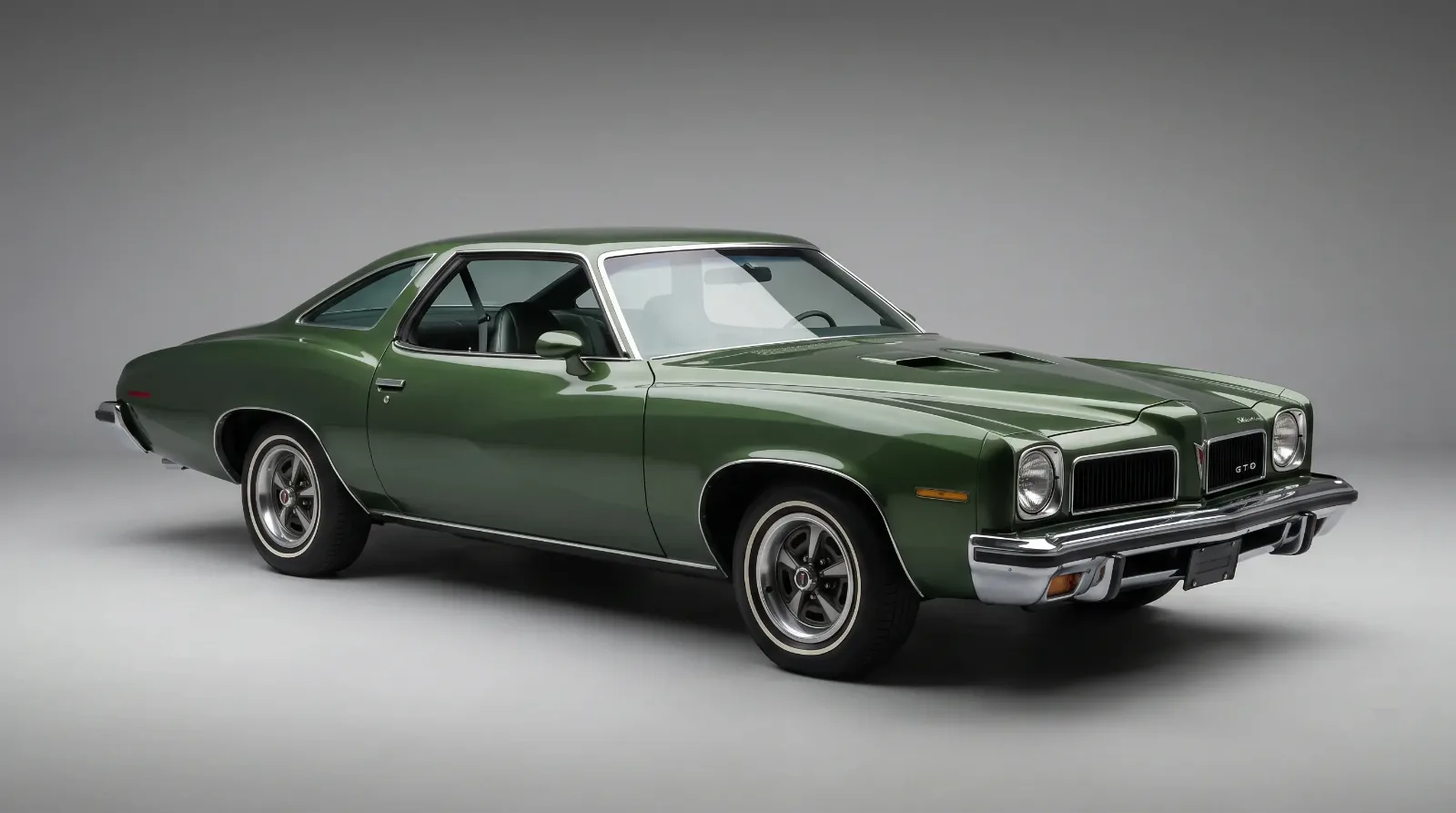
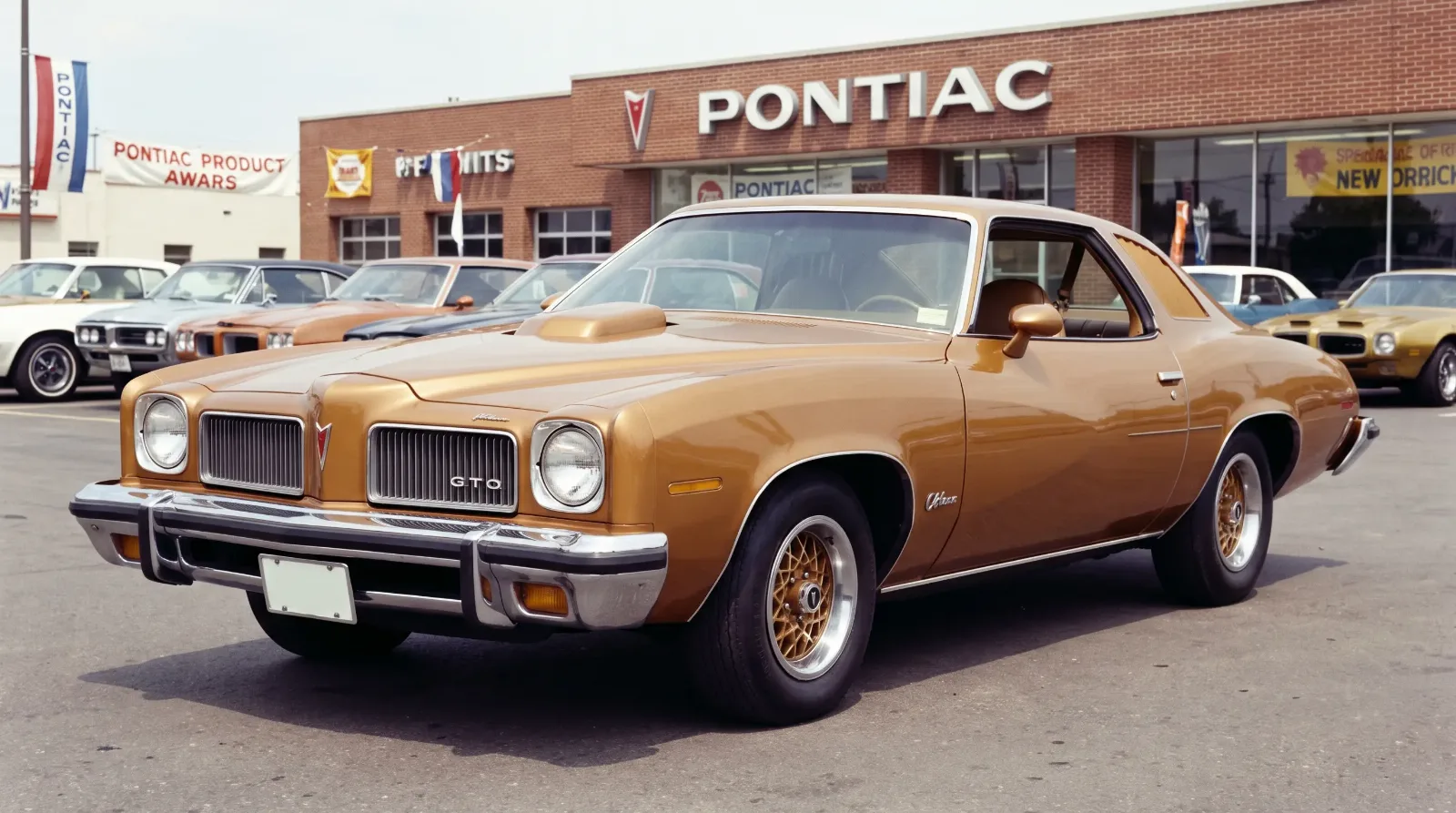
For 1973 the GTO moved onto GM's new "Colonnade" intermediate body, a heavier, softer, safety-era design with frameless door glass replaced by fixed rear quarter windows on the coupe. The car grew in weight and lost the crisp lines of the late-1960s cars. More to the point for value, the GTO was by now an option package rather than a distinct series, the W62 option buried in the LeMans lineup and no longer the halo it had been.
The engines were still Pontiac big-blocks, the 400 and 455, but detuned for low-compression unleaded fuel and emissions compliance. The 400 was net-rated at 230 horsepower and the 455 at 250, a fraction of what the same displacements had produced under the old gross ratings a few years earlier. The car was not slow in absolute terms, but it was no longer the point of the sharp end of the market, and the buyers had already left.
"The 1973 GTO is a heavier car with a smaller reputation, and the market has priced it accordingly. That is not a knock. It is a fact you can use, because it is the cheapest door into a documented classic GTO, provided you go in with clear eyes."
Marcus Feld
1974: the Ventura-based final GTO
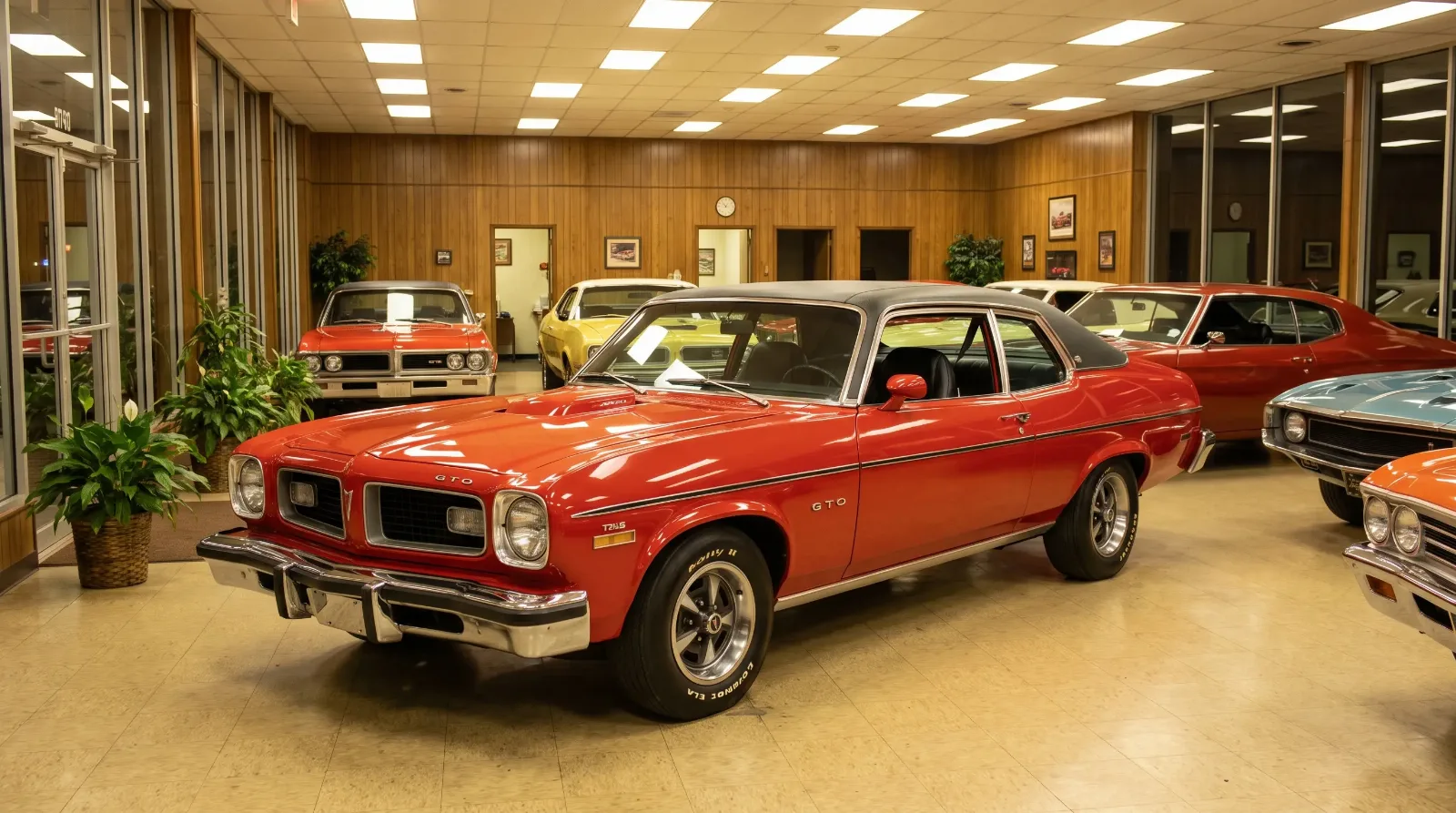
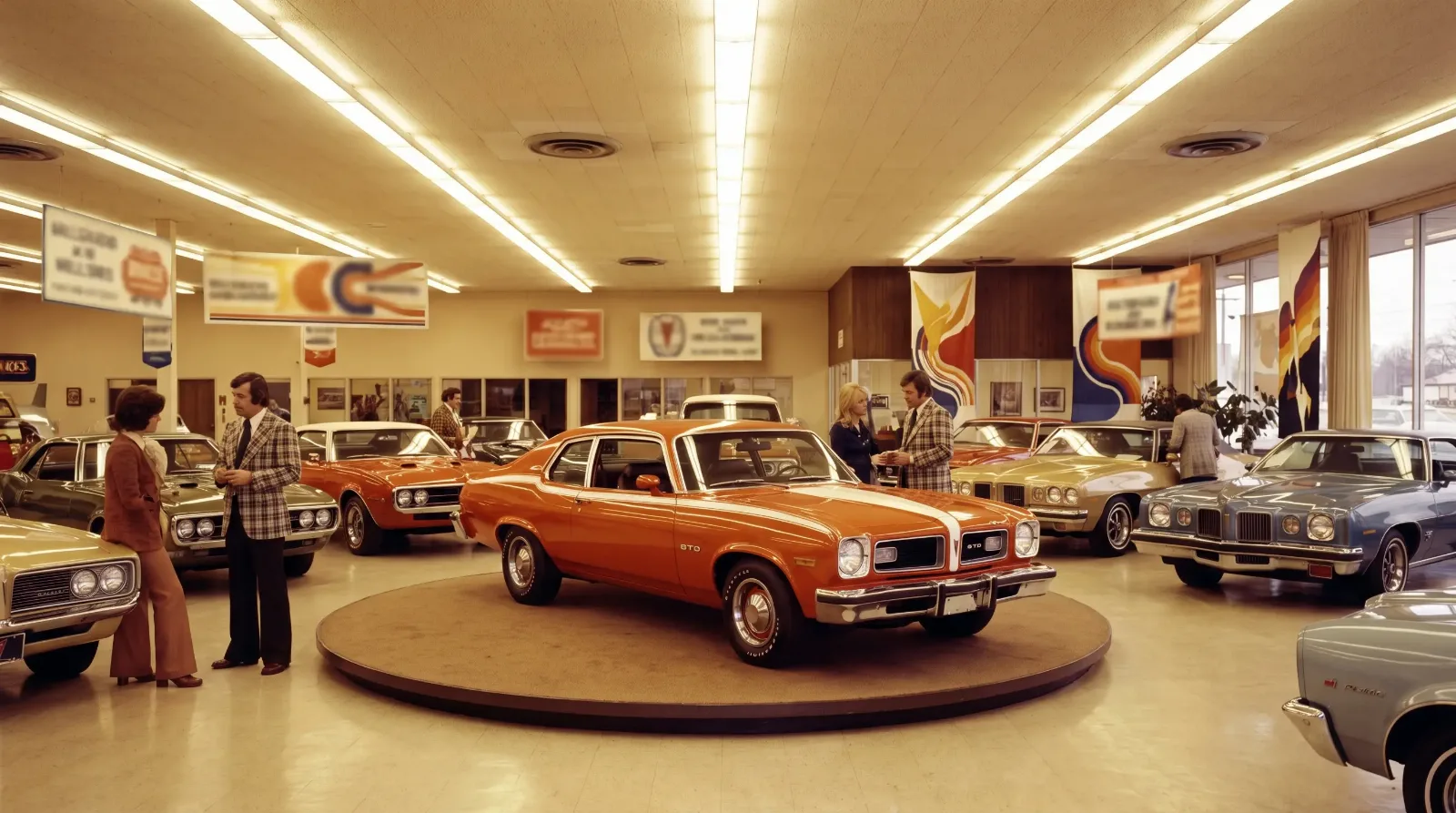
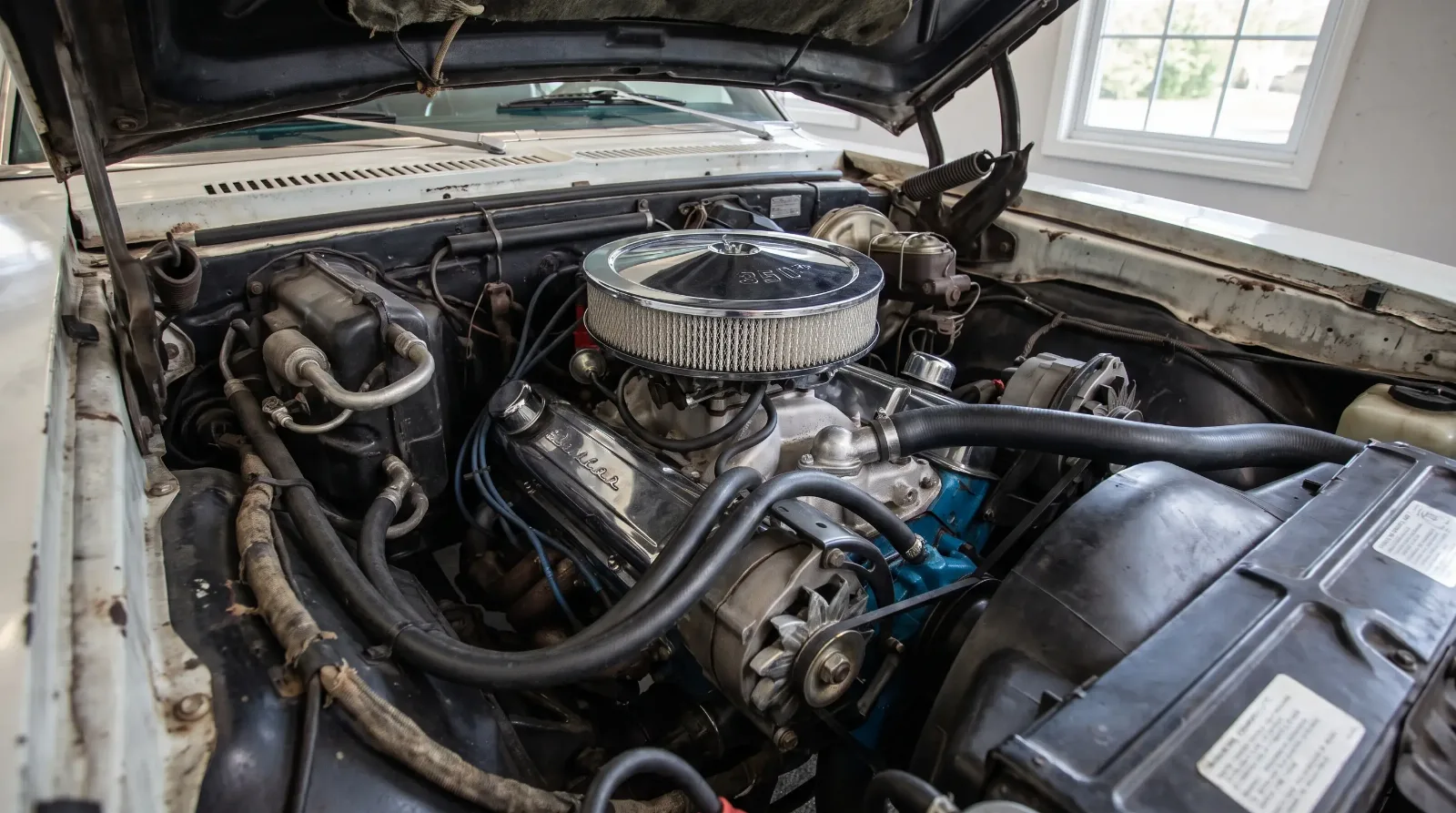
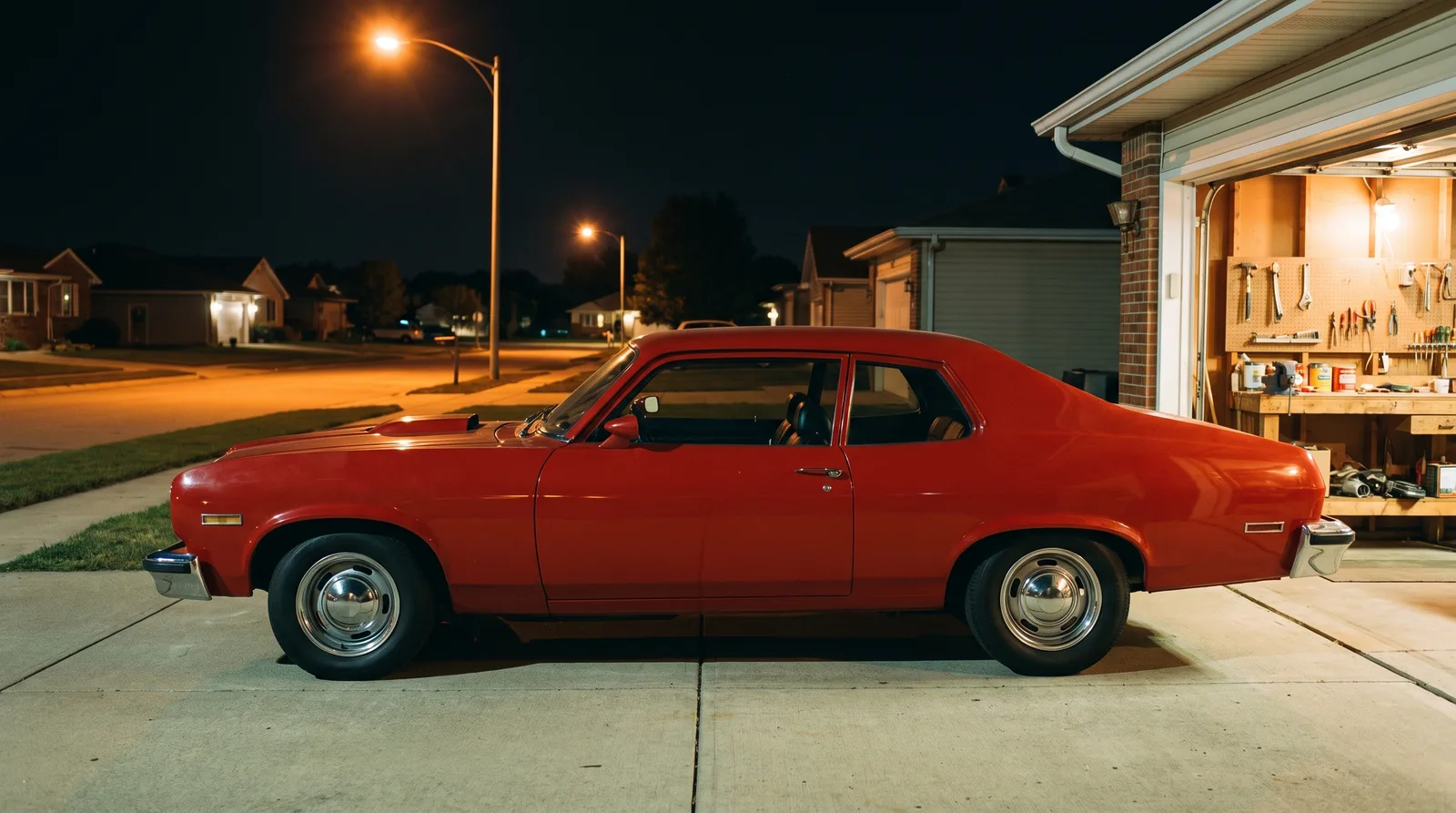
The 1974 GTO is the odd one, and the most interesting from a value standpoint. For its final year the GTO badge moved off the intermediate body entirely and onto the compact Ventura, Pontiac's version of the Chevrolet Nova platform. It carried a 350 cubic inch V8 rather than the big-blocks of the past, along with a shaker hood scoop and GTO trim. It was a smaller, lighter car, closer in concept to the original 1964 idea of a strong engine in a compact body than the heavy intermediates it replaced.
Purists treat the 1974 as an asterisk. From a value and provenance angle it is more complicated than that. It was the final year of the classic GTO, produced in modest numbers at about 7,058 cars, and it represents a genuine chapter in the story rather than a footnote to be dismissed. Do not write about the later imported revival when you talk about the last classic GTO. The classic run ended here, in 1974, on the Ventura.
| Item | 1973 | 1974 |
|---|---|---|
| Platform | Colonnade intermediate | Ventura compact |
| Engines | 400 and 455, detuned | 350 cubic inch V8 |
| Status | W62 option in LeMans | Option package on Ventura |
| Market position | Faded halo | Final classic GTO |
Why they died: the honest accounting
The end of the GTO was not a failure of engineering. It was the collision of three market forces the car could not out-run. Insurance surcharges on high-powered cars had grown steep enough to price out the young buyer who was the whole audience. Emissions regulation forced detuning and raised costs. And the move to low-octane unleaded fuel meant compression, and therefore power, had to fall. Layered on top was a broader shift in taste toward economy and away from big-engine intermediates, accelerated by fuel-price pressure by the mid-1970s.
Against all of that, the GTO's core value proposition, cheap power for a young buyer, simply stopped being deliverable. The badge outlived the formula by a couple of years and then stopped. That is the accounting, and it is the same story that closed out the entire muscle car field.
The rarity the market does not price in
Here is the appraiser's paradox on these cars. Both the 1973 and the 1974 GTO were built in modest numbers by the standards of the classic run. The 1973 is in fact the lowest-production year of the entire classic GTO, at 4,806 cars, and the 1974 followed with roughly 7,058, both a fraction of the nearly 96,946 the badge moved at its 1966 peak. Under normal collector logic, scarcity supports value. On the last GTOs it does not, and that gap is the whole story. Rarity only pays when demand is chasing it, and demand for the final cars is thin because the halo years soak up the attention and the money. So you get the unusual situation of a genuinely scarce car that stays cheap, which is a different thing from a common car that stays cheap.
For a certain kind of buyer that mismatch is the opportunity. You are paying survivor-car money for something that was not actually made in large numbers, and if the wider market ever turns its eye toward the era's overlooked cars, the supply simply is not there to meet it. I do not promise that turn will come, because an appraiser who promises appreciation is selling, not appraising. But the downside is well protected and the raw numbers are on the buyer's side, which is a rare combination in this hobby.
How to buy the last GTO without regret
Because value here rides almost entirely on condition, documentation, and originality, the inspection matters more than the badge. These are cars where a careful buyer can do very well and a careless one can overpay for a tired driver dressed up to look better than it is.
🔧 Inspection Priorities
- Verify the GTO is real. On both years the GTO was a package, so confirm the trim, drivetrain, and codes against documentation rather than trusting badges that are easy to add. This matters most on the 1974 Ventura car.
- Structural rust. Floors, trunk, and frame rust cost more to fix than these cars are worth, so a straight, dry body is the single biggest value driver. Walk away from serious structural corrosion.
- Originality of the drivetrain. An unmolested, documented, numbers-correct car is worth a real premium over a running-but-swapped example, precisely because so few survived with their original drivetrains intact.
- Documentation depth. Build sheet, original paperwork, and service history move value further on these cars than on almost any other GTO, because there is so little badge premium to fall back on.
Set your budget the way I would set a client's: pay for the straightest, most original, best-documented car you can find, and treat the badge as a bonus rather than the reason. Compared against other 1973 and 1974 muscle-era survivors, a clean documented final GTO is quietly one of the more honest values on the field, because you are buying the car and not a reputation.
What they are worth, and to whom
Value on these cars follows the usual appraisal logic: condition, documentation, and liquidity. The trouble is liquidity. Demand is thin because the halo years absorb most of the attention and most of the money. That keeps prices low and holds them there, which cuts both ways. The downside risk is limited because there is not far to fall, and the upside is limited for the same reason. These are cars you buy to own and enjoy, not to trade for appreciation.
Documentation still matters, even here. A well-documented, unmolested 1974 GTO in strong condition is a more compelling thing than its price suggests, because so few were preserved with care. Originality is the lever that moves value most on cars the market otherwise ignores.
"On the last GTOs, condition and originality are almost the entire value story, because the badge alone carries little premium. A tired one is worth what a tired car is worth. A preserved, documented one is quietly the best value in the whole GTO catalog."
Marcus Feld
Where they fit in a collection
I get asked whether a last-of-the-line GTO belongs in a serious collection, and my answer is that it depends on what the collection is trying to say. If the goal is peak value and blue-chip provenance, these are not the cars, and I will not pretend otherwise. But if the collection is trying to tell the whole story of the GTO honestly, from the 1964 loophole to the 1974 sunset, then the last cars are not optional. They are the ending, and a story with the ending cut off is incomplete no matter how strong the middle chapters are.
There is also a practical argument. A clean 1974 GTO can often be bought for a fraction of what a halo-year car costs, which means it can round out a collection or serve as the drivable, low-worry car in a stable of more valuable machines. You are not lying awake over stone chips on a car that already sits at the affordable end of the market. For a lot of owners that freedom is worth more than the bragging rights of a pricier year, and it is a perfectly rational way to enjoy the badge without overexposing yourself financially.
The bottom line
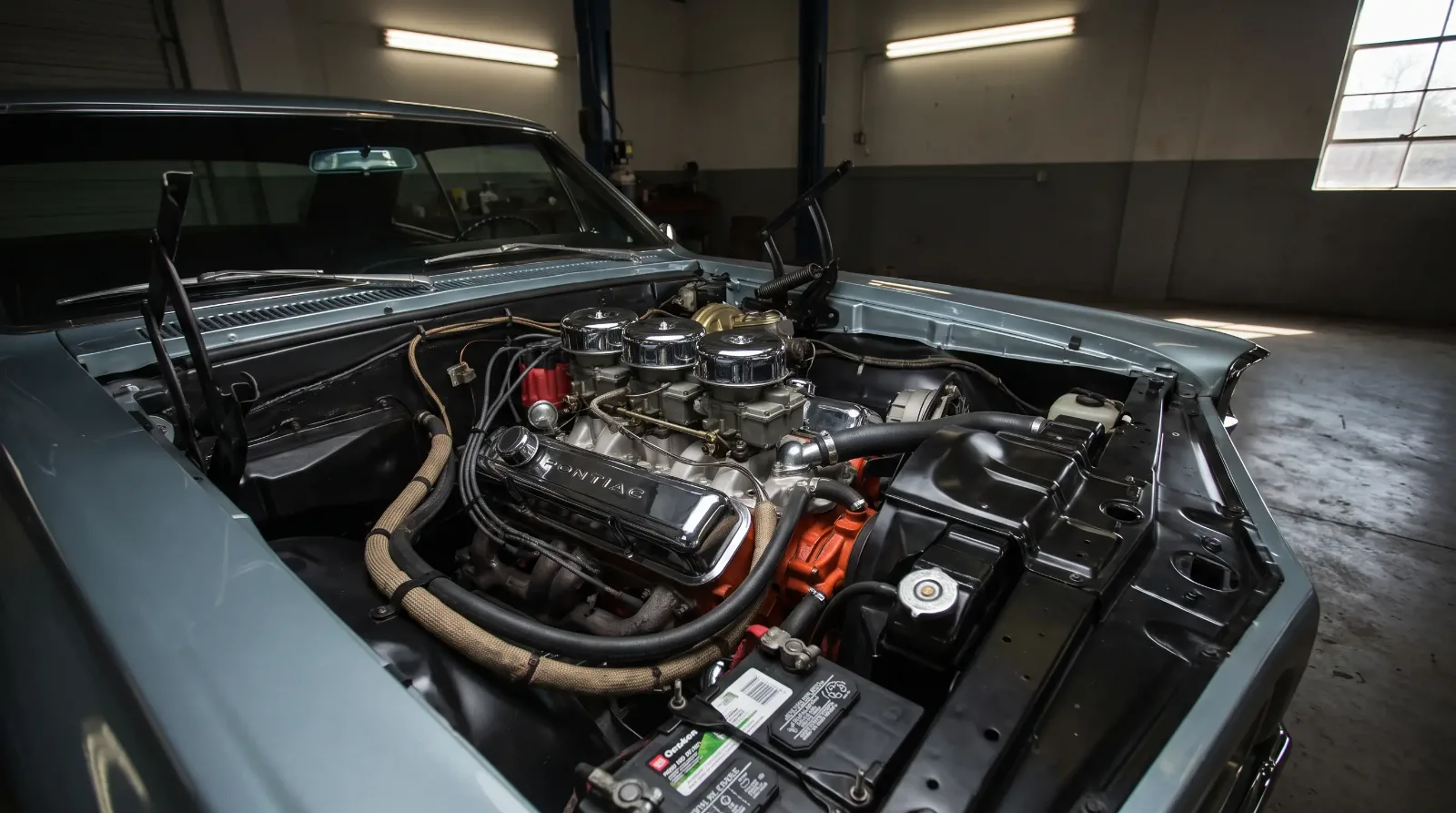
The 1973 and 1974 GTOs are the affordable, honest end of the story, and they reward a buyer who values ownership over bragging rights. Much of the character of these cars still comes down to what is under the hood, and the way Pontiac's engines evolved and then wound down is its own subject, covered in Pontiac's GTO engines.
If a genuine classic GTO on a modest budget appeals to you, this is where to look, with condition and paperwork as your guide. Browse the GTOs for sale and let originality, not the badge, set your number. The market undervalues these cars, and for the right buyer that is precisely the opportunity.
Sources and notes
Related Reading
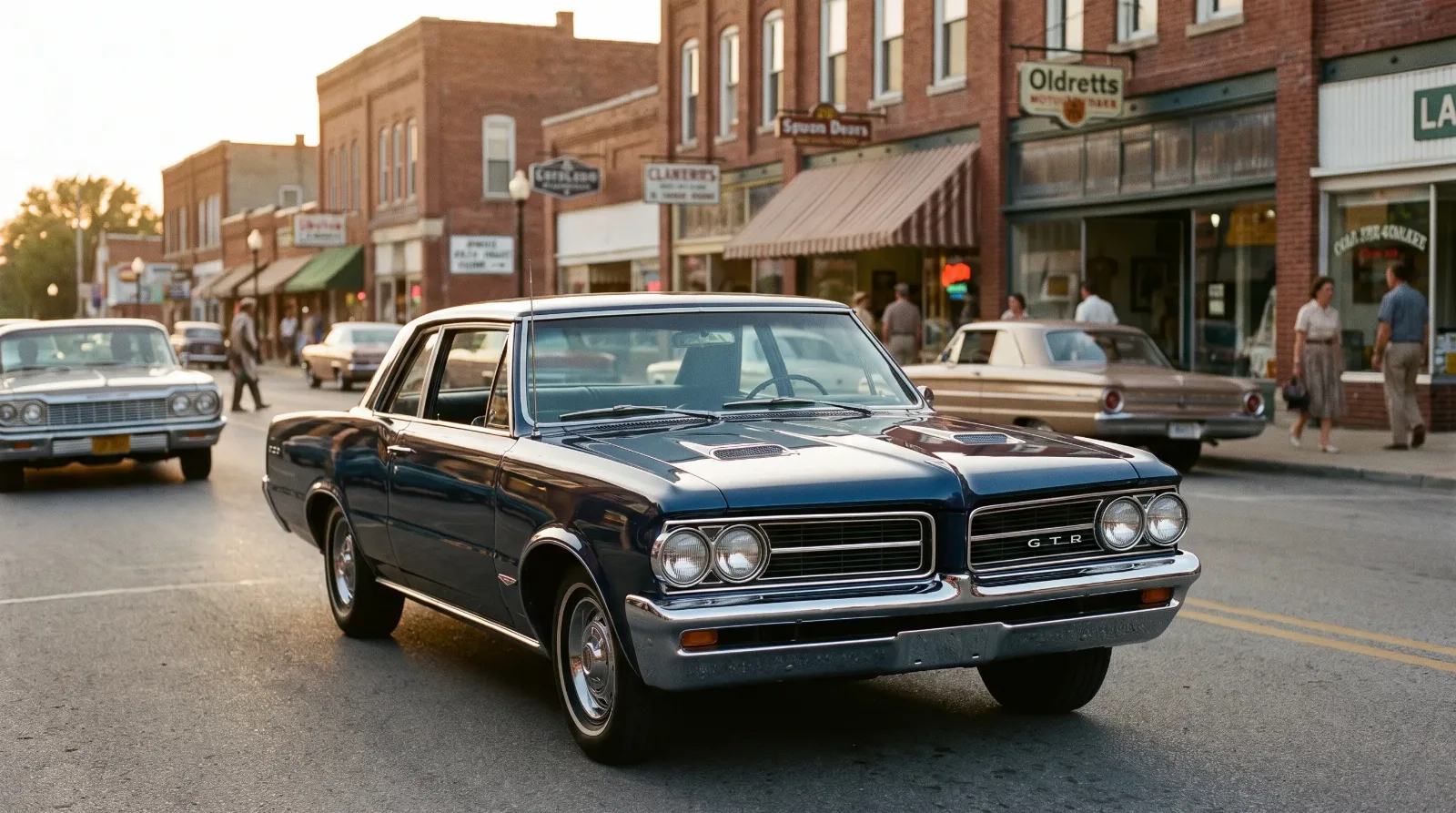
Article
The Pontiac GTO Story: How One Car Invented the Muscle Car Era
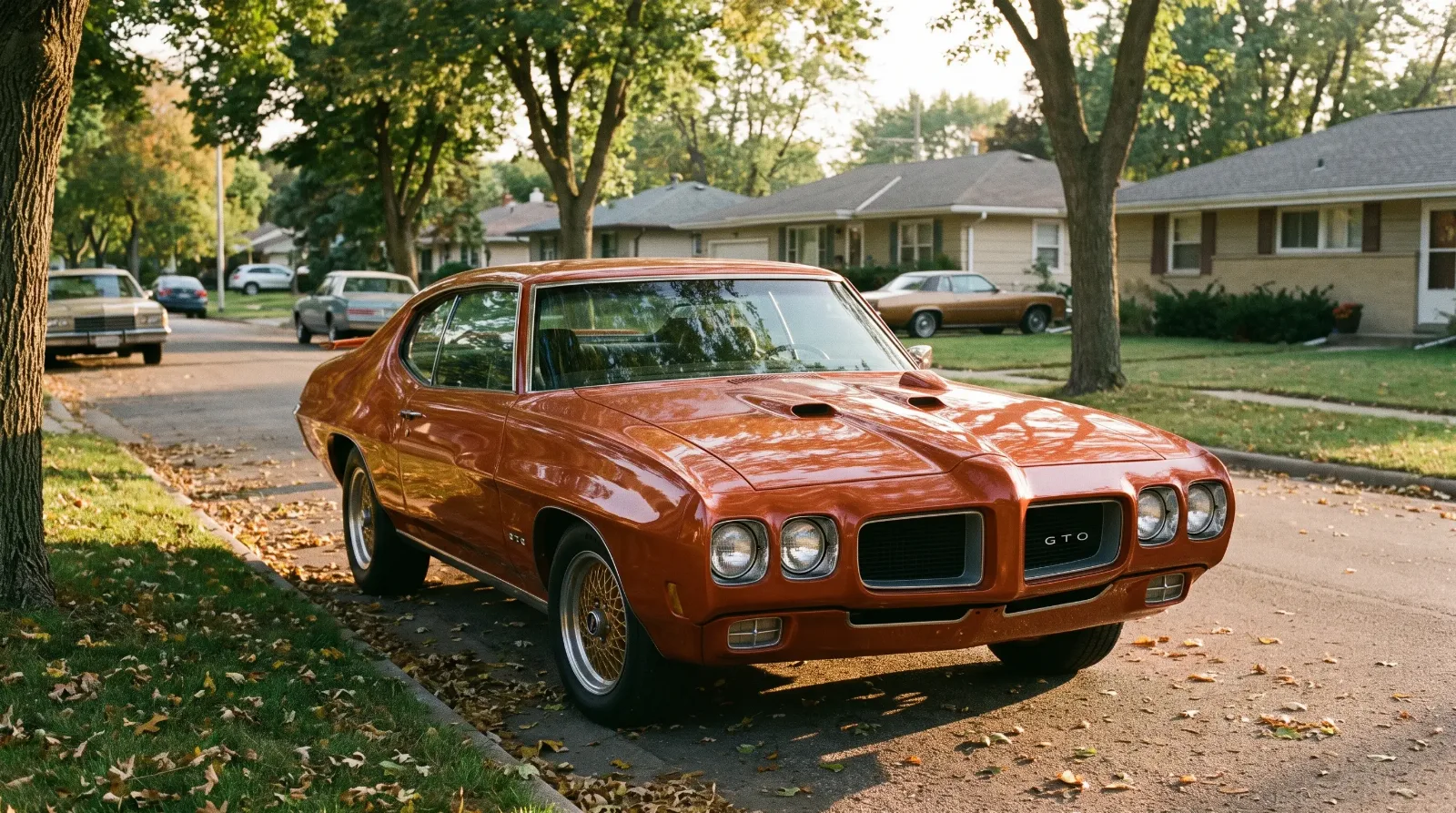
Article
1970-1972 Pontiac GTO: Peak Power Meets the Beginning of the End
Article
1973 GTO: The Colonnade Era Nobody Asked For
Article
1974 GTO: The Ventura-Based Final Year
Article
Why Pontiac Discontinued the GTO After 1974
Article
The 1974 GTO's 350 and the New Math of Net Horsepower
Article
Emissions, Unleaded, and the Death of Compression
Article
The Shaker Hood on a Compact: The 1974 GTO's One Cool Trick
Article
Is the 1974 GTO Finally Getting Respect?
Article
How the GTO's Death Foreshadowed the Muscle Era's Collapse
Article
The 1973 GTO That Almost Wasn't: Cancellation and Reprieve
Article
Grand Am and the Cars That Replaced the GTO
Article
1973-74 GTO Production Numbers: The Rarest Years by Default
Article
Why the Colonnade GTO Handles Better Than Its Reputation
Article
The Last Goat: Buying a New GTO in 1974
Article
Pontiac GTO Engines: From 389 Tri-Power to Ram Air IV and 455
Have a
Pontiac GTO
for Sale?
Reach thousands of serious classic car collectors across the US.
Sell It Here →
Are You a Classic Car Dealer?
List your full inventory and connect with targeted classic car buyers.
Join as a Dealer →

About the author
Marcus Feld
Accredited collector-car appraiser who reads the market through hammer prices, condition tiers and risk.
Related Listings - Pontiac GTO
Comments (1)
D
Don Metzger
2 months ago
Bought one last spring partly from reading this. Inspection found exactly the issues mentioned. Negotiated accordingly. Happy with the outcome.