
The Camaro Le Mans record from the classic era fits on an index card. Across the 1981 and 1982 runnings of the 24 Hours of Le Mans, three Camaros started the race, all of them entered by Stratagraph Inc. and all of them in the IMSA GTO class. One finished. That car came home 17th overall and second in class in 1982, and it remains the best result a Camaro of the 1967 to 2002 period recorded at the Sarthe circuit. What follows is the record, car by car, with the numbers the results databases agree on and a note where they do not.
Car Features
7 min read
The Stratagraph Camaros at Le Mans, 1981 and 1982
Three Stratagraph Camaros started Le Mans in 1981 and 1982. One finished, 17th overall and second in GTO. The full record, car by car.
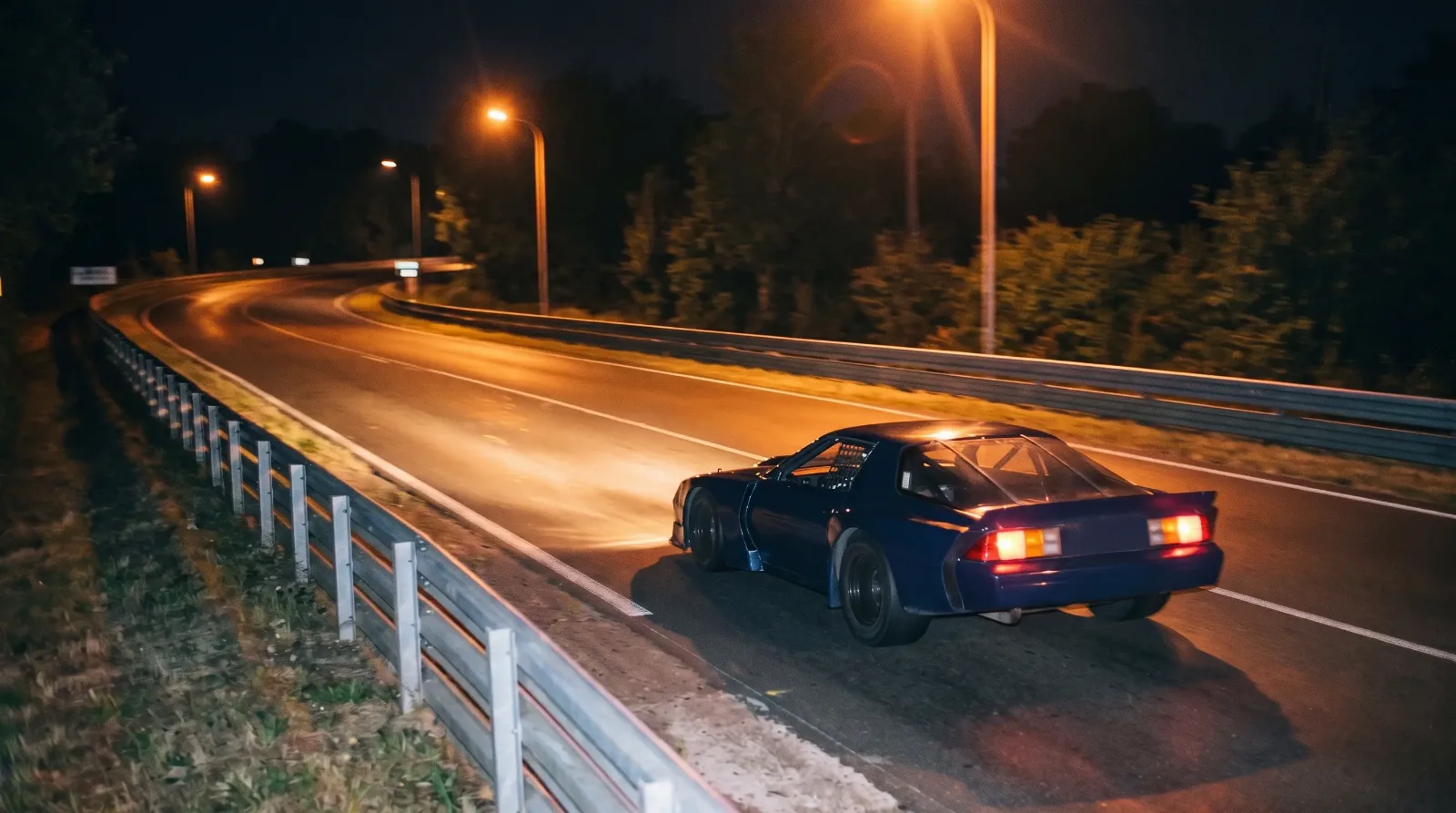
The Camaro's road-racing name was made in North America, chiefly in SCCA Trans-Am, and the background on Trans-Am and drag-strip Camaros covers that history in full. Le Mans was a different proposition: a 24-hour race in France, against factory-supported European sports cars, on a circuit whose long straights and heavy braking zones punish brakes and gearboxes. The Stratagraph effort took a big American V8 coupe into that setting twice.
Billy Hagan, Stratagraph and the GTO class
The entrant was Billy Hagan. He was a NASCAR team owner, and he owned Stratagraph, a company in the oil industry, which is where the name on the entry list came from. The cars were entered under Stratagraph Inc., not under Chevrolet's name. That distinction matters. These were private entries built around a Chevrolet product, and the records list them that way.
They ran in the IMSA GTO class, the American big-engine grand touring category, which Le Mans accepted on its entry list in this period. The 1981 car used a 6.4 liter Chevrolet V8. The 1982 No. 81 car, according to the dealer that later sold it, sits on a Dennis Frings chassis and was built by Tex Racing Enterprises, the company of Tex Powell, who was also the team's crew chief at Le Mans. The drivers came largely from stock car racing, which tells you where Hagan's connections were. Cale Yarborough, Hershel McGriff and Dick Brooks were NASCAR names, not endurance specialists, although McGriff and Brooks had both been part of NASCAR's brief 1976 Le Mans attempt.
The cars carried names as well as numbers. The racingsportscars database lists the 1982 No. 80 as "Camaro II" and the No. 81 as "Camaro III," a numbering that implies the 1981 car was the first of the series.
1981: thirteen laps for the first Camaro Le Mans entry
The first Camaro to start Le Mans was the No. 35 Stratagraph car in 1981, shared by Cale Yarborough, Billy Hagan and Bill Cooper. It qualified 39th.
The race was short for them. After 13 laps, Yarborough ran out of brakes at Arnage, a slow right-hand corner, and the car crashed out. It was the first retirement of the race. A team that had shipped a car across the Atlantic for a 24-hour race was out after 13 laps.
For the record, then: the 1981 Camaro did not run into the night, did not suffer a late failure and was not classified. It went out early, on the brakes, which is the system Le Mans has always found first on heavy cars.
1982: two cars and one finish
Hagan came back in 1982 with two Camaros, No. 80 and No. 81, again in IMSA GTO.
The No. 81 car was driven by Billy Hagan, Gene Felton and Tom Williams. It covered 269 laps and finished 17th overall and second in the GTO class. Driver line-ups for the two 1982 cars differ between sources: the Le Mans organizer's own results site puts Williams in the No. 80 instead. Wikipedia and the racingsportscars database agree on the split given here, and that is the one this article follows.
The No. 80 car, with Hershel McGriff and Dick Brooks, had a harder race. A gearbox rebuild cost it about four hours, and it was not classified at the finish. The racingsportscars results page shows 141 laps for it. One Wikipedia extraction reads 259, but 141 is the figure on the direct results page and it matches Hagerty's report that the car finished 218 laps behind the winner.
| Year | Car | Drivers | Result |
|---|---|---|---|
| 1981 | No. 35 | Cale Yarborough, Billy Hagan, Bill Cooper | Qualified 39th; accident after 13 laps (brakes at Arnage), first retirement |
| 1982 | No. 81 ("Camaro III") | Billy Hagan, Gene Felton, Tom Williams | 269 laps, 17th overall, 2nd in GTO |
| 1982 | No. 80 ("Camaro II") | Hershel McGriff, Dick Brooks | 141 laps, not classified after a gearbox rebuild of about four hours |
How close the No. 81 came to a class win
Put the result in context and it looks better than "17th" suggests. The 1982 GTO class was won by the Porsche 924 Carrera GTR of Busby and Bundy, which covered 272 laps and finished 16th overall. The Stratagraph No. 81 was three laps behind it after 24 hours, one place lower in the overall order.
Three laps over a full day is a small margin in endurance racing. It is also the honest boundary of the achievement. The Camaro was second in class at Le Mans, not a class winner, and second is the figure that belongs in any list of Camaro racing results.
"Three starts, one finish, second in class. It is a modest record, and every line of it is documented, which puts it ahead of a good many Camaro racing stories."
Tom Ramirez
The comparison with the Camaro's Trans-Am years is instructive. In SCCA racing, the Penske Trans-Am cars were built to a set of American rules, raced on American circuits and backed by a team that understood those rules better than anyone. At Le Mans, the Stratagraph cars were visitors running in a class that had been invited in, against cars designed for exactly that race.
After Le Mans: Daytona, Sebring and the auction block
The Le Mans results were not the end of the Stratagraph Camaro's racing. According to an ACO article about the No. 81 car, a Stratagraph Camaro won the GTO class at the 1984 24 Hours of Daytona, finishing sixth overall. Two of its Le Mans drivers, Billy Hagan and Gene Felton, shared it with Terry Labonte, and the racingsportscars database lists the same three. The same year it won GTO at the 12 Hours of Sebring, finishing eighth overall. Those are class wins in America's two best-known endurance races, and they show what the car could do on home ground.
No Camaro appeared at Le Mans again in the classic era. The 1983 results list no Camaro at all, a Stratagraph car entered for 1984 never arrived, and no later Camaro start before 2002 has turned up.
The No. 81 car itself resurfaced in 2014, offered at Mecum's Monterey auction as lot F157 with an estimate of $175,000 to $250,000. It did not sell on the day. Its later ownership is not recorded here.
The modern epilogue is one sentence long: in 2023, a NASCAR-based Camaro ZL1 ran Le Mans in the Garage 56 slot with Jimmie Johnson, Jenson Button and Mike Rockenfeller, completing 285 laps and placing 39th of 62. For the classic era, the record stands where the 1982 results left it: three starts, one finish and a second place in class.
Sources and notes
- Racing Sports Cars: 1981 24 Hours of Le Mans results
- Racing Sports Cars: 1982 24 Hours of Le Mans results
- Wikipedia: 1982 24 Hours of Le Mans
- 24h-lemans.com: the 1982 Chevrolet Camaro for sale
- Fantasy Junction: 1982 Chevrolet Camaro race car, history and build
- Racing Sports Cars: 2023 24 Hours of Le Mans results
Related Reading

Have a
Chevrolet Camaro
for Sale?
Reach thousands of serious classic car collectors across the US.
Sell It Here →
Selling a classic? Here's how: the best sites to sell a classic car
Are You a Classic Car Dealer?
List your full inventory and connect with targeted classic car buyers.
Join as a Dealer →

About the author
Tom Ramirez
Corvette researcher and historian based in Bowling Green, Kentucky. Two decades documenting Corvette production history from original factory records.
Related Listings - Chevrolet Camaro



Comments
Be the first to comment on this article.