
A seller calls a 1969 Camaro a "Z/28 tribute." Another calls a near-identical car a "Z/28 clone." A third just writes "Z/28" and lets the stripes do the talking. All three may be the same kind of car: a base Camaro dressed and built to look like a more valuable one. The words are not interchangeable to a buyer, though, and they matter most when money changes hands. The camaro clone vs tribute question is really a question about disclosure, and about what the paperwork can and cannot prove. This piece sorts out the vocabulary and the risk. For the wider job of bringing one of these cars back, there is more on that here.
Car Features
7 min read
Camaro Clone vs Tribute: What the Words Mean
Replica, tribute, clone: the hobby has no fixed definitions, so disclosure and paperwork decide what a Camaro dressed as a Z/28 or SS is really worth.
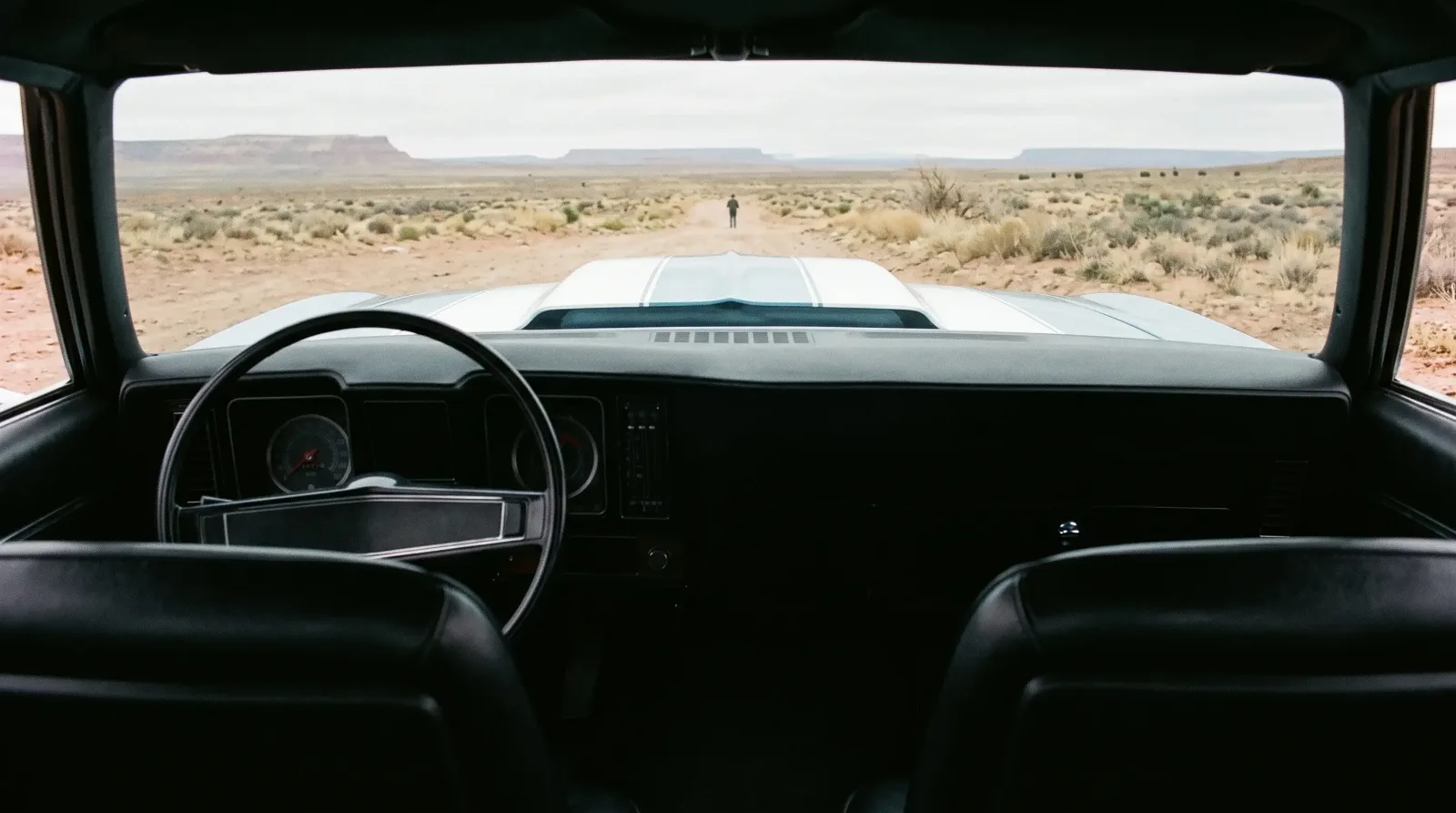
Camaro clone vs tribute: no one owns the definitions
Start with the uncomfortable part. There is no standard. No club, auction house or registry issues a binding definition that the whole hobby follows, and the published ones disagree.
Hagerty's Sam Smith has observed that most people use "tribute" as a catch-all for any car modified to resemble a more desirable one. Muscle Cars Illustrated defines a clone as a recreation that converts a base model to honor a factory or dealer-optioned muscle car, and says clones are also known as tributes or recreations: in other words, the same thing. eBay Motors, writing in 2023, draws the sharpest line of the three. Its version is the one worth carrying into a negotiation, because it is built around what the seller tells you.
| Term | What it usually means | Origin disclosed? | Buyer risk |
|---|---|---|---|
| Replica | A cosmetic copy built on a donor car or a manufactured platform; no claim to be the real thing | Yes, by definition | Low, if priced as what it is |
| Tribute | A lesser car of the same model upgraded with factory or reproduction parts to match a desirable version | Yes | Moderate: quality of the build varies |
| Clone | The same build "minus some of the integrity," in eBay Motors' phrase | Not always | High: undisclosed, it borders on fraud |
So the claim is that a tribute is honest and a clone is not. The caveat is that plenty of sellers use "clone" with no intent to deceive, and plenty of fully disclosed cars are listed as clones. Read the word as a prompt to ask questions, not as a verdict.
Why first-generation Camaros get cloned
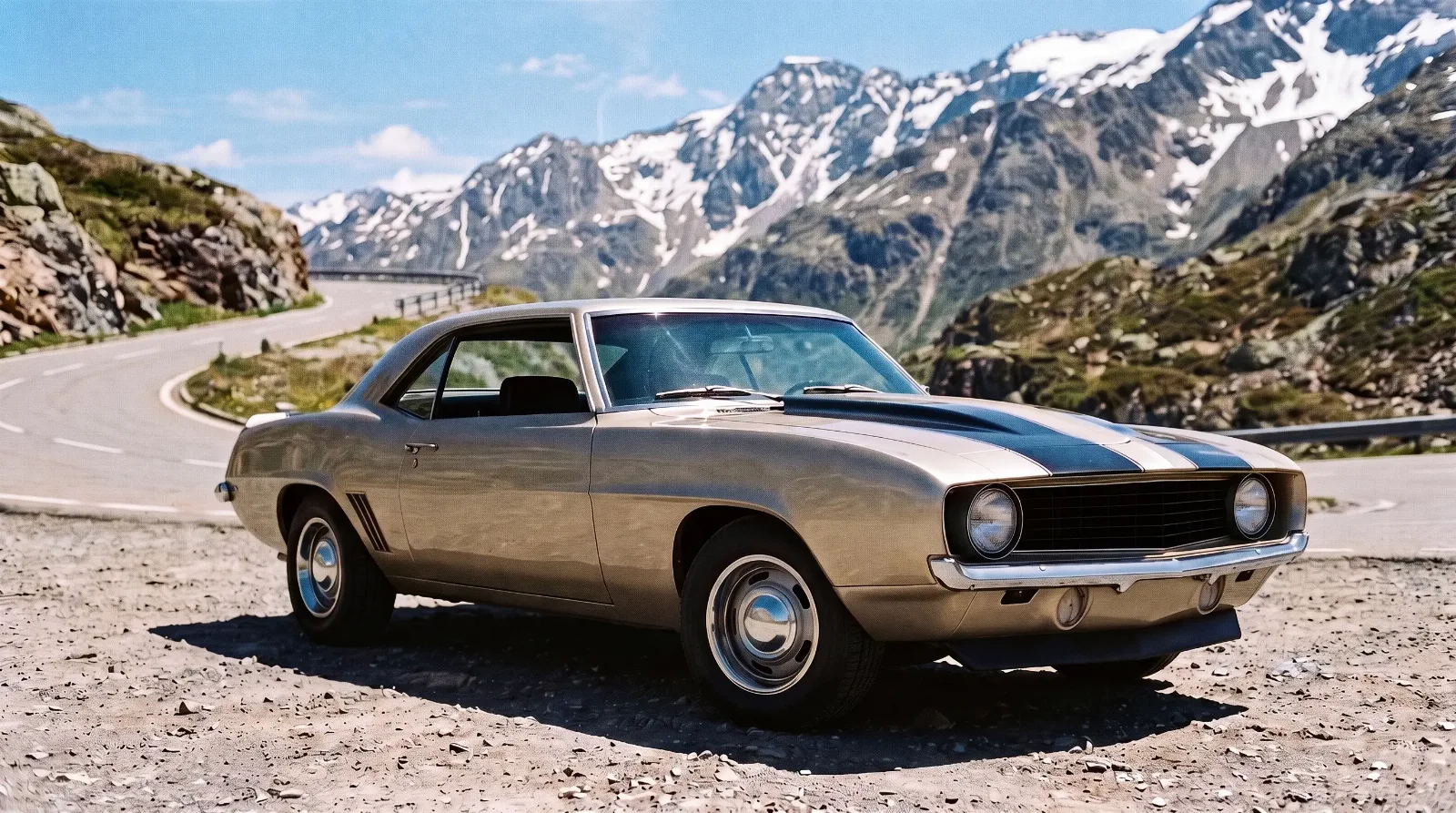
The arithmetic is simple. Chevrolet built 220,906 Camaros for 1967. Only 602 of them were Z/28s. The Z/28 count rose to 7,199 for 1968 and 20,302 for 1969, still a small slice of total output. SS production was larger, at 34,411, 27,884 and 34,932 for the three first-generation years, but still a minority of the cars on the road.
That leaves a large supply of base coupes and a small supply of the cars people want. Converting one into the other is mechanically straightforward: stripes, badges, a correct-style hood, a 302 or 396, the right wheels. A competent shop can make a base car look the part from ten feet away. It cannot make the base car's history change. That gap between appearance and origin is the entire market for this vocabulary.
"A well-built tribute is a perfectly good car. It is just not the car it resembles, and the price should say so. The expensive mistake is paying for the badge and getting the base car's paperwork."
Marcus Feld
What the paperwork can and cannot prove
Buyers often assume the VIN settles the question. On a first-generation car it does not. The 1967 to 1969 VIN does not indicate Z/28, SS, RS or any similar equipment. Neither the VIN nor the cowl tag carries a number that denotes a Z/28, and on a 1968 car the most concrete proof is the original 302 engine. The problem continues into the second generation: a 1970 Z/28's VIN reads the same as any V8 coupe's, giving only the cylinder count.
There are partial exceptions. From the 12B build week (the second week of December 1968), Norwood cowl tags on 1969 Camaros carried X-codes, such as X33 or X77 for a Z/28 and X22 or X66 for an SS 396. They were Norwood-only, earlier cars do not have them, and the Camaro Research Group has found 12B cars both with and without them. Their absence proves little, and a tag can be reproduced.
The stronger documents sit outside the body. The Protect-O-Plate on a 1967 to 1969 Camaro was stamped with the engine and carburetor, transmission, rear axle, selected options and build month, and its engine code (a factory letter, assembly date and two-letter suffix) should match the stamp on the front of the block. Build sheets, original invoices and dealer shipping records add weight. NCRS announced in 2014 that it would offer shipping records for 1965 to 1972 Camaros at $50 a car, listing the selling dealer and build date; we could not confirm the service is still running, so ask before you count on it. Note the gap: those records do not include build data, so they place a car at a dealer rather than prove its options.
Then the physical checks. The public VIN plate sits on the driver's side of the dash from 1968, and factory plates were fixed with "Rosette" rivets that show a star pattern from under the dash. Round rivets are a warning sign. From August 1969, the full VIN also appears on a sticker above the driver's door striker.
Disclosure is the line between the two
If the definitions are loose, the duty is not. Whatever word a seller chooses, the honest version of the listing states plainly that the car began life as a base model and lists what was changed. The dishonest version lets the buyer infer an origin the car does not have. That inference, not the badge, is where a tribute turns into the kind of clone eBay Motors describes.
We found no specific law or auction-house rule on clone disclosure that applies across the hobby. That is a reason for more caution, not less. If the listing is vague, put the question in writing: "Did this car leave the factory as a Z/28?" A seller who will not answer it in an email has answered it.
How an appraiser prices each one
Value is condition, documentation and liquidity. A tribute can match the real car on the first. It loses on the second by definition, and it loses on the third because the pool of buyers willing to pay real-car money for a converted car is small. We could not find a published, dated figure for the value gap between a Camaro tribute and a documented original, so treat any rule-of-thumb percentage you hear as opinion.
What can be said is how the risk stacks up. A disclosed tribute is priced on build quality, much like any modified car. A documented original is priced on its paper, and the paper is most of the premium. An undisclosed clone carries the worst risk of all: you pay original-car money for a tribute-car resale. The highest end of the originality scale belongs to survivor cars, where Bloomington Gold's Survivor rules from 2014 required original engine stamps, trim tags and VIN tags. That tells you which documents the market trusts most.
The practical rule: buy the car you can prove. If you want a Z/28 look and a fair price, a well-built, honestly described tribute is a sound purchase. If you want a Z/28, buy the documents first and the car second.
Sources and notes
- eBay Motors: what is a replica car (replica, tribute and clone)
- Muscle Cars Illustrated: the definitive guide to muscle car clones
- Hagerty: Sam Smith on tributes
- Camaro Research Group: VIN, cowl tag, X-codes and Protect-O-Plate
- Barn Finds: proving a real 1968 Z/28
- OPGI: factory documentation for Chevelles, Novas and Camaros (2014)
Related Reading
Have a
Chevrolet Camaro
for Sale?
Reach thousands of serious classic car collectors across the US.
Sell It Here →
Selling a classic? Here's how: sell my classic car
Are You a Classic Car Dealer?
List your full inventory and connect with targeted classic car buyers.
Join as a Dealer →
#chevrolet camaro
#first-gen camaro
#camaro documentation
#Protect-O-Plate
#Camaro clone
#Camaro tribute
#Z28 tribute

About the author
Marcus Feld
Accredited collector-car appraiser who reads the market through hammer prices, condition tiers and risk.
Related Listings - Chevrolet Camaro

Comments
Be the first to comment on this article.