
At any club meet there is one owner who walks over with a plastic sleeve before he has said hello. Inside is a small metal plate, a warranty booklet gone soft at the corners, and sometimes a folded sheet of paper with grease on it. Everybody leans in. Nobody looks at the paint anymore. That is the power of a Camaro build sheet and its little cousin, the Protect-O-Plate: on a car where the VIN says very little, the paper is often the only thing that can say what the car was when it left the plant.
Car Features
7 min read
Build Sheets and Protect-O-Plates: A Camaro's Paper Trail
What a Camaro build sheet and Protect-O-Plate can prove, how to read a 1967 to 1969 plate, and where to look when the original paper is gone.
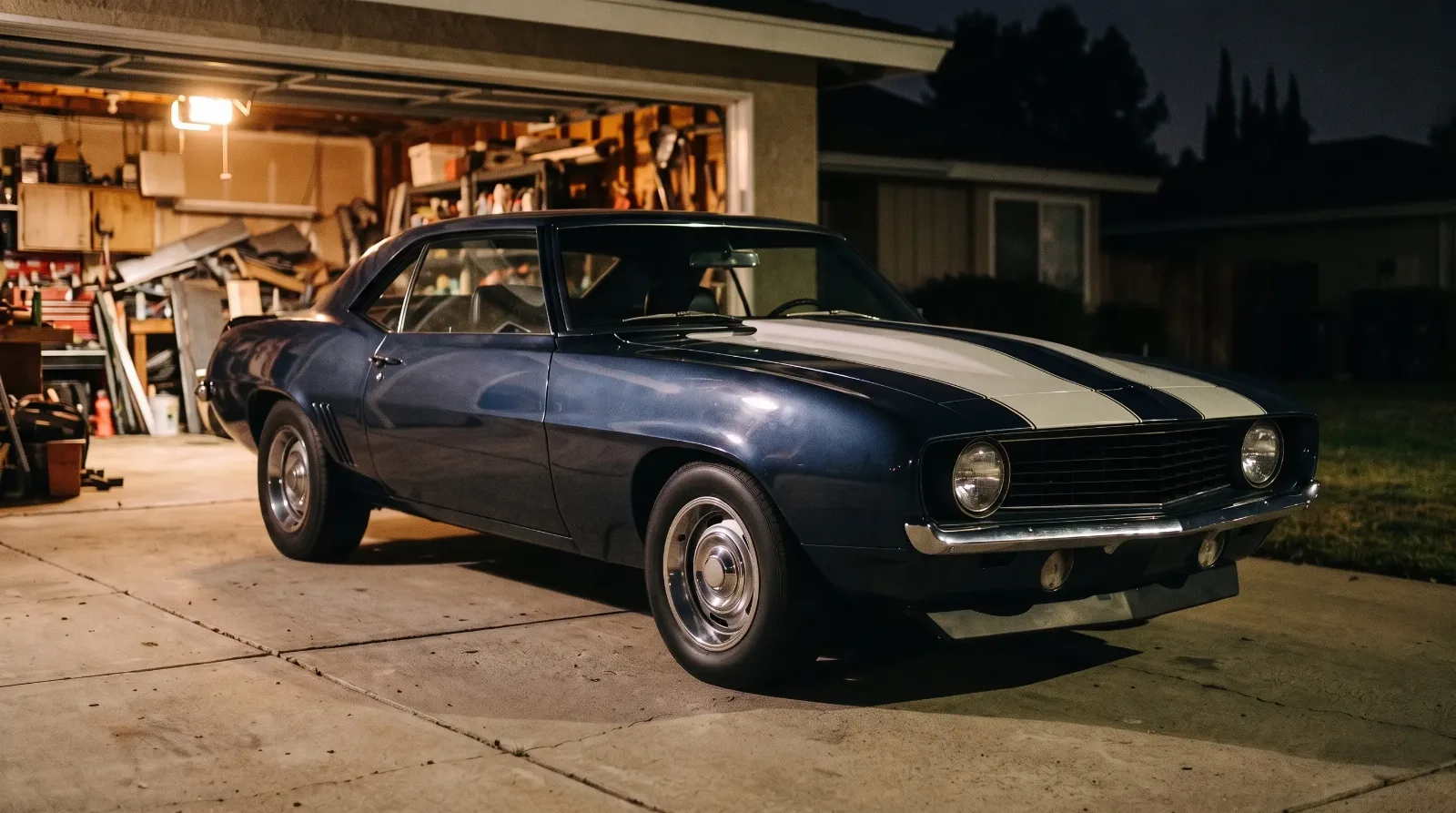
This piece sits inside our wider guide to bringing a Camaro back, and it covers the documents, not the metal. What each piece of paper is, what it can prove, what it cannot, and what to do when the sleeve is empty.
What a Protect-O-Plate is, and what it is not
The Protect-O-Plate was a small stamped metal plate supplied by the factory with each Chevrolet as part of the warranty package. The dealer added the owner's name and address on labels. It was glued inside the rear cover of the Owner Protection Plan booklet, and when the car came in for warranty work, the plate was used to stamp the details onto the work order. The plates were still being issued for 1972 Chevrolets.
So it is a warranty document. It was never meant to be a birth certificate, and it does not list every option. It carries the drivetrain and a few other items a dealer needed for warranty work, and the drivetrain is exactly what a buyer wants to check.
One catch is worth knowing up front. Plates issued when a warranty was transferred carried no drivetrain data. A blank plate is not proof of a swap. It may be proof of a second owner.
Reading a 1967 to 1969 Camaro Protect-O-Plate
The first-generation plates are the best documented. The Camaro Research Group lists what was stamped on them, in mirror image, on a grid of 8 rows by 30 columns.
| Field | What it shows | Years |
|---|---|---|
| Engine | Factory letter, assembly month and day, two-letter suffix; should match the stamp on the front of the block | 1967 to 1969 |
| Carburetor | Carburetor fitted at the factory | 1967 to 1969 |
| Transmission | Transmission identification | 1967 to 1969 |
| Rear axle | Rear axle identification | 1967 to 1969 |
| Options | Selected options only | 1967 to 1969 |
| Build month | Letters in 1967; in 1968 and 1969, digits 1 to 7 for January to July, then 8, 9, O, N, D for August to December | 1967 to 1969 |
| Paint and interior | Exterior paint and interior codes | 1967 and 1968 only |
The engine line is the one people fight over. The plate's engine code should match the code stamped on the front of the block, plant letter, date and suffix. If the plate says one thing and the block says another, the plate is not lying. Somebody changed something, and the job is to find out what and when.
"I have heard every story a seller can tell about a car. The plate does not tell stories. It tells you which engine the dealer was told to stand behind, and the block either agrees or it does not."
Wayne Coburn
Now the bad news. Reproduction plates exist, and some come with authentic-looking GM tape to make a put-together car look original. A plate with the right numbers is only as good as its history. That is where the difference between an honest tribute and a quiet fake starts, and we go through the vocabulary in clone versus tribute.
The Camaro build sheet: rare, and rarer on Norwood cars
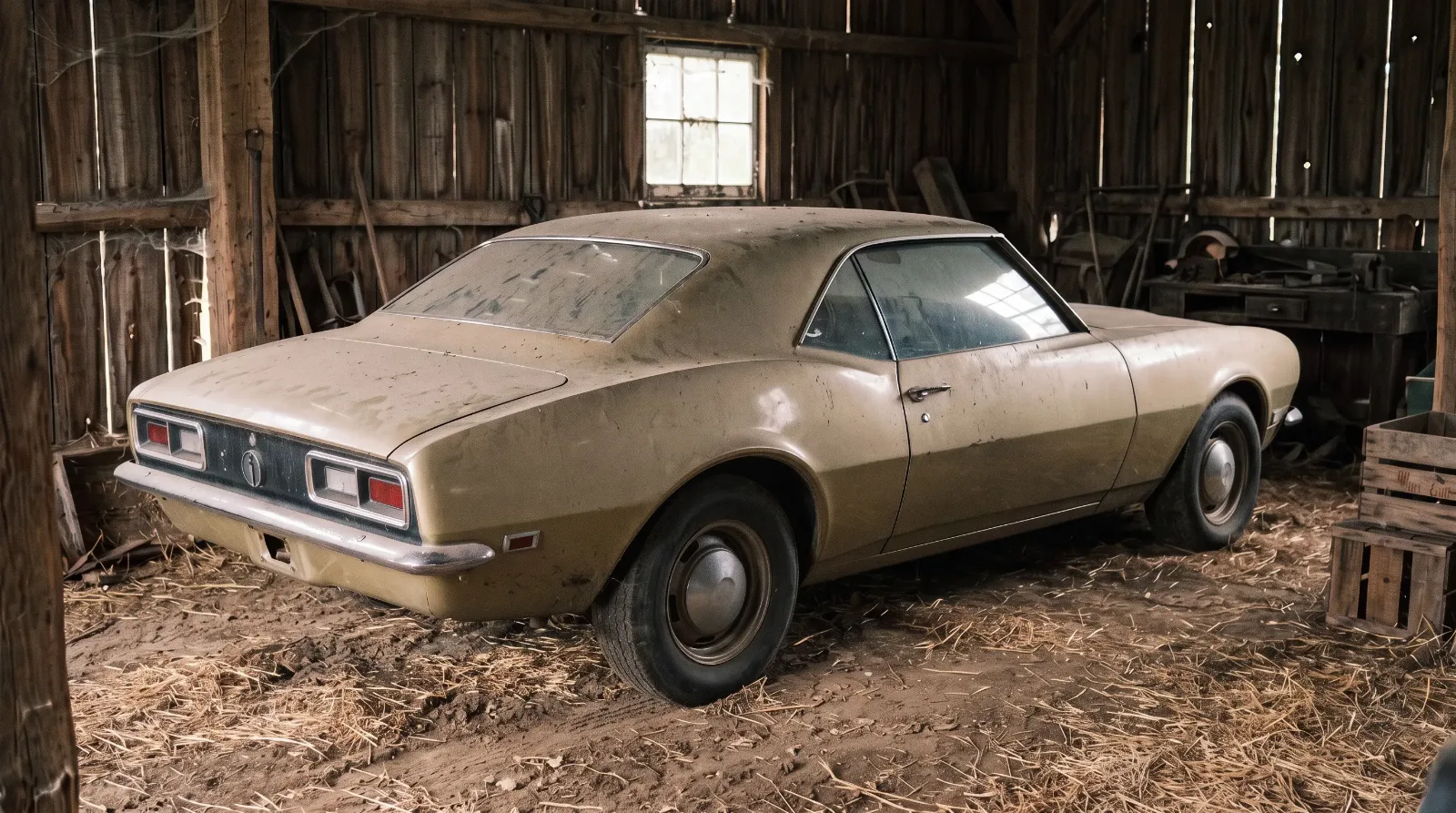
A build sheet, or broadcast sheet, is a plant document that traveled with the body down the line so workers knew what to install. It was never meant to leave the factory with the car. When one survives, it is usually because it ended up in the paperwork the dealer handed over, or because it stayed somewhere in the car and nobody took it out for decades.
On first-generation cars from Norwood, club experts say they are almost never found. In a January 2024 Camaro Research Group forum thread, one member put the odds of finding one in a Norwood car below the odds of winning the lottery, and recalled that the group had only 8 or 9 documented cars with broadcast sheets. The group's coordinator added that most 1967 to 1969 Camaros with a surviving broadcast sheet had it mixed in with the other paperwork, and few were found in the car itself. That is forum talk from people who see a lot of these cars, so treat it as experienced opinion, not a rule.
Van Nuys cars are a different story. The exception the coordinator named is the 1969 Van Nuys car, where the sheet was sometimes left on top of the gas tank, and other members have said the same for years. That is enough to say "look before you throw the old tank away," and not enough to say every Van Nuys car has one.
When the original paper is gone
Most cars have lost their plate and never had a surviving build sheet. That is normal, and there are still places to look.
NCRS announced in April 2014 that it held mostly complete microfiche shipping records for 1965 to 1972 Chevelle, Nova and Camaro, giving the dealer code, dealer name, address and build date, though not the build data, at $50 per car. Whether that service is still offered today is not clear, so ask NCRS before you count on it. There is also a known hole: Shipping Data Reports are not available for 1969 VINs 9N508855 to 9N587275.
GM's own archive is the other door. The GM Media Archive order form, handled by Allied Vaughn, offers original dealer invoices for Chevrolets from the 1977 model year on, fleet and export cars excluded, at $50 a document, with the ship-to dealer, the sticker price and the invoice number. For older cars the same form points to the free Chevrolet information kits on the GM Heritage Center site, which cover specifications and equipment, not a single car's build. A 2010 list showed a kit for every Camaro year from 1967 to 1977. Check the current offer before you order.
Paper on the later cars
The need for paper changes as the car gets newer. From 1972 the VIN carries an engine letter, and in 1973 the T code meant the 245 hp 350 used in the Z28. That does part of the job a plate once did. It does not do all of it.
Third-generation cars have their own gap. From 1987 every Camaro carries the same series letter in the VIN, and Z28 and IROC-Z are option codes, not VIN codes. On those cars the window sticker and dealer paperwork carry the weight, and the practical side of that generation's restorations is covered here. On a fourth-gen SS from 1996 or 1997, the numbered console plaque and the window sticker do the same work.
The pattern holds across how the Camaro evolved from 1967 to 2002: the more valuable the version, the more people want to copy it, and the more the paper is worth. Genuine first-gen Z/28 production was 602 cars in 1967, 7,199 in 1968 and 20,302 in 1969. There are a lot more "Z/28s" than that at shows. The plate in the plastic sleeve is the thing that sorts them, and the owner who brings it over first is usually the one with nothing to hide.
Sources and notes
- Camaro Research Group: VIN, Protect-O-Plate and numbers decoding
- Camaro Research Group forum: Norwood build sheets (January 2024)
- Camaro Research Group forum: build sheets on 1969 Van Nuys cars
- OPGI: factory documentation for Chevelles, Novas and Camaros (2014)
- GM Media Archive and Allied Vaughn: vehicle invoice request form
- Chevellestuff: GM Heritage Center information packages
Related Reading
Have a
Chevrolet Camaro
for Sale?
Reach thousands of serious classic car collectors across the US.
Sell It Here →
Selling a classic? Here's how: where to sell your classic car online
Are You a Classic Car Dealer?
List your full inventory and connect with targeted classic car buyers.
Join as a Dealer →
#first generation camaro
#chevrolet camaro
#camaro restoration
#numbers matching
#build-sheet
#documentation
#Protect-O-Plate

About the author
Wayne Coburn
Longtime Corvette owner, judge and club figure who knows the cars, the records and the people behind them.
Related Listings - Chevrolet Camaro

Comments
Be the first to comment on this article.