
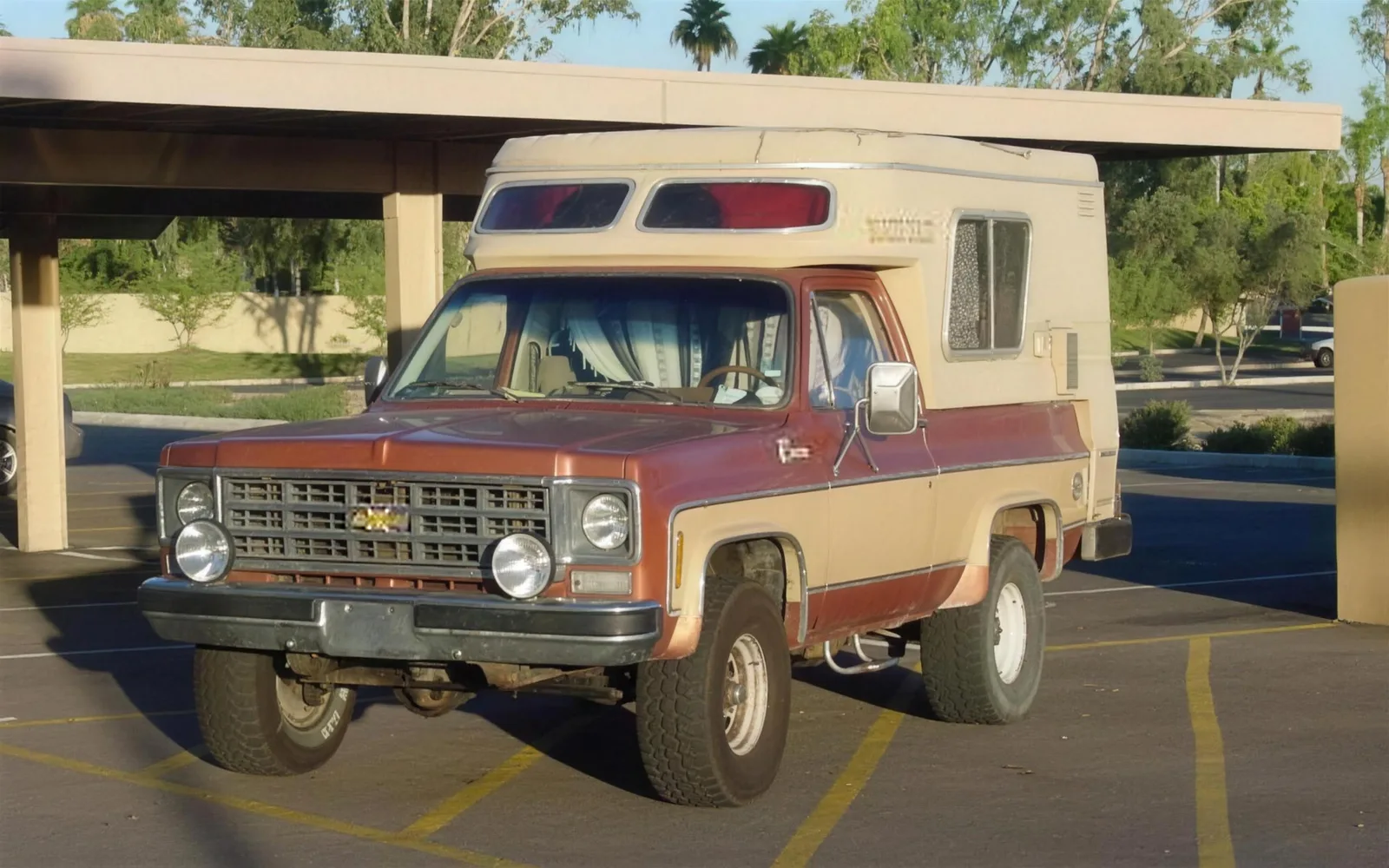
Most people who spot a Chevy Blazer Chalet at a show for the first time assume someone built it in a garage. The raised, boxy camper top perched over the back of a K5 Blazer looks like an aftermarket project, the kind of thing a weekend welder dreams up after one too many camping trips. It was not a garage build. The Blazer Chalet was a factory-offered option, sold through Chevrolet dealerships, and understanding what it was is the first step to understanding why it has become one of the strangest, most collectible footnotes in the K5's history.
Car Features
7 min read
The Chevy Blazer Chalet: A Camper on a K5
What the factory-built Blazer Chalet camper actually was, why Chevrolet offered it on the K5, and why so few survive today.
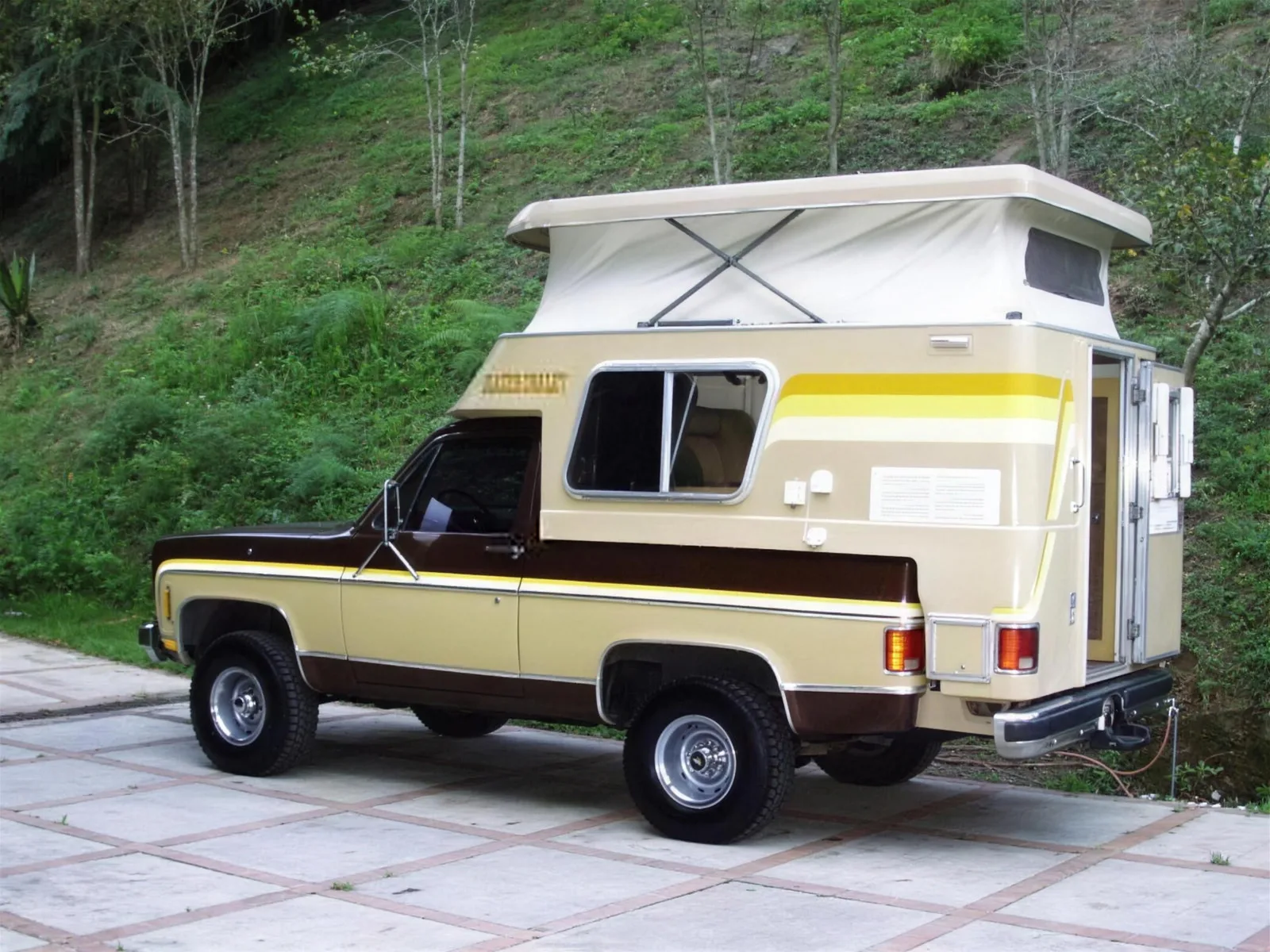
Photo courtesy of blazerchalet.com
A camper that started life as a Blazer
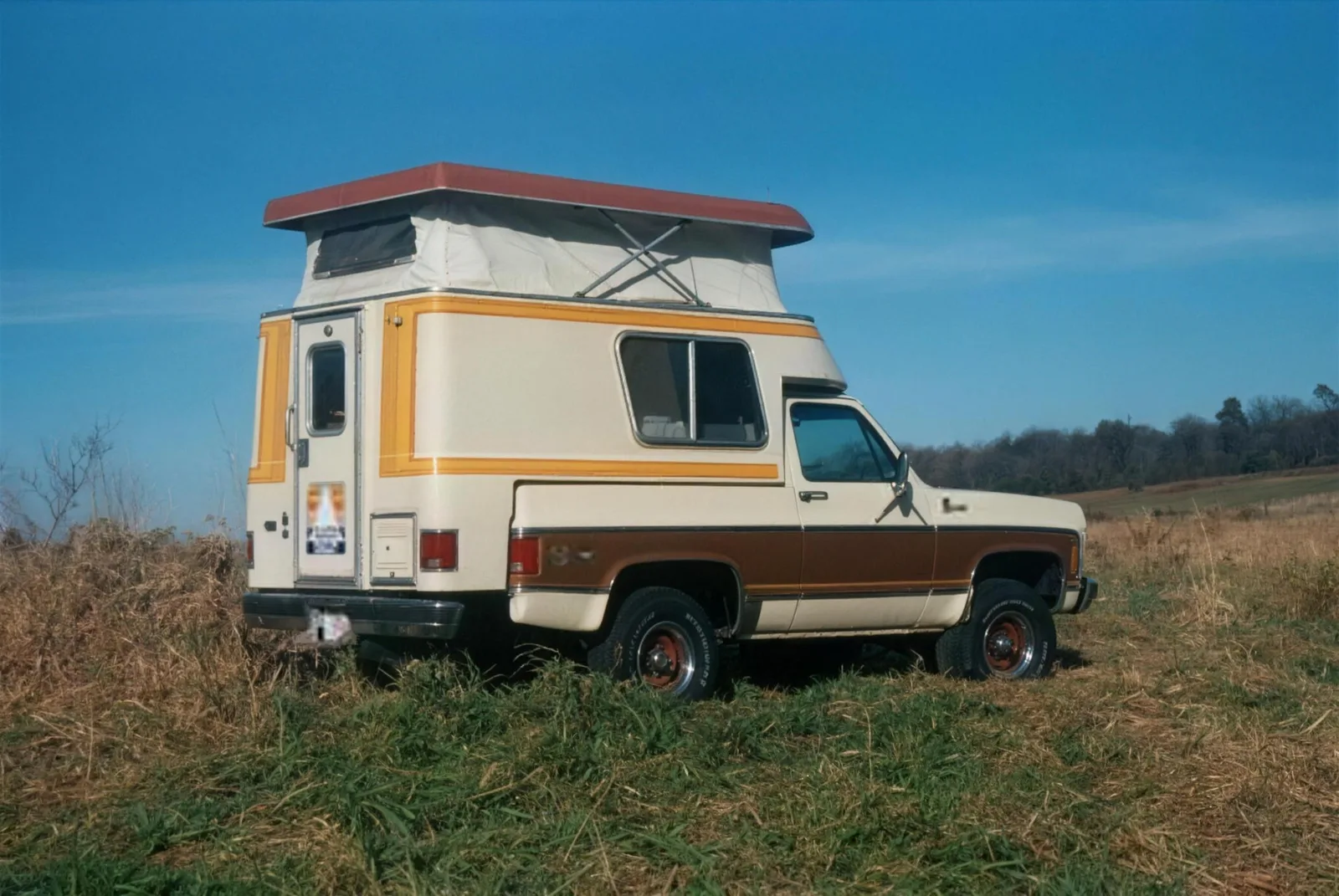
Underneath the raised roof and the fold-out camping hardware, a Blazer Chalet is a K5 Blazer, full stop. Chevrolet took the standard body, removed or reworked the rear roof section, and mated it to a raised fiberglass camper shell built to sit over the truck's cargo area. The result gave standing headroom in the back where a stock K5 offered none, roughly 59 inches of interior height in a standard Blazer stretched to nearly 80 inches with the Chalet's top raised, along with enough space to fit a small galley, a dinette that folded into a bed, and storage for the kind of gear a family needed for a week away from pavement.
What made it unusual was not the concept, camper conversions on trucks were common enough in the 1970s, but the fact that it came from the factory rather than an aftermarket shop. Chevrolet contracted Chinook Mobilodge, an outside recreational vehicle builder, to handle the conversion work, then sold the finished package through its own dealer network as a factory option on the K5 Blazer for the 1976 and 1977 model years. That gave buyers something rare: a truck-based camper with a full factory warranty and a Chevrolet badge, rather than a truck plus a bolt-on camper shell from a third party.
Why Chevrolet built it in the first place
The mid-1970s recreational vehicle market was booming. Families were buying pop-up campers, truck caps, and Class C motorhomes in numbers that made GM's product planners take notice. The K5 Blazer already had a reputation as a capable, truck-based utility vehicle, and turning it into a self-contained camper was a logical extension of that reputation rather than a wild pivot. Chevrolet was not trying to compete with dedicated motorhome builders. It was trying to give K5 buyers who already wanted a camping rig a reason to stay loyal to the brand instead of shopping elsewhere for their recreational vehicle.
Inside the camper
Step inside a surviving Blazer Chalet and the layout reads like a scaled-down travel trailer squeezed into a truck bed. A small two-burner stove, a compact sink, an ice box for keeping food cold, and a dinette booth that converted into sleeping space at night made up the core of the interior. Cabinets tucked into every available inch of wall space held dishes, bedding, and supplies. None of it was luxurious by modern standards, but for a family used to tent camping, a Blazer Chalet represented a real step up in comfort, especially on a rainy weekend when a tent would have meant a miserable trip.
The raised roof was the feature that made all of this possible. Without it, a K5's interior height simply could not accommodate a person standing to cook or make a bed. Chevrolet's engineers solved that problem with a design that added height without destroying the truck's proportions entirely, though the Chalet's silhouette is unmistakably different from a standard K5's low, flat roofline. For the fuller mechanical and historical background on the conversion, k5 blazer chalet history covers the details this piece only touches on.
"You explain the Blazer Chalet to someone who has never seen one and they think you're describing a fever dream. Then you show them a photo and they go quiet, because it actually looks like it works."
- Patrick Walsh
Why it disappeared and why that matters now
The Blazer Chalet did not last long on Chevrolet's option sheet, and its short run is a big part of why surviving examples draw so much attention today. Building a factory camper conversion is expensive, the market for it is narrower than the market for a standard truck, and by the late 1970s, GM had other priorities pulling engineering and marketing resources elsewhere. The Chalet quietly disappeared from brochures, leaving behind a small number of trucks that most Blazer owners today have never even heard of. There is a related story worth reading if you want to understand exactly how that ending played out, and a related story covers where the whole idea came from in the first place.
For collectors, that rarity is the whole appeal. A standard K5 Blazer, even a clean one, is a known quantity with an established market. A Blazer Chalet is something else entirely, a factory oddity that most shoppers have never seen in person, let alone owned. Finding one in driveable condition, with the camper hardware intact and the fiberglass roof free of the cracking and water damage that claimed so many of these trucks, takes patience and a willingness to search beyond the usual listings. If a standard K5 is more your speed while you keep an eye out for a Chalet, there are usually a few K5 Blazers for sale now worth a look.
What a buyer got for their money
Ordering a Blazer Chalet was never going to be the budget-friendly choice. A buyer paid a real premium over a standard K5 Blazer, with a 1977 Chalet carrying a base suggested retail price of roughly $9,426, a figure that could climb toward $13,000 with options, covering the cost of the raised roof conversion, the interior fit-out, and the labor of a separate coachbuilder handling work Chevrolet's normal assembly line was never set up to do. In exchange, that buyer got a vehicle capable of serving as both the family's daily truck and their weekend camper, without owning two separate vehicles or towing a trailer behind the one they already had.
For a certain kind of buyer, that math worked out favorably. A family that camped regularly could justify the added cost against what they would otherwise spend on a separate trailer or pop-up camper, plus the hassle of towing, storing, and maintaining a second unit. For a family that only camped occasionally, the Chalet probably represented more truck than they needed, which is likely part of why it never became a volume product even during its brief run on the option sheet.
What the Chalet says about the K5's flexibility
More than anything, the Blazer Chalet is proof of how adaptable the K5 platform really was. Chevrolet engineers took a truck built for towing, hauling, and light off-roading, and turned it into a livable camper without abandoning what made the K5 itself worth buying. That kind of flexibility is rare in any era of truck design, and it is part of why the K5 Blazer, in all its variations, still draws serious attention from collectors more than four decades after the Chalet quietly left the brochure.
Sources and notes
Related Reading
Have a
Chevrolet Blazer
for Sale?
Reach thousands of serious classic car collectors across the US.
Sell It Here →
Selling a classic? Here's how: sell my classic car
Are You a Classic Car Dealer?
List your full inventory and connect with targeted classic car buyers.
Join as a Dealer →
#Chevrolet history
#K5 Blazer
#Blazer Chalet
#Chevrolet camper
#factory camper conversion
#classic RV

About the author
Patrick Walsh
Automotive journalist covering classic car shows, events, and the enthusiast community across North America.
Related Listings - Chevrolet Blazer
Comments
Be the first to comment on this article.