
The Z28 began life as three characters on an order form. Regular Production Option Z28 was a line item a dealer could check, and for its first model year the car that carried it wore no Z28 badge at all. Over the next 35 years the code became a name, the name lost its slash, disappeared twice, came back twice and outlived the generation that created it. Camaro Z28 history is easier to follow if you track it the way the factory did, by option code, engine code and production count, and that is how this account runs, from the first cars built in late 1966 to the last one built in August 2002.
Car Features
6 min read
The Z28 Name, 1967 to 2002
Camaro Z28 history by option code, engine and production count, from the first 1966 builds to the last red Z28 convertible of August 2002.
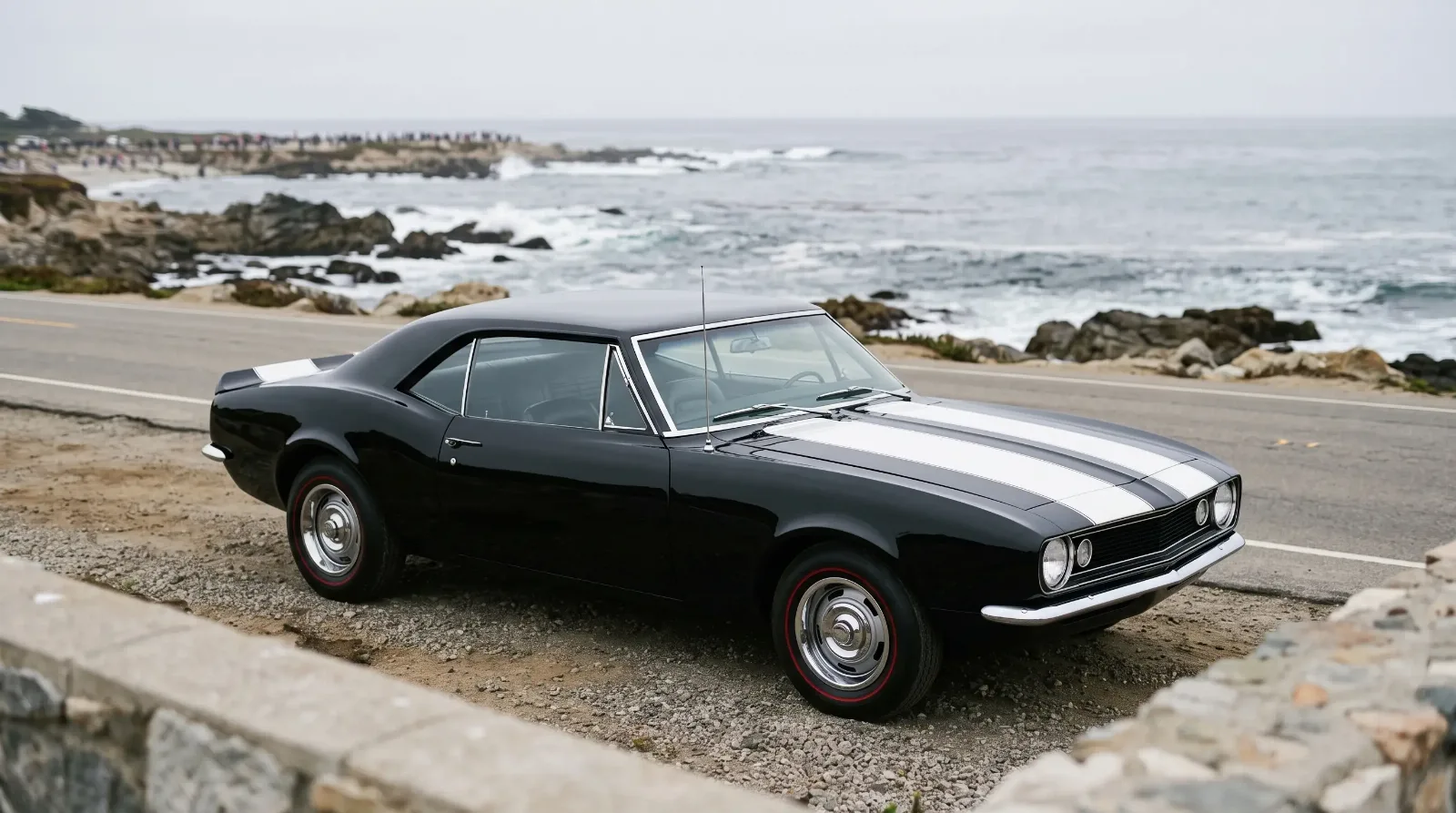
Camaro Z28 history starts with an option code, 1967 to 1969
RPO Z28 became available in December 1966. The first cars were built late that month, carrying a 4P firewall code, and deliveries began in January 1967. The man most often called the father of the Z28 is Vince Piggins, Chevrolet's manager of product promotion, and the purpose was racing. The SCCA Trans-Am series had a 5.0 liter limit, so the package used a 302 cubic inch small-block with a 4.002 inch bore and a 3.005 inch stroke, rated at 290 hp at 5,800 rpm gross on 11.0:1 compression. The Camaro Research Group calls that rating "very conservative."
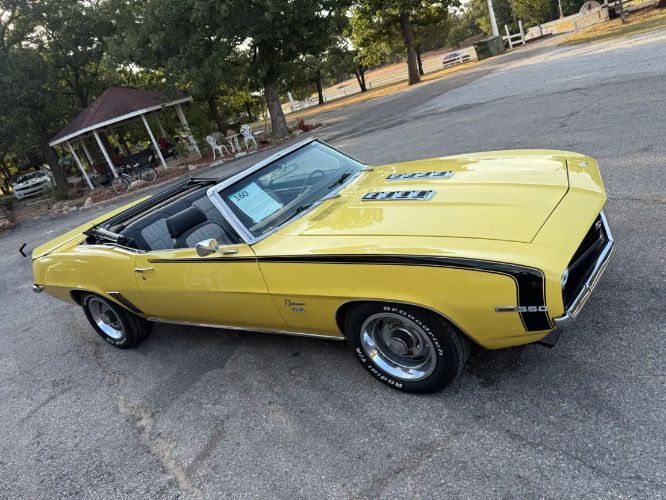
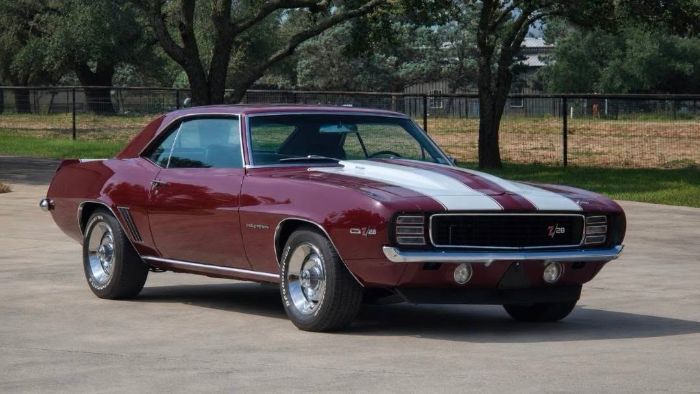
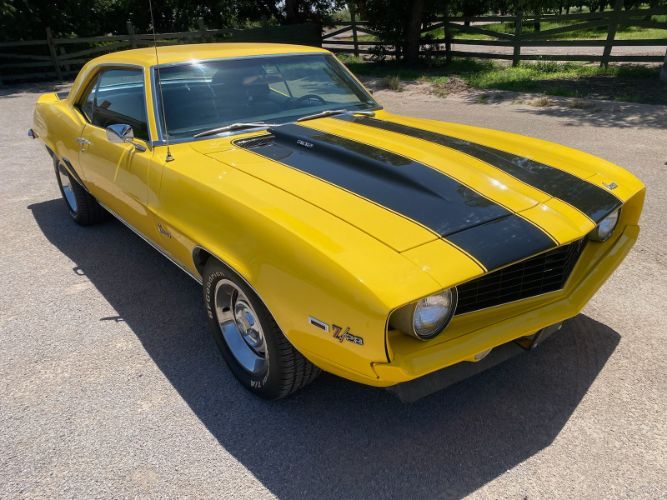
Production tells the story of a code finding its audience: 602 cars for 1967, 7,199 for 1968 and 20,302 for 1969. The package price rose from $358.10 in 1967 to $400.25 in 1968, and during the 1969 model year it climbed in steps from $458.15 to $522.40. Disc brakes were required and priced separately. The badges followed the sales. The 1967 cars had no Z28 or engine badge. The 1968 cars wore a "302" fender emblem until early March 1968, then a "Z/28" emblem. The 1969 cars added Z28 badges on the grille and tail panel. On the track, Mark Donohue's Penske Z28 won 10 of the 13 rounds of the 1968 Trans-Am season, eight of them in a row, which did more for the name than any brochure.
The slash, the LT-1 and the gap, 1970 to 1976
The second-generation Z/28 arrived on February 26, 1970, the car collectors call the 1970½. RPO Z28 now cost $572.95 and brought the LT-1 350, rated at 360 hp gross and 380 lb-ft. It was also the first Z/28 offered with an automatic, a Turbo Hydra-Matic 400. Then came the slow squeeze. The LT-1 was rated at 330 hp gross (275 net) for 1971 and 255 hp net for 1972, the year the slash was dropped and the name became "Z28." For 1973 the engine changed to the L82 with hydraulic lifters, rated at 245 hp net, and air conditioning was available on the Z28 for the first time.
The production line shows the strain: 8,733 for 1970, 4,862 for 1971, 2,575 for 1972, then a recovery to 11,574 for 1973 and 13,802 for 1974, the best second-gen Z28 year to that point. It did not save the package. The Z28 was dropped after 1974 because of emissions, and there was no Z28 for 1975 or 1976. The full body-and-chassis story of these years is in our second-gen Camaro guide.
The 1977½ comeback and the volume years
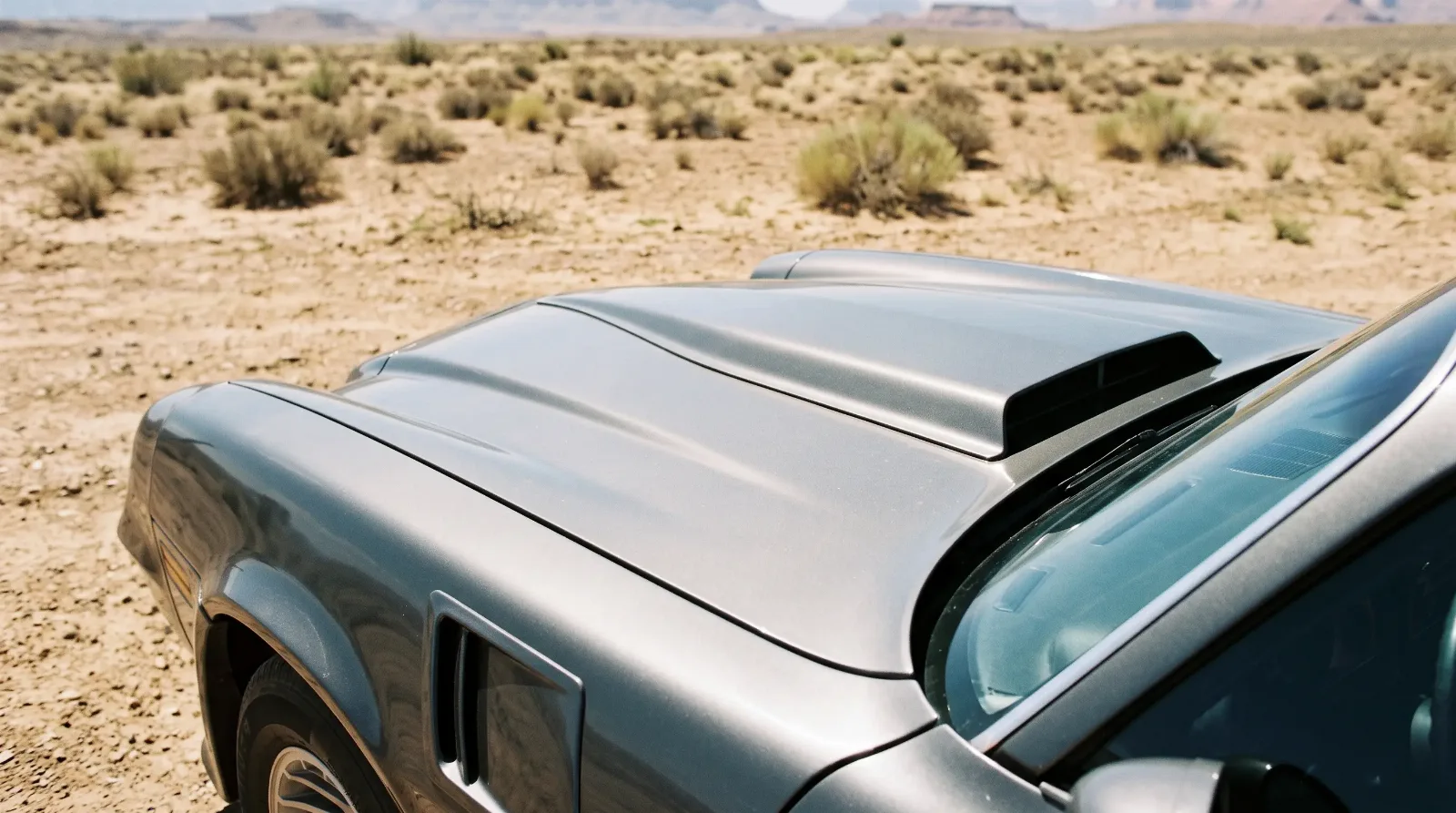
The Z28 returned in the spring of 1977, debuting at Daytona in February, and this time it was a separate model rather than an option. Its LM1 350 four-barrel was rated at 185 hp at 4,000 rpm and 280 lb-ft (175 hp in California). You will see 195 hp in one source and "about 13,000" cars in another. The better-supported figures are 185 hp and 14,349 cars, the count given by three separate sources.
From there the name sold in numbers the 302 cars never approached. The table below gives the count for each of the last five second-generation years.
| Model year | Z28 engine and rating | Z28 production |
|---|---|---|
| 1977 | LM1 350, 185 hp net | 14,349 |
| 1978 | LM1 350, 185 hp net | 54,907 |
| 1979 | LM1 350, 175 hp net | 84,877 |
| 1980 | 350 four-barrel, 190 hp net | 45,137 |
| 1981 | 350, 175 hp, automatic only | Disputed: 43,272 or 20,253 |
The 1981 figure is the one real argument in the table. The model total of 126,139 is not in doubt, but some sources give the Z28 43,272 cars and the Berlinetta 20,253, while others print the same two numbers the other way round. Until someone publishes the factory breakdown, quote both.
The 1980 rating of 190 hp was the highest since 1974, and the 1980 and 1981 cars got the Air Induction hood, a rear-facing scoop with a solenoid flap that opened at full throttle. For 1981 the 350 came only with an automatic and Computer Command Control, while four-speed and California buyers got a 305 rated at 165 hp.
Third generation: Car of the Year, then a missing name
The 1982 Z28 was Motor Trend's Car of the Year and paced the Indianapolis 500. Its engines were modest by later standards: the LG4 305 at 145 hp, or the LU5 Cross-Fire injection 305 at 165 hp with an automatic only. In 1985 the IROC-Z arrived as RPO B4Z, an option package on the Z28.
Here is the myth worth correcting: the Z28 name did not run unbroken through the 1980s. For 1988 Chevrolet dropped the Z28 name and made the IROC-Z the top model. The IROC-Z ended with 1990, when Chevrolet did not renew its agreement with the International Race of Champions, and the Z28 came back for 1991. The 1991 and 1992 Z28 offered the LB9 305 TPI at 205 hp with an automatic or 230 hp with the five-speed, and the L98 350 TPI at 245 hp, automatic only. The 1992 run was 6,451 cars, 5,197 coupes and 1,254 convertibles.
The fourth generation and the last classic Z28
Fourth-generation production moved to Sainte-Thérèse, Quebec, from November 1992. The 1993 Z28 used the LT1 5.7 at 275 hp and 325 lb-ft, and a Z28 paced the 1993 Indianapolis 500, with replicas sold for $995 extra. For 1998 the Z28 switched to the aluminum LS1 5.7, rated at 305 hp through 2000, and the 2001 and 2002 cars reached 310 hp and 340 lb-ft with an LS6 intake and a revised cam.
The Z28 also became the base for the SS. The 1996 SS, the first since 1972, was a Z28 converted by SLP Engineering under GM contract, which ties the two names together in a way buyers often forget. That parallel thread is covered in the SS badge's long run. The volume, meanwhile, had fallen far from the 1979 peak. Model year 2001 built 29,009 Camaros, the lowest of the fourth-generation run, and 12,652 of them were Z28s.
"People ask me what the Z28 was. I tell them to look at the order form first and the badges second. In 1967 it was a code with no emblem, for 1975 and 1976 and again from 1988 to 1990 it was not on the order form at all, and the records settle every argument in between."
Tom Ramirez
On August 27, 2002, the last fourth-generation F-body left the line at Sainte-Thérèse, a red Z28 convertible, and the plant closed the next day. The name went quiet for more than a decade. As a one-line epilogue, the Z/28 returned for 2014, slash restored, as a track-focused car with a 500 hp V8. For how the Z28 fits beside the SS, the COPO cars and the other performance Camaros, read more here.
Sources and notes
- Camaro Research Group: the first-generation Z28, option code, prices and production
- Wikipedia: second-generation Camaro, the 1970 Z/28 automatic and the 1977 return
- Wikipedia: the 1968 Trans-Am season, round by round
- Muscle Car Facts: the 1979 Camaro, Z28 rating and the 84,877 count
- Catalog Camaro: the 1981 production split that disagrees with other sources
- Auto123: the last Z28 built at the Boisbriand plant on August 27, 2002
Related Reading
Have a
Chevrolet Camaro
for Sale?
Reach thousands of serious classic car collectors across the US.
Sell It Here →
Are You a Classic Car Dealer?
List your full inventory and connect with targeted classic car buyers.
Join as a Dealer →

About the author
Tom Ramirez
Corvette researcher and historian based in Bowling Green, Kentucky. Two decades documenting Corvette production history from original factory records.
Related Listings - Chevrolet Camaro
Comments
Be the first to comment on this article.