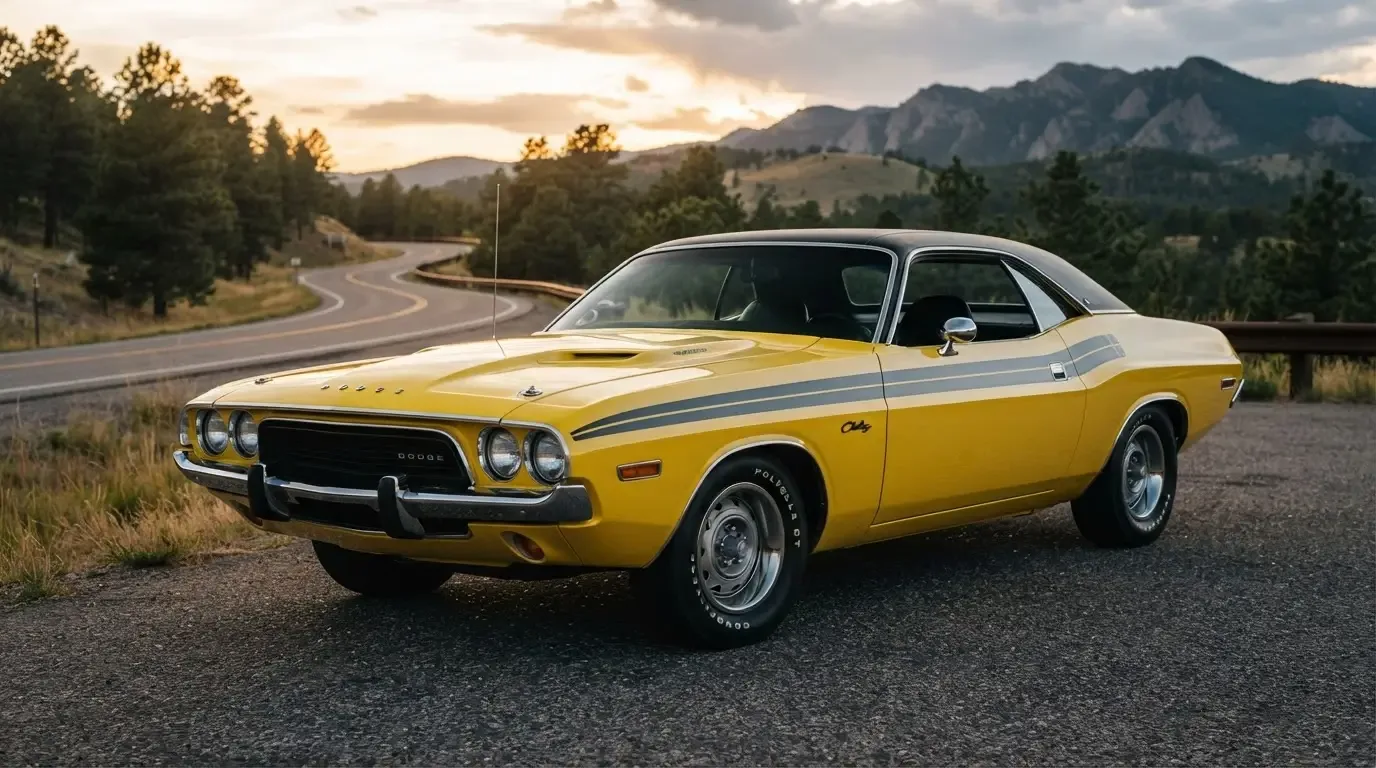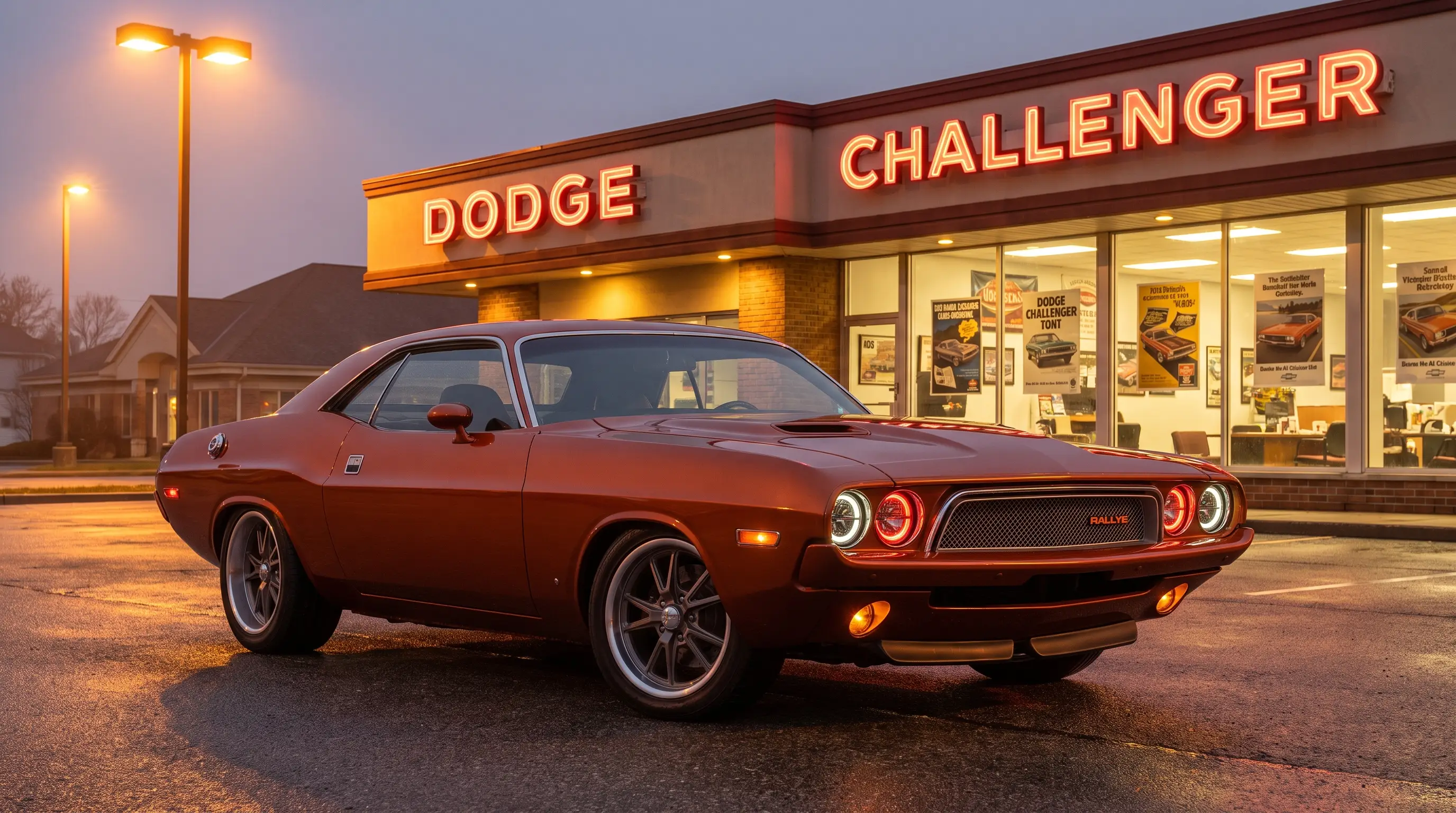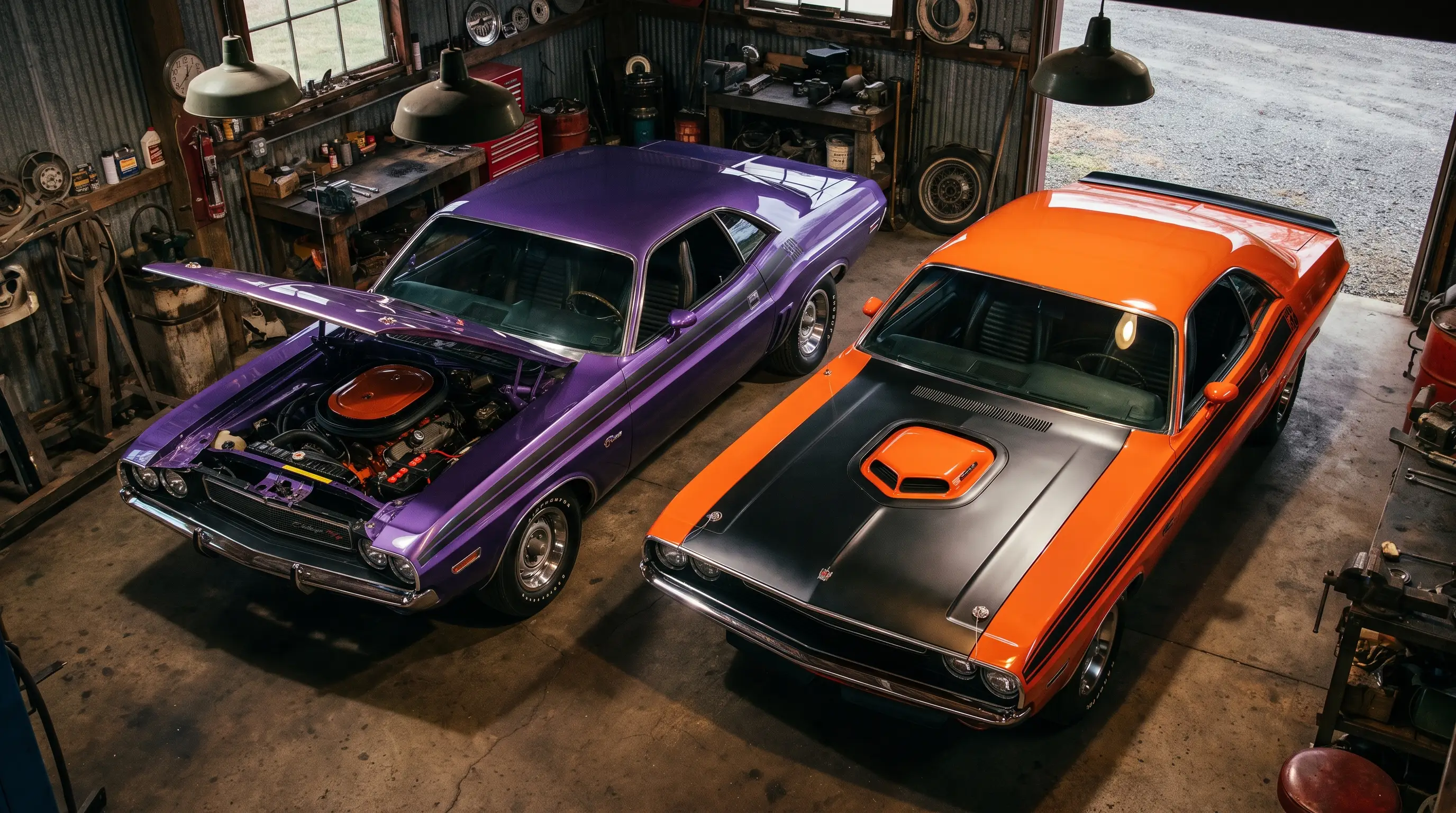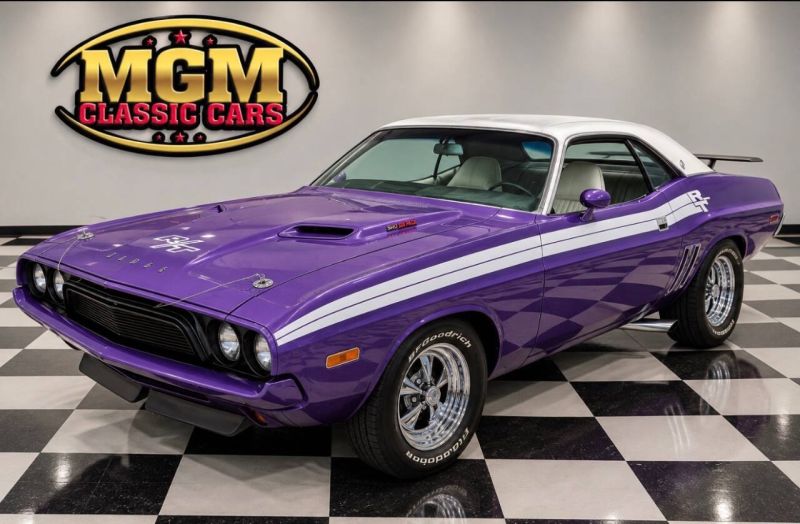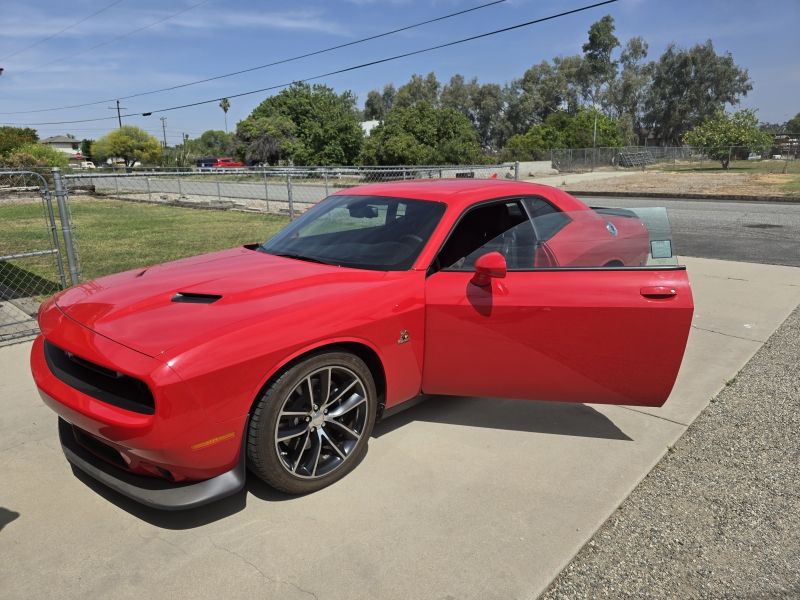
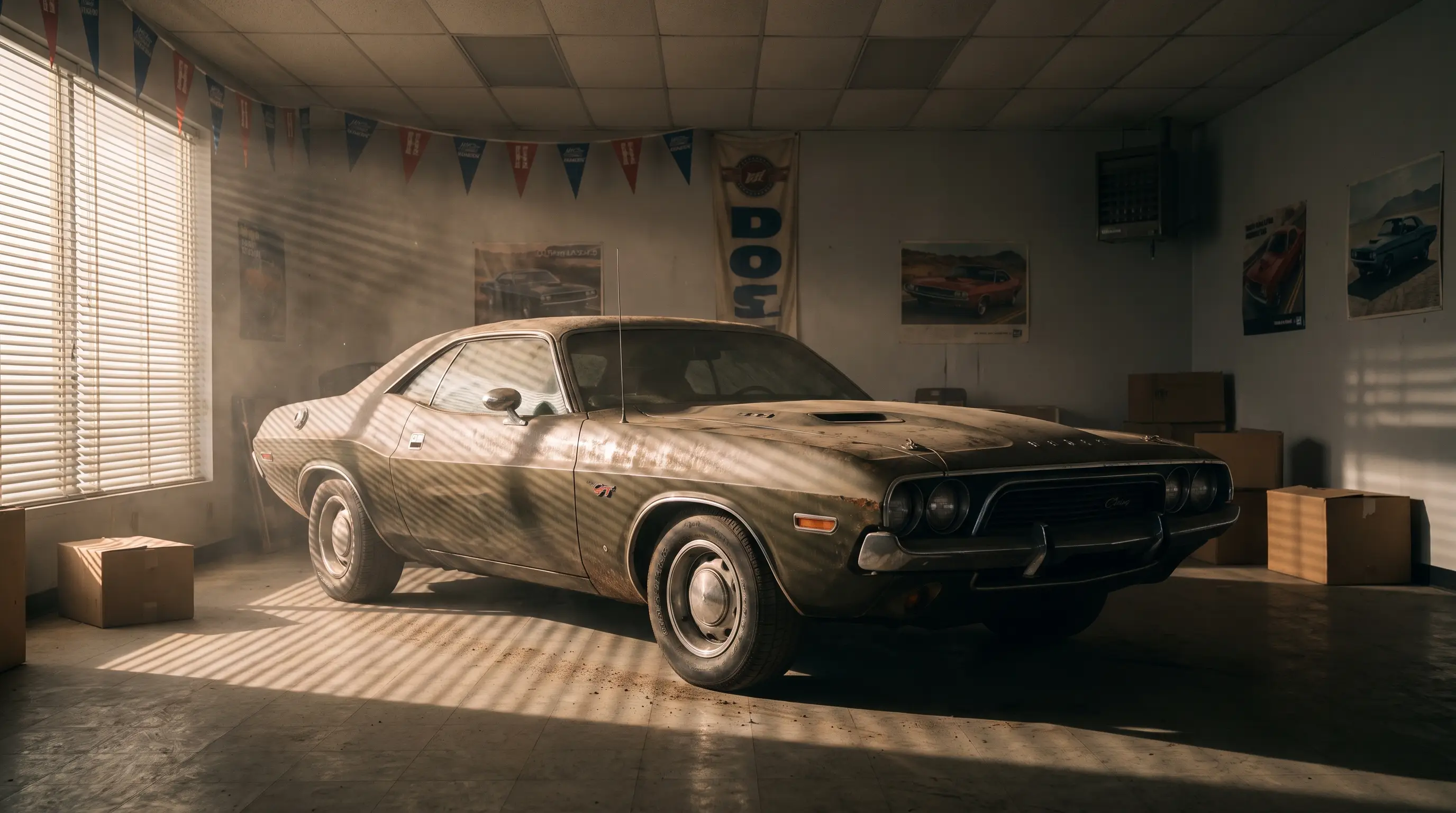
The Dodge Challenger left the factory floor in 1974 without ceremony, and that absence of fanfare tells you almost everything about why it ended. Three model years earlier the car had been Dodge's answer to the Mustang and Camaro, a full-size pony car with big-block options and a rallye stripe that meant something. By its last season it was a small-block, low-compression shadow of that car, and the market had already moved on before Chrysler pulled the plug.
The muscle car market did not survive the early 1970s
Insurance surcharges on high-horsepower cars started climbing hard around 1970, and by 1972 a young buyer shopping a 340 or 383 Challenger was paying a premium that made the car a harder sell than the sticker price alone suggested. Add in tightening emissions rules that forced power ratings down across the board (Chrysler switched to net horsepower ratings for 1972, which made every engine look weaker on paper even before real output dropped), and the whole segment that the Challenger had been built to serve was shrinking fast.
Dodge dealers felt it directly. Challenger sales had peaked in the car's debut year of 1970 at just under 77,000 units, then fell sharply in 1971 and again in 1972 before a brief uptick in 1973. By 1974 the number was a fraction of what it had been, and a car that sells in the low five figures against a platform that costs real money to keep in production stops making sense on a spreadsheet, no matter how good it looks on a showroom floor.
The 1973 oil embargo changed what people wanted to drive
The OPEC oil embargo hit in October 1973, right in the middle of the Challenger's final model year on sale, and it reordered consumer priorities almost overnight. Gas lines wrapped around city blocks, prices at the pump roughly quadrupled, and a two-door coupe with a big V8 under the hood went from aspirational to a liability in a matter of weeks. Chrysler was already trimming the Challenger's engine lineup before the embargo, down to a 318 or a 360 by 1974, but the fuel crisis made the decision to end the car an easy one rather than a gamble.
It is worth remembering that Chrysler as a company was under serious financial strain through this period, years before the federal bailout that would eventually keep it afloat. A slow-selling pony car sharing tooling with the Plymouth Barracuda was not a priority when the corporation was fighting to stay solvent. Cutting two related nameplates at once, as Dodge and Plymouth did when the Challenger and Barracuda both ended after 1974, was as much a survival move as a market decision.
Federal regulation reshaped the whole car
Beyond emissions, new federal bumper standards phased in through the early 1970s forced ungainly rubber-tipped bumpers onto cars that had been styled for cleaner lines. The Challenger absorbed these changes reluctantly, and the result looked like a car wearing a costume that did not fit. Combined with detuned engines and rising insurance costs, the 1974 Challenger was doing the same basic job as the 1970 original with far less of the appeal that made buyers choose it in the first place.
Read the 1972 dodge challenger history and you can trace this decline model year by model year: the same body, steadily fewer engine choices, steadily more compromise. It is not a story of a car falling apart. It is a story of a car being slowly hollowed out by forces well outside Dodge's product planners' control.
What replaced the Challenger tells the rest of the story
Dodge did not bring back a two-door pony car for years afterward. The name went dormant for the rest of the 1970s while the company focused on smaller, more efficient products that fit the new economic reality. When Dodge did revive the Challenger nameplate in 1978, it was a badge-engineered Mitsubishi Galant Lambda coupe, a front-drive-adjacent compact with nothing in common mechanically with the E-body car. That gap says more about 1974 than any sales chart could. The market for a big American two-door with a V8 simply was not there anymore, and Chrysler knew it.
For readers curious about how the trim levels diverged before the end, a related story breaks down exactly what separated the Rallye from the R/T in those last seasons, and why the distinction mattered less each year as options dried up.
"Nobody at Dodge woke up one morning in 1974 and decided the Challenger was a bad car. The market underneath it just disappeared in about eighteen months, and no amount of good engineering fixes an insurance surcharge or a gas line."
- Tom Ramirez
It helps to remember that the Challenger did not fold in isolation. Chevrolet's Camaro and Pontiac's Firebird both went through the same detuning process across the early 1970s, and General Motors seriously considered ending both nameplates before deciding to keep them alive on reduced budgets. Ford had already killed the original Mustang's biggest engines by the time the Challenger left production. Every pony car built for the muscle era was fighting the same insurance surcharges, the same emissions equipment, and the same buyer retreat from big-displacement engines that the Challenger was fighting.
What separated the Challenger's fate from the Camaro's or the Firebird's was mostly a matter of corporate priorities rather than the car's individual merits. General Motors had the financial cushion to keep a money-losing product on life support through a bad stretch, betting that the market would eventually turn back toward performance. Chrysler in the mid-1970s did not have that cushion. Every dollar spent tooling a slow-selling E-body coupe was a dollar not spent on products that might actually keep the company solvent, and that math, more than any judgment about the car's quality, is what closed the Challenger's assembly line for good.
Sales figures from Dodge dealers in these final years back this up plainly. A Challenger buyer in 1974 had fewer engine choices, a smaller color palette, and less dealer enthusiasm behind the car than a buyer in 1970 ever encountered, and the showroom traffic reflected it. Cutting a car nobody was excited to sell was, from Chrysler's perspective in that specific financial moment, one of the easier decisions on the table.
Why the ending still matters to collectors today
The abrupt, unglamorous nature of the Challenger's exit in 1974 is exactly why early cars carry such a premium now. Buyers understand that the window for the true first-generation Challenger, built with real displacement and real performance intent, closed fast and never reopened in the same form. A 1970 or 1971 car represents the platform at its healthiest. A 1974 car represents the last gasp before regulation and economics caught up with it entirely.
That context is part of what drives interest in original, well-documented survivors from every year of the run, including the compromised final seasons. If you want to see what is actually available from this era, Challengers for sale now gives a current look at the market rather than a history lesson. The cars that made it this far, forty and fifty years later, did so despite the exact pressures that ended their production run in the first place, and that survival is its own kind of story.