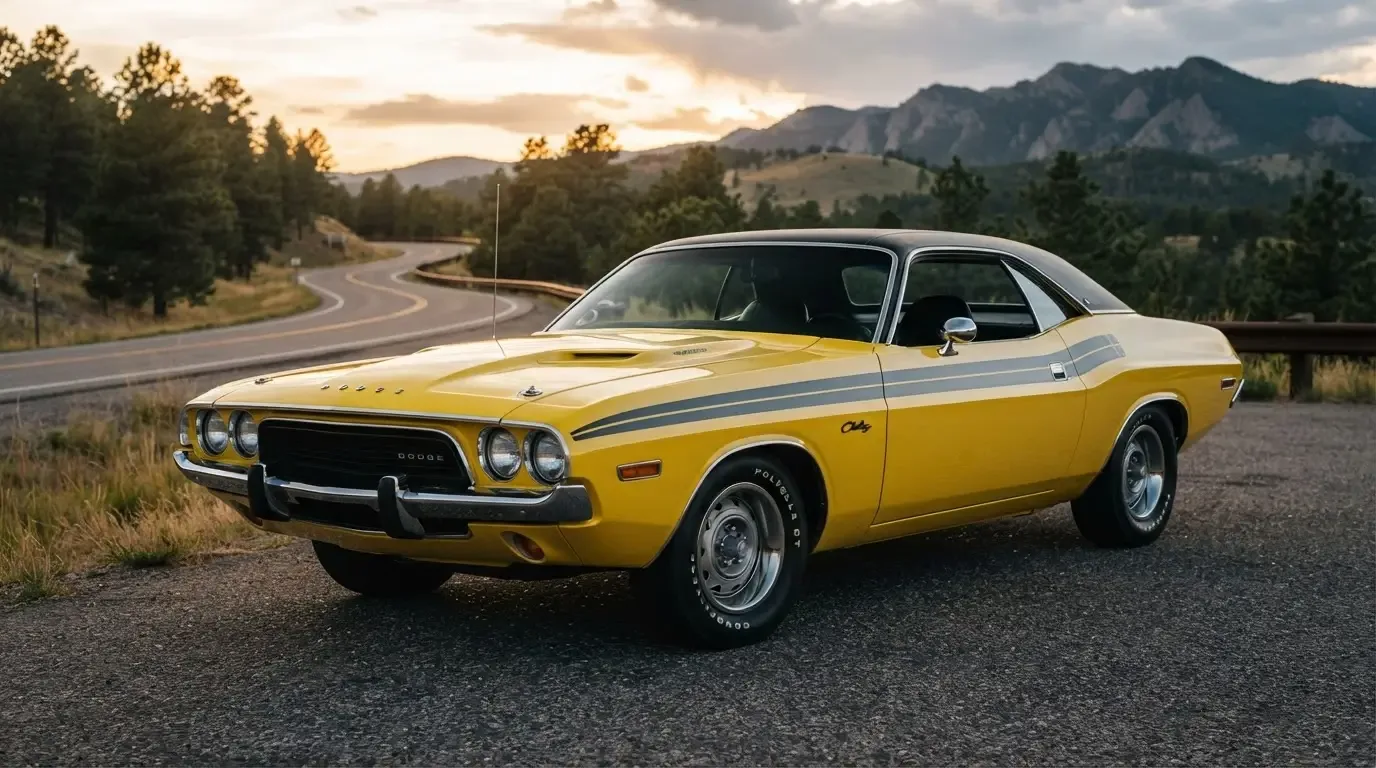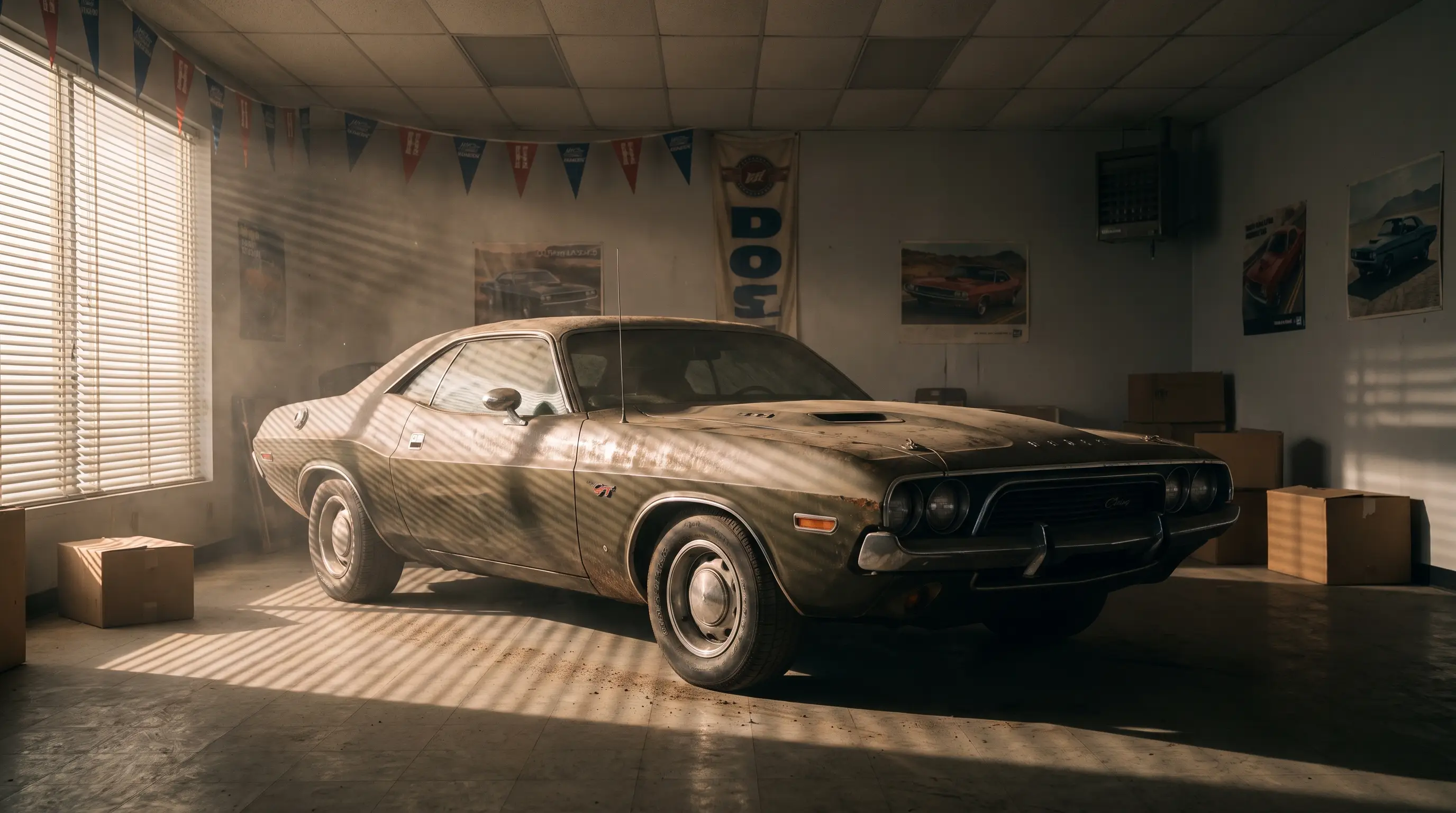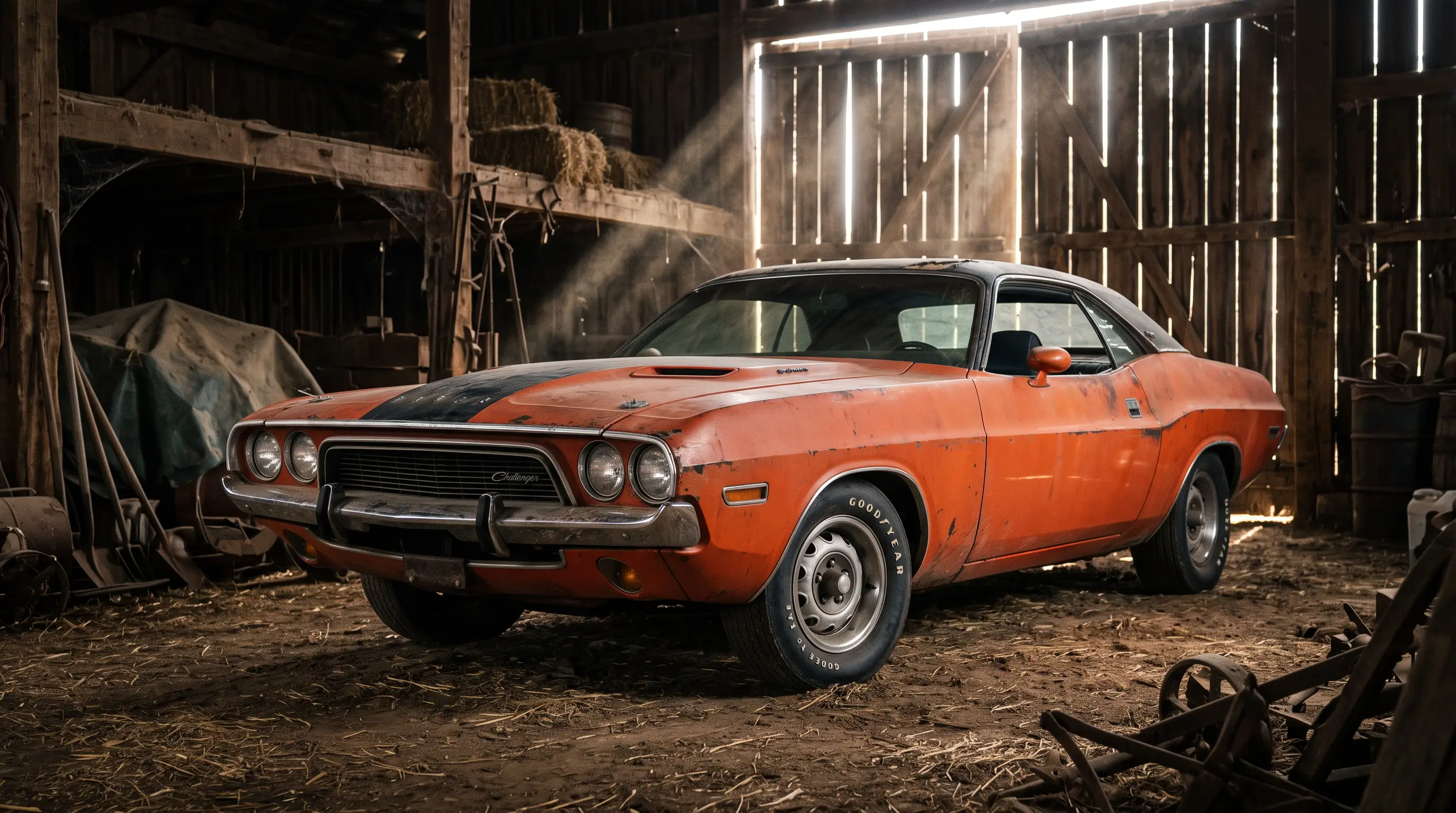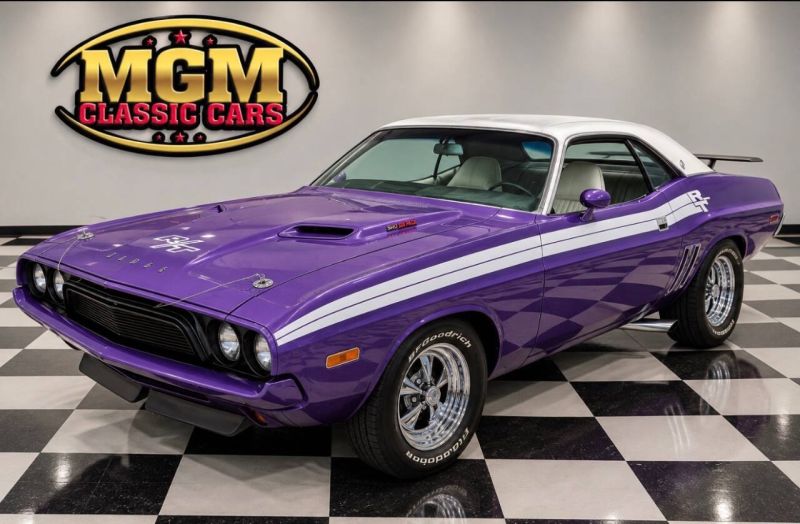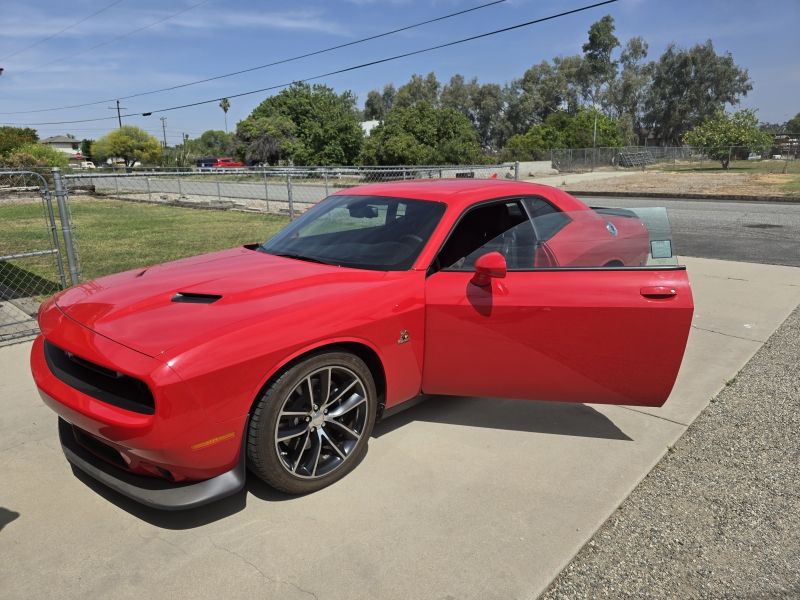
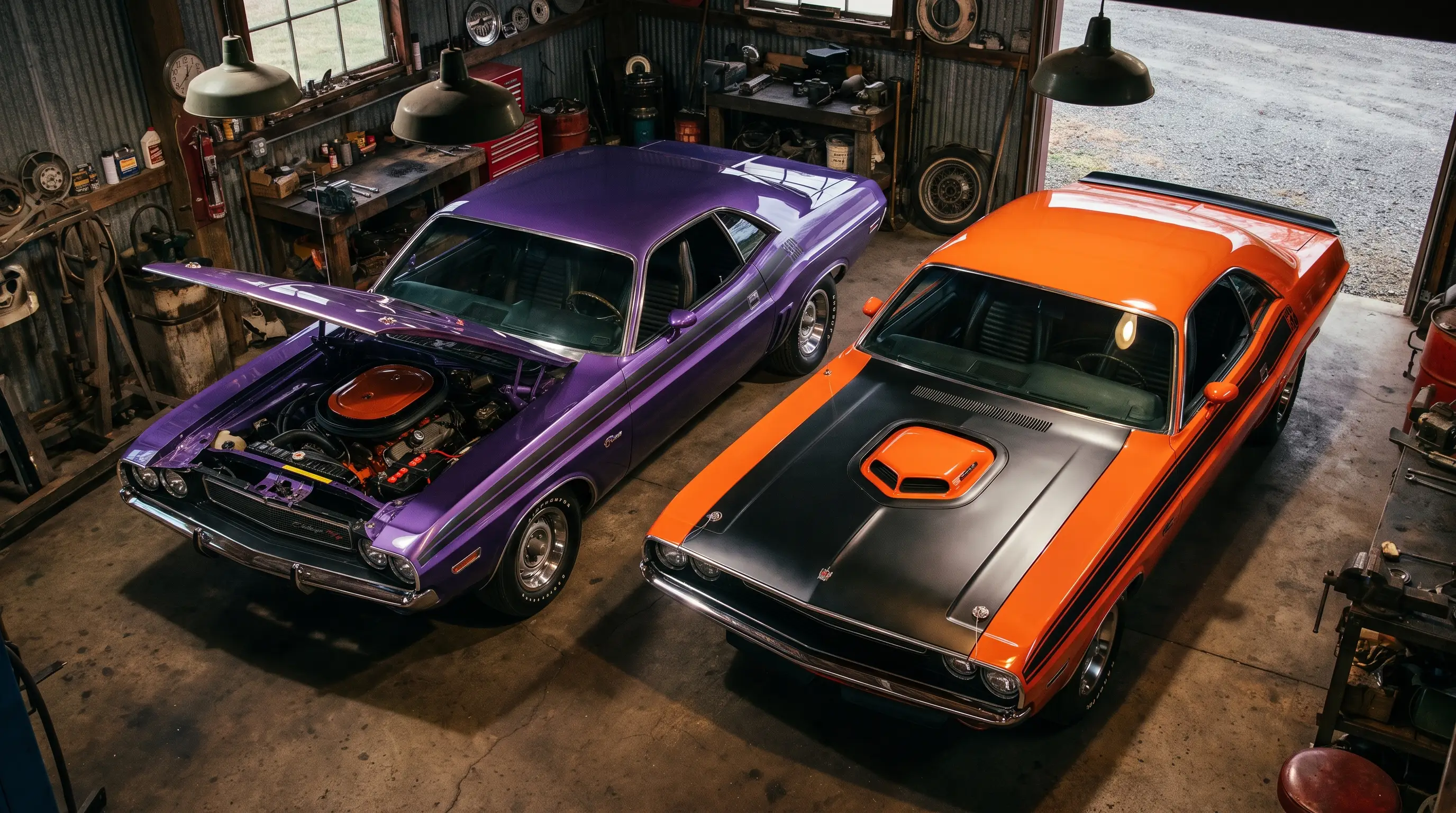
I had a guy at a swap meet in Ohio try to sell me a "Challenger R/T" that was, once you got down to the fender tag, a Rallye with a set of R/T stripes some previous owner had bolted on decades ago. It happens more than people admit. The Rallye and the R/T looked close enough from twenty feet that plenty of Challengers have been dressed up over the years, and the actual story of what separated them is more interesting than the stripe kit anyway.
The R/T was the performance trim from the start
When the Challenger launched for 1970, R/T stood for something specific. It was Dodge's performance package, and it came bundled with a minimum engine requirement: you could not order an R/T with anything smaller than a 383 cubic inch V8. From there the options climbed all the way to the 426 Hemi and the 440 Six Pack, engines that turned a Challenger into a genuine quarter-mile threat. The R/T also brought heavier-duty suspension, dual exhaust as standard, and the domed hood scoop that became the car's visual signature. This was not a trim level for looking fast. It was built around the assumption that the owner intended to use it.
The R/T's badging was deliberate too. Bumblebee stripes wrapped around the tail, R/T callouts sat on the fenders, and the whole package told anyone at a stoplight exactly what they were looking at. Dodge wanted the R/T recognized instantly, and for a couple of years it was.
The Rallye filled the gap underneath it
The Rallye package arrived in 1972 as the Challenger lineup got reshuffled, and it occupied a different spot entirely. Where the R/T demanded a big engine, the Rallye was available across a much wider range of engines, small-block included, and it was really an appearance and handling package rather than a performance mandate. You got the domed hood, rallye instrumentation with a tachometer and extra gauges, and a firmer suspension tune, but you did not need a 383 under the hood to order it.
That distinction matters more than it sounds like on paper. A Rallye with a 340 could be a genuinely quick, well-sorted car, lighter over the nose than an R/T with a big-block and often more balanced through a corner. But it was not automatically a muscle car the way an R/T was assumed to be. The Rallye let Dodge put the look and the driving feel of a serious Challenger into the hands of buyers who did not want, or could not afford, the insurance bill that came with a 440.
| Feature | R/T (1970-71) | Rallye (1972-74) |
|---|---|---|
| Minimum engine | 383 cubic inch V8 | None, small-blocks available |
| Top engine option | 426 Hemi, 440 Six Pack | 340 or 360, depending on year |
| Hood | Domed scoop, R/T badging | Domed scoop, rallye badging |
| Stripes | Bumblebee tail stripe | Longitudinal or tail stripe options varied by year |
| Positioning | Performance mandate | Appearance and handling package |
1972 changed the equation for both packages
By 1972 the R/T was gone as a standalone Dodge Challenger package, a casualty of insurance rates and the industry-wide retreat from big-block muscle cars. The Rallye survived and effectively became the top performance-adjacent trim left on the Challenger, even as the engines available under it kept shrinking year over year. A 1972 or 1973 Rallye was doing double duty, carrying the visual identity that the R/T had established while working with a much smaller menu of engines than the original package ever had to.
This is the part of the story people miss when they assume "R/T" is just a synonym for "the fast one." For three of the Challenger's five model years, the R/T did not exist at all, and the Rallye was the only serious trim left standing. Anyone chasing the whole picture of the Challenger's later years needs to understand that the Rallye was not a downgrade from the R/T. By 1972 it was simply what remained.
"Stripes are cheap. A build sheet is not. I have seen more fake R/Ts at swap meets than real ones, and every single time the fender tag settled the argument in about thirty seconds."
- Wayne Coburn
The badges tell only part of the story
Bumblebee stripes, hood pins, and R/T fender callouts were never hard to source once the cars started aging out of daily use. A quarter panel emblem is a bolt-on part, not a birth certificate, and that gap between what a car wears and what a car actually is has driven more disputes at car shows than almost any other topic in the Challenger community. I have watched two grown men argue for twenty minutes over a car's identity before either one thought to ask for the fender tag, which would have settled things before the argument even started.
The fender tag itself is a small stamped plate that lists the car's original build codes, trim level, engine, and color, and it is about as close to a birth certificate as a Mopar owner gets. A broadcast sheet, when one survives, goes further still, listing the exact options ordered on that specific car as it moved down the assembly line. Between the two documents, a buyer can usually determine within minutes whether a car left the factory as an R/T, a Rallye, or a base model that somebody dressed up decades later.
None of this means a dressed-up base car is worthless. Plenty of enthusiasts build tribute cars deliberately, understanding exactly what they have and pricing it accordingly. The trouble starts when a seller either does not know the difference or hopes the buyer will not ask. A basic understanding of what separated the Rallye from the R/T in period specification terms, not just badges, protects a buyer from paying R/T money for a car that never carried an R/T's engine requirement in the first place.
Why the distinction still trips up buyers today
Decades of parts swapping, stripe kits, and casual restorations have blurred the line between these two trims more than the factory ever did. A fender tag or broadcast sheet settles the argument fast, but plenty of cars on the market wear R/T stripes without R/T documentation, and just as many honest Rallyes get mistaken for something lesser than they actually were. Knowing the real difference, engine requirement versus appearance package, badge history versus badge presence, keeps you from overpaying for a costume or underpaying for a genuine car.
If you are shopping the market rather than reading about it, go find a classic Challenger and pull the documentation before you trust the stripes. The paperwork tells you which package you are actually looking at, R/T or Rallye, and that answer matters a lot more to value than most buyers realize walking up to the car for the first time.
It is also worth asking a seller directly whether the car has ever been restamped, restriped, or rebadged, since honest owners will usually know and say so without hesitation. A seller who gets evasive about that question, or who cannot produce a fender tag on request, is telling you something important even if they never say a word about the car's actual history.