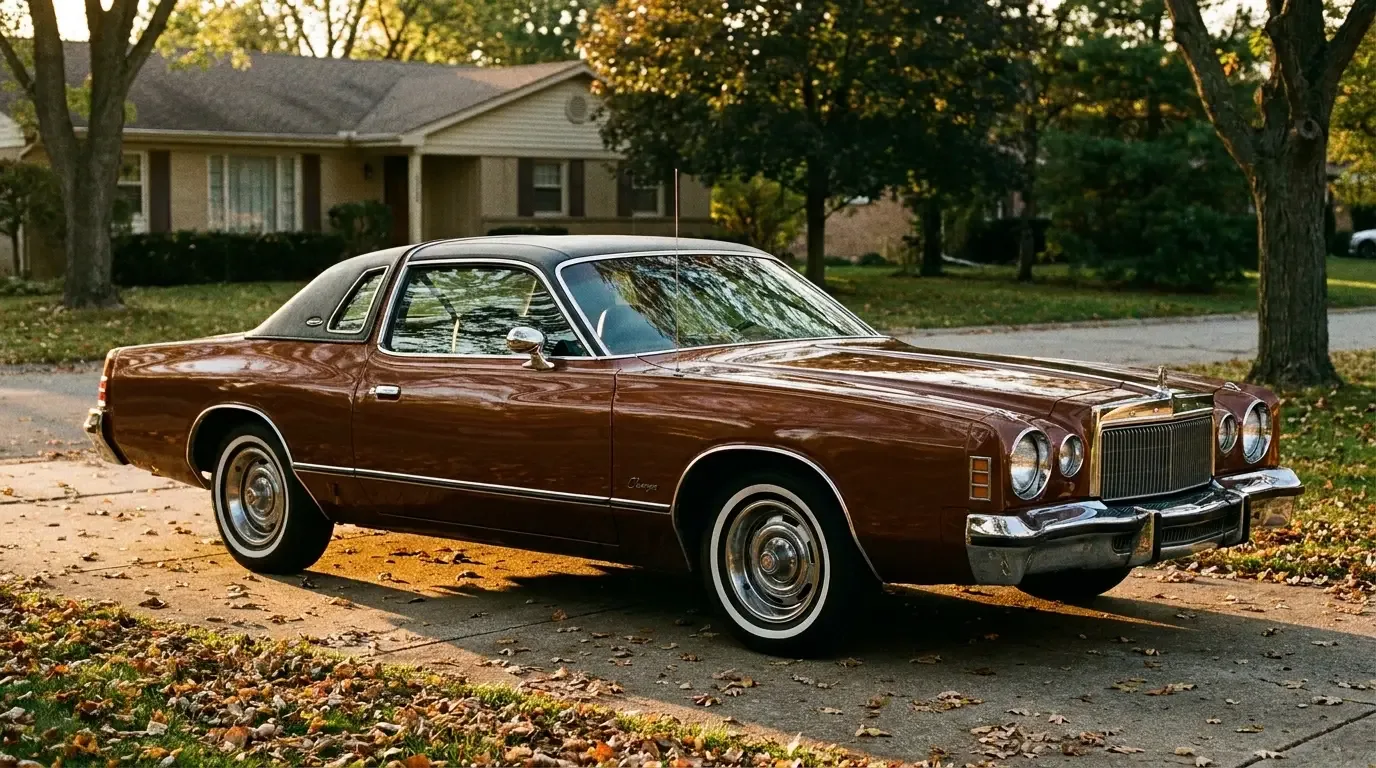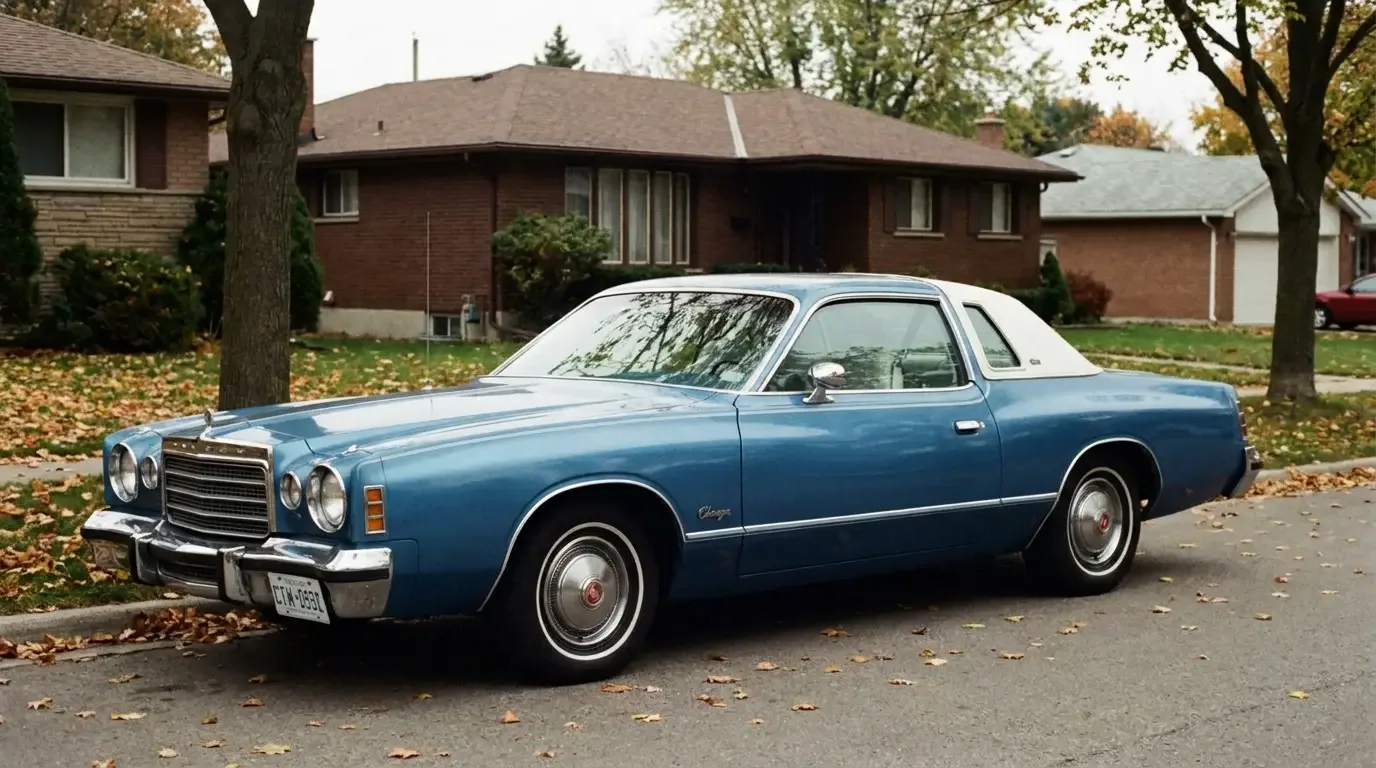
A car nameplate with real name recognition doesn't usually just stop. Value in collectible cars runs on continuity: a story buyers can trace, a lineage that makes sense from one year to the next. The Charger's history has a hole in it, four model years wide, and that gap changes how appraisers have to think about everything built right before it closed.
The last year, then nothing
After the 1978 model year, Dodge stopped building the Charger entirely. The nameplate didn't return until the early 1980s, and when it did, it came back attached to a front wheel drive subcompact hatchback with no engineering relationship whatsoever to the rear wheel drive B body cars that had carried the name since 1966. For four model years, there was simply no Charger in Dodge's lineup at all. The same discipline that applies to grading a car's condition applies here: a gap this size in a nameplate's production history isn't a footnote. It's a material fact that shapes value.
The reasons behind the gap were financial, not sentimental. Chrysler Corporation was working through the most serious crisis in its history by the late 1970s, a situation severe enough to eventually require a federal loan guarantee in 1980 just to keep the company solvent. Model line consolidation was a survival tactic. The Charger and the closely related Magnum both competed in a personal luxury coupe segment that had cooled considerably from its mid decade peak, and Chrysler could no longer justify the engineering and marketing spend required to support overlapping nameplates in a shrinking market.
Why the gap matters to a valuation
Appraising a personal luxury Charger from 1975 through 1978 requires treating it as the closing chapter of a specific, bounded story rather than one entry in an ongoing series. That distinction affects comparables directly. Buyers can't cross reference a 1978 Charger against a 1979 or 1980 example because none exist. The next Charger built shares essentially nothing with it beyond the name, which means this generation stands as its own complete, self contained set with a hard endpoint. Markets tend to place a premium on completeness, and a defined, closed production run has a different collector logic than an ongoing model line still in production somewhere down the road.
That premium is modest right now, not dramatic. Fourth generation Chargers still trail the muscle car era cars significantly in collector demand, and the personal luxury coupe segment broadly has taken decades to develop serious appreciation. But the trend line among buyers who specialize in this era shows growing interest specifically in last-of-the-line examples, cars that can be documented as coming from the final production year before the gap.
"A #2 car with a thin paper trail isn't a #2 car when the check clears. It's a #3 with a good story, and the appraisal has to say so."
— Marcus Feld
Documentation risk in this specific window
Because these cars weren't treated as anything special when new, and because the segment they occupied fell out of collector fashion for so long, documentation gaps are common. Original window stickers, dealer invoices, and even complete build sheets survive at lower rates for this generation than for the earlier muscle car Chargers, which collectors began preserving deliberately decades ago. A buyer looking at a 1978 example should expect to do more legwork verifying originality than they would on a 1969 R/T, where documentation practices among owners and clubs are far more mature.
This creates real appraisal risk. A car represented as all original with its factory drivetrain intact, but lacking supporting paperwork, carries a discount relative to a fully documented equivalent, even if the car itself is genuine. The gap in production history compounds this problem, since there's no later model year data to help triangulate what a given car's original specification should have looked like.
| Factor | Impact on value |
|---|---|
| Documented final model year (1978) | Modest premium among specialist collectors |
| Missing build sheet or window sticker | Meaningful discount, harder to verify originality |
| Post gap Charger comparison | Not applicable, no engineering relationship |
| Overall segment demand | Rising slowly from a low base |
What this means for buyers today
Anyone shopping this generation should treat documentation as the primary value driver, more so than condition alone. A cosmetically excellent car without paperwork carries real uncertainty an appraiser has to account for. A more modest condition car with a complete, verifiable history, fender tag decoded, build sheet on hand, original ownership records where available, often represents the smarter long term purchase, since that documentation becomes harder to source with every passing year rather than easier.
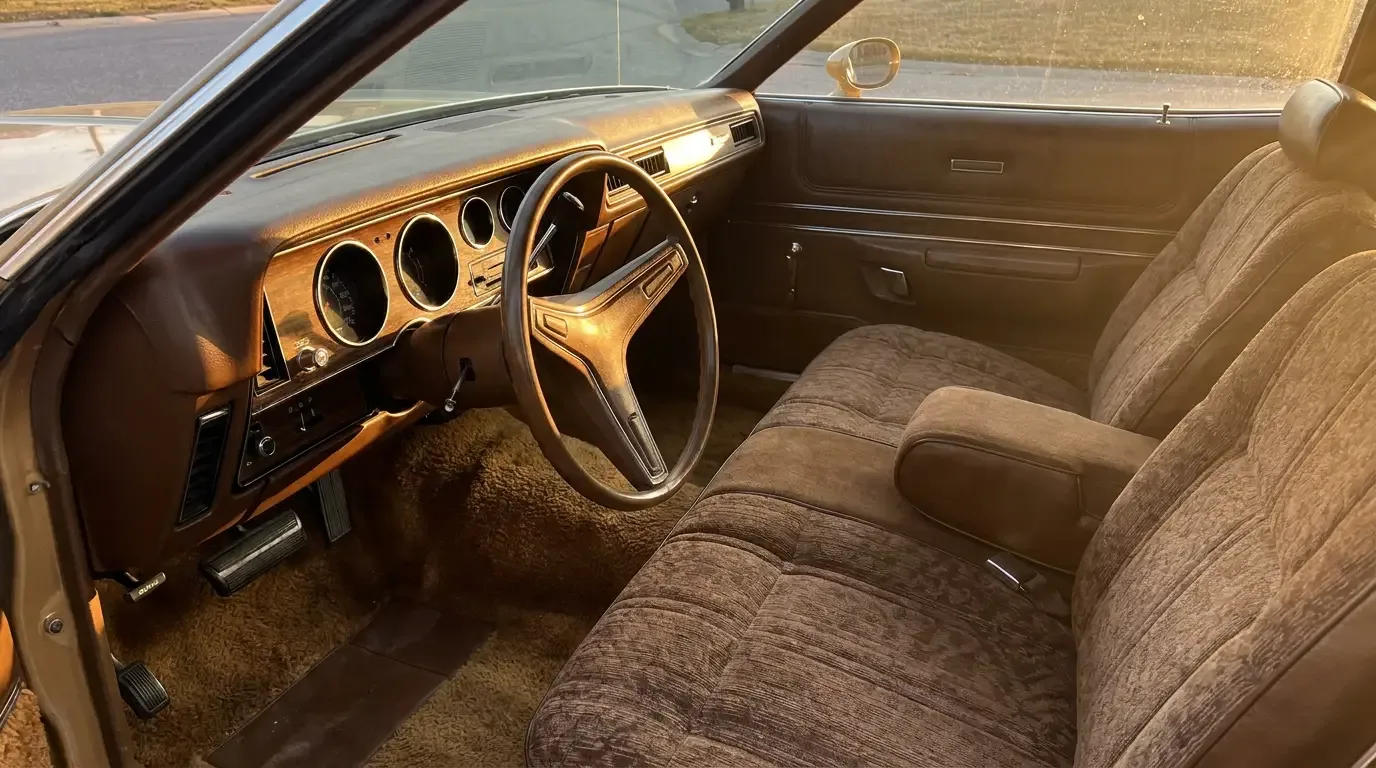
more on the personal-luxury Charger covers the broader context of how this generation's identity took shape, useful background for understanding why documentation habits were so inconsistent during its original production run. And for a closer look at what buyers valued inside these cars specifically, the 1975 Charger Interior story gets into the trim and equipment details that separated well optioned examples from base cars.
How the gap compares to other Mopar discontinuations
Chrysler wasn't alone in trimming its lineup during this stretch, and the Charger's disappearance sits inside a broader pattern worth understanding for context. Several nameplates across the corporation's B and E body lines either vanished entirely or got folded into other models as the company fought to control costs through the late 1970s and into the following decade. What sets the Charger apart is the length of the gap and the completeness of the break. Four full model years passed with no Charger in production, and when the name returned it wasn't attached to a warmed over version of the old platform the way some revived nameplates were. It landed on an entirely new architecture built for a different market.
That distinction matters when comparing this situation to other collector segments. A nameplate that takes a year or two off and returns on a related platform tends to retain more continuity in collector demand, since buyers can still draw a reasonably direct line between the two eras. A four year gap followed by a total platform change breaks that line cleanly, which is exactly why treating the pre gap cars as a closed set, rather than an early chapter in an ongoing story, is the correct appraisal framework here.
The appraiser's bottom line
The 1978 to 1982 gap isn't a curiosity for this generation of Charger. It's a structural fact that any serious valuation has to account for directly, the same way an appraiser accounts for a break in any asset's chain of custody. Treat the pre gap cars as a closed, complete set rather than an open ended production run, weight documentation heavily, and expect the collector premium for genuinely final year, well documented examples to keep building slowly as the broader personal luxury coupe segment continues its gradual climb in serious collector attention.
Sources and notes
- Dodge Charger (B-body), Wikipedia - confirmed 1978 was the last B body Charger and the nameplate did not return until the early 1980s on an unrelated front-wheel-drive platform.
- Dodge Charger (L-body), Wikipedia - confirmed the revived Charger was a front-wheel-drive subcompact with no relationship to the B body car.
- Chrysler Corporation, Wikipedia - confirmed the late-1970s financial crisis and the 1979-80 federal loan guarantee that reshaped the lineup.
- Chrysler Cordoba, Wikipedia - confirmed the personal-luxury segment context and the shared B body platform.
- Hagerty: 1976 Dodge Charger SE - confirmed the fourth-generation Charger's low period demand and slow collector appreciation.