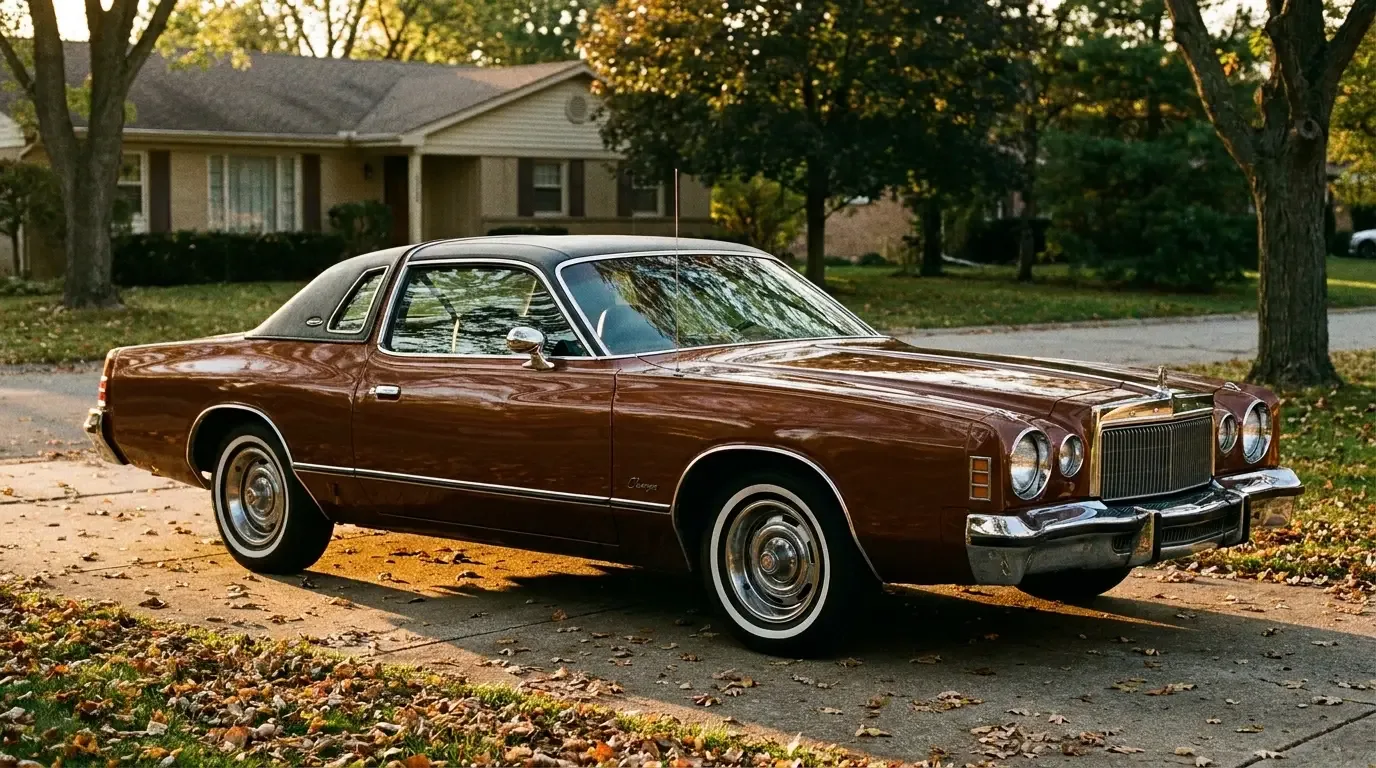
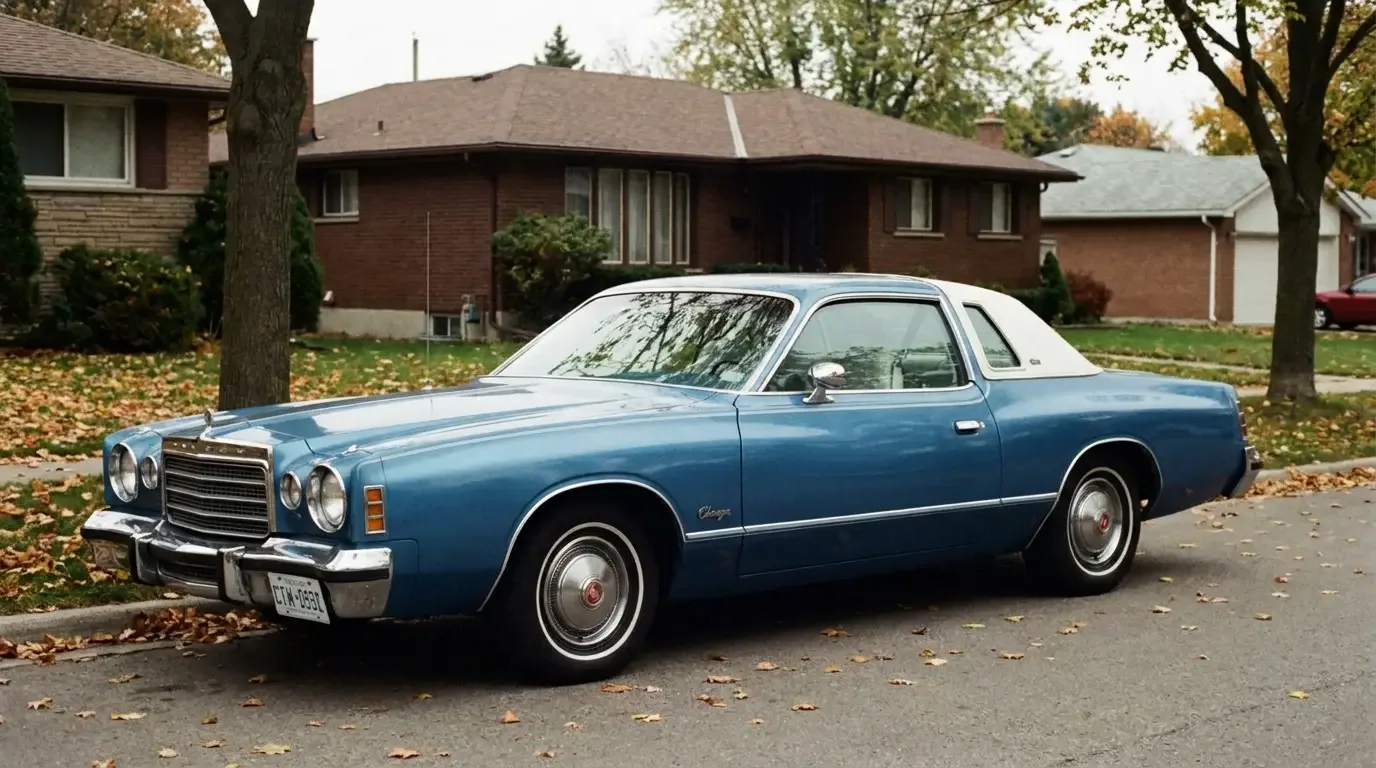
The guy at the dealership in 1978 didn't know he was selling the end of something. He was selling a Charger, same as he'd sold the year before, filling out paperwork on a personal luxury coupe with opera windows and a vinyl roof that his customer wanted mostly because it looked sharp next to the Cordoba her sister had just bought. Nobody in that showroom knew the name would vanish from Dodge's lineup within a few years and not come back around to mean anything close to a Charger until well into the 1980s, and even then as something entirely different. That's the strange thing about endings in the car business. They rarely announce themselves.
A model year with no idea it was the last
1978 wasn't planned as a farewell. Dodge continued the Charger largely unchanged from the previous two model years, still riding the same B body platform introduced for 1975, still wearing the same personal luxury identity that had replaced the muscle car version of the nameplate. Sales had softened from the segment's mid decade peak, a reality shared across nearly every personal luxury coupe on the market as fuel prices climbed and buyer tastes started shifting toward smaller, more efficient cars. But nothing about the 1978 lineup itself signaled that Chrysler intended to retire the name.
The decision came from corporate arithmetic more than any single dramatic event. Chrysler was working through one of the most difficult financial periods in its history by the late 1970s, and consolidating model lines became a survival strategy rather than a styling choice. The Charger and the Magnum, a closely related model introduced for 1978, both occupied a shrinking segment that Chrysler could no longer justify supporting with multiple overlapping nameplates.
What made 1978 genuinely different
Look closely at the 1978 Charger and small changes separate it from its 1975 and 1976 predecessors. Grille and taillight treatments were refreshed, some trim details shifted, and the model lineup itself narrowed as Dodge trimmed slower selling configurations. The core engineering, though, remained the same B body architecture that had underpinned the Charger since the personal luxury pivot began, and read more here covers that shift in full. This was refinement, not reinvention, the kind of subtle year over year update that automakers make when a platform is nearing the end of its planned lifecycle rather than the beginning of a new one.
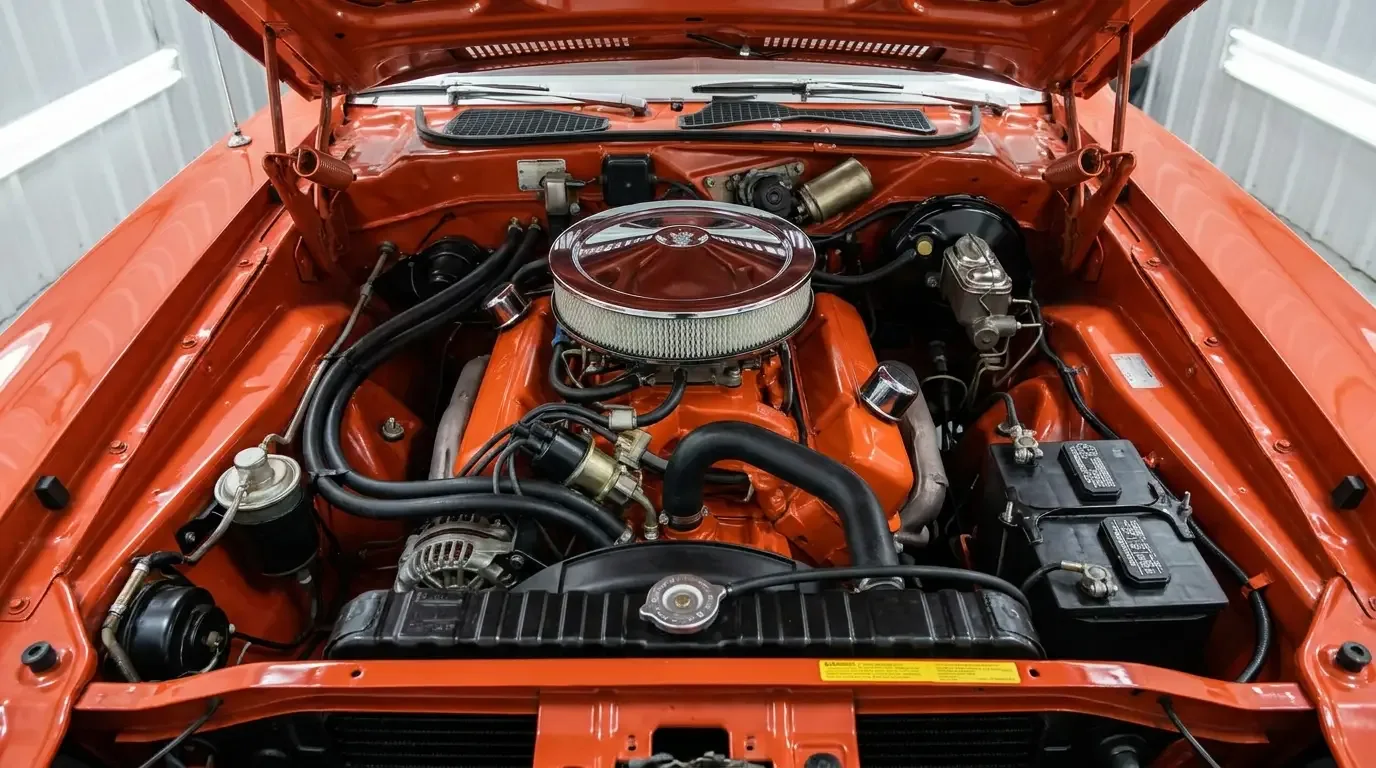
The engines carried over largely unchanged too, the same 318, 360, and 400 cubic inch options that had powered the Charger SE since 1975, still working within the same emissions constraints that had reshaped every American V8 through the decade. There was no farewell tour performance package, no special edition marking a final year. The 1978 Charger left the line looking, in almost every meaningful way, like a car with a future rather than a car reaching the end of one.
"The guy I talked to at Carlisle had owned his car since 1974. Drove it there every single year, even the time the water pump let go outside Harrisburg."
— Patrick Walsh
The gap that followed
What happened after 1978 is its own strange chapter. The Charger name disappeared from Dodge's lineup entirely, not returning until the early 1980s and then attached to an entirely different kind of car, a front wheel drive hatchback with no meaningful connection to the B body Charger that came before it. That gap, and the corporate decisions behind it, get their full treatment in the Charger feature on Classic Cars Arena, which is worth reading for anyone trying to understand how a nameplate this significant could simply vanish for several model years.
For enthusiasts, that disappearance is part of what makes the 1978 car meaningful now. It's the last Charger that shared any real DNA with the muscle car legend the name built in the late 1960s: full sized, rear wheel drive, V8 powered, built on a platform lineage that traced directly back to 1966. Everything that came after, whenever the name resurfaced, started from a different set of engineering assumptions entirely.
Why enthusiasts return to this specific year
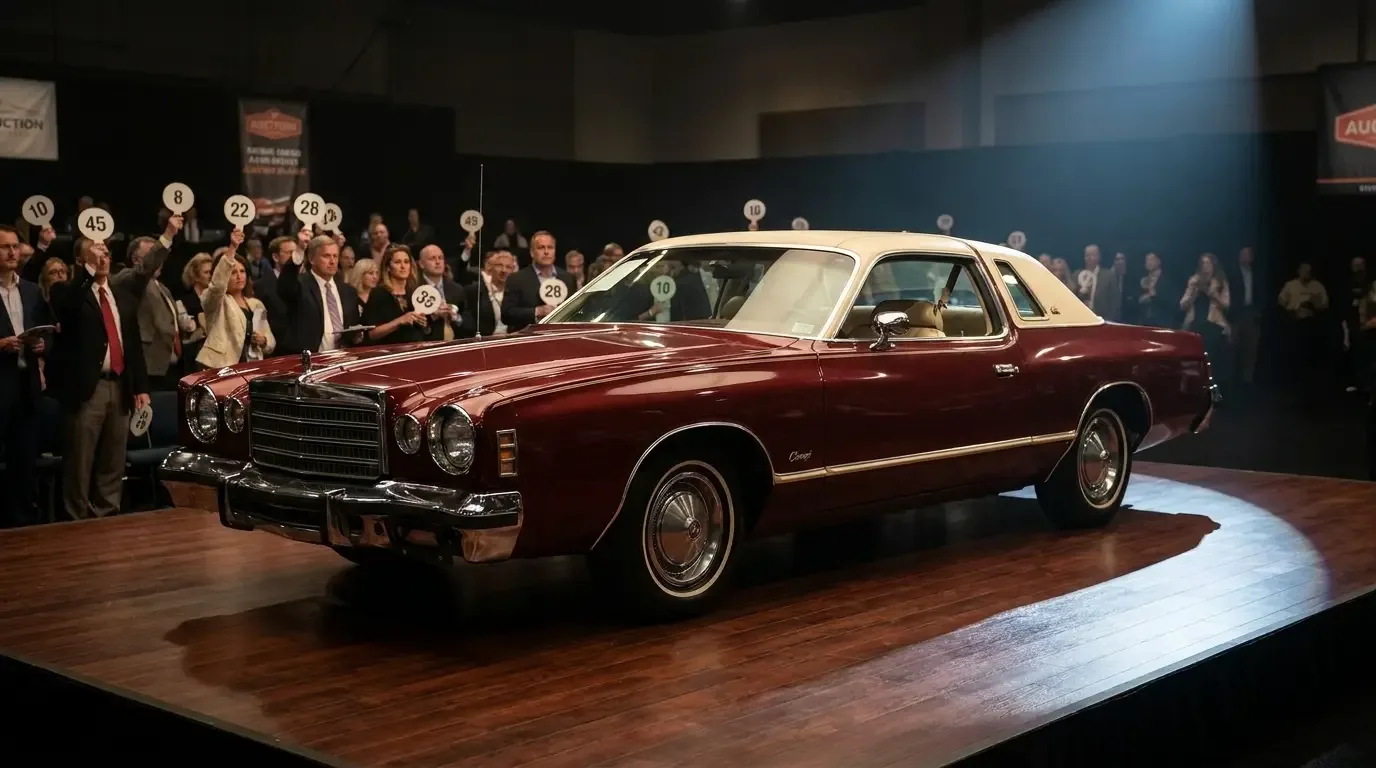
There's a particular kind of collector interest reserved for last-of-the-line cars, and the 1978 Charger fits that pattern closely. It represents a genuine historical closing point, the final model year before a corporate restructuring erased the nameplate from active production. Buyers drawn to this specific year aren't usually chasing performance numbers. They're chasing the completeness of a story, the ability to own the actual final chapter of a lineage that started with one of the most storied nameplates in American muscle car history.
| Detail | 1978 Charger |
|---|---|
| Platform | B body, unchanged from 1975 introduction |
| Engines carried over | 318, 360, 400 cu in V8 |
| Production status | Final year before nameplate discontinued |
| Successor | Charger name returned early 1980s on unrelated platform |
Finding one worth owning
Survival rates for these final year cars are modest, since nobody at the time treated them as anything special worth preserving. Production had collapsed by the end too: Dodge built only about 2,735 Chargers for 1978, a tiny fraction of the roughly 65,900 it moved in 1976, which makes an honest, original 1978 car genuinely scarce today. That scarcity works in a buyer's favor now, but it also means patience matters more than urgency when shopping this specific model year. Rust in the usual B body trouble spots, trim availability for the era specific details, and honest documentation of what left the factory all deserve the same careful attention that any Charger from this generation demands. Readers building a full picture of the nameplate's history from 1966 forward should start with dodge charger history, and anyone ready to look at what's actually on the market can Dodge Chargers for sale today.
What strikes me most, having talked to a few owners of these final year cars, is how little ceremony surrounded the ending. Nobody threw a party for the last Charger off the line. It just stopped, quietly, the way most things in the car business actually end, long before anyone gets around to writing the elegy.
Sources and notes
- Dodge Charger (B-body), Wikipedia - confirmed 1978 was the final B body year (about 2,735 units), the carried-over 318/360/400 engines, and that the Magnum replaced the Charger.
- Chrysler Cordoba, Wikipedia - confirmed the shared B body context and the personal-luxury segment the Charger competed in.
- Chrysler Corporation, Wikipedia - confirmed the late-1970s financial crisis and the 1979-80 federal loan guarantee.
- Hagerty: 1976 Dodge Charger SE - confirmed the softening personal-luxury demand across the model run.
- Motales: 1975 Dodge Charger SE - confirmed the unchanged B body architecture through the generation.