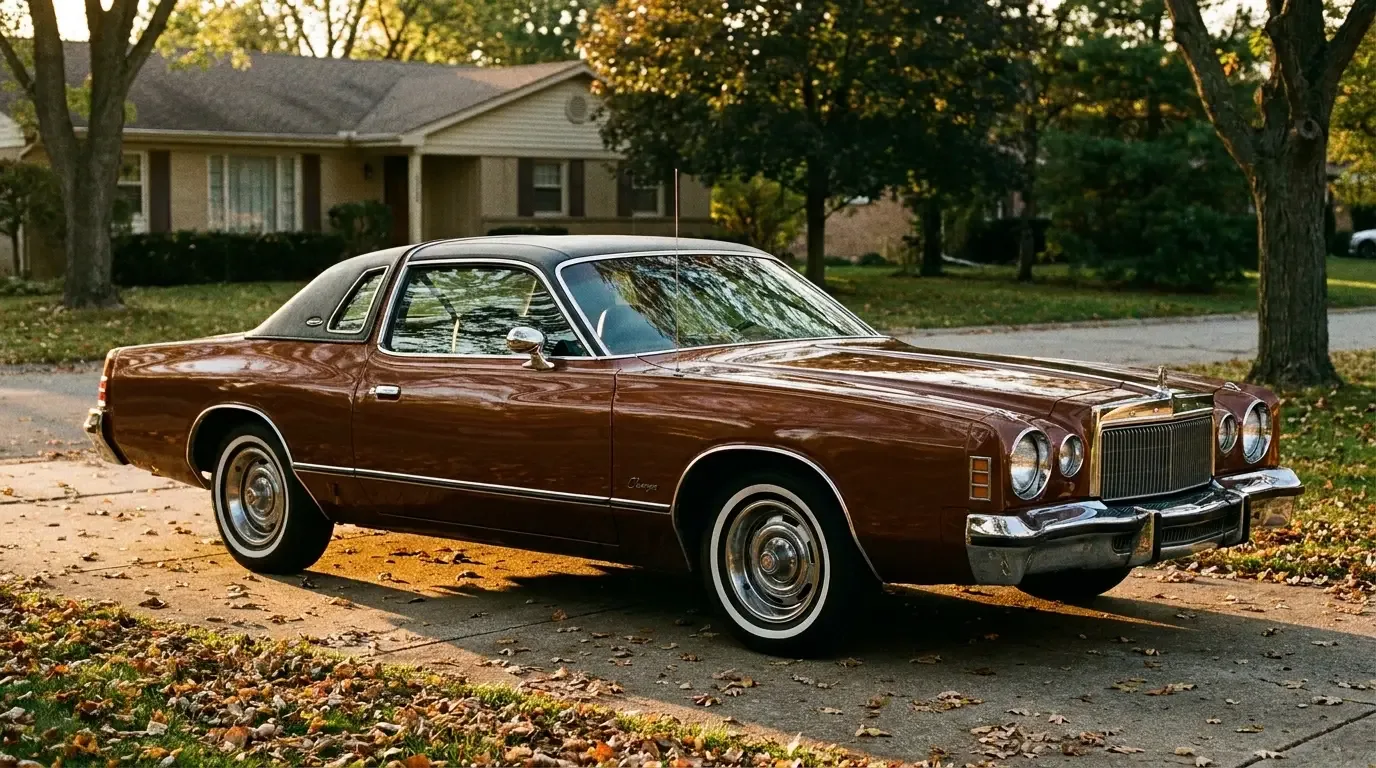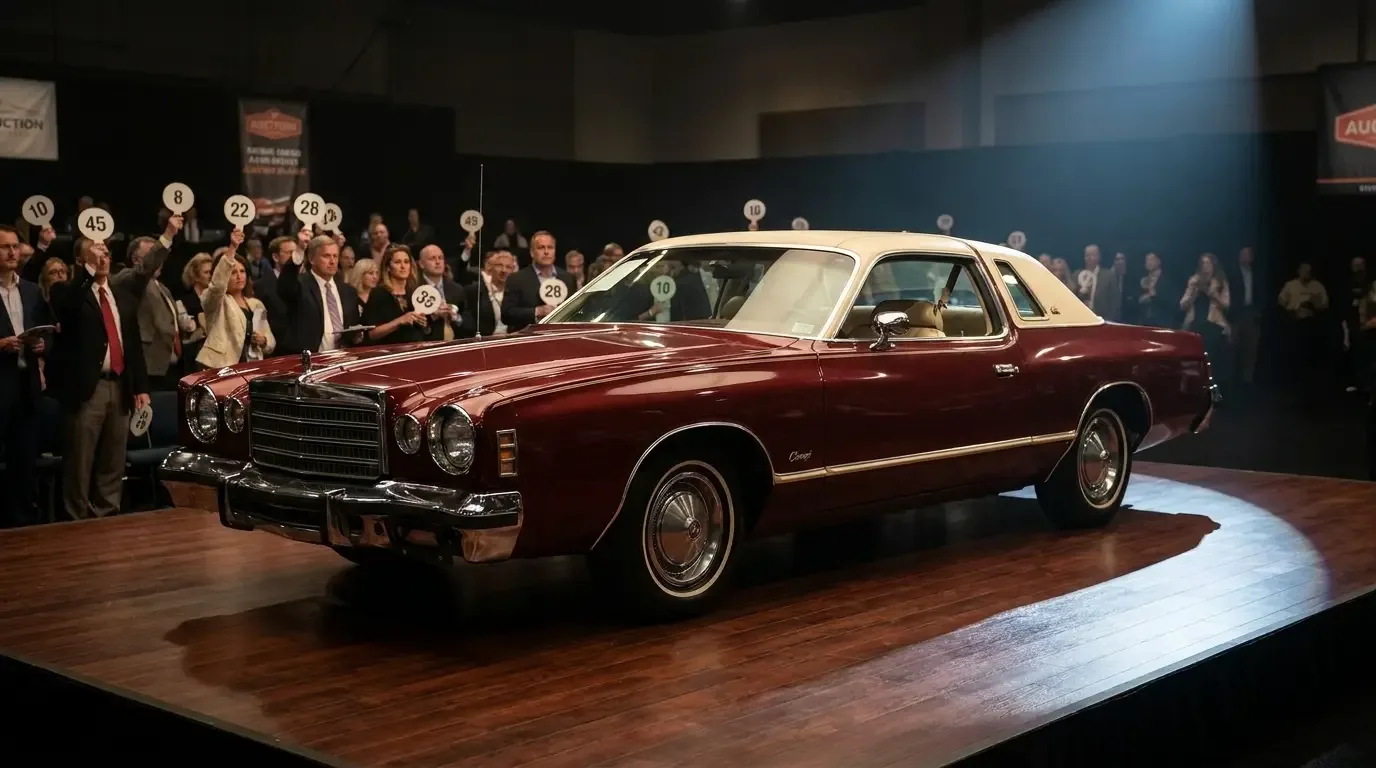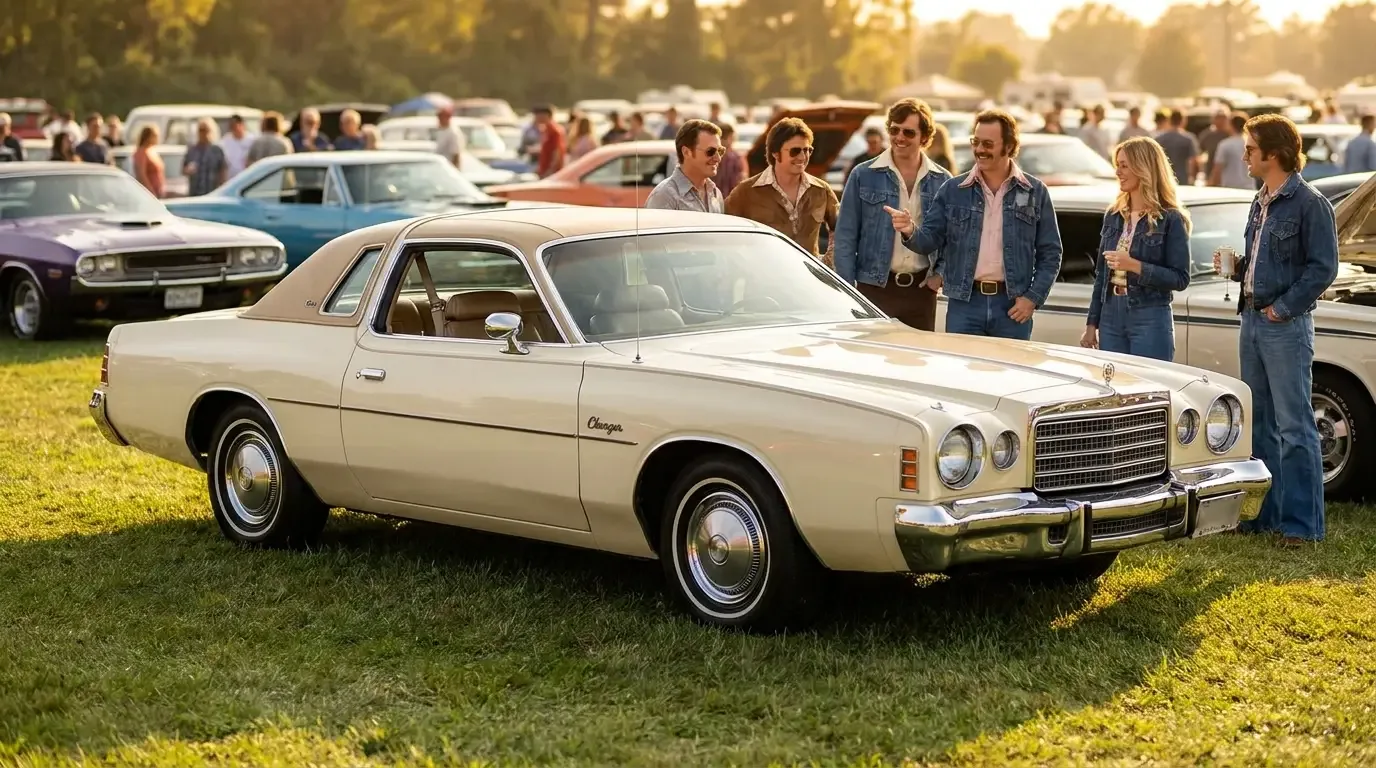
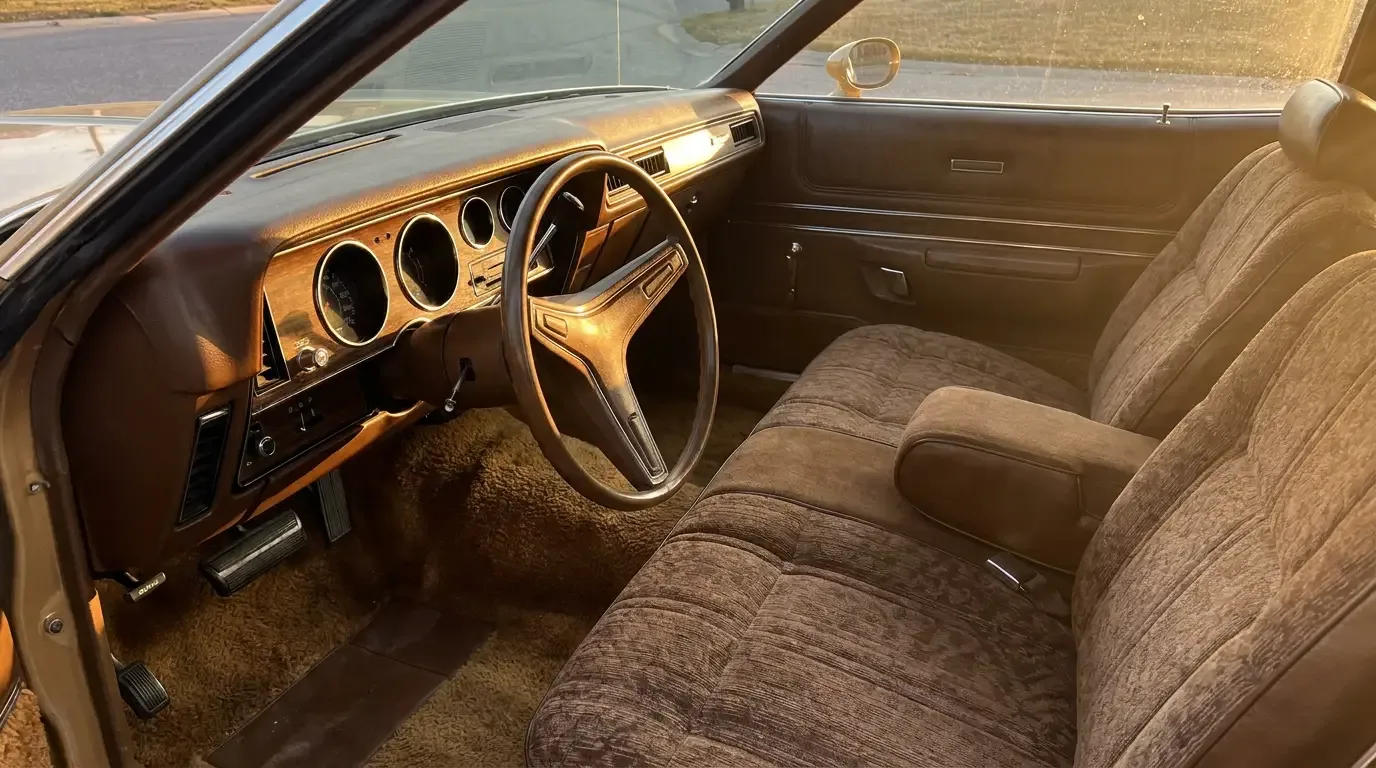
Her father used to fold his coat carefully before sliding onto the seat, the way people once treated cars they thought deserved respect. The Charger he drove home in 1975 wasn't the car she'd seen in old photographs from his younger years, the loud one with the stripe down the hood that made her mother nervous. This one was quiet. Woodgrain caught the evening light across the dash, the seats held their shape after fifteen years of use, and the whole cabin smelled faintly of the same leather conditioner he used every spring without fail. She remembers that smell more clearly than she remembers most of what he actually said to her.
The 1975 Charger's interior was built around a completely different promise than the cars that carried the name before it, and understanding that promise means looking past the exterior styling entirely and sitting inside where the real argument for the car was made.
A cabin built for comfort, not speed
Where earlier Chargers prioritized a driver focused cockpit with minimal distraction, the 1975 redesign shifted everything toward passenger comfort and visual warmth. The dashboard swept in a continuous arc, trimmed in simulated woodgrain that wrapped from the instrument cluster across to the passenger side door panel, creating a sense of continuity that earlier, more function forward dashboards never attempted. Chrome accents outlined the gauges and vents sparingly, enough to suggest quality without tipping into excess.
Seating options reflected the same priorities. A 60/40 split bench came standard on many configurations, letting driver and front passenger each adjust their own position independently, a detail that mattered enormously to buyers cross shopping this car against a Monte Carlo or a Grand Prix. Optional bucket seats with a center console were available for buyers who wanted a sportier cabin layout, but the bench remained the more popular choice among the personal luxury buyers this car was actually built to attract.
Materials chosen to feel expensive
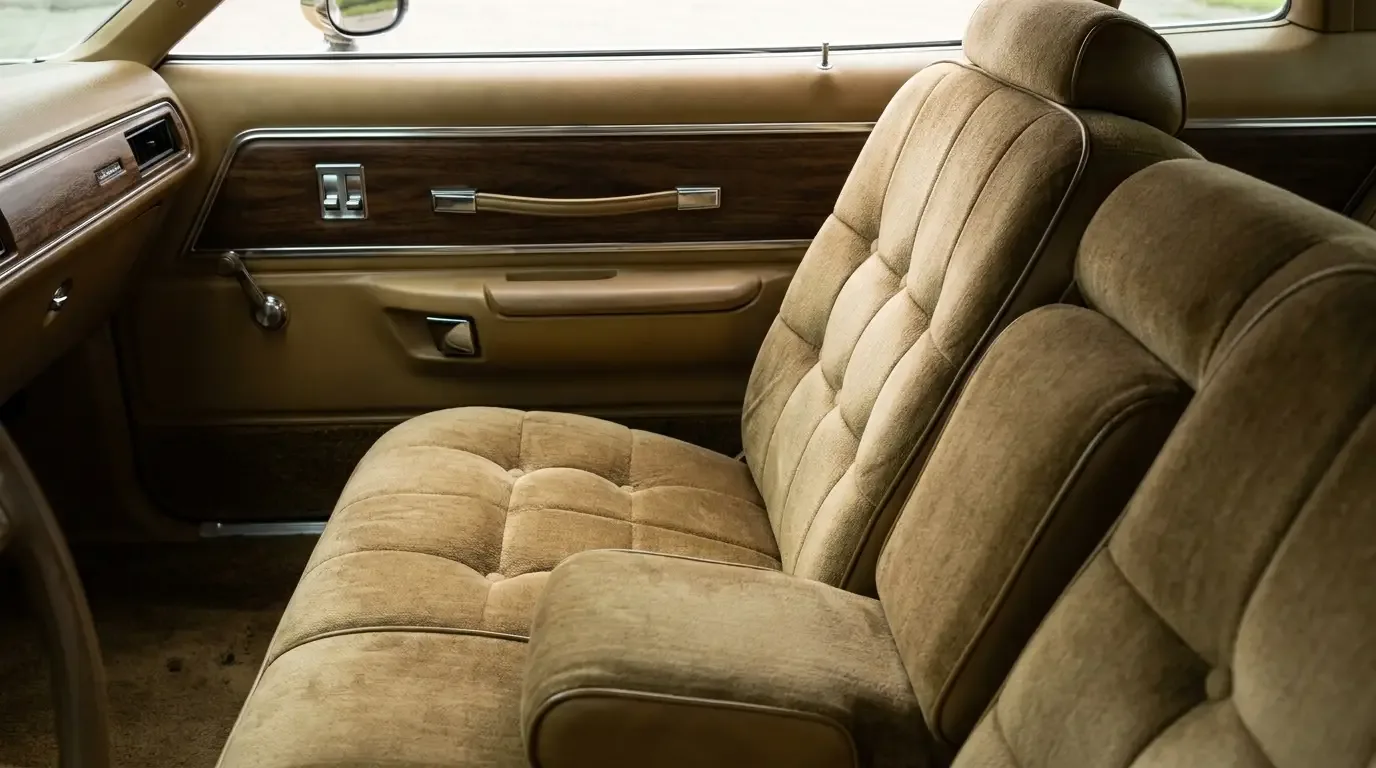
Upholstery choices ran from durable vinyl through cloth and, on higher trim SE models, a softer, more tailored cloth pattern meant to evoke a proper living room chair rather than an automotive seat. Door panels carried the same woodgrain theme as the dash, along with integrated armrests and, on well equipped examples, power window and lock controls that were still a genuine luxury feature for a mainstream American car at this price point in 1975.
Carpeting ran thicker than earlier Chargers, and additional sound insulation in the floor pan and firewall meant road noise stayed noticeably lower at highway speed. None of this shows up in a spec sheet, but it's exactly what a buyer noticed the first time they closed the door and heard how little of the outside world followed them in. That quiet was the actual product being sold, more than any single feature or option.
"She kept the car in the barn for eleven years before she could sell it. When the new owner started it, she cried in the driveway."
— Nora Beckett
Options that separated a well equipped car from a base model
Air conditioning, increasingly common by 1975 but still a meaningful option rather than a given, transformed the cabin experience in warmer climates and remains one of the most requested features among buyers shopping this generation today. AM/FM radios, some with optional eight track players, gave the cabin a genuine entertainment feature beyond basic AM reception. Tilt steering wheels, power seats on the most heavily optioned examples, and a center console with floor shifter for buyers who chose the bucket seat configuration rounded out the higher end of what a Charger SE buyer could specify.
Taken together, these options meant two 1975 Chargers could feel like genuinely different cars depending on how they left the factory, one a comfortable but basic cruiser and the other something approaching what buyers of the era would have called genuinely luxurious. That range is part of what makes shopping this generation interesting today, since a heavily optioned survivor offers a meaningfully richer experience than a stripped base model wearing the same badge.
| Feature | Detail |
|---|---|
| Dashboard trim | Photographic woodgrain laminate |
| Standard seating | 60/40 split bench, cloth or vinyl |
| Optional seating | Bucket seats with center console |
| Key options | Air conditioning, tilt wheel, power seats, AM/FM with eight track |
What survives, and what to check
Interior condition varies enormously across surviving examples, largely because these cars spent decades as ordinary used cars rather than protected collectibles. Sun exposure damaged dashboard woodgrain trim and cracked vinyl upholstery on cars stored without garages, and replacement parts matching the exact factory grain pattern and color are genuinely difficult to source today. Cloth upholstery in good original condition is rarer still, since fabric wears and fades faster than vinyl and reproduction patterns don't always match perfectly.
For the full context on how this interior fit into the broader personal luxury redesign, the full write-up covers the whole shift in depth. And for anyone seriously considering a purchase in this generation, worth reading up on what makes a 1975 charger collector car specifically valuable before shopping listings.
What stays with people about these interiors isn't any single feature. It's the cumulative effect of a cabin built to feel considered, warm, and unhurried, a deliberate departure from everything the Charger name meant before it, and for a lot of families, exactly the car that carried them through some of their most ordinary and most memorable years.
Sources and notes
- Dodge Charger (B-body), Wikipedia - confirmed the 1975 personal-luxury redesign and the SE's comfort-first interior positioning.
- Chrysler Cordoba, Wikipedia - confirmed the shared B body and the era's woodgrain-and-plush personal-luxury cabin conventions.
- Mac's Motor City Garage: Cordoba Clone - confirmed the SE's upscale trim and equipment relative to the base Charger.
- Hagerty: 1976 Dodge Charger SE - confirmed the interior features and options that defined the personal-luxury cabin.
- Motales: 1975 Dodge Charger SE - confirmed the comfort-oriented, quiet-cabin design goals of the SE.