
Every time I pull the factory documentation on a 1973 Chevelle, I have to remind myself that the car sitting in front of me represents one of the more significant structural pivots in the whole A-body run, even though it doesn't get talked about with the reverence collectors reserve for the earlier SS 396 and LS6 cars. The Colonnade body, introduced for 1973, wasn't a stylistic whim. It was GM's answer to a set of federal rollover and roof-crush standards that were working their way through the regulatory process in the early 1970s, and the design solution that resulted still shows up on driveways and at shows today, usually misunderstood.
Car Features
7 min read
The Colonnade Era: Opera Windows and a New Direction
Why the 1973 Chevelle lost its hardtop roof, what the Colonnade design actually changed, and the story behind the Landau opera window.
Read the Chevelle's design story for the full arc, because the Colonnade generation makes a lot more sense once you understand what came immediately before it.
Why "Colonnade" and why 1973
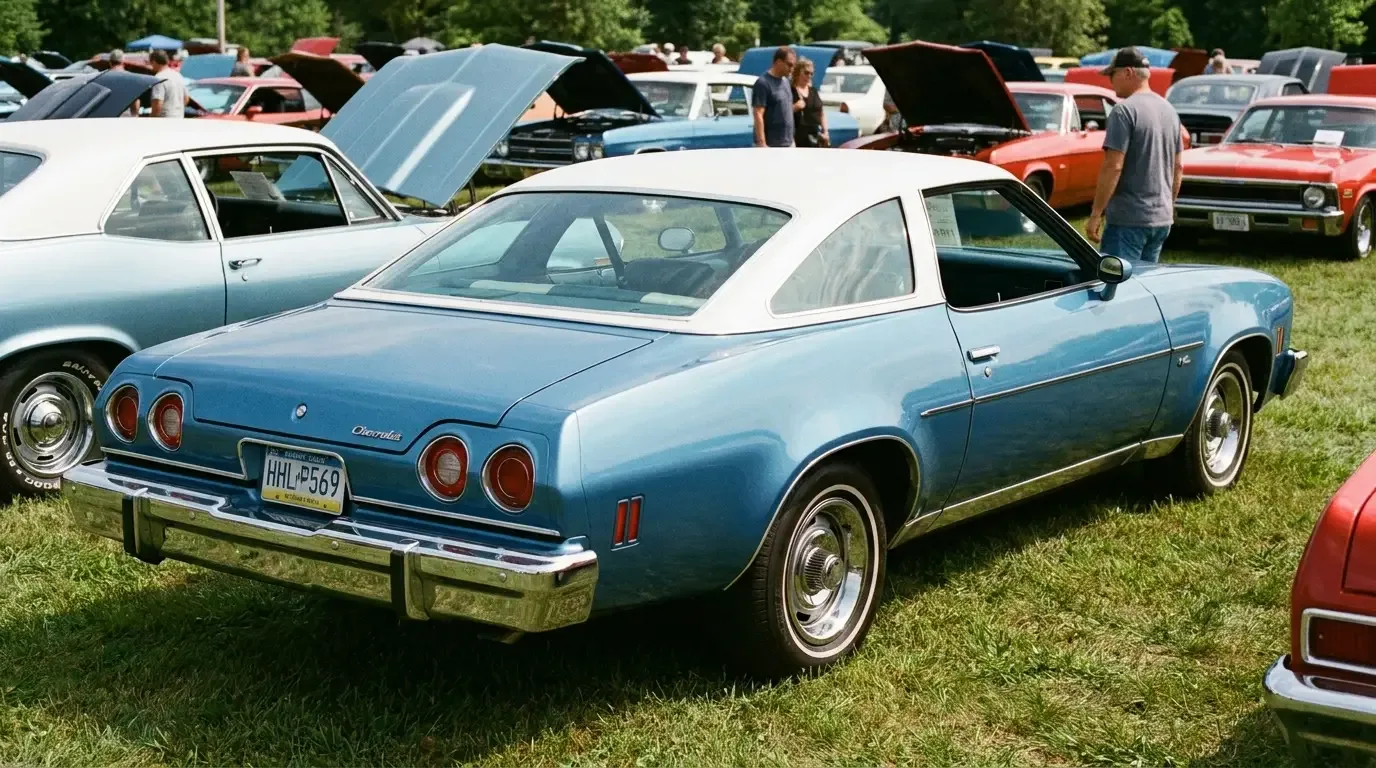
The name comes from architecture, specifically the row of columns that supports a roofline in classical building design, and GM applied it to the fixed roof pillars that replaced the pillarless hardtop on its 1973 intermediate line, Chevelle included. Anticipated federal rollover standards pushed GM to move away from the true hardtop body style, the one with no B-pillar and windows that rolled fully down for an open, glass-to-glass look, in favor of a fixed center pillar that added structural rigidity to the roof.
The standards themselves never took final effect in the form GM was designing around, which is a detail that gets lost in casual retellings of this story. The convertible and true four-door hardtop were dropped from the A-body line for 1973 specifically because of those anticipated rollover rules, even though the rule as written was never actually enacted. GM committed to the Colonnade architecture based on where the regulatory conversation was heading, not necessarily where it ended up, and once that structural decision was made across the whole intermediate line, there was no going back to the pillarless hardtop for the rest of the Chevelle's production run.
What actually changed structurally
The fixed B-pillar was the headline change, but it came with a cascade of other differences. Glass area grew substantially, with large fixed rear quarter windows on the coupe models that gave the greenhouse a much airier look than the notchback profile of the 1968-72 cars. The frame and floor structure were reinforced to work with the new roof design. Body-on-frame construction continued, but the overall structure was noticeably heavier than the previous generation, and that added weight is part of why performance-focused buyers of the era were less excited about the Colonnade cars than they were about the earlier SS 396 and LS6 Chevelles.
The wagon and sedan body styles carried on with more conventional four-door architecture and weren't affected by the hardtop-to-fixed-pillar transition the same way the two-door coupe was, since four-door Chevelles hadn't offered a true pillarless hardtop configuration in the same numbers to begin with.
The opera window as a Landau signature
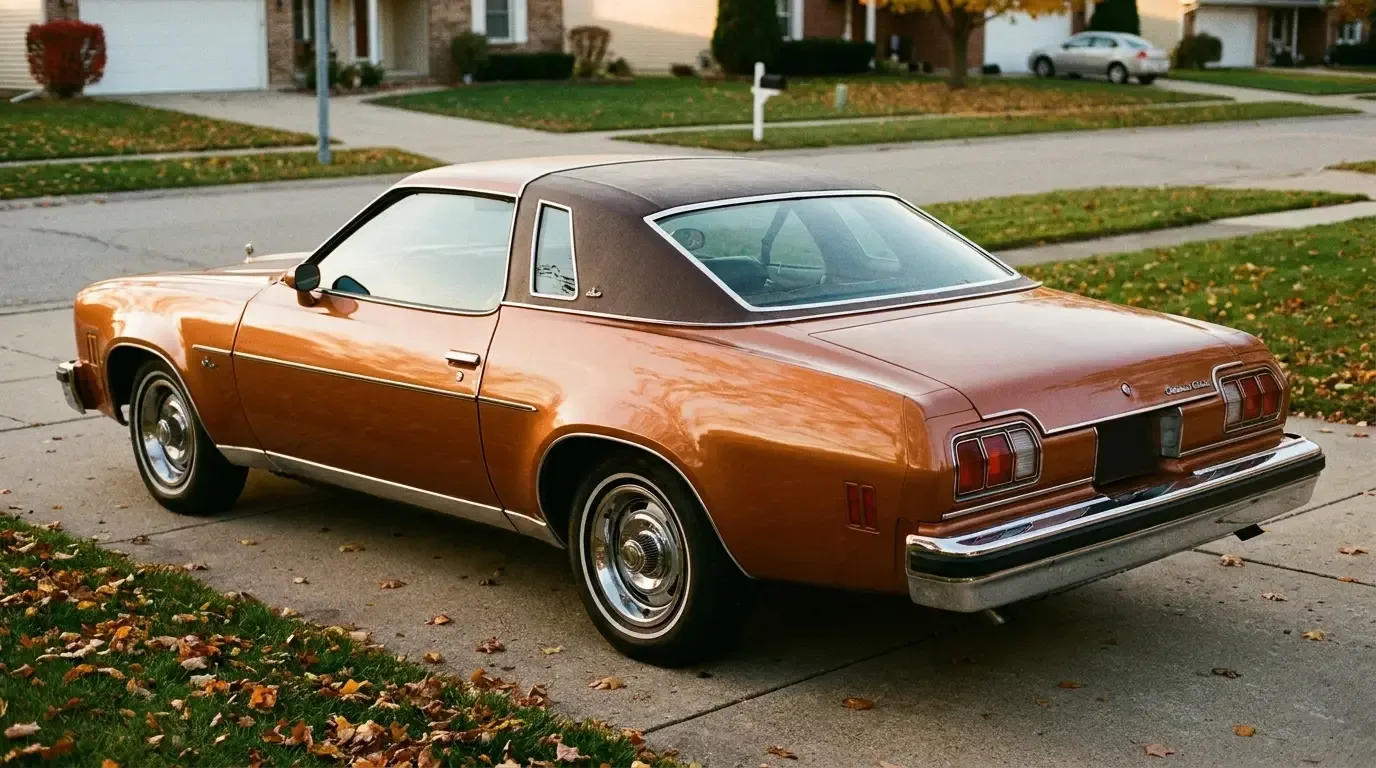
Once the fixed C-pillar became part of the roof structure, Chevrolet had a wide expanse of sheetmetal there to work with, and the styling department used it. Malibu Classic Landau models offered a small, formal opera window set into that pillar, a design cue borrowed from the broader industry trend toward formal, personal-luxury styling touches that were showing up across GM's intermediate and full-size lines in the mid-1970s. It's a detail that reads as decorative, but it also served to break up what would otherwise have been a large blank expanse of sheetmetal on the Colonnade coupe's rear roof pillar.
Interior gains and the Laguna S-3
Structural documentation tends to focus on the roof, but the Colonnade redesign changed the cabin experience just as much. The reinforced floor pan and the deeper door structure needed to support the fixed pillar also opened up more shoulder room and a noticeably different dashboard layout compared to the 1968-72 cars. Chevrolet leaned into a more contoured, driver-oriented instrument panel on these cars, and the Malibu Classic trim brought softer, more heavily padded seating than anything offered on the earlier generation. None of that shows up in a photo of the roofline, but it's a meaningful part of why buyers who actually drive their Chevelles regularly, rather than trailer them to shows, often prefer the way a Colonnade car lives day to day.
The tradeoff, and it's a real one, is that all of this reinforcement and added comfort came with weight the earlier cars didn't carry. A Colonnade Chevelle Malibu coupe ran roughly 500 to 550 pounds heavier than a comparably equipped 1970 Malibu coupe, and that shows up immediately behind the wheel. It's a smoother, quieter, more isolated car. It is not a lighter, more eager one, and buyers coming from an earlier SS Chevelle sometimes need a lap or two to recalibrate their expectations.
Chevrolet didn't abandon the performance-image Chevelle entirely once the Colonnade platform arrived, it just had to work within the new structural reality. The Laguna S-3, offered in the mid-1970s, wore a distinctive body-color urethane nose designed with an eye toward NASCAR aerodynamics, since GM was racing Colonnade-based intermediates on the superspeedways during this period and wanted the street car's front end to echo that connection. It's a different kind of performance statement than an LS6 big-block, built around aerodynamic styling rather than raw horsepower, but it's a legitimate continuation of the idea that a Chevelle could still look purposeful even inside a heavier, more regulation-driven body.
How the Colonnade cars are regarded today
For years the Colonnade generation sat in the shadow of the earlier muscle-era Chevelles, and honestly, from a factory documentation standpoint, that made research on these cars less glamorous work. Production numbers were high, the performance options were diminished compared to the LS6 era, and the cars simply didn't carry the same collector cachet. That's shifted somewhat as interest in 1973-77 Chevelles has grown among buyers who want the styling and the drivability without the price tag of an earlier SS car, and the Laguna S-3, with its notable body-color nose and NASCAR-influenced aerodynamics, has become a legitimate collector interest in its own right within this generation.
What hasn't changed is that documentation on these cars requires the same rigor as any other Chevelle. The tank sticker and build sheet still tell you what actually left the factory, whether that's a Landau opera window package or a specific engine option, and I'd rather see a Colonnade-era Chevelle with solid paperwork than an earlier car with none.
| Feature | Pre-1973 Chevelle | Colonnade Chevelle (1973-77) |
|---|---|---|
| Roof structure | Pillarless hardtop available | Fixed B-pillar, no true hardtop |
| Rear glass | Notchback profile | Large fixed quarter windows |
| Formal roof trim | Not offered | Opera window on Landau models |
| Structural weight | Lighter | Noticeably heavier |
"People assume the pillarless hardtop just went out of fashion. It didn't. GM built the Colonnade roof around where federal rollover standards looked like they were heading, and once that structural commitment was made, the whole body architecture followed it. The opera window is a styling flourish on top of an engineering decision, and it's worth understanding in that order."
Tom Ramirez
The Colonnade cars represent a real inflection point in how the Chevelle was engineered, not just how it was styled, and that's easy to miss if you only look at the sheetmetal. For how the body architecture continued to diversify from here, see Hardtop, Convertible, Wagon, El Camino, which traces the shared design DNA across every body style Chevrolet offered on the A-body platform.
Sources and notes
- Curbside Classic: CC Tech, 1973-77 GM Colonnade Chassis Design
- Mac's Motor City Garage: 1973 Chevrolet Monte Carlo, The Dawn of the Colonnade Era
- Barn Finds: Colonnade Muscle, 1973 Chevrolet Chevelle SS
- Conceptcarz: 1973 Chevrolet Chevelle specifications
- ChevelleStuff.net: 1970 Chevelle dimensions and weights
- Wikipedia: Chevrolet Chevelle
Related Reading
Have a
Chevrolet Chevelle
for Sale?
Reach thousands of serious classic car collectors across the US.
Sell It Here →
Are You a Classic Car Dealer?
List your full inventory and connect with targeted classic car buyers.
Join as a Dealer →

About the author
Tom Ramirez
Corvette researcher and historian based in Bowling Green, Kentucky. Two decades documenting Corvette production history from original factory records.
Related Listings - Chevrolet Chevelle




Comments (1)
M
Mike Ferrano
2 months ago
The documentation point can't be overstated. I've seen beautiful cars pass at auction because the seller couldn't back up what they were claiming.