
Wheels are the fastest way to date a Chevelle at fifty paces, and they're also one of the details that gets swapped, lost, and misrepresented more than almost anything else on the car. I've spent a lot of hours with factory build sheets and dealer accessory catalogs trying to sort out what actually left the plant on a given order versus what a selling dealer bolted on before delivery, and the wheel story on the A-body is a good example of how murky that line can get.
Car Features
7 min read
Wheel Design Evolution: Rally, SS, and Magnum 500
Rally wheels, SS mag-style covers, and Magnum 500s: how Chevelle wheel options changed and why documentation matters more than looks.
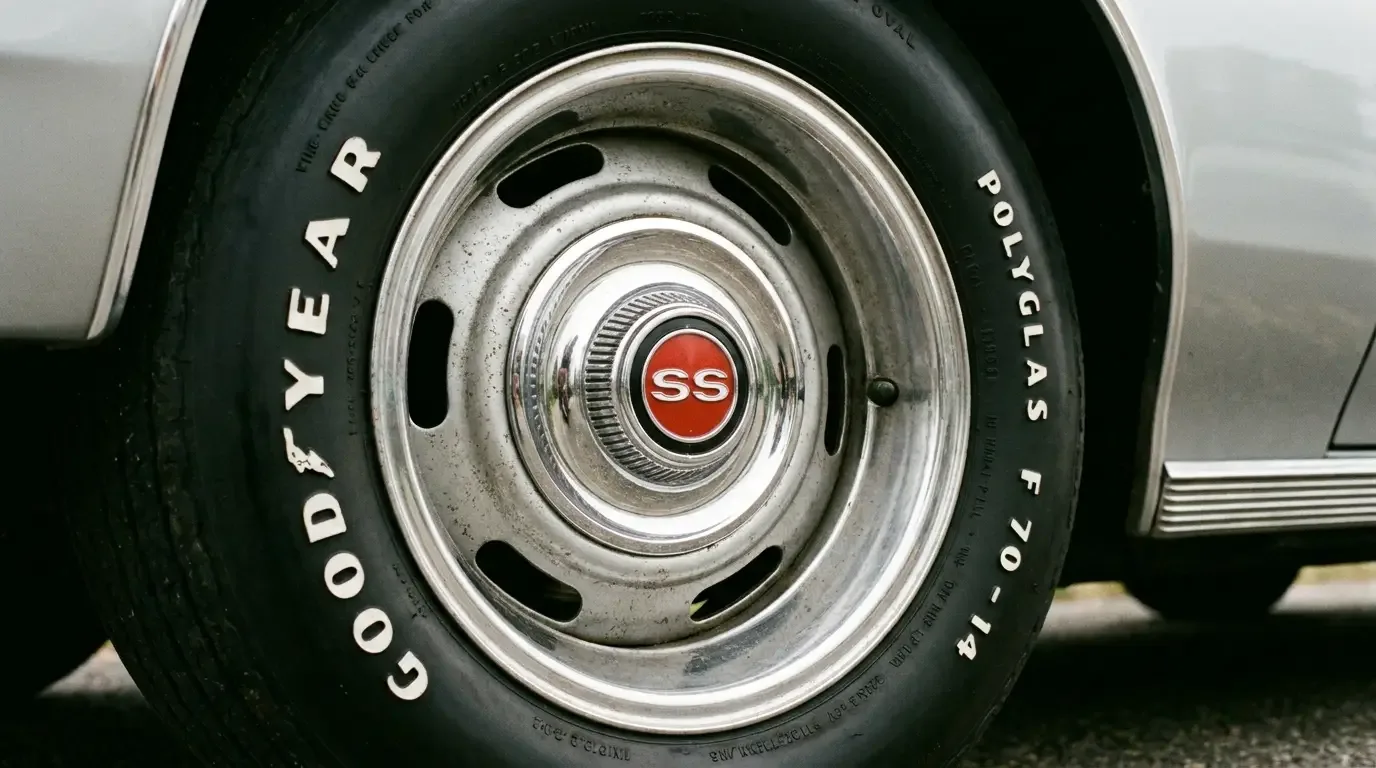
The base Chevelle rolled out on plain stamped steel wheels with small hubcaps or dog-dish caps, and that's still the correct look for a lot of six-cylinder and small-V8 cars that never left the factory with anything fancier. But the options that collectors chase today, the Rally wheels and the Magnum 500s, tell a more complicated story about what GM built in-house versus what came from outside suppliers through the dealer network. Read the full design story for the bigger picture of how the A-body's look evolved across three generations, because the wheels didn't change in isolation. They tracked the overall styling direction of the car.
The dog-dish years: 1964 to 1965
The first-generation Chevelle came standard with 14-inch steel wheels wearing small chrome hubcaps, commonly called dog-dish caps because they cover only the center of the wheel and leave the black steel visible around the rim. This was standard fare across the GM intermediate line, not unique to Chevelle, and it's the correct baseline appearance for a Malibu or 300-series car built without upgraded wheel options. Full wheel covers were available as a factory option and dressed the car up considerably, covering the entire wheel face in chrome.
What collectors need to understand about these early cars is that wheel covers were frequently swapped or lost over six decades of ownership, so a car presented today with a certain wheel cover style isn't necessarily wearing what it left the factory with. Cross-reference the build sheet or the original owner's invoice if you can find one, because the wheel cover line item is one of the easier things to verify against paperwork.
Rally wheels arrive with the Super Sport package
The Rally wheel, a stamped steel wheel finished in argent silver with a chrome trim ring and a small center cap, became closely associated with the SS package as the muscle car era ramped up through the mid and late 1960s. The look was simple and functional: no wheel cover to hide behind, just the styled steel wheel itself dressed up with a trim ring. It read as purposeful in a way the full wheel cover didn't, and that fit the image Chevrolet was building around the SS 396.
The exact RPO code moved around by year, and I'd want a specific build sheet in hand before I quoted one to a buyer as gospel. For 1966 the 14x6 wheel was regular production issue on SS396 cars only, and by 1967 it opened up to any Chevelle ordered with the F70-14 Wide Oval tire package, with disc-brake cars carrying their own code (DG that year, then JJ paired with disc brakes and JK on standard rims by 1968). What I can say with confidence from handling these cars is that Rally wheels were 14x6 across SS396 production through the late 1960s, moving to wider widths as the body grew heavier and the tire sizes grew with it into the early 1970s.
SS wheel covers and the simulated mag look
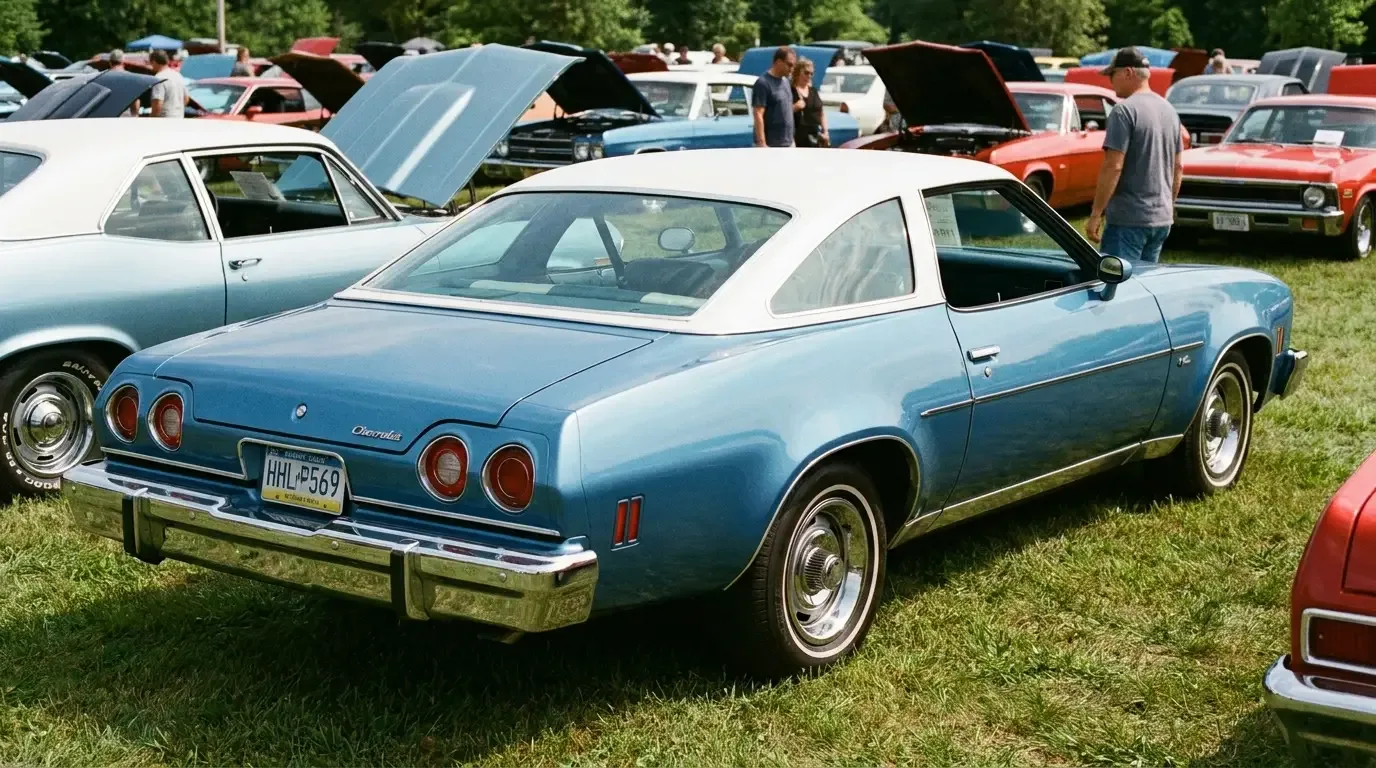
Not every SS buyer wanted the exposed steel look. Chevrolet also offered simulated mag wheel covers, full-face wheel covers styled to mimic the look of a cast aluminum wheel with spokes, without the cost or manufacturing complexity of actually casting one. These showed up heavily in Chevelle brochures and dealer photography through the late 1960s and early 1970s, and they're often overlooked by buyers who assume every period-correct SS wore Rally wheels. Both were legitimate factory-available looks, and the correct one depends entirely on how a specific car was ordered.
This is where documentation matters more than assumption. I've corrected plenty of well-meaning restorers who put Rally wheels on a car that left the factory with mag-style wheel covers because that's the more famous look today. Correct for the era isn't always correct for the specific car.
Magnum 500s and the dealer accessory question
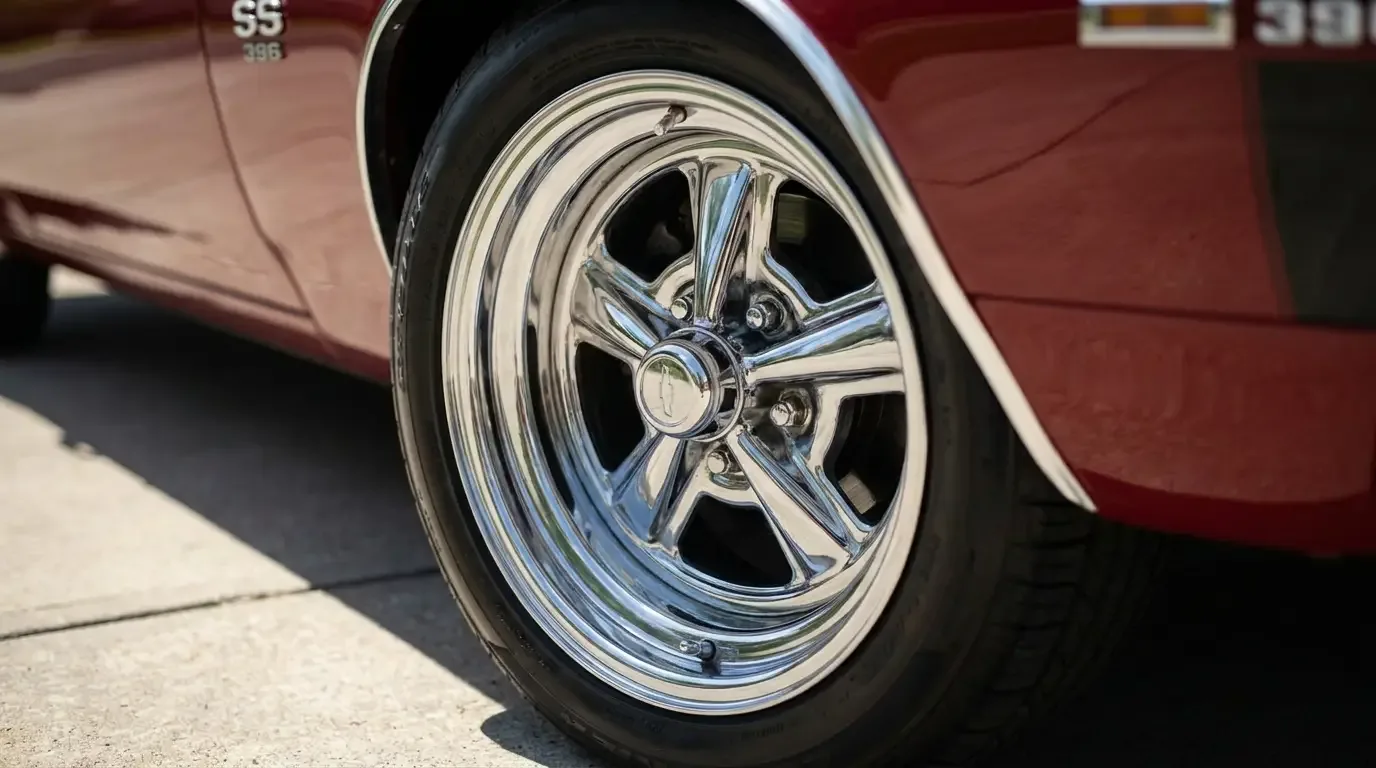
The Magnum 500 is the wheel most people picture when they think "classic muscle car wheel": a chrome five-spoke styled steel wheel with a bold, aggressive look. It became hugely popular on Chevelles, Camaros, and Chevrolet trucks alike, but its factory history is more complicated than a simple RPO code on the build sheet. Magnum 500 wheels were sold through Chevrolet's dealer accessory program in many cases, meaning a selling dealer could install them before delivery, and they also became an extremely common aftermarket and restoration-era addition decades later.
That dual history means a Chevelle wearing Magnum 500s today could be wearing a genuine period-correct dealer-installed option, or it could be wearing a set installed in 1995 because they look right. Neither is wrong for a driver-quality car, but if originality and documentation matter to you, the Magnum 500 question deserves more scrutiny than most buyers give it.
| Wheel type | Typical finish | Common association | Verification difficulty |
|---|---|---|---|
| Dog-dish hubcap | Chrome cap, black steel visible | Base Chevelle, six-cylinder cars | Low, simple part |
| Full wheel cover | Chrome, covers entire wheel face | Malibu, upgraded trim levels | Moderate, easily swapped |
| Rally wheel | Argent silver steel, chrome trim ring | SS package cars | Moderate, check width and offset |
| Simulated mag cover | Chrome, cast-look spoke pattern | SS package, later Malibu Classic | Low, distinct casting pattern |
| Magnum 500 | Chrome five-spoke steel | Dealer accessory, aftermarket | High, dual factory/aftermarket history |
What this means for a numbers-matching build today
If you're chasing originality on a restoration, the wheel question is worth pulling documentation for before you order anything. A tank sticker or factory invoice won't always spell out the wheel package explicitly, but dealer paperwork and period photography of the specific car, when it exists, can settle an argument that internet consensus can't. I'd rather see an owner run the wrong-but-documented wheel than the right-looking-but-unverified one, because the paperwork is what a judge or a serious buyer is going to ask about first.
None of this is a reason to avoid buying a Chevelle wearing a wheel package you can't fully document. It's a reason to know what you're looking at and price accordingly. A well-documented SS with correct Rally wheels commands a premium over an otherwise identical car wearing undocumented aftermarket Magnum 500s, even though both look sharp in a driveway.
"The tank sticker matters. Not because it tells you everything, it doesn't, but because it's the factory's own record of what left the line. Wheels are one of the easiest things to get wrong on a restoration because they're also one of the easiest things to swap, so I always want to see paperwork before I take somebody's word for what's original."
Tom Ramirez
The wheel story on the Chevelle is really a small window into the larger design evolution of the car, from the plain and functional early 1960s intermediate to the performance image the SS package built through the late 1960s. For the next chapter in that styling arc, look at The Colonnade Era, where the whole body architecture shifted and the wheel-and-fender relationship changed along with it.
Sources and notes
- Team Chevelle forum: 1967 14x6 Rally wheel code DG discussion
- Team Chevelle forum: correct 1968 Chevelle SS wheel codes
- Speedway Motors: Chevrolet Rallye Wheel & Hubcap Guide
- In The Garage Media: A Guide to Steel Wheels for Chevy Cruisers and Muscle Cars
- Hagerty: The Essential Mag Wheel Field Guide
- Mopar Connection Magazine: Motor Wheel Corporation's Magnum 500 wheels
Related Reading
Have a
Chevrolet Chevelle
for Sale?
Reach thousands of serious classic car collectors across the US.
Sell It Here →
Are You a Classic Car Dealer?
List your full inventory and connect with targeted classic car buyers.
Join as a Dealer →

About the author
Tom Ramirez
Corvette researcher and historian based in Bowling Green, Kentucky. Two decades documenting Corvette production history from original factory records.
Related Listings - Chevrolet Chevelle




Comments (1)
L
Linda Kowalski
1 month ago
Great resource for someone new to this segment. Sent it to a friend who's been asking questions about getting into the hobby.