
The first time most Americans saw a Camaro move, it was climbing out of a volcano. That was the opening television spot for the 1967 car, and it set the tone for thirty-five years of vintage Camaro ads: loud, a little theatrical, and always aimed squarely at the Mustang. Chevrolet had arrived late to the pony car fight, and its advertising behaved like a latecomer with something to prove. Reading those ads in order is a quick way to understand how the car's image was built, long before it became part of the Camaro on screen and on the street.
Car Features
7 min read
Classic Camaro Ads, 1967 to 2002
From a volcano TV spot to Heartbeat of America: how vintage Camaro ads sold the car as the challenger for 35 years.
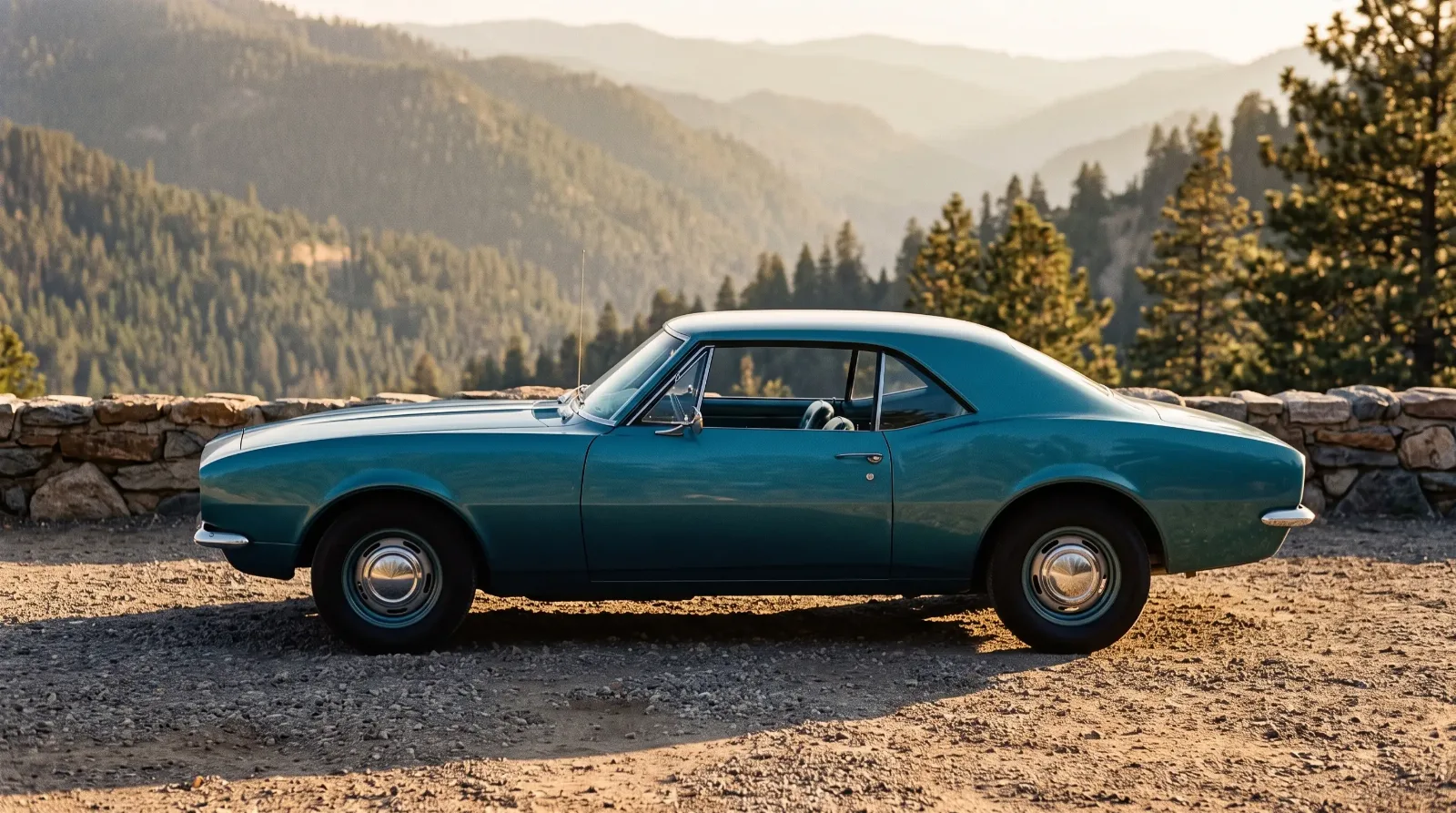
Nearly all of it came from one shop. Campbell-Ewald, based in Detroit and later in Warren, Michigan, handled Chevrolet advertising from 1919 until April 2010, when the account moved to Publicis. Every Camaro from 1967 to 2002 was sold under that single agency relationship, which explains why the voice of the ads changed with the times but never lost its swagger.
The volcano, the name and the Hugger
The pitch started before the car did. On 28 June 1966 Chevrolet held a naming press event across 14 cities linked by telephone, and Pete Estes spelled out the new name for reporters. Asked what a Camaro was, Estes called it "a small, vicious animal that eats Mustangs." No copywriter ever wrote a better line for the car, and the dealers knew it. The Camaro went on sale on 29 September 1966 as a 1967 model, and Chevrolet built 220,906 of them that first year.
The volcano commercial gave the car its entrance. Print gave it a nickname. A 1967 ad showed a woman at the wheel of a convertible called the "Hugger," a word meant to suggest the way the low, wide car held the road. The label traveled further than anyone might expect: an Australian Holden dealer, Bill Patterson Motors, ran a 1967 print ad telling local readers that Americans knew the car as "The Hugger."
Hugger Month and the 1969 ads that picked fights
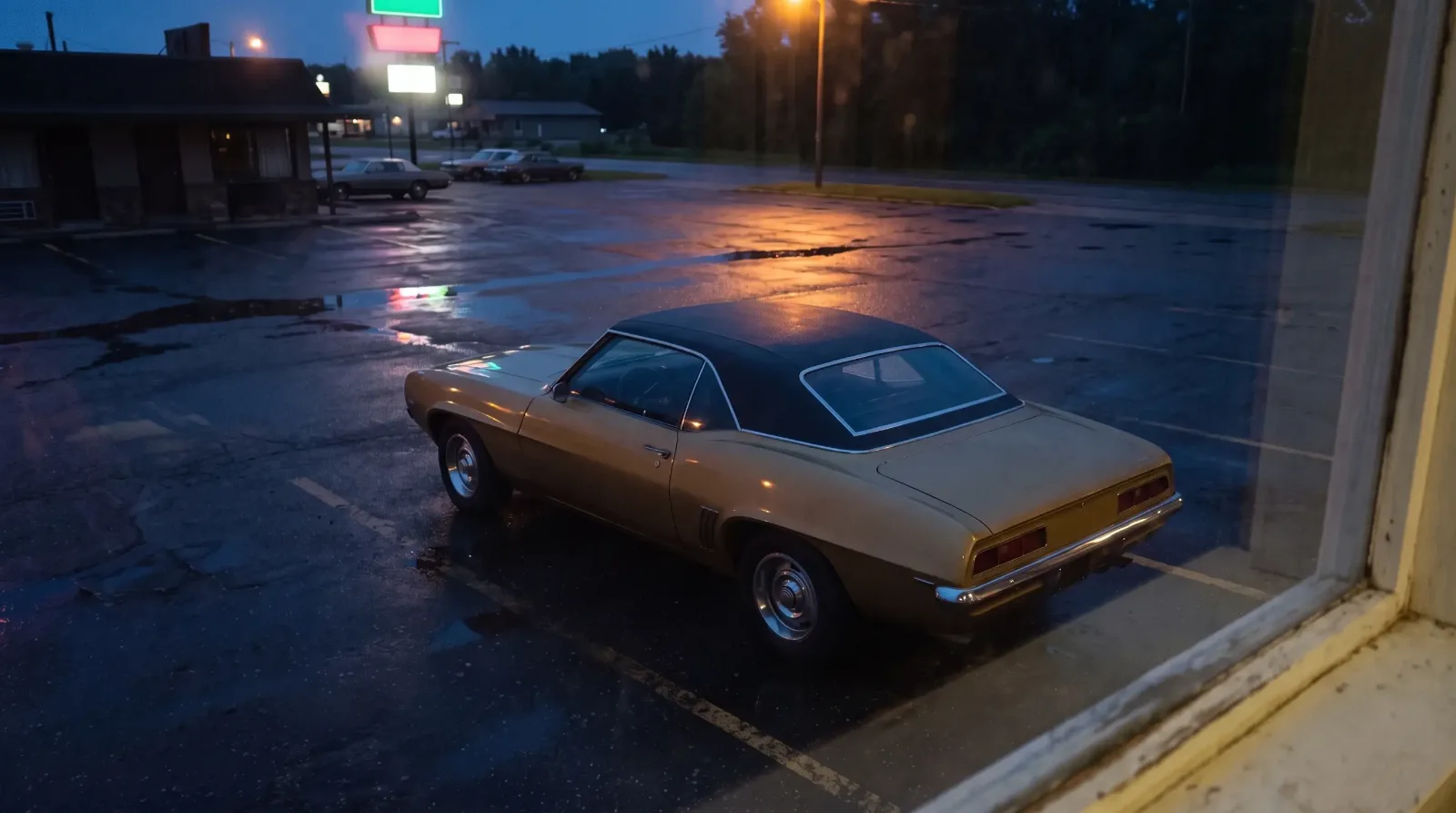
By the second model year Chevrolet turned the nickname into a sales event. It billed February 1968 as "Hugger Month" across the United States and Canada, and dealer newspaper ads ran from 17 to 28 February, with some continuing into March, April and May. The push was big enough to earn a trade column of its own: on 1 February 1968 The New York Times ran Philip H. Dougherty's piece "Advertising: Big Push Is On for the Hugger."
The 1969 ads got bolder. One Campbell-Ewald spread put a Camaro SS with Rally Sport equipment next to a big-block Corvette under the line "We'll take on any other two cars in this magazine." Another SS ad addressed rivals directly: "A word or two to the competition: You lose." This was copy written by people who expected to win, and who wanted Ford's ad men to read it too.
"Pony car ads were never really about the car parked on the page. They sold the idea that the guy who owned one was a step ahead of the guy in the next lane, and the Camaro ads said it louder than anybody."
Patrick Walsh
Vintage Camaro ads of the 1970s, from Super Hugger to go bananas
The second generation was late, and Chevrolet made the delay part of the story. The launch ad read simply "New Camaro - February 26th." under a "Super Hugger" theme, and the car did go on sale on 26 February 1970. The 1970 print campaign followed with one of the most confident lines Chevrolet ever ran: "Now our competitors know how the captain of the Titanic felt."
As the decade moved on, the tone shifted with the market. Emissions rules and the fuel crisis took the edge off the performance pitch, and the headlines started selling comfort, value and fun instead of quarter-mile times. The progression reads almost like a diary of the era.
| Year | Headline | What it was selling |
|---|---|---|
| 1970 | "Now our competitors know how the captain of the Titanic felt." | The all-new second generation |
| 1973 | "You deserve a car this good." | The upscale Type LT |
| 1974 | "With Camaro, you can be practical. Or go bananas." | A car for both sides of the buyer |
| 1976 | "Want a lift, America? '76 Camaro." | Optimism in the Bicentennial year |
| 1978 | "His majesty. The 1978 Camaro Z28." | The returning performance model |
| 1979 | "A new way to take your pulse." | The Berlinetta |
The 1974 line is the most honest of the group. It admits that most Camaro buyers wanted a stylish, sensible coupe, while a few wanted something louder, and it promised both. The 1978 Z28 ad, by contrast, went back to royalty and swagger for the performance model that had just returned. Late in the decade the copy kept reaching for the open road, with lines such as "Looking for People Who Love to Drive" in 1977 and "Spread Your Wings" in 1981.
Heartbeat of America and the third-generation pitch
The phrase most people associate with 1980s Chevrolet started on a Camaro. Jerry Burton, an associate creative director at Campbell-Ewald, coined "Heartbeat of America" in 1984 and first used it on a Camaro brochure. Chevrolet then launched it as the full-line campaign in the fall of 1986, and it ran until 1993. Accounts differ by a year or so on the dates, but the brochure origin is the part worth remembering.
The third generation also had a credential the ad men loved. The 1982 Z28 was named Motor Trend Car of the Year and paced the Indianapolis 500, and Chevrolet sold over 6,000 pace car replicas. That August, a Z28 belonging to a high school football star was wrecked on screen in a teen comedy, a story covered here. Once the IROC-Z arrived, a 1986 print ad leaned on the racing name with the slogan "IROC 'n Roll." By then the car's image was being written by musicians and filmmakers as much as by copywriters, and the Camaro songs of the decade did as much for its street reputation as any brochure.
Brute power and the last fourth-generation campaign
The fourth generation needed a harder sell. Camaro sales fell nearly 23 percent in 1997 compared with 1996, a year in which Chevrolet had spent about $26 million on Camaro advertising. For the restyled 1998 car, Campbell-Ewald and its chief creative officer, Bill Ludwig, produced two 30-second television spots that broke on 14 October under a "brute power" theme, comparing the car to rough motorcycle riders. It was a long way from the volcano, but the instinct was the same: make the Camaro feel dangerous.
It was not enough. In late September 2001 GM said that 2002 would be the last model year for the Camaro and the Firebird, and that the Ste-Thérèse plant in Quebec would close in the fall of 2002. The spokesman who announced it was John Middlebrook, GM's vice president for vehicle brand marketing and corporate advertising. The man in charge of selling the car was the one who told the country it was going away.
Today the old ads are collectibles in their own right, cut out of magazines and framed in garages next to the cars they promised. They record a car that was always written as the challenger, even in the years it sold best, and that attitude explains a lot about why people still care about it.
Sources and notes
- Newsweek: America's love affair with the Chevrolet Camaro
- Camaro Research Group forum: Hugger Month newspaper clippings, 1968
- Click Americana: 1970s Chevrolet Camaro ads
- Chevy Hardcore: the 1969 Camaro and Corvette "two cars" ad
- We Are the Mutants: Heartbeat of America and the IROC-Z, 1985 to 1990
- MediaPost: Chevrolet revives Heartbeat of America
Related Reading
Have a
Chevrolet Camaro
for Sale?
Reach thousands of serious classic car collectors across the US.
Sell It Here →
Selling a classic? Here's how: sell my classic car
Are You a Classic Car Dealer?
List your full inventory and connect with targeted classic car buyers.
Join as a Dealer →
#chevrolet camaro
#pop culture
#muscle car marketing
#vintage ads
#Campbell-Ewald
#Hugger
#Heartbeat of America

About the author
Patrick Walsh
Automotive journalist covering classic car shows, events, and the enthusiast community across North America.
Related Listings - Chevrolet Camaro
Comments
Be the first to comment on this article.