
A first model year rarely gets everything right, and the 1969 K5 Blazer is no exception. Chevrolet moved fast to answer the Scout and the Bronco, and that speed shows up in a handful of details that separate that debut year from every K5 Blazer built afterward. The K5 Blazer 1969 first year quirks are the kind of thing a casual buyer would never notice, but they matter enormously to anyone trying to identify, date, or correctly restore a genuine first-year truck today.
Car Features
7 min read
The First-Year Quirks of the 1969 K5 Blazer
The K5 Blazer 1969 first year quirks, from a four-wheel-drive-only launch to early removable-top hardware, matter to anyone chasing a genuinely correct truck.
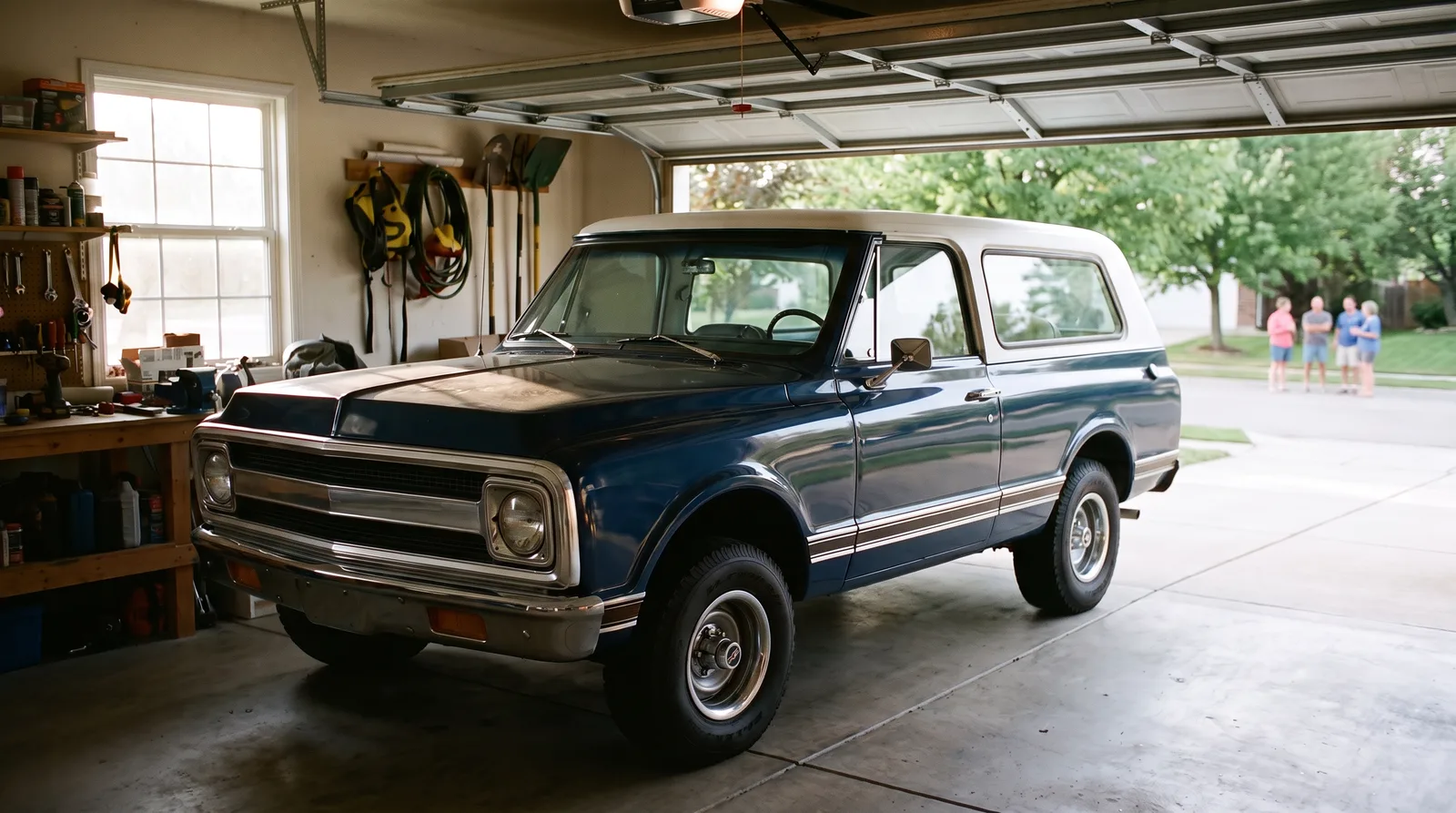
Four-wheel drive, no other option
The most significant quirk of the 1969 model year is also the most straightforward. Chevrolet launched the K5 Blazer exclusively as a four-wheel-drive vehicle, with no two-wheel-drive version available at all that first year. This was a deliberate choice built around who Chevrolet expected to buy the truck, off-road-focused buyers who wanted the capability first and the daily-driver versatility second. A two-wheel-drive Blazer did arrive, but not until the following model year, which means any genuine 1969 K5 Blazer is, by definition, a four-wheel-drive truck. That single fact is one of the fastest ways to spot a truck misidentified as a 1969 model when it is actually a slightly later build.
A shorter options list than later years
Compared to the K5 Blazer lineup that developed through the early and mid-1970s, the 1969 truck came with a noticeably shorter list of factory options and trim packages. Chevrolet had not yet built out the range of interior packages, appearance packages, and convenience options that later became common on the Blazer. Buyers in 1969 were choosing from a leaner set of choices, which means original 1969 trucks tend to look and feel more utilitarian than a 1971 or 1972 example equipped with the fuller option list Chevrolet had rolled out by then.
This matters for restoration work specifically. A shop trying to bring a 1969 Blazer back to correct original condition needs to know that certain trim and interior combinations common on slightly later trucks simply were not available when the 1969 model left the factory, and installing them creates a truck that looks close to correct but is not actually accurate to that specific model year.
The removable top in its earliest form
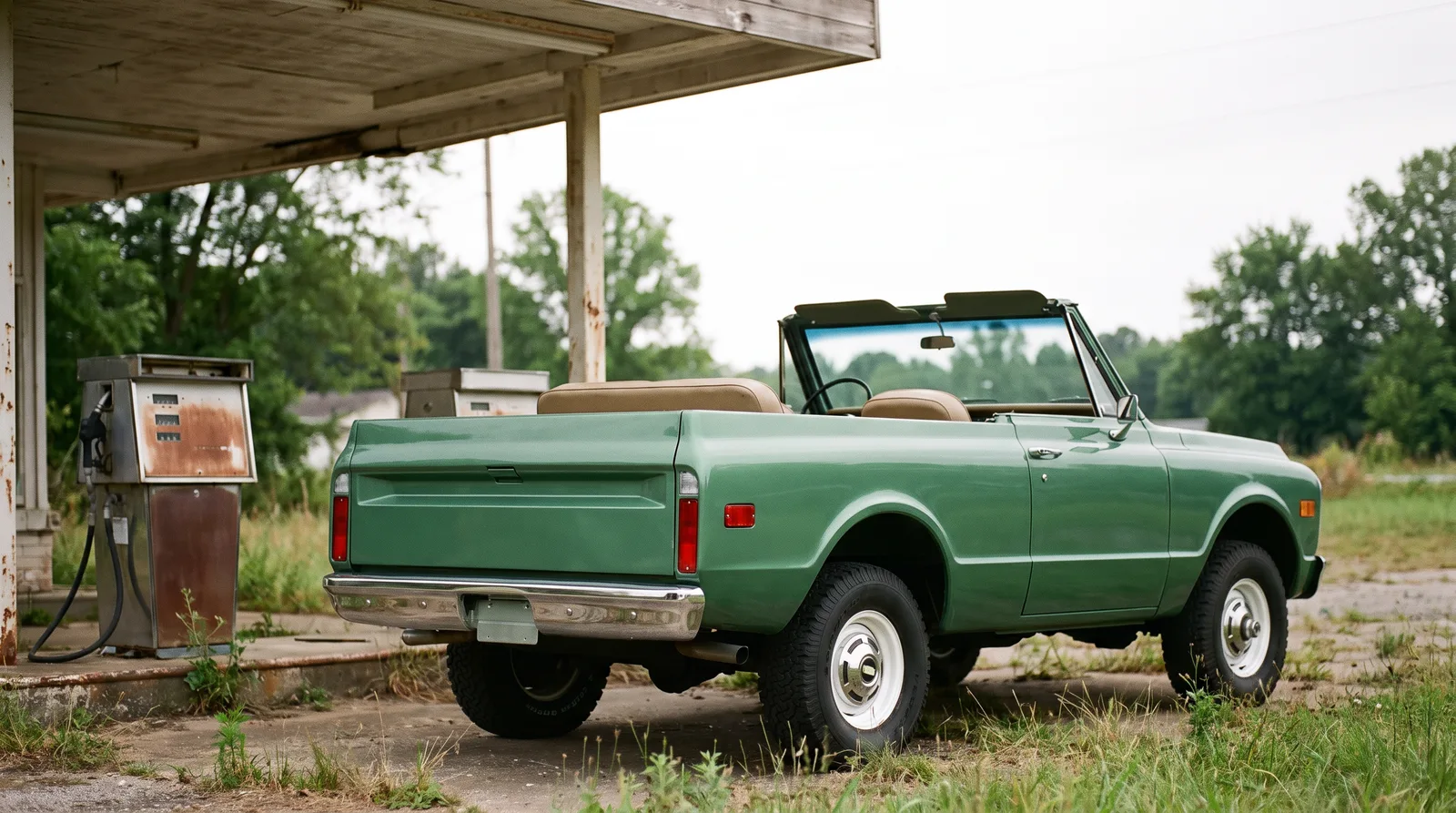
The removable fiberglass hardtop that defined the entire first-generation K5 Blazer through 1972 debuted in its earliest form on the 1969 truck, and it carried some fit and hardware details that Chevrolet refined in subsequent years. Owners and restorers working on genuine 1969 trucks sometimes find that top latches, weatherstripping, and mounting hardware differ subtly from what shows up on 1970 and 1971 parts listings, which can create headaches for anyone assuming every removable-top Blazer from the era uses identical hardware. Sourcing correct parts for a first-year truck sometimes requires more careful cross-referencing than sourcing parts for a 1971 or 1972 example, simply because the earliest production run saw fewer changes documented in later parts catalogs.
"The 1969 trucks are the ones that trip people up the most, because everyone assumes the whole first generation is identical under the skin. It is not. The earliest Blazers have their own small set of details, and if you are restoring one, those details are the difference between correct and close enough."
- Sarah Whitfield
Interior and gauge cluster differences
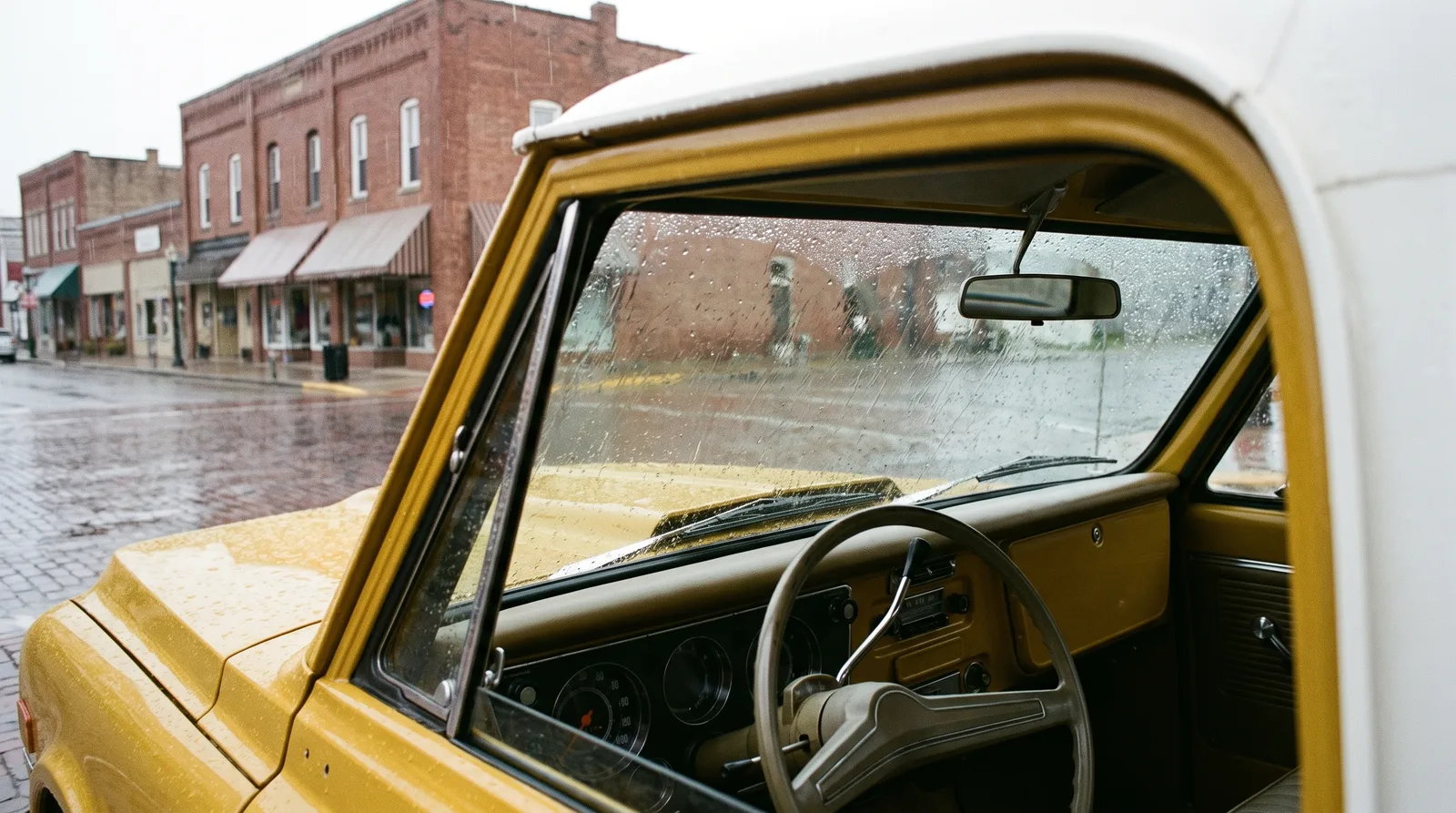
The dashboard and gauge layout on a genuine 1969 K5 Blazer carries its own set of details that later years revised. Because the truck launched with a relatively basic equipment list compared to what Chevrolet offered by the early 1970s, the earliest trucks often show a simpler gauge package and fewer factory-installed convenience features than a 1971 or 1972 example equipped with options that had not yet been introduced when the 1969 model went into production. Restorers working from photographs of later trucks sometimes install trim or gauge configurations that were never actually offered in that first model year, which creates an interior that looks plausible but is not actually correct for a genuine 1969 build.
Seat upholstery patterns and available color combinations followed a similar pattern. Chevrolet expanded the range of interior color and trim choices as the K5 Blazer matured through its early years on the market, which means an interior restoration aiming for accuracy on a 1969 truck needs to work from documentation specific to that model year rather than assuming the broader first-generation parts catalog applies uniformly across 1969 through 1972.
Why these details matter beyond trivia
None of this changes how a 1969 K5 Blazer drives or how capable it is off-road. What it changes is value and authenticity for buyers who care about originality. A truck correctly identified as a genuine four-wheel-drive-only 1969 model, with the correct early-production top hardware and a period-accurate options list, commands more confidence from serious buyers than a truck with unclear history or components mixed in from later model years. Sellers who understand these quirks can market a truck more accurately, and buyers who understand them can avoid overpaying for a truck presented as more original than it actually is.
Anyone researching a specific truck's history should look at our complete history of the model's debut year to understand how these first-year details fit into the broader story of why Chevrolet built the Blazer the way it did, and how quickly the model evolved once it hit the market.
For buyers who have done that homework and are ready to shop, it is worth taking time to find a classic K5 Blazer that matches what a genuine first-year truck should look like, rather than relying on a seller's description alone.
Badging and identification details
Even the badges and identification plates on a genuine 1969 K5 Blazer carry small details that later years revised as Chevrolet refined its truck lineup branding. VIN placement, tag stamping conventions, and even some exterior badge details from that first year can differ subtly from what became standard just a year or two later. For anyone trying to authenticate a truck rather than simply enjoy driving it, these small identification details often matter as much as the mechanical specifications, since a mismatched VIN tag or an inconsistent badge detail can be the first clue that a truck's history is not quite what a seller has represented.
None of this is meant to suggest that every 1969 K5 Blazer needs forensic-level verification before a purchase makes sense. Most buyers are looking for a solid, usable truck and do not need to chase every production detail down to the stamping on a build tag. But for anyone paying a premium specifically for genuine first-year status, understanding these quirks is the difference between paying for what a truck actually is and paying for what a listing merely claims it is.
A short model year with a long shadow
The 1969 K5 Blazer was only on sale for part of a model year before Chevrolet began making changes for 1970, but the truck's core identity, the four-wheel-drive launch, the removable top, and the shorter options list, all trace directly back to those first months of production. Anyone chasing a genuinely correct example needs to know these quirks exist, because they are exactly the kind of detail that separates a truly original 1969 Blazer from a truck that only looks like one at a glance.
Sources and notes
Related Reading
Have a
Chevrolet Blazer
for Sale?
Reach thousands of serious classic car collectors across the US.
Sell It Here →
Selling a classic? Here's how: where to sell your classic car online
Are You a Classic Car Dealer?
List your full inventory and connect with targeted classic car buyers.
Join as a Dealer →

About the author
Sarah Whitfield
Third-generation classic car collector specializing in pre-war American and European coachbuilt automobiles. Researcher and concours enthusiast.
Related Listings - Chevrolet Blazer
Comments
Be the first to comment on this article.