
Ask why Chevrolet built the K5 Blazer and the easy answer is competition. That answer is not wrong, but it is incomplete. The full story of why Chevrolet built the K5 Blazer in 1969 involves a company watching a market segment grow around it for the better part of a decade, deciding its existing truck lineup could not address that opportunity, and making a calculated bet that a bigger, more capable entry would beat two smaller, established competitors on their own turf.
Car Features
7 min read
Why Chevrolet Built the K5 Blazer in 1969
The K5 Blazer 1969 why chevy built it story is about a company betting that capability, not compactness, would win a segment defined by the Scout and Bronco.
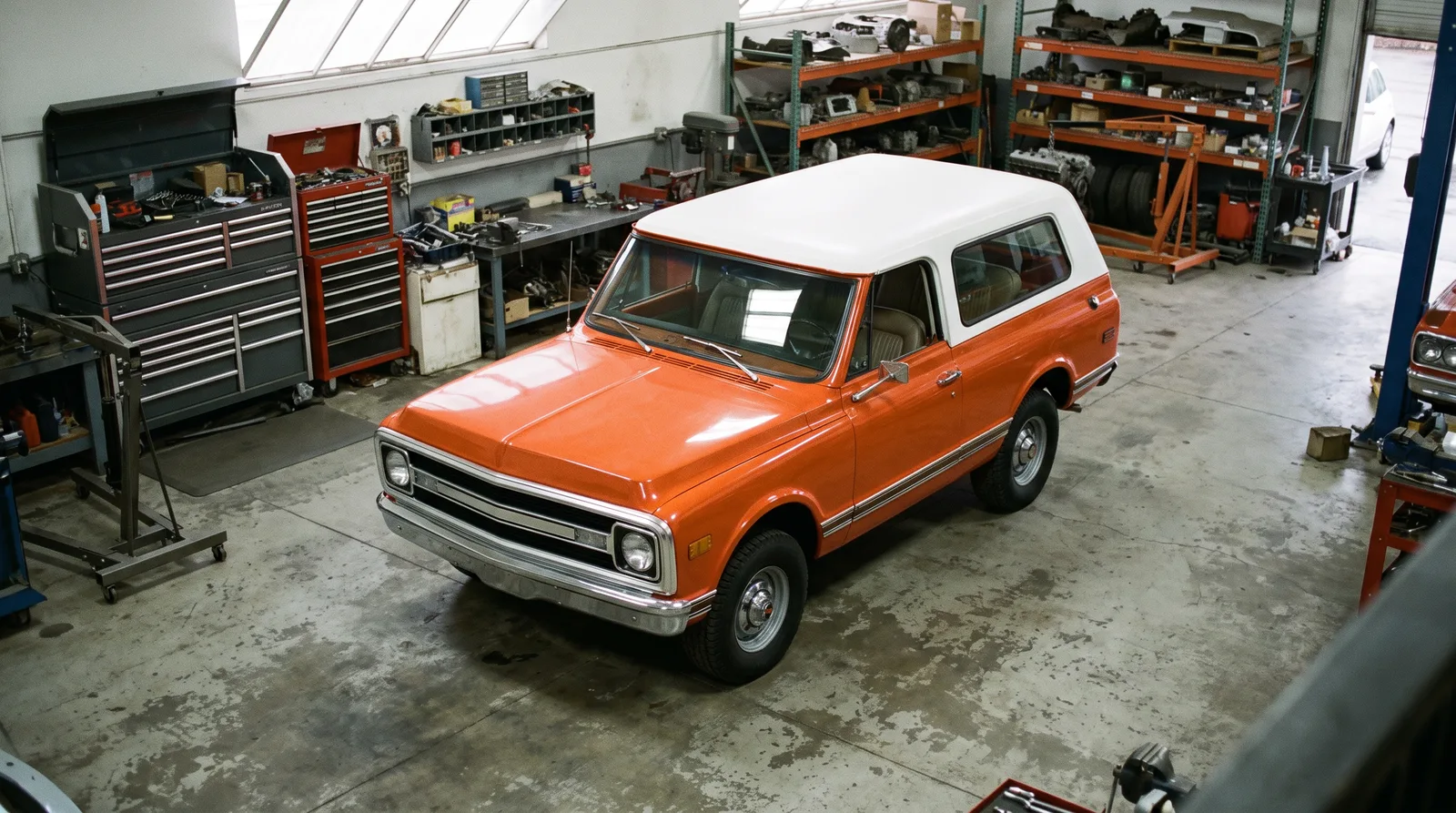
A segment Chevrolet was watching from the sidelines
International Harvester had been selling the Scout since 1961, and Ford entered with the Bronco in 1966. Both trucks carved out a genuine and growing customer base of buyers who wanted something more capable than a standard car but smaller and more affordable than a full pickup. Chevrolet had nothing to compete with either one directly through most of the 1960s. The closest thing in the Chevrolet lineup was the standard pickup truck, which offered none of the compact off-road character that was drawing buyers to the Scout and Bronco.
By the mid-1960s, that gap was costing Chevrolet real sales, and General Motors leadership knew it. The question was not whether to respond, but how. A direct copy of the Scout or Bronco formula, a genuinely compact vehicle built from scratch, would have taken years and a substantial new investment. Chevrolet had a faster option sitting right in its existing lineup.
The shortcut that became the strategy
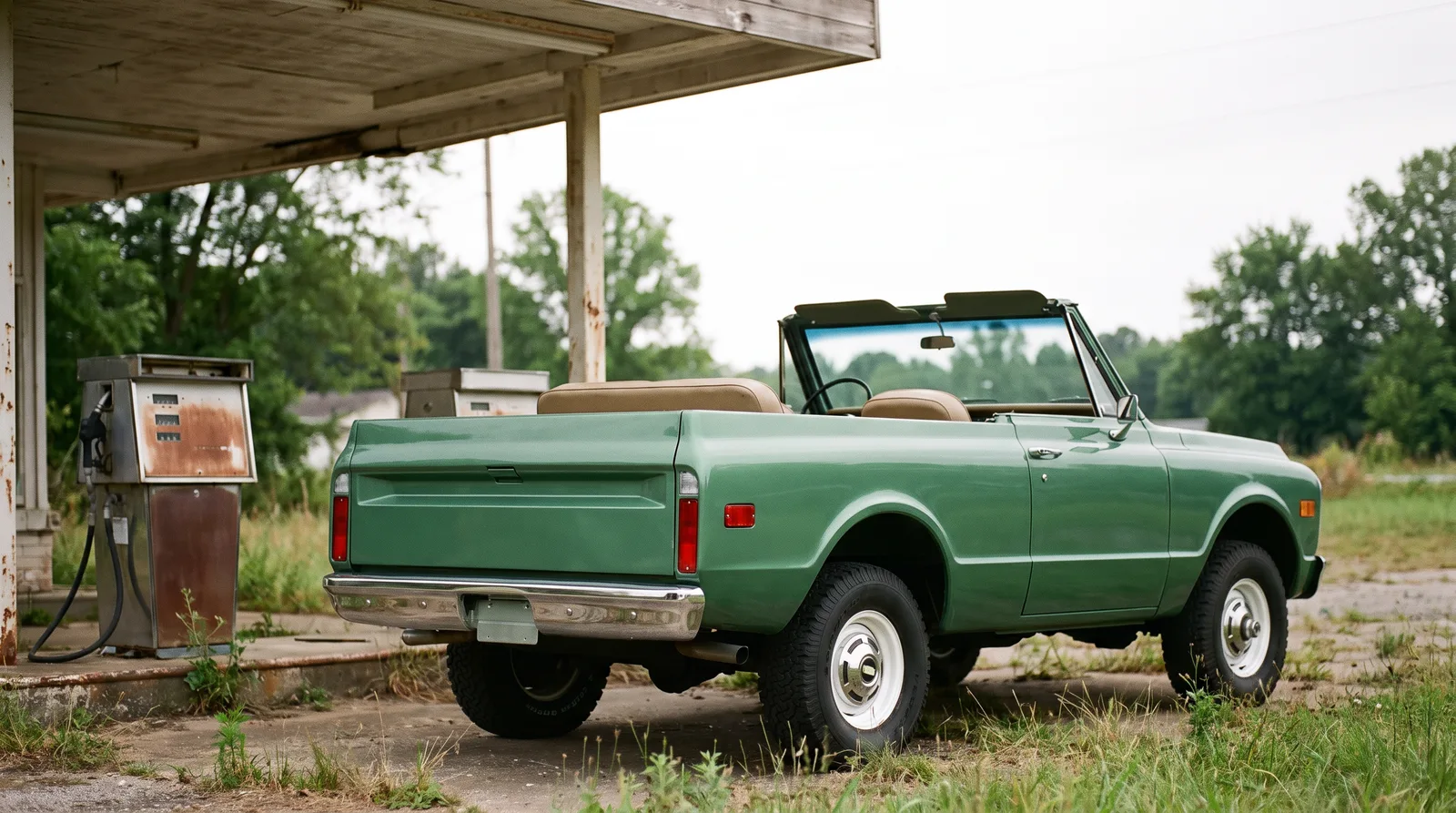
Chevrolet's existing C/K pickup platform gave engineers a foundation they could adapt quickly. Rather than designing a new small vehicle, they shortened the wheelbase of the pickup chassis and built a distinctive body on top of it, complete with a removable top that gave the open-air character buyers wanted from this class of vehicle. The result reached dealers for the 1969 model year, and it let Chevrolet enter the segment without the years of development a from-scratch design would have required.
This decision shaped the entire personality of the K5 Blazer. Because it used a full-size truck platform underneath, it offered more engine choices, more payload capacity, and more towing capability than the Scout or Bronco could match. Chevrolet was not trying to beat those competitors by being smaller and cheaper. It was betting that buyers actually wanted more capability than the compact segment was offering, wrapped in the same open-top format that had made the category popular in the first place.
Betting on capability over compactness
The gamble paid off because Chevrolet correctly read what a meaningful share of buyers actually wanted. Ranchers, contractors, and rural buyers who needed genuine towing and payload capacity, not just trail capability, found the K5 Blazer's truck-based underpinnings far more useful than a smaller, lighter competitor. The Blazer could do real work during the week and still deliver the open-air weekend appeal that made the segment popular in the first place. That combination was difficult for International Harvester or Ford to match without essentially building a bigger truck of their own, which both companies eventually did, years after Chevrolet had already staked out that space.
Launching as a four-wheel-drive-only model in 1969 reinforced that positioning further. Chevrolet was not hedging with an entry-level, road-focused variant. The truck arrived built for the exact use case that was driving segment growth, and readers who want the fuller account of what that debut truck actually offered should read the background on the launch itself.
"Chevrolet was not chasing the Scout and Bronco on price. They were chasing the buyers who had outgrown what those trucks could tow and haul. That is a completely different strategy, and it is why the Blazer succeeded instead of just becoming a third option in an already crowded segment."
- Tom Ramirez
The competitive response Chevrolet anticipated
Chevrolet's engineers and product planners were not operating in a vacuum when they made these decisions. Ford and International Harvester had both proven the compact off-roader segment could sell in real volume, and General Motors leadership understood that a slow or half-hearted response would let both competitors entrench themselves further before Chevrolet ever entered the fight. Speed mattered as much as strategy. Adapting the existing C/K platform rather than engineering something new from the ground up let Chevrolet get a genuinely differentiated product to market fast enough to matter, rather than arriving years late with a me-too competitor that offered nothing the Scout and Bronco did not already provide.
That urgency also explains why Chevrolet was willing to launch with a relatively narrow initial lineup, four-wheel drive only, a limited engine range, and a leaner options list than the model would carry within just a few years. Getting a distinctive product into dealer showrooms mattered more in that first year than getting every detail of the lineup fully built out, and the rapid expansion that followed for 1970 shows Chevrolet treated the 1969 launch as a foundation to build on rather than a finished, complete product.
What the decision reveals about Chevrolet's read on buyers
The choice to build the K5 Blazer on a shortened truck platform rather than a purpose-built compact chassis reveals something about how Chevrolet understood its own customer base. The company was not simply trying to check a box and have an entry in a hot segment. It was trying to extend the appeal of that segment to buyers who needed real working capability, buyers who might otherwise have simply bought a standard pickup and done without the open-air versatility altogether. That strategy required confidence that the market would reward capability over minimalism, and the K5 Blazer's commercial success through the 1970s and beyond suggests that confidence was well placed.
The strategy also set up a natural product family. The truck's 4x4-only launch and the reasoning behind it are worth understanding on their own, and readers digging into this history should also check out the story on why the debut truck launched worth a look too, since it explains the specific market logic behind that decision in more depth.
For anyone who has read this far and wants to see how that original strategy translates into trucks available today, it is worth taking time to shop classic K5 Blazer listings and compare what survives against the original goals Chevrolet set for the model back in 1969.
A decision that outlived its original competitors
Chevrolet built the K5 Blazer in 1969 because it saw a real gap between what buyers wanted and what its own lineup could offer, and it filled that gap using resources it already had rather than starting from zero. The Scout ended production in 1980 and the first-generation Bronco gave way to a larger replacement for 1978, while the K5 Blazer platform continued in production into the early 1990s. That longevity is the clearest evidence that Chevrolet's original 1969 strategy, building bigger and more capable rather than smaller and cheaper, was the right read on what the market actually wanted.
Sources and notes
Related Reading
Have a
Chevrolet Blazer
for Sale?
Reach thousands of serious classic car collectors across the US.
Sell It Here →
Selling a classic? Here's how: where to sell your classic car online
Are You a Classic Car Dealer?
List your full inventory and connect with targeted classic car buyers.
Join as a Dealer →

About the author
Tom Ramirez
Corvette researcher and historian based in Bowling Green, Kentucky. Two decades documenting Corvette production history from original factory records.
Related Listings - Chevrolet Blazer

Comments
Be the first to comment on this article.