
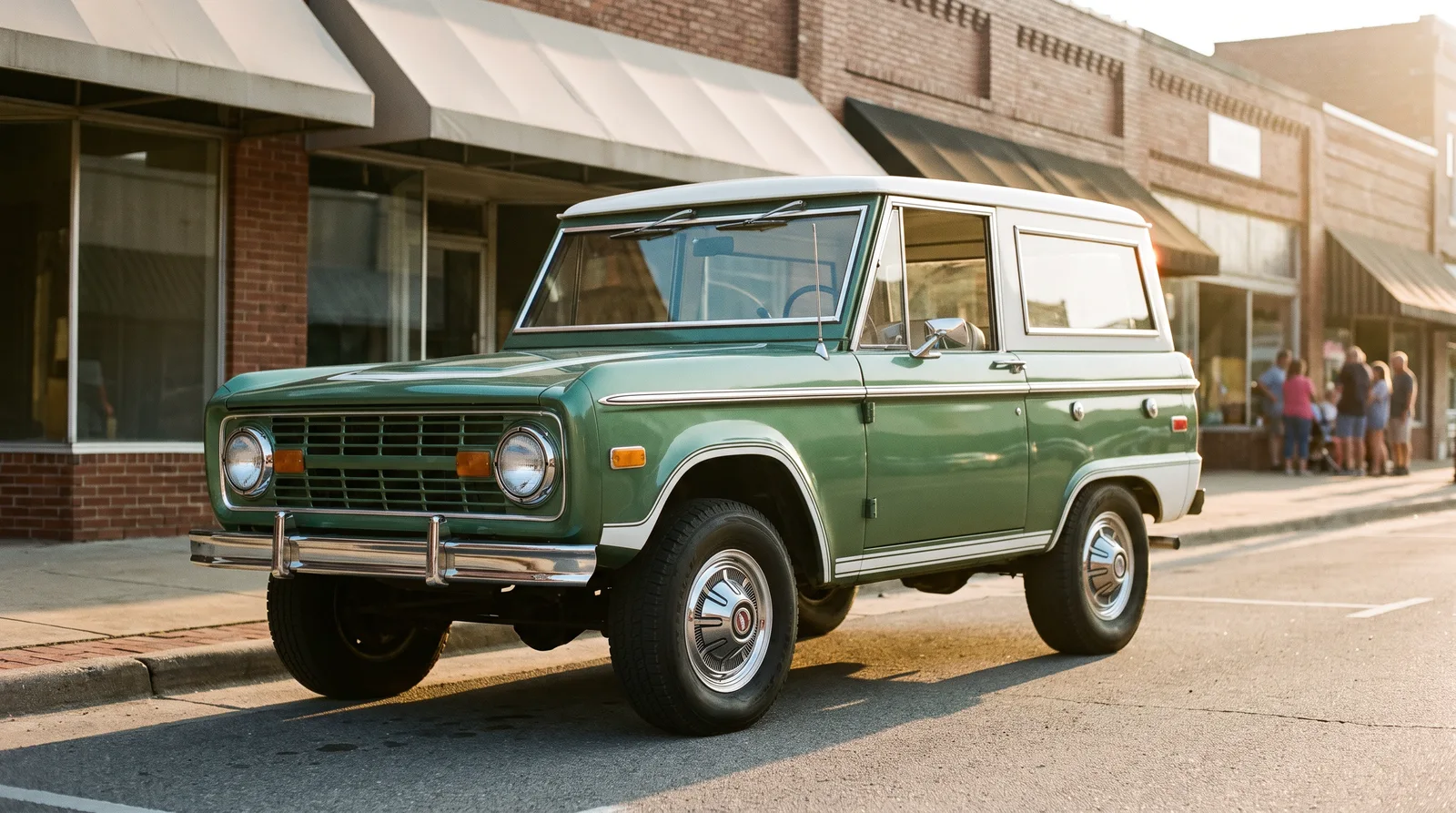
The ford bronco 1973 ranger trim package is the clearest evidence that Ford understood its Bronco buyer was changing. What started in 1966 as a stripped-down utility rig aimed squarely at Jeep CJ-5 buyers had, by the early 1970s, attracted a growing number of customers who wanted the truck's capability but expected a bit more polish inside the cabin. The Ranger package was Ford's answer, and by 1973 it had become a well-established, well-understood option on the order form.
Car Features
6 min read
The Bronco Ranger, the Upscale Trim Story
The ford bronco 1973 ranger trim package added chrome, better upholstery, and real polish, answering buyers who wanted comfort to match the Bronco's off-road capability.
What the Ranger package actually added
Ordering the Ranger trim on a 1973 Bronco brought a specific, documented set of upgrades over the base truck. Exterior trim moved from painted steel to brighter chrome accents, including around the grille and window surrounds. Inside, the Ranger buyer got upgraded upholstery, additional sound deadening, and trim pieces that made the cabin feel considerably less like a work truck. Ford also used the package to bundle in convenience items that base trucks often lacked, giving Ranger buyers a more complete, finished feeling vehicle without requiring them to pick through a long list of individual options.
None of this changed the mechanical substance of the truck. A Ranger-trimmed 1973 Bronco used the same 92-inch wheelbase, the same Dana front axle, and the same engine choices as a base model. The package was entirely about presentation and comfort, not capability, and Ford marketed it accordingly to buyers who wanted their truck to look and feel a step above the plain work-spec version.
Positioning against the rest of the 1973 lineup
By 1973, Ford was selling the Bronco to a genuinely split audience. On one end sat ranch and fleet buyers who wanted the cheapest, most durable configuration possible. On the other sat suburban buyers cross-shopping the Bronco against the established Chevrolet K5 Blazer, on sale since 1969 with a noticeably more finished, car-like cabin from the start. The Ranger package was Ford's direct response to that competitive pressure, giving dealers something to point to when a customer walked in expecting Blazer-level comfort in a smaller, more agile package.
That competitive context matters for anyone trying to understand why the Ranger trim existed at all. It was not a vanity option. It was a deliberate move to keep the compact Bronco relevant against larger, more comfortable rivals without abandoning the smaller footprint that made the Bronco appealing in tight trails and narrow ranch roads in the first place.
Rarity and collector demand today
Ranger-equipped 1973 Broncos are not rare in the sense of a limited-production special edition, but they are less common than base-trim trucks, particularly among surviving examples that have not had their original trim swapped or lost to decades of use. Because the package was aimed at buyers who cared about presentation, Ranger trucks were statistically more likely to be babied, garaged, and maintained carefully compared to work-spec trucks that lived hard lives on ranches and job sites.
That survival pattern has real consequences for today's collector market. A documented, original Ranger-trim 1973 Bronco tends to present better and often commands a premium over a comparable base truck in similar mechanical condition, simply because the trim and upholstery pieces are harder to source and more expensive to reproduce correctly. Buyers evaluating a Ranger-badged truck should confirm the trim is factory original rather than a later addition, since reproduction Ranger emblems and trim pieces have circulated in the restoration parts market for years.
"The Ranger package tells you something about how the original owner used the truck. Someone paying extra for chrome trim and better upholstery in 1973 was not buying a truck to abuse on a work site. That context shapes how I evaluate the rest of the vehicle's condition."
- Sarah Whitfield
Identifying a genuine Ranger truck decades later
Verification comes down to a handful of specific details. Original Ranger badges carry a particular font and mounting pattern that differs from later reproduction pieces sold through the aftermarket restoration parts trade. Upholstery patterns specific to the package, along with the correct door panel trim, offer additional confirmation when they survive intact, though interiors are often the first thing replaced during a truck's working life, making original upholstery a genuine rarity on any high-mileage survivor. Door tag codes, where legible, remain the single most reliable way to confirm factory Ranger equipment, since they were stamped at the point of production rather than added later by a dealer or owner.
Buyers should also expect some variation in how thoroughly individual dealers documented Ranger orders. Smaller rural dealerships selling primarily to ranch and farm customers moved fewer Ranger trucks and sometimes kept less detailed paperwork than larger suburban dealers who specialized in the more comfort-focused end of Ford's truck lineup. That inconsistency is simply part of researching any option package from this era, and patient buyers who take the time to cross-check available evidence tend to end up with more confidently documented trucks.
Ranger's influence on later Ford truck marketing
The 1973 Ranger package also illustrates a strategy Ford would lean on repeatedly across its truck lineup for decades afterward: using a single trim name to signal an upscale, more finished version of a working vehicle. That approach eventually extended well beyond the Bronco, shaping how Ford marketed comfort and capability together across its broader truck business. Seeing the Ranger name applied to a 1973 Bronco is a small but genuine piece of that longer story, predating the name's later, much more famous use elsewhere in Ford's lineup.
Where the Ranger trim fits in the bigger Bronco story
Readers who want more on the 1973 ford bronco as a full model year will find the Ranger package covered in context alongside the drivetrain and steering changes that arrived the same season. And for anyone tracing the truck's roots further back, where this started covers the original 1966 launch that set the template the Ranger package eventually dressed up.
The Ranger option is a small but telling piece of the 1973 Bronco story. It shows a truck company paying close attention to what its customers actually wanted, and adjusting a proven platform accordingly without losing the compact, capable character that made the Bronco worth buying in the first place. Shoppers curious about current pricing and available examples can browse classic Broncos on the market to see how Ranger trim trucks compare to base models today. Whichever trim level you end up with, the underlying truck is the same capable compact 4x4 that made the Bronco worth building in the first place, and that consistency is a big part of why buyers across every trim level keep coming back to this model year.
Sources and notes
Related Reading
Have a
Ford Bronco
for Sale?
Reach thousands of serious classic car collectors across the US.
Sell It Here →
Selling a classic? Here's how: compare the places to sell classic cars
Are You a Classic Car Dealer?
List your full inventory and connect with targeted classic car buyers.
Join as a Dealer →

About the author
Sarah Whitfield
Third-generation classic car collector specializing in pre-war American and European coachbuilt automobiles. Researcher and concours enthusiast.
Related Listings - Ford Bronco
Comments
Be the first to comment on this article.