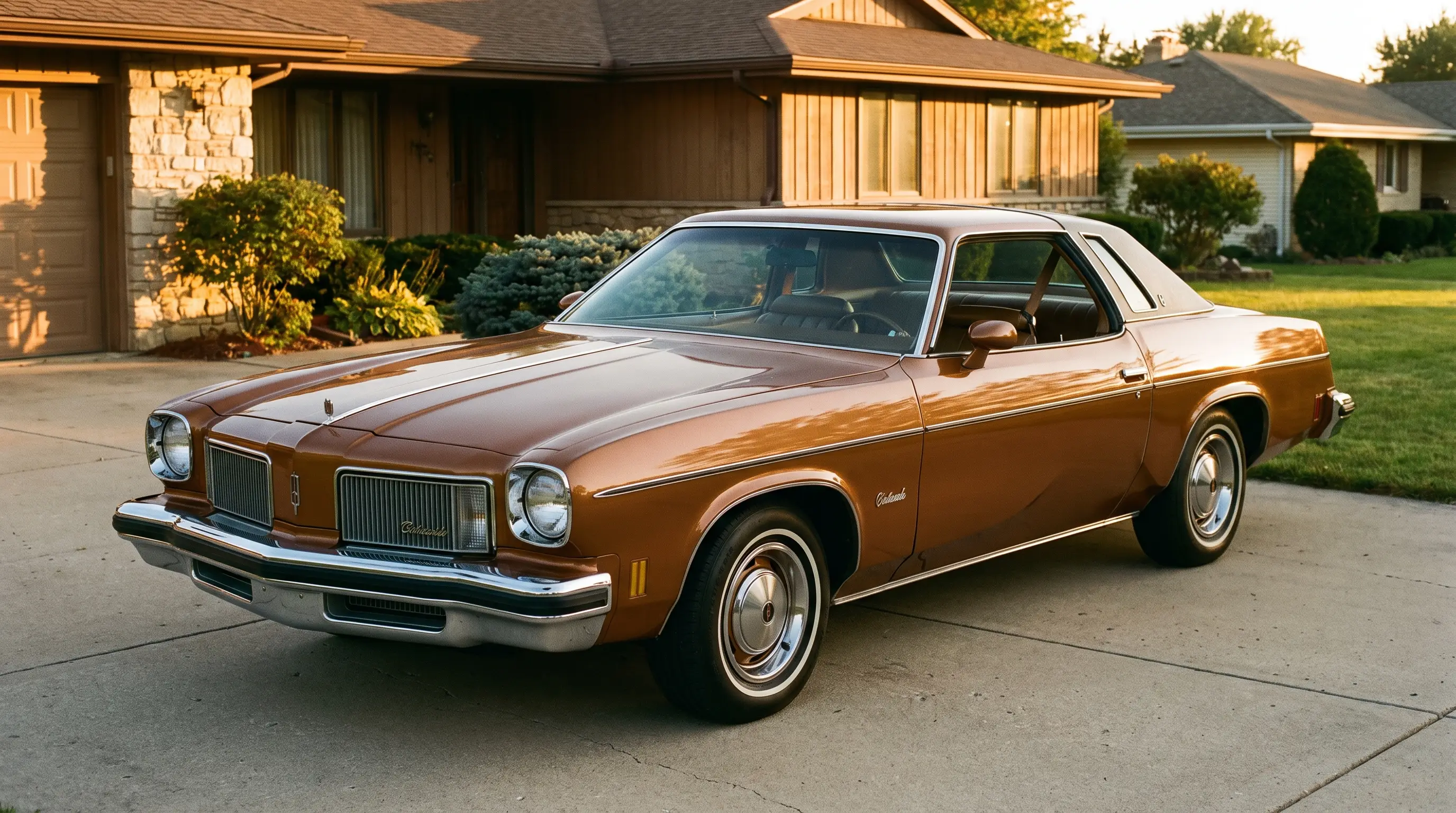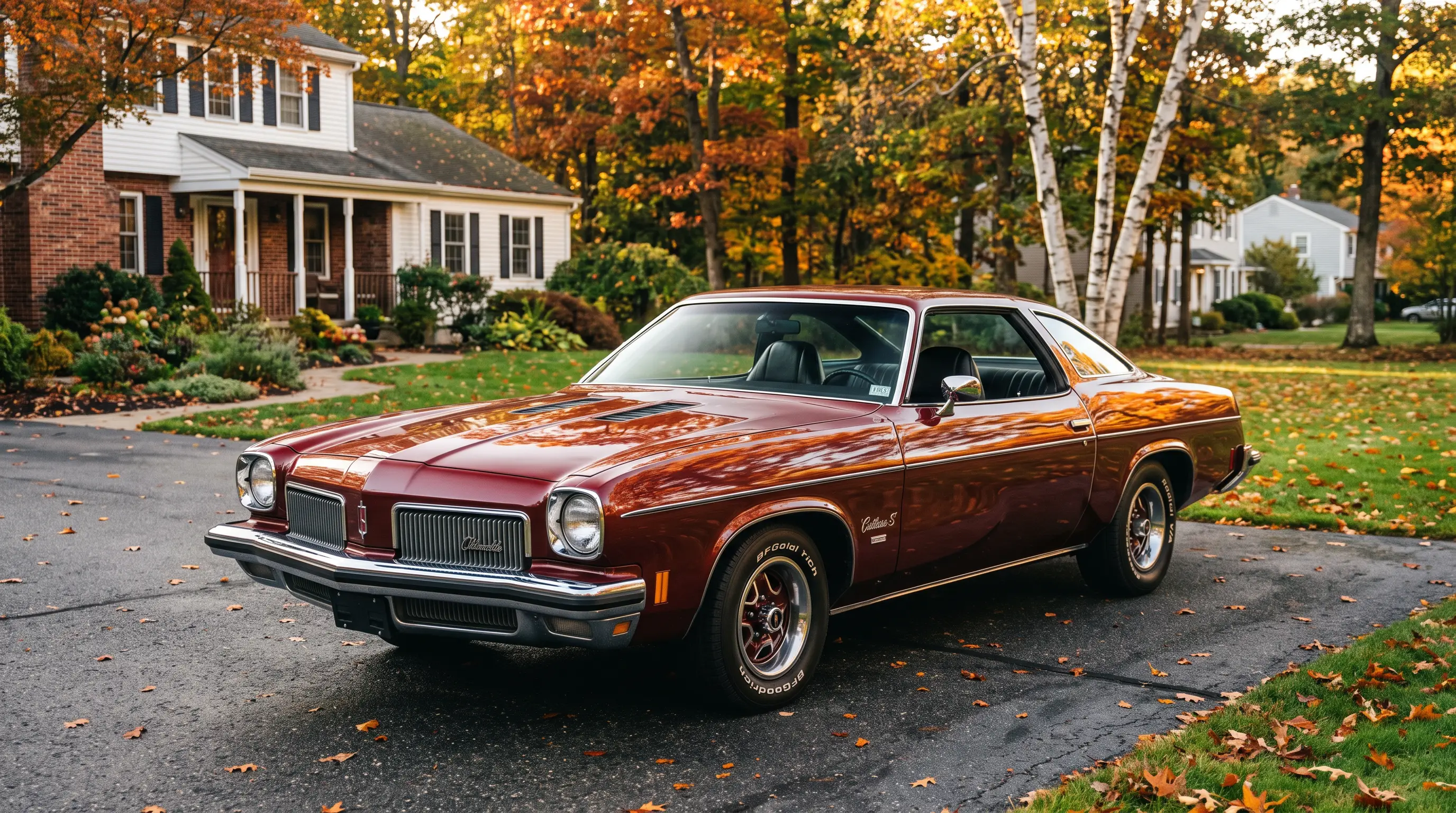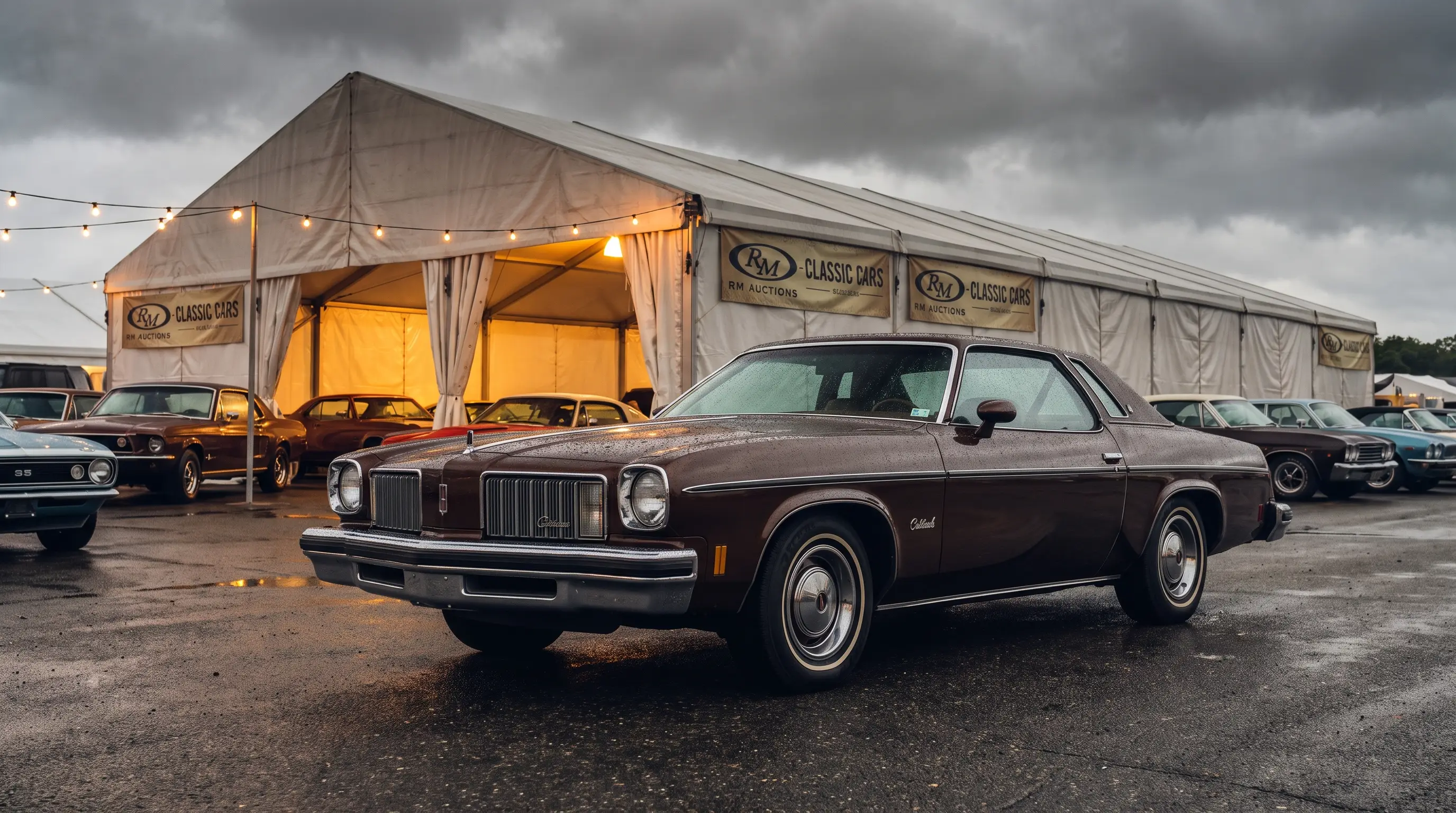
Pull up a photo of a Cutlass Supreme parked at a show and count how many of them are painted some shade of brown, gold, or green before you find a red one. That is not a coincidence of what happened to survive fifty years of weather and repaints. It is a fairly accurate snapshot of what Oldsmobile buyers actually chose off the order sheet in the mid 1970s, and the story behind those colors says as much about the decade as the sheet metal does.
The palette that defined the Colonnade years
Earth tones dominated Oldsmobile's color charts through the Colonnade run in a way that looks almost uniform compared to the bright, saturated options of the muscle car years just before it. Names like Colonial Cream, Sandstone, Sable Brown, Omega Bronze, and Canyon Copper filled the order forms buyers actually pulled from, alongside Sage Green and Forest Green in the deeper end of the palette. This was not an Oldsmobile-only phenomenon. It reflected a broader shift in American consumer taste across furniture, interiors, and appliances at the same time, and Detroit's color labs followed the culture rather than leading it.
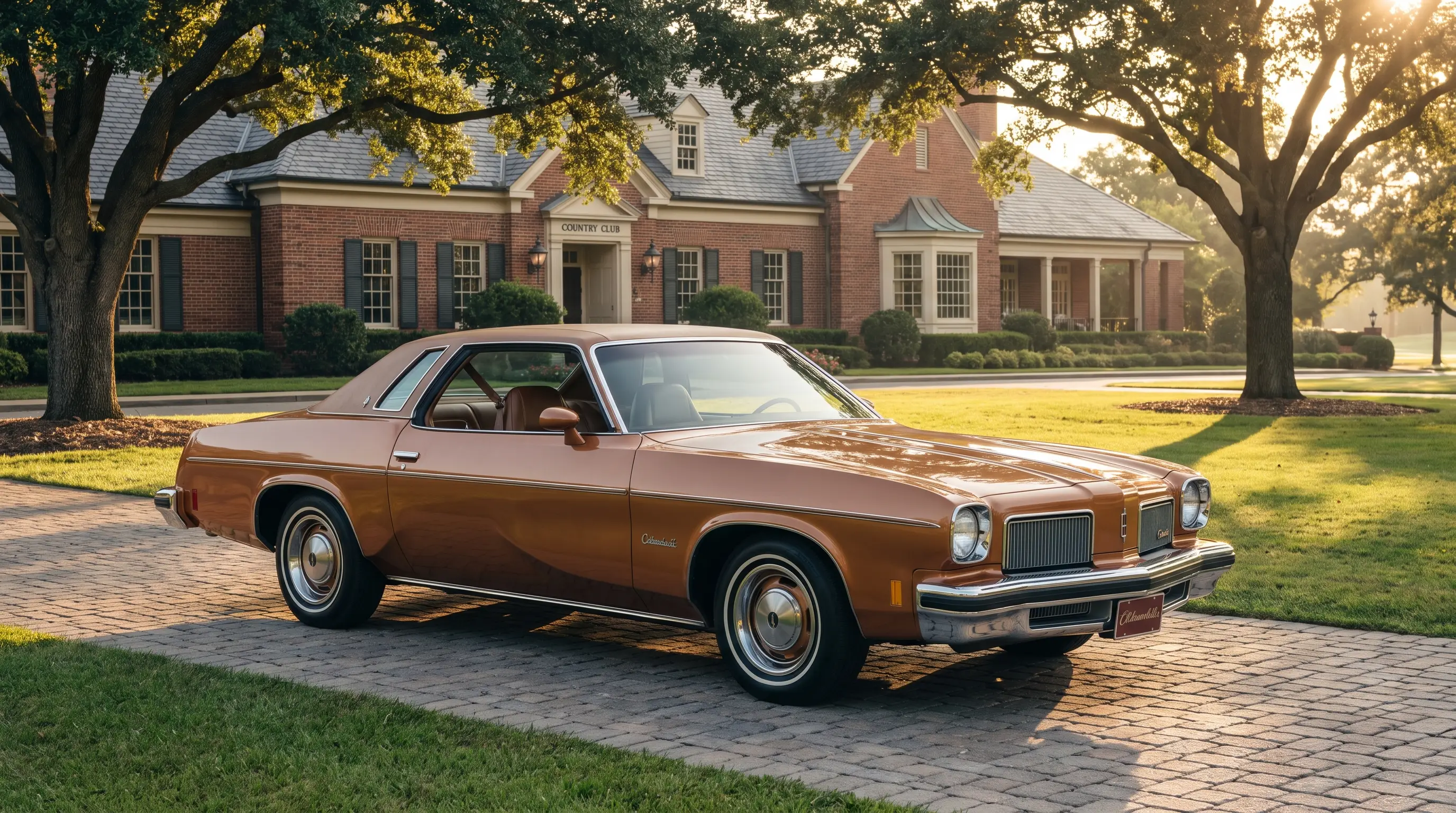
A Cutlass Supreme ordered in one of these earth tones, paired with a color-matched or contrasting vinyl roof and an opera window on the rear quarter, was the default look most buyers actually chose rather than an exception. The vinyl roof itself deserves its own mention here, since it was ordered on a large share of Colonnade Cutlass coupes and came in its own separate color palette that did not always match the body paint. A brown car with a white or tan vinyl roof was a common, deliberate combination, not a mismatch.
Interior trim followed the same instinct
Inside the car, the story continues in the same direction. Cloth and vinyl interior colors leaned into the same earth-tone family, with browns, tans, and greens dominating the upholstery charts alongside a more conservative black or white option for buyers who wanted contrast rather than a monochrome cabin. The Cutlass Supreme Brougham, the top trim through much of this run, pushed further into plush, tufted upholstery patterns that read as living room furniture translated into a bench seat, which was very much the intended effect. Oldsmobile was selling comfort and a sense of domestic warmth as much as it was selling a car, and the color choices reinforced that pitch at every touchpoint from the dealer brochure to the actual cabin.
| Element | Common Colonnade-era choice | Note |
|---|---|---|
| Exterior paint | Earth tones (browns, golds, greens) | Dominated order sheets over brighter muscle-era colors |
| Vinyl roof | White, tan, or color-coordinated | Ordered on a large share of Supreme coupes |
| Interior trim | Brown, tan, green cloth/vinyl | Matched the broader domestic color trend of the decade |
| Opera window | Optional on Supreme coupe | Fixed rear quarter treatment tied to the Colonnade roofline |
What this means for buyers and restorers today
Anyone restoring or repainting a Colonnade Cutlass runs into a decision that goes beyond simple color preference. A car repainted in a bright modern color looks sharp in the parking lot, but it is not the car Oldsmobile actually built or the car that wins points with judges who know the era. The earth-tone palette is not a limitation so much as a specific historical fact about what these cars looked like new, and clubs that judge originality weigh a correct factory color and vinyl roof combination heavily for exactly that reason. I have watched more than one nicely done Cutlass lose ground at a show because the owner repainted it in a shade Oldsmobile never offered on that body style, no matter how good the paint job itself looked.
"Somebody always shows up with a Cutlass painted a color Oldsmobile never built, swearing it's original, until the judge pulls the brochure and that's the end of the argument."
— Wayne Coburn
The bigger picture behind the color chart
None of this happened in isolation from the rest of what made the Colonnade Cutlass such a sales success through a difficult decade for Detroit. The earth-tone palette, the plush Brougham interiors, and the formal vinyl roof treatments were all part of the same pitch: comfort, warmth, and a sense of substance at a time when buyers were nervous about fuel prices and unsure what to make of smaller imports crowding the market. Oldsmobile leaned into that mood rather than fighting it, and the color charts from these years are as much a document of American taste in the mid 1970s as they are a spec sheet for a car. For buyers weighing what a well-preserved example is actually worth today, a related deep-dive covers that side of the story.
Repaint decisions aside, plenty of these cars simply survived in their original colors because owners kept them garaged and out of hard daily use once they aged out of being someone's primary car. That is part of why the earth-tone survivors at shows today often look better preserved than you might expect for cars pushing fifty years old. A brown Cutlass Supreme with a tan vinyl roof was never going to be anyone's flashy weekend car, and that relative lack of glamour probably saved more than a few of them from the harder driving and neglect that claimed brighter, sportier cars of the same era. Sometimes the least exciting color on the order sheet turns out to be the reason a car is still around to argue about at a show fifty years later.
None of which stops the color debate from resurfacing every time a repaint comes up in conversation at a club meeting. Some owners argue for staying faithful to whatever the original build sheet says, brown vinyl roof and all, on the theory that authenticity is the whole point of owning one of these cars. Others point out that a driver-quality Cutlass, one that gets used rather than trailered, has earned the right to wear a color its owner actually likes. Both positions have merit, and the honest answer is that it depends on what the car is for. A car headed to judged concours events has one set of rules. A car headed to Sunday cruise nights has another, and nobody at the second kind of event is checking anyone's brochure.