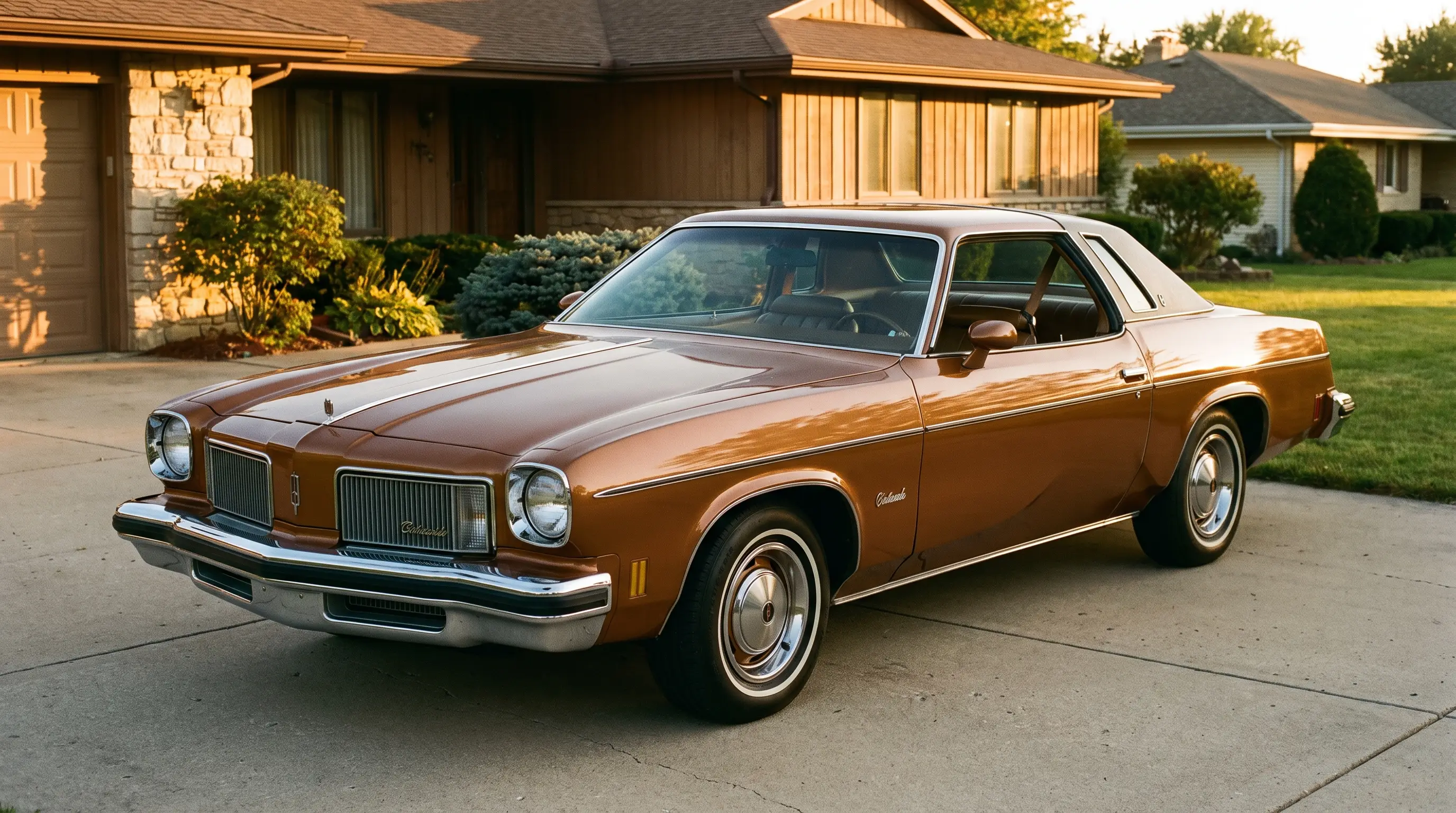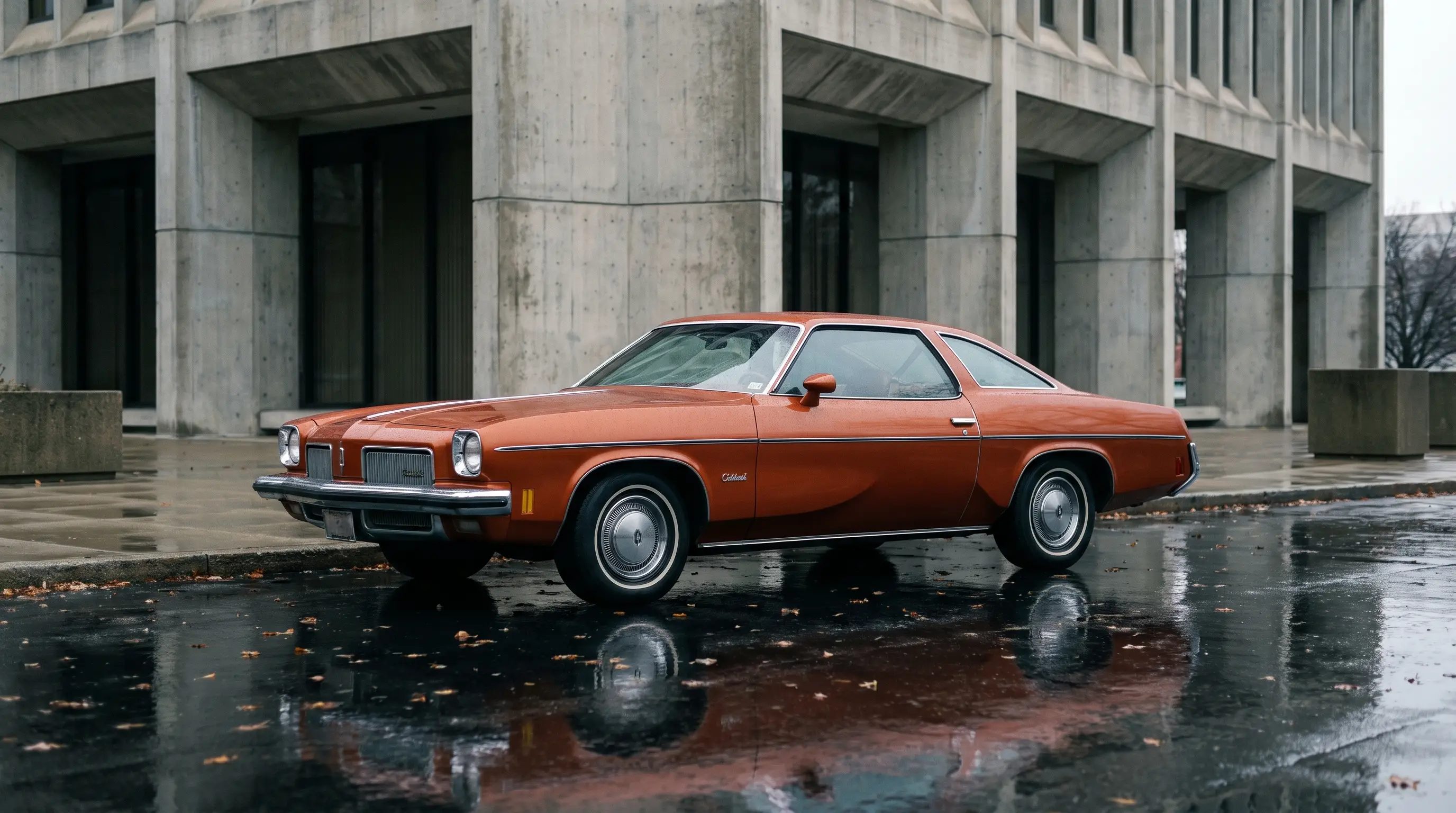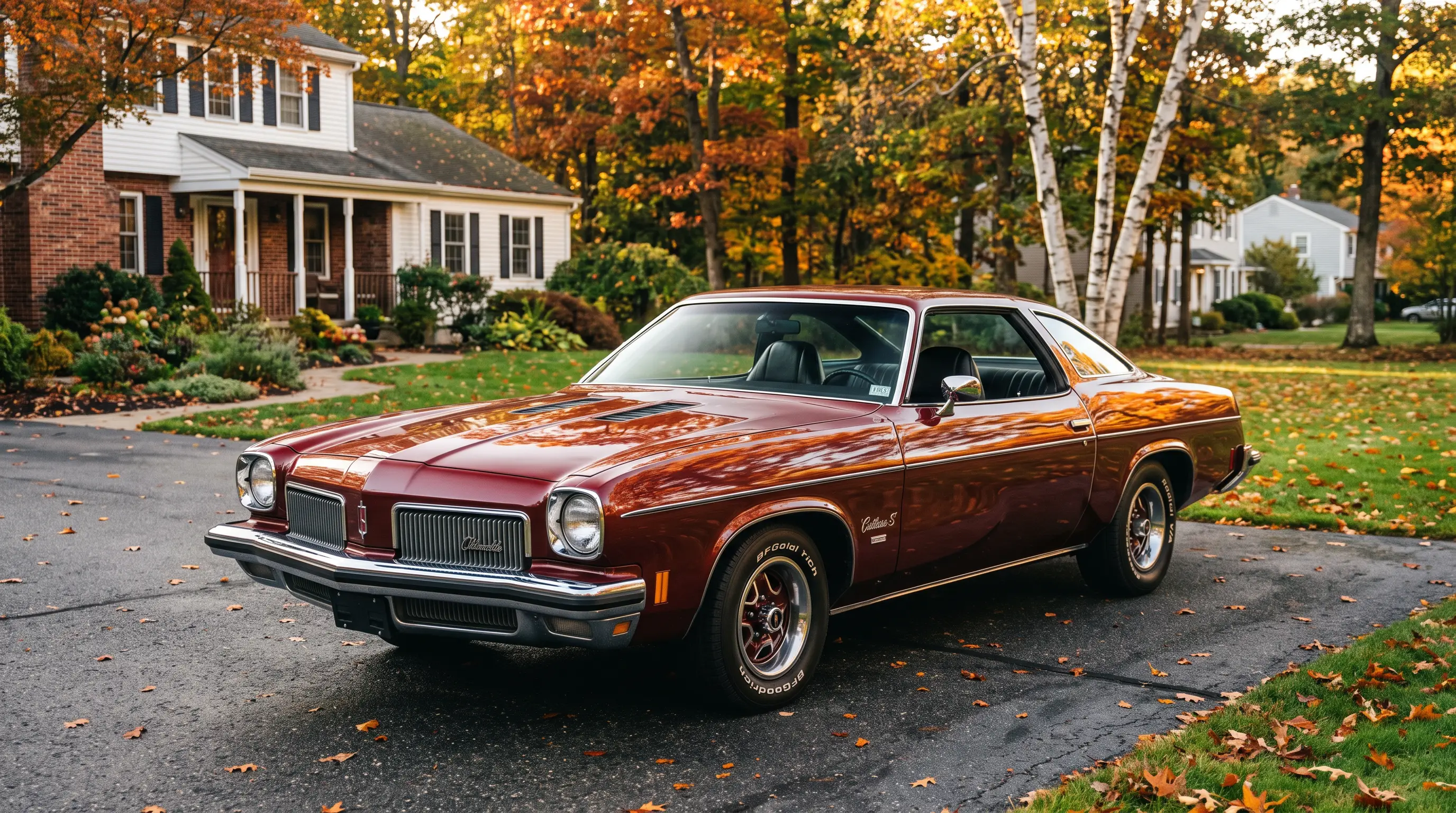
There is a guy at nearly every Oldsmobile meet who bought his Cutlass new, and he will tell you the exact year the numbers on the window sticker started shrinking. For a lot of Colonnade Cutlass owners, that year is burned into memory the way other people remember gas prices. The Cutlass engine lineup of the mid 1970s tells the story of the Malaise Era about as clearly as any car GM built, and it did not happen all at once. It happened gradually, model year by model year, until the horsepower figures on a 1977 window sticker looked nothing like 1973.
The lineup GM offered through the Colonnade years
When the Colonnade Cutlass launched for 1973, Oldsmobile still offered a real spread of displacement. The 350 cubic inch Rocket V8 was the volume engine, with the big 455 available for buyers who wanted more; Oldsmobile had dropped the 400 from its lineup once GM lifted the old 400-cubic-inch cap on intermediates, so the Cutlass never offered a 400 at all during the Colonnade years. By the middle of the decade, the 455 had quietly disappeared from the Cutlass options list, and by 1977 the largest engine most Cutlass buyers could order was the 350, with a Buick-sourced 231 V6 covering the low end for shoppers chasing better fuel economy after the 1973 oil embargo. That embargo, not styling committees, is what actually reshaped the engine bay options over those five years.
The horsepower ratings dropped for two overlapping reasons, and club old-timers tend to blur them together. The first is real: emissions equipment, leaner carburetor calibrations, and lower compression ratios genuinely cut output to meet tightening federal standards. The second is a numbers game: 1972 was the year the industry switched from SAE gross horsepower ratings to SAE net ratings, which measured the engine with accessories, exhaust, and emissions equipment attached rather than on a stripped test stand. A lot of the shock buyers felt reading a 1973 or 1974 window sticker next to an early '70s one was that switch in measurement as much as an actual mechanical decline, though the real decline was happening too and it kept happening through 1977: the 350 Rocket V8 started the run around 180 horsepower with a 200 horsepower dual-exhaust version also offered, the 455 was rated around 250 horsepower with a 270 horsepower W-30-style version at the top, and by 1975 the 455 had settled to roughly 190 horsepower as catalytic converters and leaner tuning took their toll.
| Model year | Engine options | Notable change |
|---|---|---|
| 1973 | 350 V8, 455 V8 | Colonnade body debuts; no 400 was offered in the Cutlass |
| 1974 | 350 V8, 455 V8 | Catalytic converter groundwork begins ahead of 1975 |
| 1975 | 250 six, 260 V8, 350 V8, 455 V8 | Catalytic converters mandated, unleaded fuel required; smaller engines added for economy |
| 1976 | 250 six, 260 V8, 350 V8, 455 V8 | 455 nearing the end of its run in the Cutlass line |
| 1977 | 231 V6, 260 V8, 350 V8 | 455 gone, smaller displacement options added for economy |
Why 1975 was the hinge point
Ask anyone who wrenched on these cars new and they will point to 1975 as the year everything changed at once. Catalytic converters became mandatory that model year, which meant unleaded fuel became mandatory too, which meant a smaller fuel filler neck designed to reject the leaded-fuel nozzle at the pump. It also meant recalibrated ignition timing and leaner mixtures to protect the catalyst, all of which cost the engines real power on top of whatever the net rating switch had already taken off the sticker. Buyers who cross-shopped a 1974 Cutlass against a 1975 model at the dealer noticed the difference immediately, and plenty of the old-timers at today's shows still argue about which model year is the last "real" one before the catalytic converter changed everything.
What the club consensus gets right, and wrong
The popular version of this story treats 1973 through 1977 as a straight line of decline, and mechanically that is roughly true. What gets lost is that Oldsmobile buyers in this era were not necessarily choosing horsepower first. The Cutlass Supreme was outselling plenty of genuine muscle cars by the mid 1970s precisely because comfort, styling, and a smooth V8 that would start reliably in January mattered more to the average buyer than a spec sheet number. the Colonnade Cutlass sold in huge volume through these very years, which tells you the market cared less about the shrinking horsepower figures than modern enthusiasts assume looking back.
"Everybody wants to blame the government for what happened to these engines, and the government gets plenty of the blame fair and square, but half the argument at any show is really about a rating change from 1972 that had nothing to do with the actual iron under the hood."
— Wayne Coburn
Sorting out a car by its powerplant today
For buyers looking at a Colonnade Cutlass now, the engine question is mostly about matching expectations to the model year. A 1973 or 1974 car with the 455 will feel noticeably stronger than a 1977 350, and that difference is not a matter of condition or tune, it is baked into the emissions calibration of the era each car was built in. Documentation matters here more than most buyers expect, since a numbers-matching 455 car commands real respect at a show even with modest output on paper. For the full mechanical story of the volume engine that carried the nameplate through this whole stretch, there is a related deep-dive worth reading next.
There is also a practical side to all of this that goes beyond bragging rights at a show. A buyer cross-shopping two Colonnade Cutlasses two model years apart should expect a real difference in how the car actually drives, not just what the sticker once claimed. A 1973 455 pulls with a torque curve that a 1977 350 simply cannot match, catalytic converter or not, and that difference shows up the first time you merge onto a highway ramp rather than on any spec sheet. None of that makes the later cars bad cars. It just means shopping by model year matters as much as shopping by trim level, and a seller who glosses over which engine era a car falls into is skipping a detail that changes the whole ownership experience.