
Drive through certain neighborhoods in East Los Angeles on a Sunday afternoon and you might still catch one: a lowered Oldsmobile Cutlass, paint laid on so deep it looks wet even in the shade, riding low enough that the frame seems to float an inch off the pavement. The oldsmobile cutlass lowrider tradition did not start with the Cutlass, and it is not exclusive to it, but the car found a second life in that world that Oldsmobile's own marketing department never could have planned for.
Car Features
6 min read
The Cutlass in Lowrider Culture
How the G-body Oldsmobile Cutlass Supreme became one of the defining canvases of Chicano lowrider culture in Southern California.
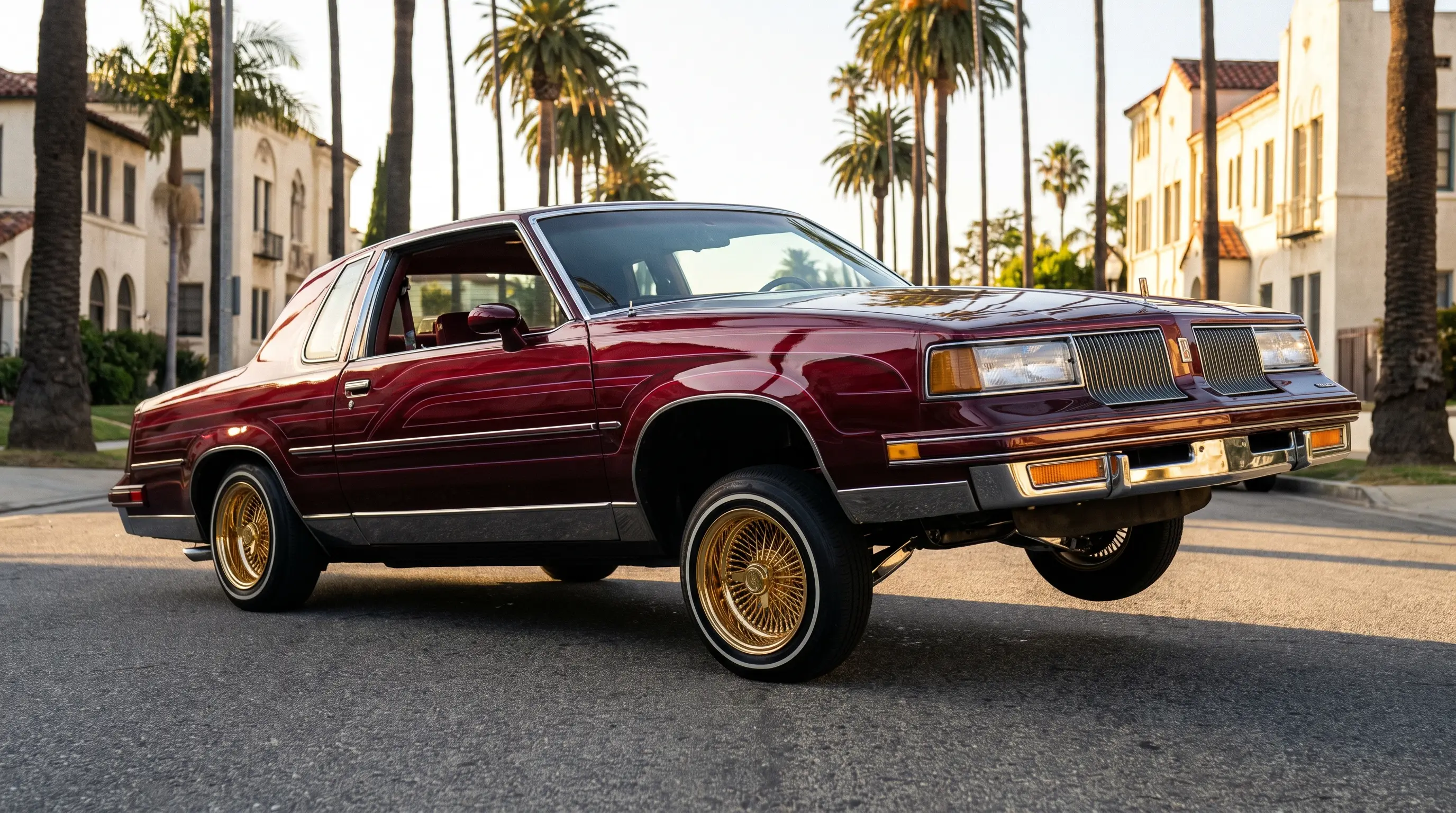
It is one of the odder turns in American car culture. A mid-size personal luxury coupe built for suburban buyers in Ohio and Michigan became, a decade or two later, one of the defining canvases of Chicano custom car culture in Southern California. That the Cutlass ended up there at all says something about how classic cars find their real audience long after the factory stops caring.
Why the Cutlass fit the lowrider template
Lowrider culture, in its modern form, grew out of the boulevard cruising scene of the 1960s and 1970s, and it favored certain kinds of American cars for practical reasons as much as aesthetic ones. Full-frame construction mattered because hydraulic suspension setups needed a solid platform to lift and drop. Body-on-frame G-body Oldsmobiles, built from 1978 through 1988, fit that requirement, and their broad, flat sheet metal panels gave painters an enormous, uninterrupted canvas for the kind of multi-layer candy and mural work the scene became known for.
The Monte Carlo and the Buick Regal shared that same G-body architecture and got plenty of attention too, but the Cutlass Supreme had a formality to its lines, that upright grille, the crisp character line running the length of the door, that a lot of builders felt lent itself especially well to a slow, deliberate cruise. It looked composed even hopping three feet off the ground, which is not a small thing when the whole point is presentation.
Hydraulics, paint, and the culture behind them
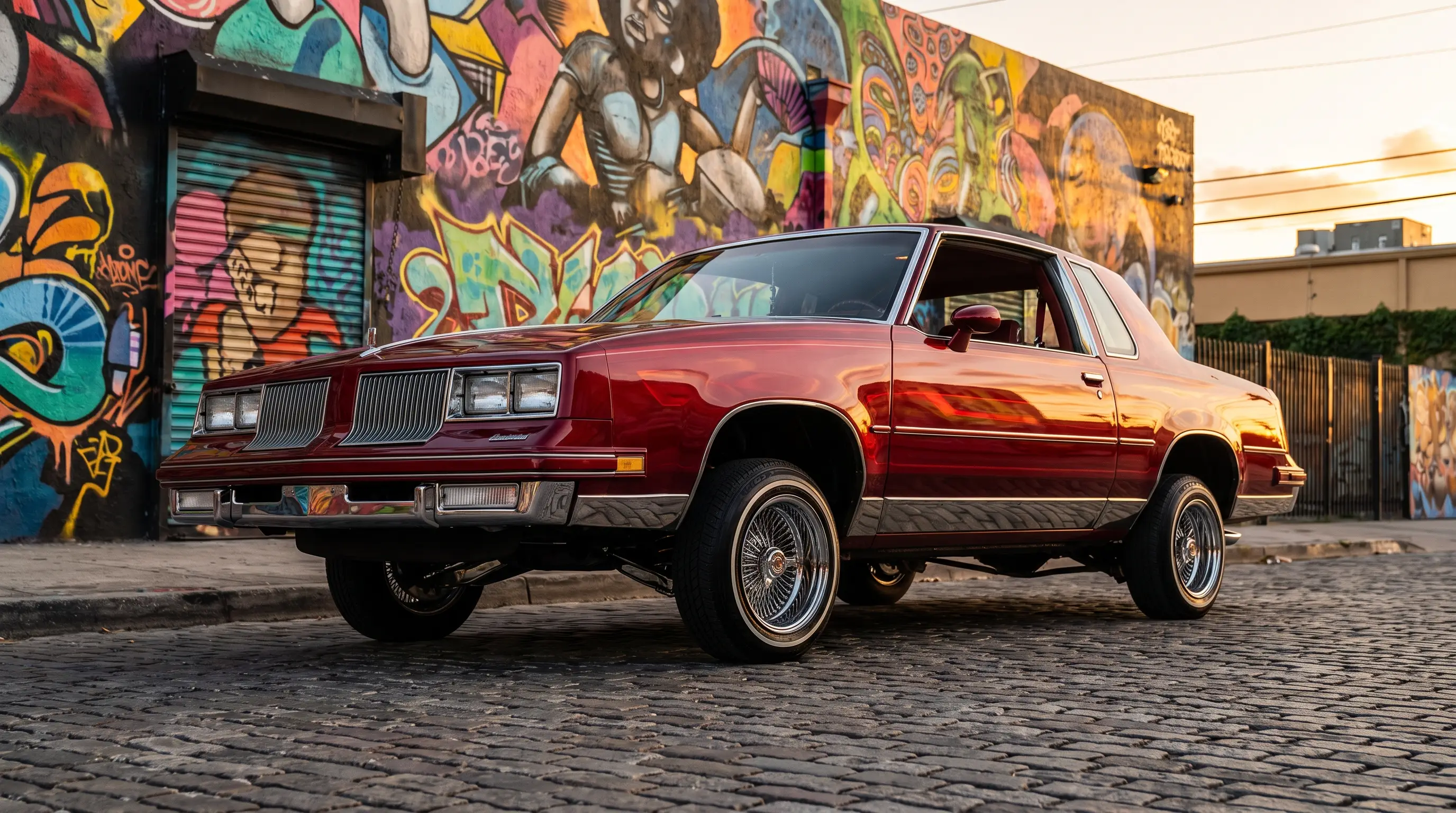
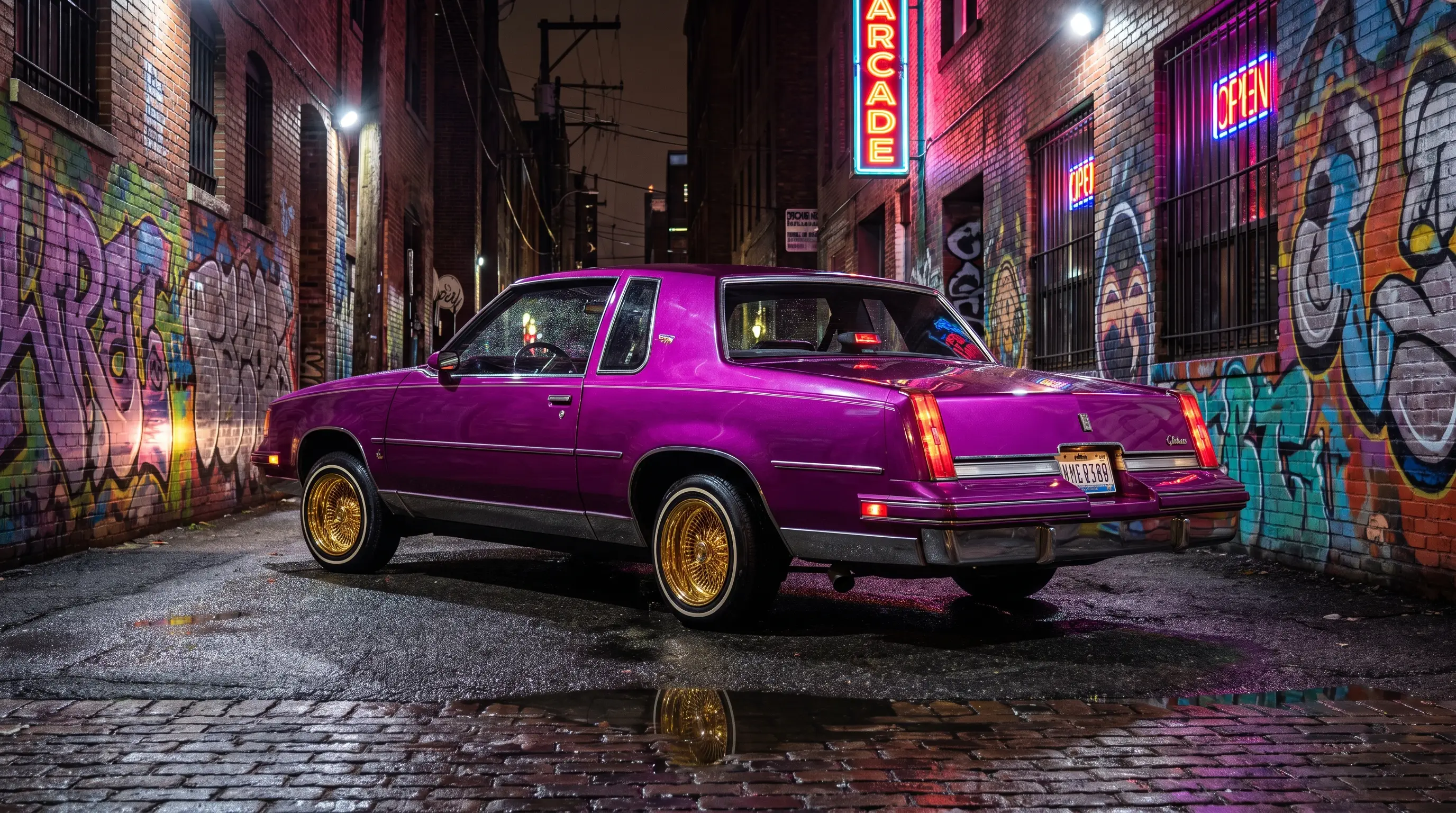
What actually made a Cutlass a lowrider was rarely just a lower ride height. Builders installed hydraulic pump systems, often multiple pumps and batteries, that let the car dance, hop, and lock its suspension at will for shows and competitions. That mechanical theater sat alongside custom interiors, often velour or crushed fabric with elaborate stitching, wire wheels with wide whitewalls, and paint jobs that took weeks rather than days.
None of that happened in isolation. Lowrider car clubs organized cruises, built community, and passed craft knowledge down from builder to builder in a way that had almost nothing to do with Detroit's original intentions for the car. A club's Cutlass carried the club's name, its colors, sometimes a hand-painted plaque mounted in the back window, and that car represented the club at every show and every cruise it attended.
"Nobody at Oldsmobile drew up the Cutlass Supreme with a hydraulic pump in mind, but that is exactly the point. The best classic cars end up living lives their designers never imagined, and the lowrider scene gave the Cutlass one of the richest second lives any American car has had."
Patrick Walsh
The competition circuit that pushed the craft forward
Lowrider shows gave builders a reason to keep refining their work, and a Cutlass entered into competition was judged on categories that had nothing to do with the standards a concours judge would apply to a stock restoration. Paint depth, engraving on chrome components, upholstery stitching, and hydraulic performance in hop competitions all carried weight, and a serious build could take years and multiple show seasons before a builder considered it finished. Some owners never considered a car finished at all, treating it instead as an ongoing project that evolved year over year as trends in paint and hardware shifted.
A car shared across generations of builders
What keeps the Cutlass relevant in lowrider circles today is not nostalgia alone. It is the fact that parts are still findable, the platform is still forgiving to work on, and the cultural cachet the car carries has only grown as the original show cars from the 1980s and 1990s have become collectible in their own right. A well-documented lowrider Cutlass with known club history and period-correct hydraulics can now command real money at specialty auctions, a fact that would have baffled anyone shopping for a new Cutlass Supreme off a dealer lot in 1980.
That crossover between lowrider culture and mainstream classic car collecting is fairly recent, and it has changed how people talk about these cars. A car that once might have been dismissed outside its own community as "just a lowrider" now gets discussed with the same seriousness as a numbers-matching muscle car, complete with debates about originality, provenance, and which builders' work is most historically significant.
Where the story goes from here
The oldsmobile cutlass lowrider tradition is still alive, even if the peak building years were decades ago. Newer generations of builders continue to restore and customize G-body Cutlasses, often working from period photographs to get paint schemes and hydraulic setups as close to original as possible. It is preservation work as much as customization, an attempt to keep a specific chapter of American car culture from fading out along with the people who lived it.
For the broader picture of how the Cutlass became a car that so many different communities claimed as their own, the Cutlass legend covers the full arc. And the lowrider story does not exist alone. It runs parallel to another chapter of the car's cultural life, one told through music rather than car shows, and a related deep-dive picks up that thread.
Sources and notes
- How Lowrider Culture Turned Custom Cars Into Colorful, Stunning Works of Art, Smithsonian Magazine
- When A Lowrider Isn't Just A Lowrider, LAist
- General Motors G platform (RWD), Wikipedia
- Oldsmobile Cutlass Supreme, Wikipedia
- The Final G-Body Oldsmobile Is Becoming a Genuine Classic, Hagerty
- 1982 Oldsmobile Cutlass Supreme Brougham Lowrider On Hydraulics, Deadclutch
Related Reading
Have a
Oldsmobile Cutlass
for Sale?
Reach thousands of serious classic car collectors across the US.
Sell It Here →
Are You a Classic Car Dealer?
List your full inventory and connect with targeted classic car buyers.
Join as a Dealer →

About the author
Patrick Walsh
Automotive journalist covering classic car shows, events, and the enthusiast community across North America.
Related Listings - Oldsmobile Cutlass




Comments
Be the first to comment on this article.