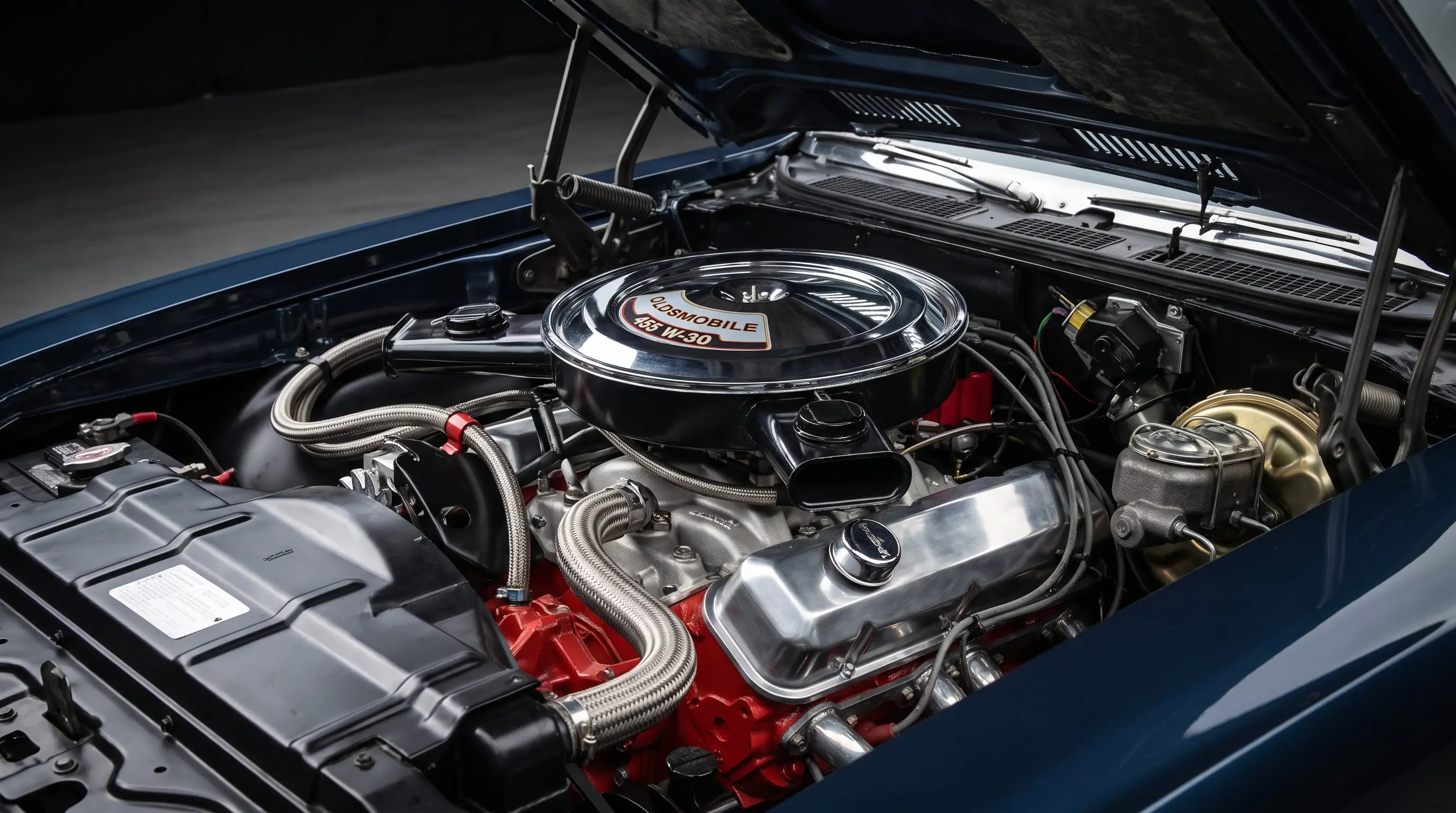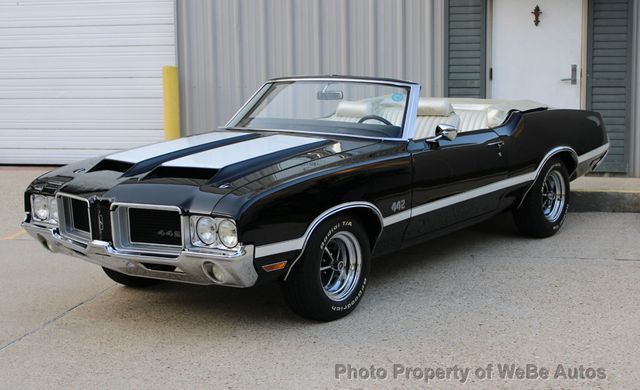
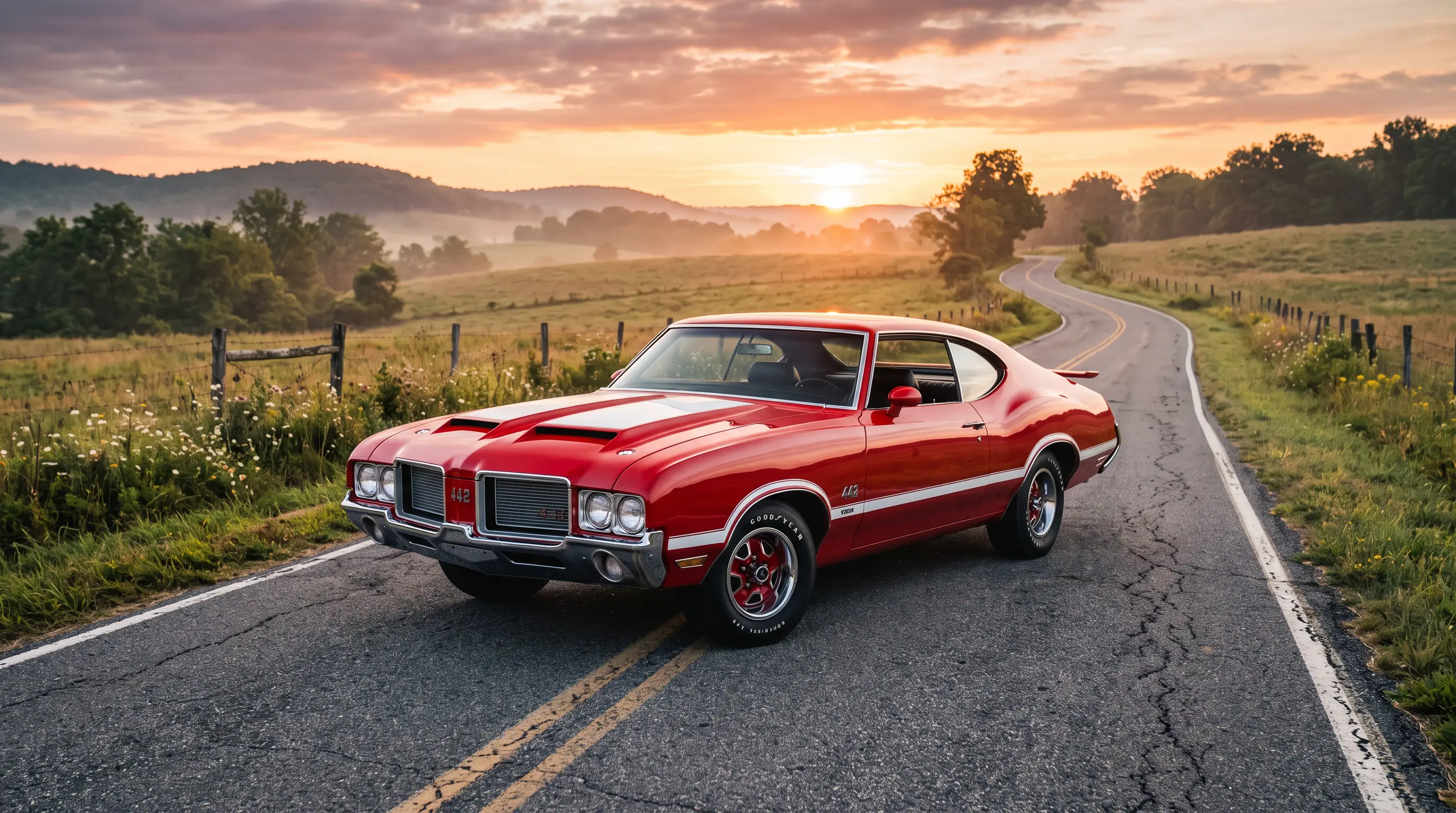
People ask me which Cutlass had the most powerful factory engine and expect a complicated answer. It isn't. The most powerful cutlass engine Oldsmobile ever put in a production car was the 1970 W-30 455, rated at 370 gross horsepower. Not the 442 badge, not the name on the fender. The engine. Everything else is trim.
370 gross horsepower, and here's why that number holds up
The W-30 package bolted a hotter cam, better-flowing heads, and a functional fiberglass hood with cold-air induction onto the base 455 block. The standard 455 that same year was rated at 365 gross horsepower. The W-30 added five more on paper and felt like a lot more than five on the street, because the induction system was actually feeding the carburetor cool outside air instead of the hot soup sitting under a closed hood. That's not a marketing trick. Cold, dense air makes real power, and Oldsmobile built the hardware to deliver it rather than just printing a sticker.
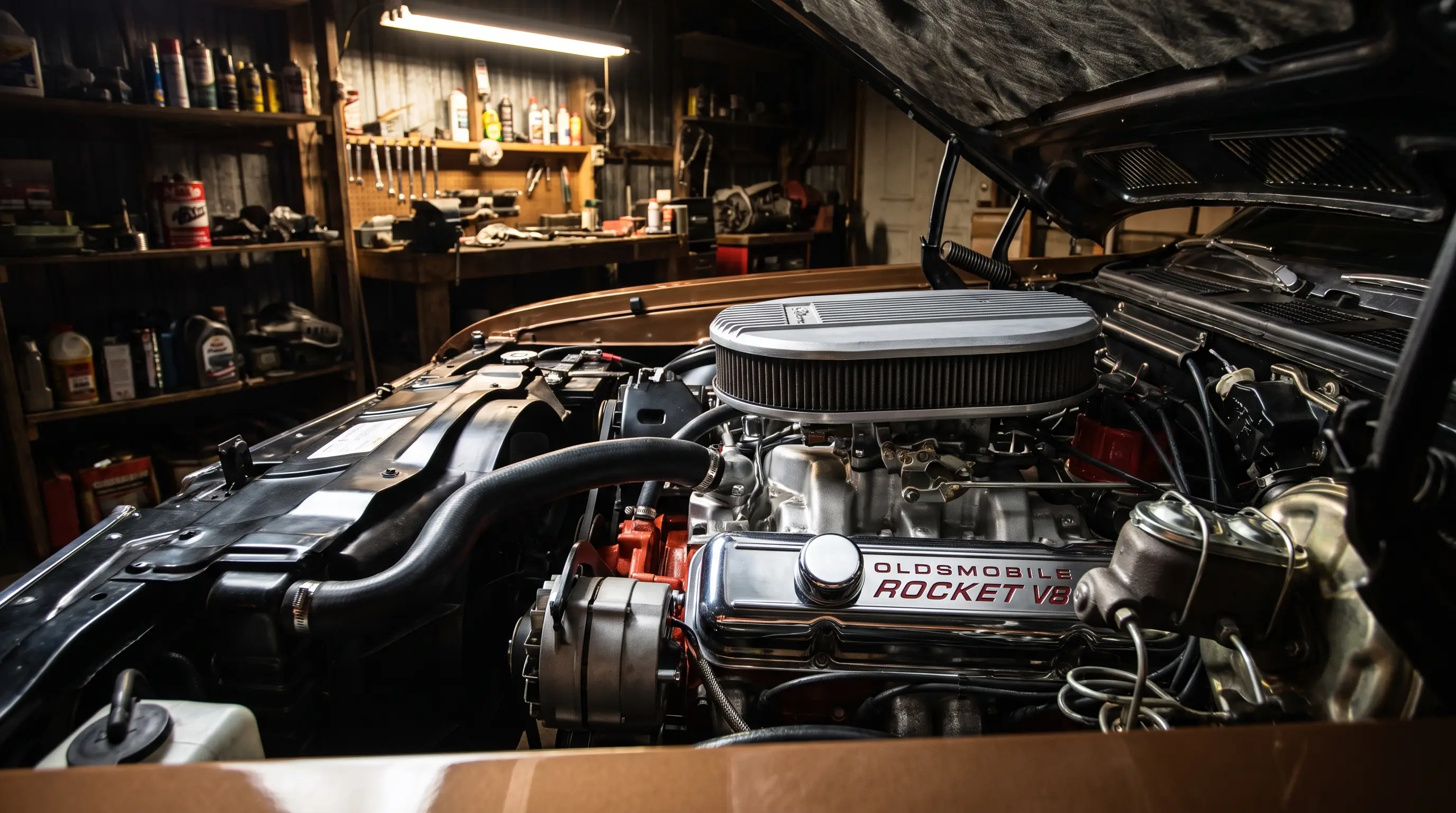
Displacement alone doesn't explain the number. The base 455 and the W-30 455 share a bore, a stroke, and a lot of internal parts. The difference is entirely in the parts that let the engine breathe, and that's a cheap lesson for anyone shopping a 442 or a Cutlass today: a big number stamped on a fender means nothing if the heads and cam underneath it are stock. Oldsmobile Rocket power covers the whole family this engine came from, and it's worth reading before you trust any seller's claim about what's actually under the hood.
The road that got Oldsmobile to 370 hp
Oldsmobile didn't arrive at the W-30 455 overnight. The 400 cubic-inch V8 that powered the first 442s in the mid-1960s topped out at 360 gross horsepower with the W-30 option, with the standard four-barrel version rated around 345 to 350 gross horsepower depending on the year. The jump to 455 cubic inches came in 1968, a bore-and-stroke increase on the same basic architecture rather than a clean-sheet redesign, and it gave Oldsmobile the displacement headroom to keep climbing the horsepower ladder against what Pontiac and Chevrolet were building. By 1970, GM had also quietly abandoned the corporate displacement caps that had limited engines in intermediate cars for most of the 1960s, and Oldsmobile used that opening immediately. The W-30 455 is what happens when a company waits for the rules to change and already has the engine ready to take advantage of it.
Nineteen seventy sits at the top for a specific reason: compression. The W-30 455 that year ran high compression, in the neighborhood most muscle-era big-blocks needed to make their peak numbers. Every year after 1970 chipped away at that compression to deal with lower-octane and eventually unleaded fuel, and the horsepower ratings fell with it. Nothing about the engine got worse on purpose. The fuel it had to run on got worse, and Oldsmobile had no choice but to detune around it.
Net ratings rewrote the record book without changing the metal
Nineteen seventy-two is where the horsepower story gets confusing for people who don't know the history. That year the entire industry switched from gross horsepower ratings, measured on a stand with no accessories, to net ratings, measured with the engine installed and everything running. The same 455 that made 370 gross horsepower in 1970 would have printed a much lower number under the net standard, even before you account for the compression cuts that came with it. So when someone tells you a mid-1970s 455 "only" made 225 or 250 horsepower, they're not describing a weaker engine. They're describing a different ruler measuring roughly the same iron.
Correct for the ruler change and the compression drop together, and the 1970 W-30 still comes out on top of the Cutlass family by any honest comparison. Nothing built after it, gross or net, matched what that specific combination of displacement, compression, and breathing hardware produced in that one model year.
| Engine | Year | Rating | Notes |
|---|---|---|---|
| 400 V8 | 1965-1969 | 345-360 gross hp | Standard rated 345-350 hp; W-30 package reached 360 hp |
| 455 base | 1970 | 365 gross hp | Standard big-block, no cold air |
| 455 W-30 | 1970 | 370 gross hp | The most powerful factory Cutlass engine |
| 455 base/W-30 | 1971-1976 | Falling year over year | Compression cuts, then net ratings in 1972 |
What the number doesn't tell you
Horsepower peaks are the easy story. The harder, more honest one is that a lot of these cars didn't need to rev to their advertised peak to feel fast, because the torque arrived so much earlier. A base 455 made 500 lb-ft of torque well below where the horsepower number was measured, and the W-30 version made its living the same way, pulling hard from a stoplight long before the tachometer got anywhere near where 370 horsepower showed up. If you're cross-shopping a 442 W-30 against a small-block W-31, understand you're comparing two completely different personalities, not just two numbers on a spec sheet. One shoves. The other revs. Both are quick. Only one of them is the record holder for peak factory output, and that's the W-30 455, full stop.
None of this changes what a buyer should actually do before writing a check on a car advertised as a "370 horsepower W-30." Match the casting numbers. Confirm the VIN. A fender badge and a hood scoop are the two easiest things in the world to bolt onto a base car, and the market has no shortage of tribute builds wearing both. The real ones carry paper trails that back up the claim, and that documentation is worth more than the badge every time.
"Everybody wants a bigger number. The W-30 455 gave Oldsmobile the biggest one it ever built into a Cutlass, and that record has held for over fifty years because nothing after it had the compression or the breathing to beat it, not because nobody tried."
— Dan Reeves
If the gross-versus-net argument and the compression story interest you beyond one engine, a companion piece gets into why Oldsmobile's whole engine family behaved the way it did across three decades, not just in the one peak year that produced the highest number on paper.