I've had guys bring me a Cutlass with a Chevy small-block bolt pattern stuck in their head, wondering why nothing lines up right. That mistake is the whole oldsmobile engine legacy in one wrench-turning lesson. GM built five divisions and Oldsmobile insisted on doing its own thing, engine-wise, longer than almost any of them. That stubbornness is why these motors feel like their own world, and why treating them like a Chevy in a different jacket gets you a busted knuckle and a wasted afternoon.
Same company, different shop
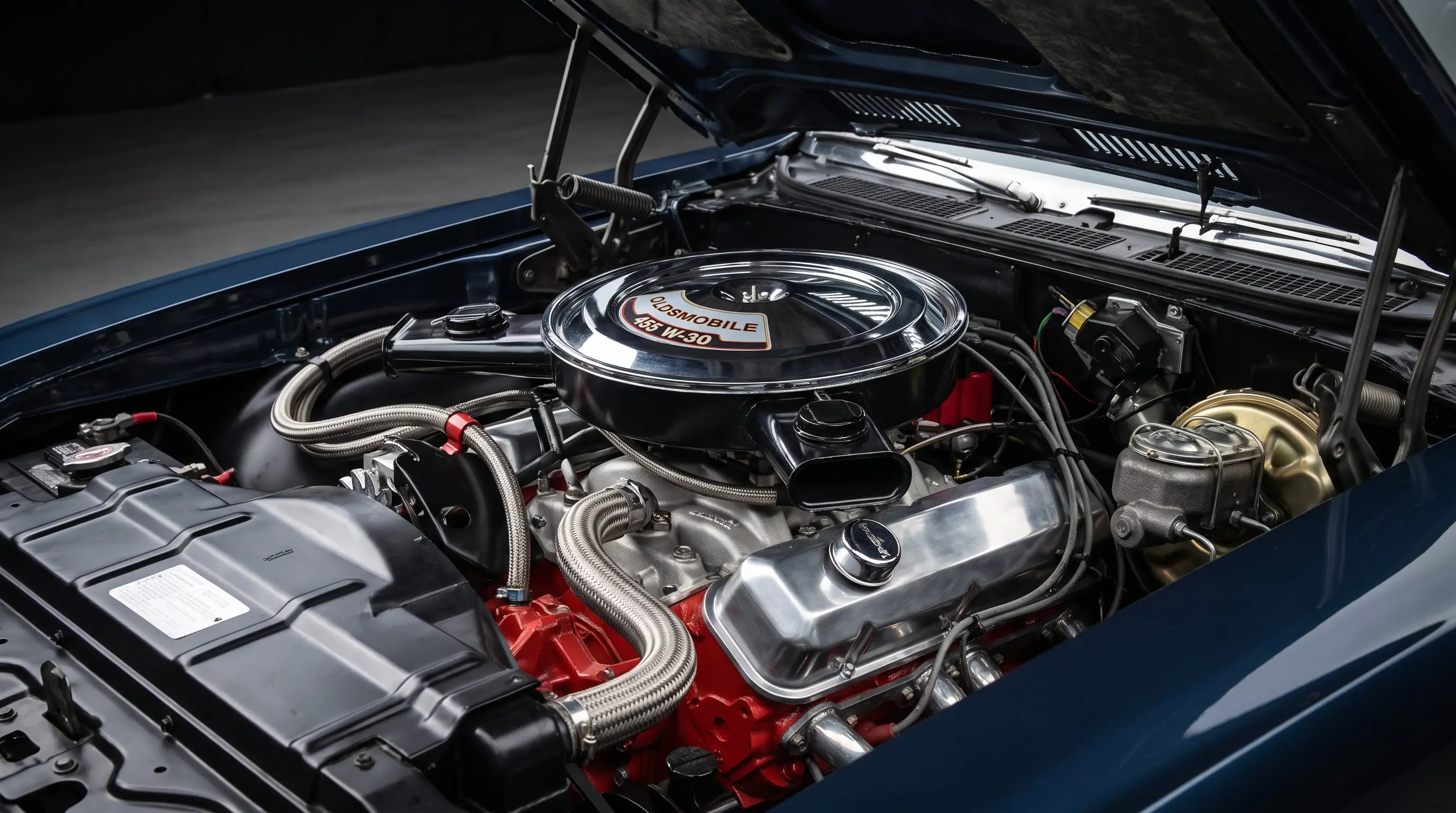
Chevrolet, Pontiac, Buick, and Oldsmobile all built their own V8 families well into the muscle era, and that's not a footnote, it's the reason a 350 badge doesn't tell you anything by itself. A Chevy 350 and an Olds 350 share nothing internally. Different bore centers, different bolt patterns, different firing order, different everything under the valve covers. I've watched a guy try to bolt Chevy accessory brackets onto an Olds block because "it's a 350, it should fit." It didn't. It never does. Read the engine chapter if you want the full rundown on which Cutlass carried which Rocket variant, because knowing the family tree saves you from exactly this kind of mistake before you buy the wrong parts.
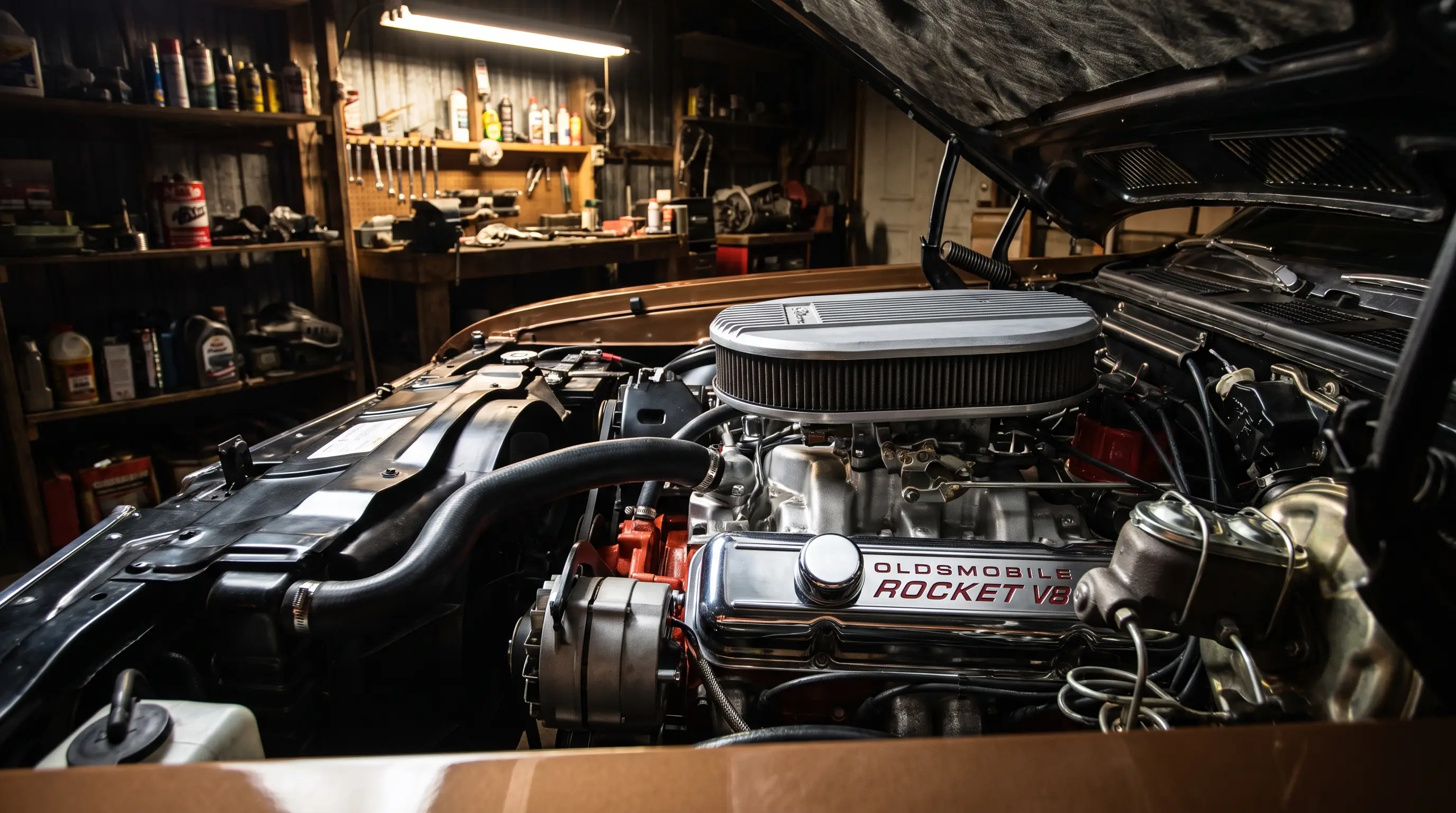
Oldsmobile called its V8 line the Rocket, and the name wasn't just advertising fluff. The Rocket architecture traced back to 1949, and Oldsmobile kept developing it in-house, generation after generation, instead of leaning on a corporate engine shared across GM. That's a real commitment of engineering money at a company that could have taken the cheaper path decades earlier. They didn't, and the payoff is an engine family with a distinct personality that Chevy guys still underestimate.
The casting numbers tell the whole truth
Every Oldsmobile block carries casting numbers and date codes that tell you exactly what you're looking at, and I check them before I trust a single word a seller tells me. A fender badge says 455. The casting number tells you the actual year, the actual application, sometimes the actual plant. I've seen too many "matching numbers" cars that match nothing once you actually decode the stamps, and the sellers usually aren't lying on purpose. They just never checked. Learn to read a casting number before you buy an Olds engine, full stop. It's a ten-minute skill that saves you from a five-figure mistake.
This documentation habit runs through the whole Rocket family, not just the big 455s everybody chases. The 330, the 350, even the humble 307 that carried G-body Cutlasses through the 1980s all carry the same kind of identification if you know where to look. Oldsmobile engineers weren't thinking about future collectors when they set up that system. They were thinking about warranty tracking and production control. Collectors just got lucky that the paperwork trail survived.
The diesel is the legacy's one real scar
I won't pretend the Oldsmobile engine story is all good news. The 350 diesel V8 that showed up in 1978 damaged the whole division's reputation in a way that took a decade to shake off. Head bolts that couldn't clamp diesel compression, no water separator in the fuel system, blown head gaskets on cars that hadn't even hit their first oil change interval. That's not bad luck. That's an engine rushed to market on a gas-engine architecture that wasn't built for what diesel compression demanded of it.
Here's the part that actually matters for a buyer today: the diesel disaster doesn't touch the reputation of the gas Rocket engines it shared a name with. The 350 gas V8 that powered a huge share of Cutlasses through the late 1970s and 1980s is a completely different, genuinely reliable engine. Don't let the diesel scare you off a gas-powered Cutlass from the same years. They're not related in any way that matters mechanically, just in badge and displacement number.
Why the whole thing still holds together
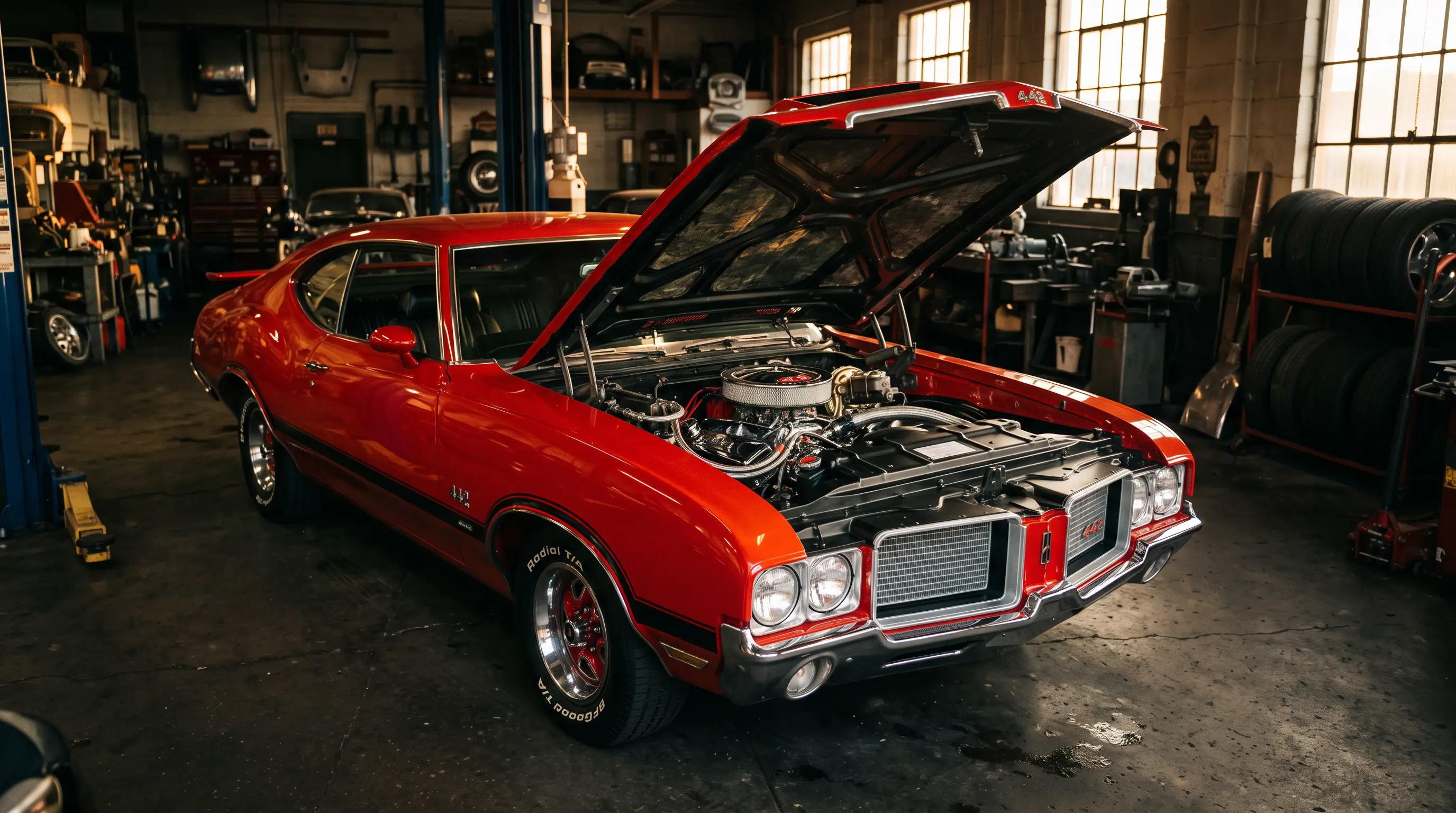
What makes the oldsmobile engine legacy worth understanding, rather than just tolerating, is how consistent the engineering philosophy stayed across three decades. Long-stroke big-blocks built for torque over revs. In-house casting and identification systems that make honest verification possible fifty years later. A commitment to building their own architecture instead of borrowing a corporate cousin's parts bin. That consistency is why a well-documented Olds engine, whether it's a 442's 455 or a base Cutlass's 350, still commands real respect from people who actually know what they're looking at.
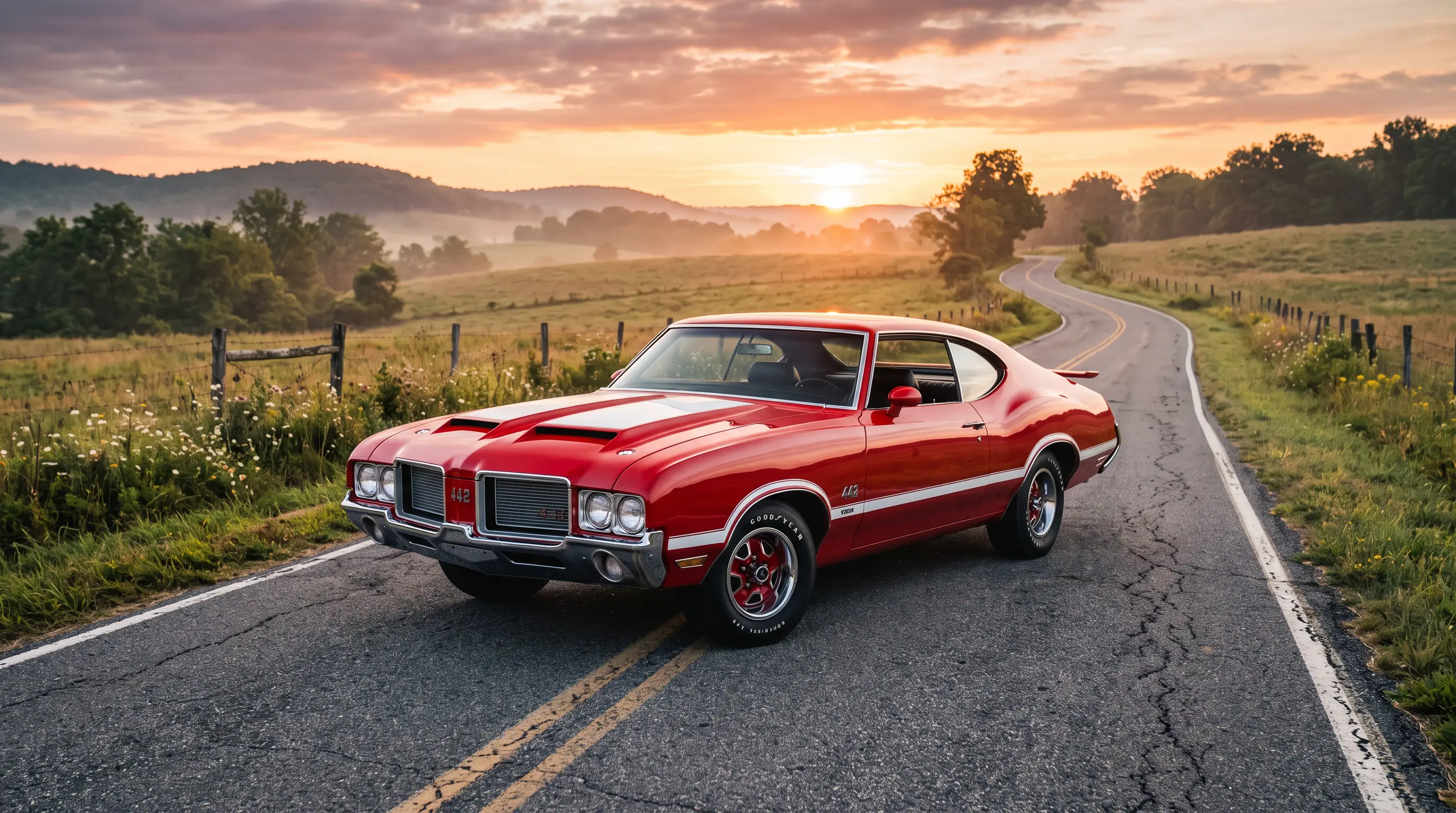
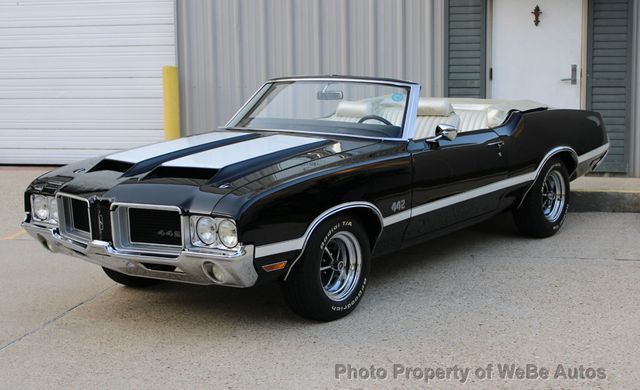
If you want the bigger picture, not just the engine bay, our Cutlass retrospective covers the whole nameplate across the decades these engines powered. And if the Rocket V8's own origin story is what you're after, keep reading the series for how the family got its name and why it lasted as long as it did.
"I've pulled apart enough of these to tell you the badge on the fender is the last thing I trust. The casting number under the intake is the first. Learn to read one before you spend real money on an Olds engine, and you'll save yourself a lot of grief."
— Mike Sullivan
Respect the engineering and the documentation habit that built it, and an Oldsmobile Rocket V8 will reward you with decades of straightforward, honest running. Ignore it, treat it like generic GM iron, and you'll find out the hard way why that assumption doesn't hold up under a wrench.
Sources and notes
- Hagerty Media: Oldsmobile's 1949 Overhead Valve V8 Launched an Engine Revolution
- Mac's Motor City Garage: Game Changer, the 1949 Oldsmobile Rocket V8
- Wikipedia: Oldsmobile V8 Engine
- Wikipedia: Oldsmobile Diesel Engine
- Muscle Car DIY: How to Identify an Oldsmobile V8 Engine
- Ate Up With Motor: Rocket Bomb, the Oldsmobile Rocket 88