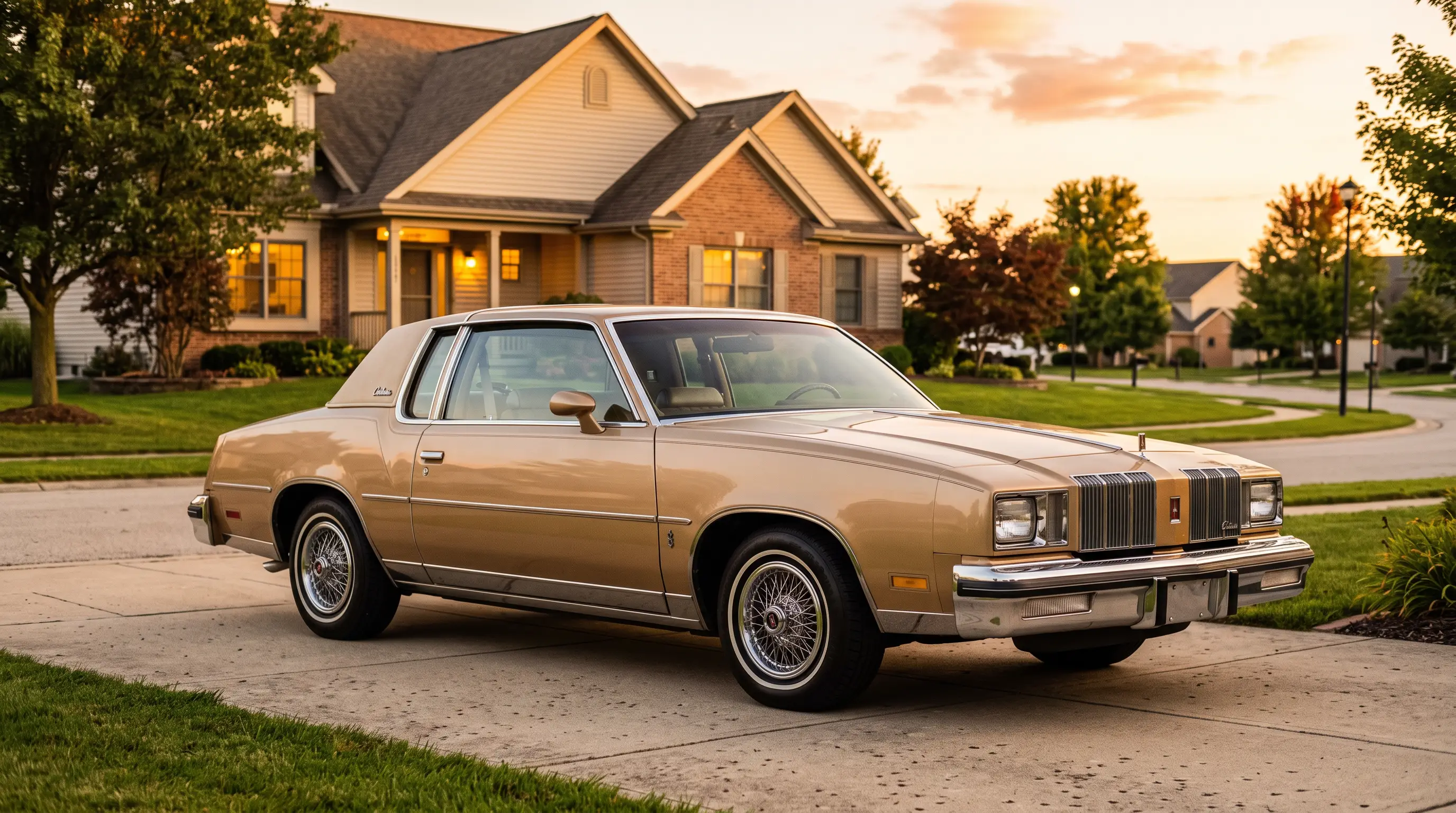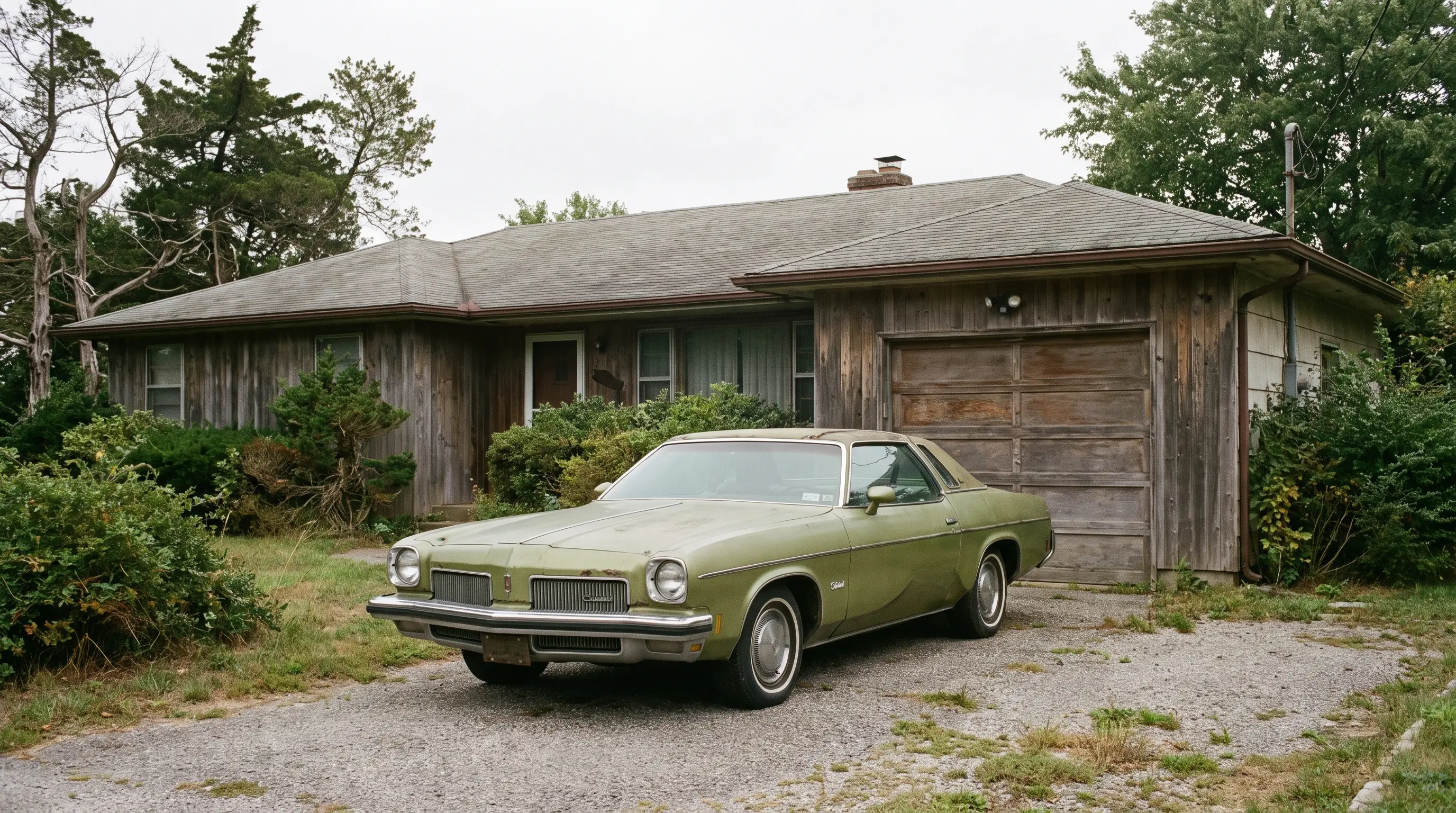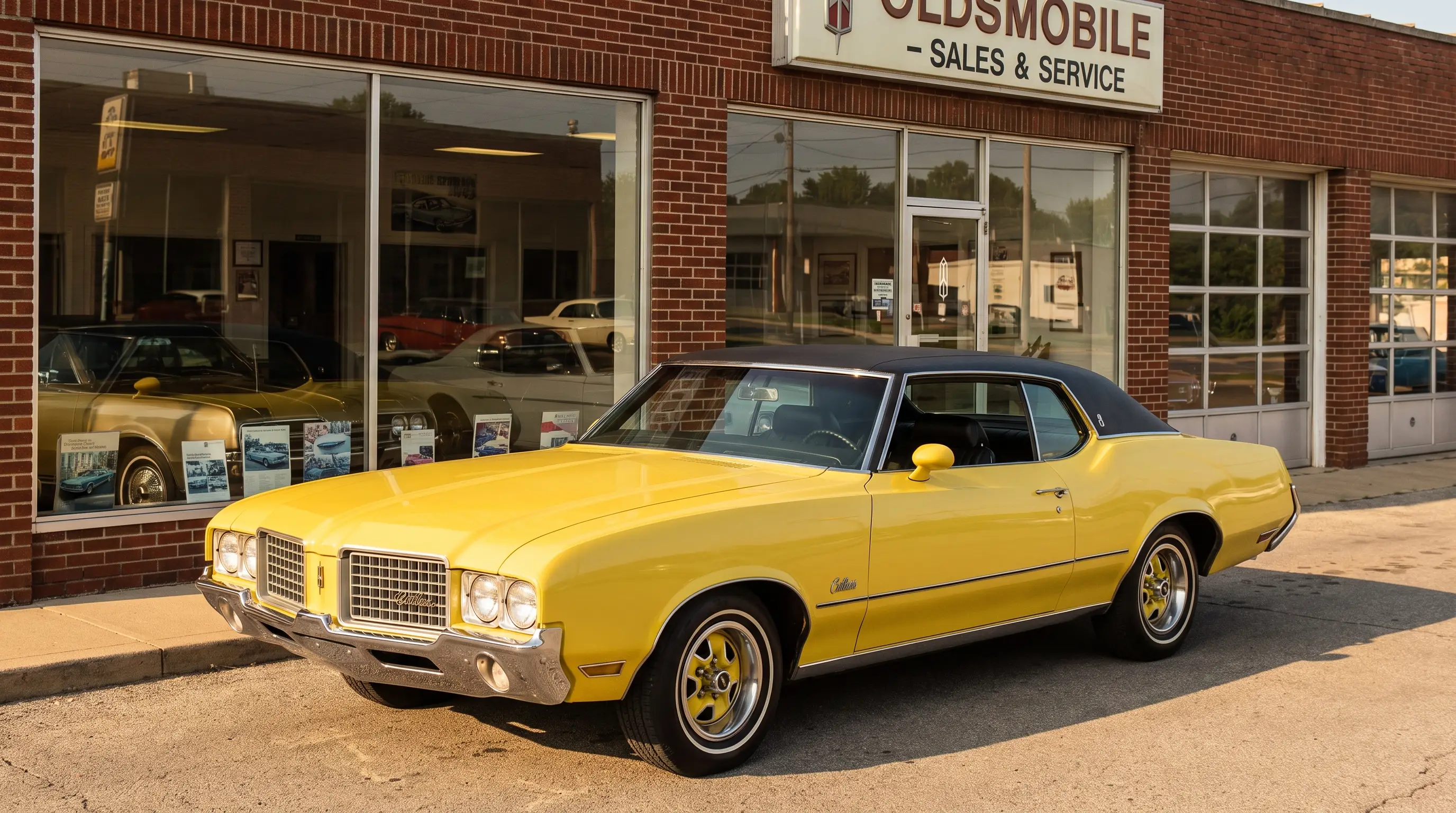
Somewhere in an Oldsmobile parts warehouse in the late 1970s, a manager looked at the order sheets coming in for Cutlass Supreme components and reportedly joked that the division should just build a second assembly line and call it done. It was not far from the truth. For several years running, the Cutlass Supreme and its Colonnade and G-body siblings sold in numbers that startled even the people building them, numbers big enough to make Oldsmobile, for one strange and glorious stretch, one of the best-selling car brands in the entire country.
Cutlass supreme production during that run was not a footnote in Oldsmobile's history. For a while, it was the whole story.
An intermediate coupe becomes a phenomenon
When Oldsmobile introduced the Colonnade-era Cutlass Supreme in the early 1970s, it was one entry among several personal-luxury intermediates competing for the same buyer as the Chevrolet Monte Carlo, Pontiac Grand Prix, and Buick Regal. Nothing about the formula suggested it would eventually outsell all of them combined. But the timing lined up almost perfectly with a national mood shift away from big-block excess and toward comfortable, efficient, good-looking cars that did not apologize for being practical.
By 1976, the Cutlass line as a whole, with the Supreme as its flagship trim, had become the single best-selling nameplate in the entire United States, a remarkable feat for a car built on a shared corporate platform against three direct siblings, and it held that title again in 1977. The Supreme was not winning that fight on features unique to Oldsmobile. It was winning on styling, on badge appeal, and on a sense of proportion that buyers simply preferred over its corporate cousins.
The numbers behind the boom
Annual production of the Cutlass Supreme through the back half of the 1970s ran into the hundreds of thousands of units in its strongest years. In 1977 alone, the full Cutlass line found 632,742 buyers, with the Supreme and Supreme Brougham coupes and sedans accounting for roughly three-quarters of that total, a figure that placed it in direct competition with far larger, full-size cars for sheer sales volume. That kind of output meant Lansing assembly lines and outside contract plants ran the Cutlass Supreme in close to continuous production, a scale most personal-luxury nameplates from the era never approached.
The scale had real consequences for the car itself. Building that many coupes meant Oldsmobile leaned on shared components across the Cutlass family wherever possible, from sheet metal stampings to interior hardware, which kept costs controlled even as the trim ladder grew more elaborate. It also means, decades later, that parts availability for the Cutlass Supreme remains far better than for lower-production classics from the same period, since so much of what went into building one also went into building a Malibu-fighting Cutlass sedan or wagon down the same line.
The 1978 downsize and what it did to output
The redesign that moved the Cutlass Supreme onto the smaller G-body platform for the 1978 model year was a response to tightening fuel economy standards, and it briefly threatened to slow the sales momentum the nameplate had built. Instead, the smaller, lighter Supreme kept nearly all of its visual identity, the formal roofline, the trim ladder, the Brougham option, while trimming enough size and weight to keep the car relevant under new regulatory pressure. Production held strong through the change, and the G-body Supreme went on to enjoy its own extended run into the late 1980s.
That continuity across a major platform change is unusual. Plenty of nameplates lose their sales momentum the moment a redesign changes their proportions, but the Cutlass Supreme carried its audience through the downsizing almost intact, a sign of just how strong the brand loyalty around the name had become by the end of the 1970s.
| Era | Platform | Production character |
|---|---|---|
| Early-to-mid 1970s | Colonnade intermediate | Rapid sales growth, rising trim complexity |
| 1976-1977 peak | Colonnade intermediate | Best-selling nameplate in America both years |
| 1978 onward | Downsized G-body | Smaller footprint, sustained volume |
| 1980s | G-body coupe | Long production tail into the late decade |
"You do not build a hundred thousand of anything by accident. Oldsmobile built the Cutlass Supreme by the assembly-line full for years, and every one of those cars is a small piece of evidence about what an entire country actually wanted to drive."
— Nora Beckett
What the volume means for buyers now
High production numbers cut both ways for anyone shopping the classic market today. On one hand, so many Cutlass Supremes were built that clean, honest examples remain genuinely findable, and replacement parts, from trim pieces to interior components, are far easier to source than on a lower-volume classic from the same decade. On the other hand, that same abundance means rarity alone will never be the reason to pay a premium for a particular car, and buyers who expect scarcity-driven appreciation the way muscle car collectors experience it will be disappointed.
What the production numbers really tell a buyer is where to look for value. It is not in finding an unusual example, since so few Supremes were genuinely unusual to begin with. It is in finding one that survived cleanly, with its original interior and trim intact, out of the enormous pool that was built. Understanding the scale of production, and how consistent the car stayed across that scale, is the groundwork for making sense of everything else about the Supreme, including how it looked and how buyers can judge originality today, which is exactly where a related deep-dive picks up the thread.
None of it would have happened without the identity Oldsmobile built around the Cutlass Supreme in the first place. The numbers only make sense once you understand why so many buyers wanted the car badly enough to make it happen.
Sources and notes
- Oldsmobile Cutlass Supreme, Wikipedia
- Oldsmobile Reaches Peak Cutlass: the 1977 Cutlass Supreme, Mac's Motor City Garage
- USA 1976: Oldsmobile Cutlass still America's favourite, Best Selling Cars Blog
- Why The Hell Did Americans Buy So Many Oldsmobile Cutlasses, Jalopnik
- 1977 Oldsmobile Cutlass Supreme 5-Speed, Curbside Classic
- Oldsmobile Cutlass Supreme production numbers, Automobile Catalog