
There is a guy at nearly every Cutlass meet who will tell you the Salon was "basically a Supreme with a stripe kit." I have heard some version of that sentence at three different shows this year alone, usually from someone standing next to a car he is trying to sell for more than it is worth. It is not true, and the club has the build sheets to prove it, but the argument keeps coming back because Oldsmobile genuinely muddied these three names over the years, and nobody explains the difference well until somebody pulls out the paperwork.
Car Features
6 min read
Cutlass S vs Supreme vs Salon
Cutlass S, Supreme, and Salon each promised something different to buyers, and the club has learned to settle the arguments about which was which with the build sheet, not the badge.
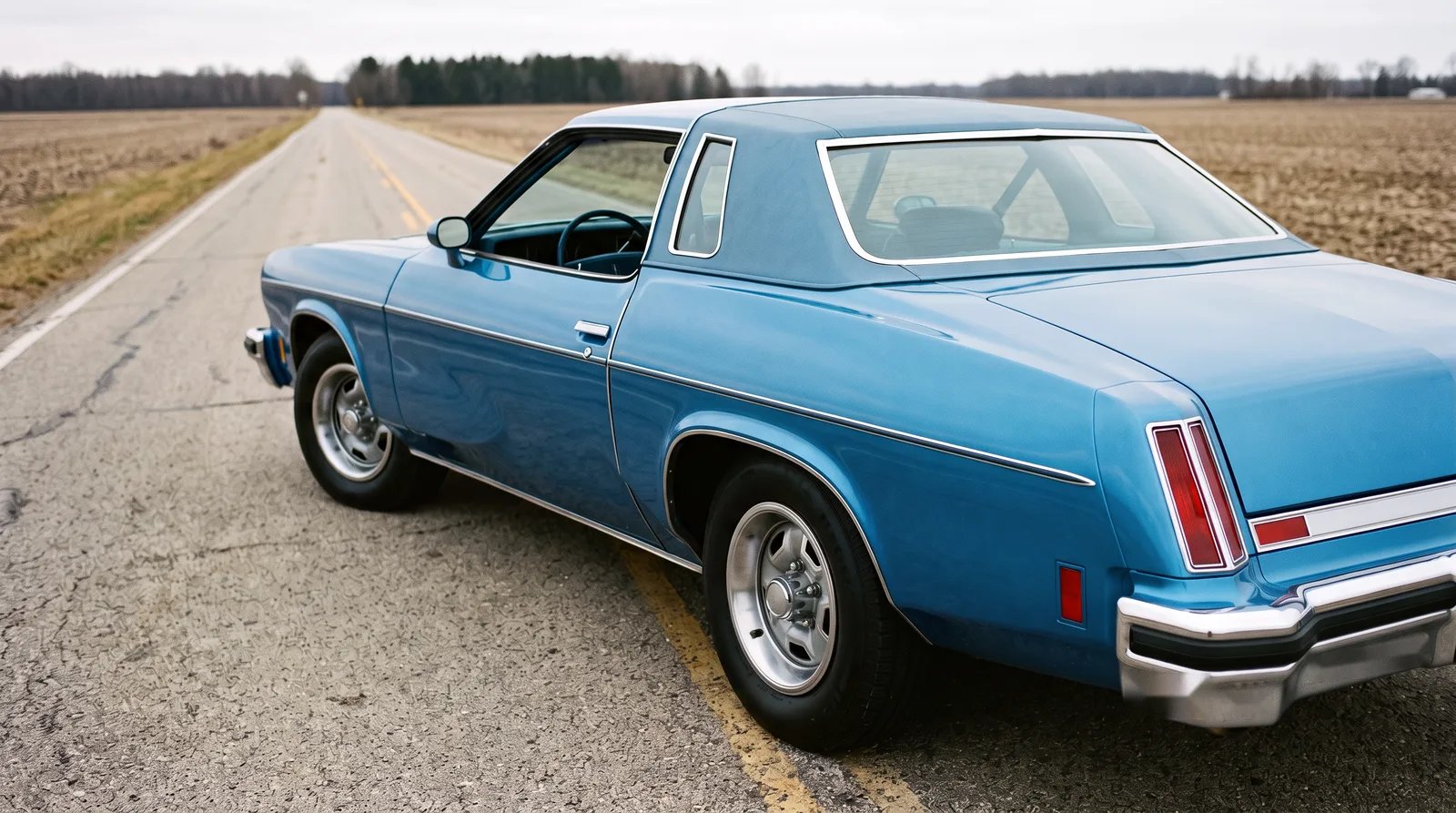
The Cutlass S sat above the base car
Here is where people get tangled up first. In the Colonnade years the plain Cutlass, without any suffix, was the base trim, and the base line was dropped in 1976, when the S became the entry-level car. From 1968 to 1972 the F-85 sat below the S. The Cutlass S sat above the base car, aimed at buyers who wanted a sportier look without stepping up into full 442 territory, and it was the line the 4-4-2 was built on. Optional Strato bucket seats with high seatbacks were offered on the S and the 4-4-2 in the Colonnade years.
None of this happened by accident. Oldsmobile had been sorting the Cutlass into tiers since the early sixties, and the whole trim ladder only makes sense once you understand where it started. For the early Cutlass story, the S tier is really just the sporty branch of a family tree that had been growing new limbs since 1961.
Supreme meant something specific, and it changed
Somebody at a club meet in Ohio a few years back had a 1970 Supreme hardtop and a 1975 Supreme sedan parked next to each other, and watching people walk between the two cars was its own education. The 1970 Supreme was a notchback hardtop built to look upscale next to a sportier S. By the mid-1970s, once the Colonnade generation arrived, Supreme had become the nameplate behind the strongest Cutlass sales, no longer a niche step above the S so much as the car most buyers actually wanted.
That shift matters when you are trying to value a car today. A documented early Supreme hardtop is a different animal from a mid-decade Supreme sedan, even though both cars wear the same badge. The name stayed. What it was attached to moved considerably.
| Trim | Positioning | Typical buyer |
|---|---|---|
| Cutlass S | Sport-leaning, the line the 4-4-2 was built on, optional bucket seats | Younger buyer, driver-focused |
| Cutlass Supreme | Upscale trim, later the big seller | Style-conscious buyer wanting comfort with presence |
| Cutlass Salon | Luxury and handling package from 1973, its own series from 1975, European-flavored | Buyer wanting a domestic car that drove like an import |
Salon was the one nobody remembers correctly
The Salon is the trim that gets the most confused history at a club table, because it began in 1973, with the Colonnade generation, as an option package on the Supreme sedan, and it was pitched at a very specific kind of buyer: someone who wanted the ride and handling manners of a European sedan without giving up a domestic car's space and easy service. A Salon carried a firmer suspension tune than the standard setup, radial tires as standard equipment when a lot of the range still rode on bias-plys, and reclining bucket seats in corduroy or vinyl.
I watched a club argument get settled by exactly one document a couple years back. Two guys were debating whether a particular sedan was a genuine Salon or a Supreme with the wrong trim swapped on, and it came down to the factory build sheet in the glovebox, which listed the Salon option code plain as day. That is how these arguments always end, not with somebody's memory of what looked right, but with the paper the factory actually printed.
Why the distinction still matters at a show
None of this is academic if you are buying or selling. An S badge on the fender means something different for value and expectation than a Supreme badge, and a genuine Salon with its correct suspension and trim commands a different conversation entirely than a Supreme dressed up to look like one. The club has gotten better about teaching new members to ask for the build sheet before the check gets written, and that habit alone has settled more driveway arguments than any amount of badge-reading ever will.
New members usually start out thinking the tier a car wears is a fixed fact stamped in at the factory and never revisited. It rarely works that way in practice. Dealers swapped trim pieces during the used-car years far more often than anyone wants to admit, and a Supreme that lost its original grille badge somewhere in the 1980s can end up wearing whatever emblem a previous owner had in the parts bin. That is exactly why the old-timers at the club treat the paperwork as the only evidence that counts, and why a car's reputation at a show is worth less than a single line on a factory build sheet.
For more on how these body styles and their variations fit together across the Cutlass generations, a companion piece works through the sheet metal side of the story, which pairs naturally with understanding what each trim badge actually promised the buyer who paid for it.
"Everybody at the club had an opinion about that Salon until somebody pulled the build sheet, and just like that, the argument was over."
Wayne Coburn
Sources and notes
- Oldsmobile Cutlass - Wikipedia
- Oldsmobile Cutlass Supreme - Wikipedia
- Oldsmobile Cutlass Guide - Outright Oldsmobile!
- Oldsmobile Cutlass - The Crittenden Automotive Library
- 1968 Oldsmobile Cutlass Supreme Trim Levels - J.D. Power
Updated November 4, 2026: Corrected: the Cutlass Salon began in 1973 as an option package on the Supreme sedan and became its own series in 1975, and the base-car and Cutlass S descriptions now match the model years.
Related Reading
Have a
Oldsmobile Cutlass
for Sale?
Reach thousands of serious classic car collectors across the US.
Sell It Here →
Selling a classic? Here's how: where to sell your classic car online
Are You a Classic Car Dealer?
List your full inventory and connect with targeted classic car buyers.
Join as a Dealer →
#Cutlass Supreme
#colonnade cutlass
#Cutlass S
#Cutlass Salon
#Oldsmobile trim levels
#classic Oldsmobile

About the author
Wayne Coburn
Longtime Corvette owner, judge and club figure who knows the cars, the records and the people behind them.
Related Listings - Oldsmobile Cutlass




Comments
Be the first to comment on this article.