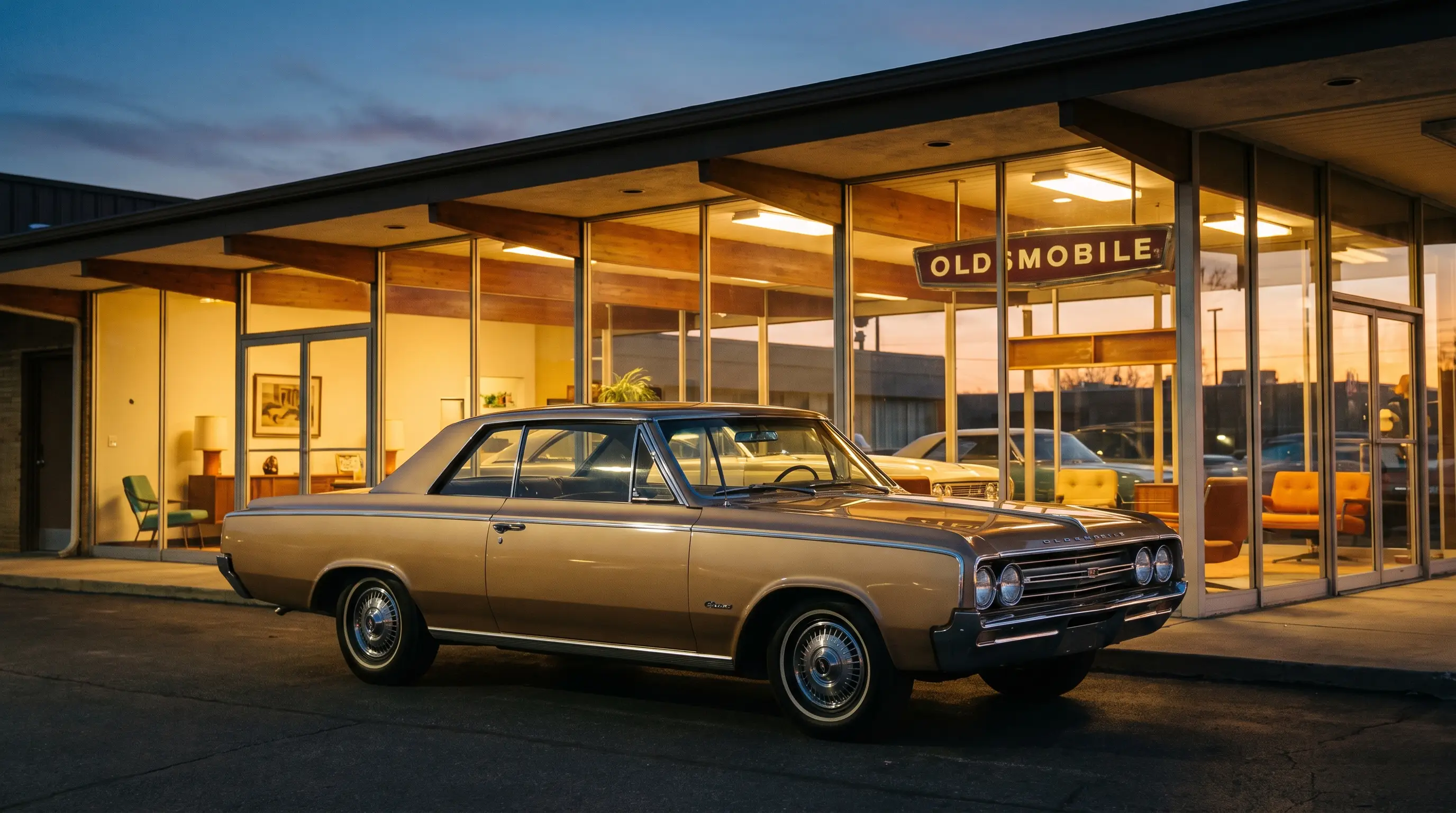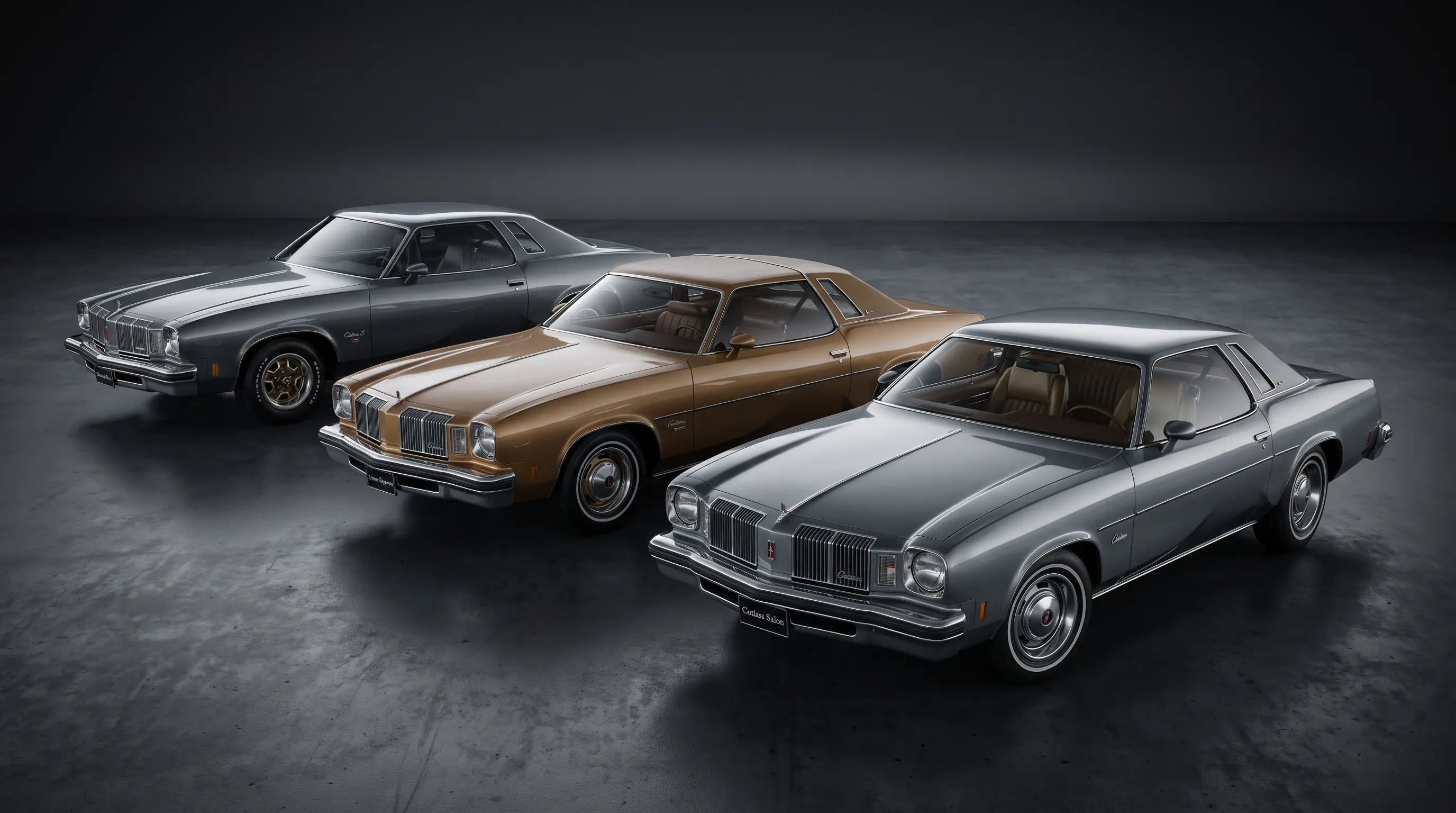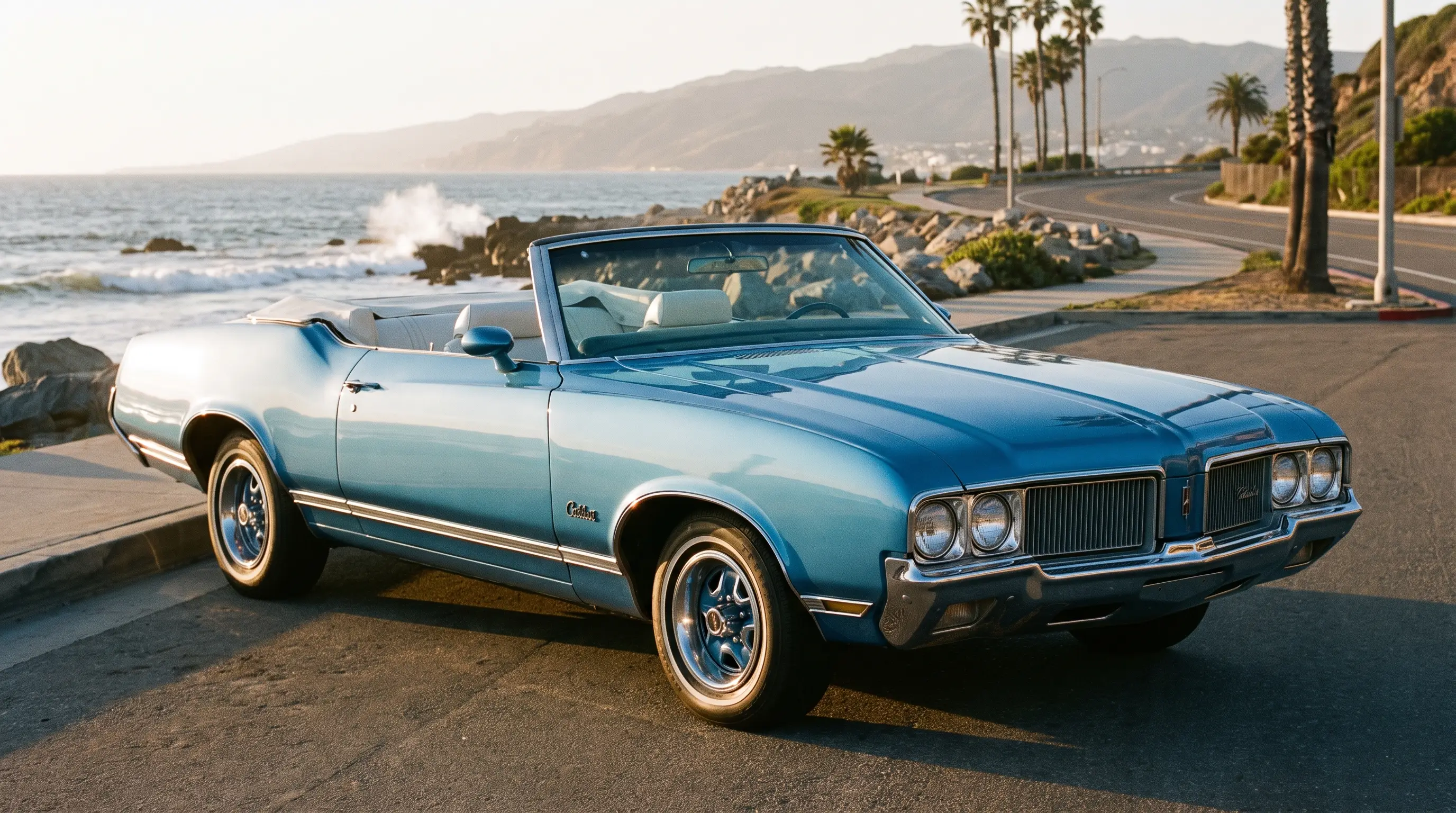
The Oldsmobile Cutlass line switched to General Motors' redesigned A-body platform for the 1968 model year, and that single change is why the phrase cutlass body styles covers so much ground. A shopper walking into an Oldsmobile store that fall could order a two-door hardtop, a pillared coupe, a convertible, a four-door sedan, or a wagon, all wearing the same Cutlass badge and sharing the same basic chassis underneath. Some of those bodies lasted the full run of the generation. Others were gone within a couple of years. Sorting out which is which is mostly a matter of reading the build sheet correctly, and that is where most of the confusion starts.
A new body for a new decade
GM's 1968 intermediate redesign moved the Cutlass onto a shorter, more curvaceous shell with the "Coke bottle" flanks that defined the era. Two-door models rode a 112-inch wheelbase. Four-door sedans and wagons stretched that to 116 inches, which is a detail worth remembering because it explains why a Cutlass sedan photographs longer in the doors than a coupe parked next to it. The styling department gave every body version its own roofline rather than stamping one greenhouse across the lineup, and that decision is a big part of why this generation still photographs so well.
Underneath the sheet metal, the Cutlass shared its A-body architecture with the Chevrolet Chevelle, Pontiac Tempest and Buick Skylark, but Oldsmobile's engineering group tuned the chassis differently, with its own front subframe mounts and its own suspension calibration. That is a fact worth stating plainly because it gets flattened in casual conversation. People treat A-body cars as interchangeable under the skin. They were related. They were not identical, and the build records back that up.
The coupes: hardtop, post, and Cutlass S
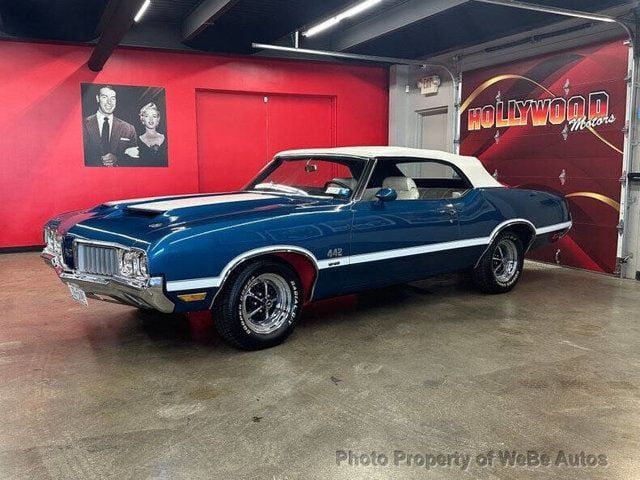
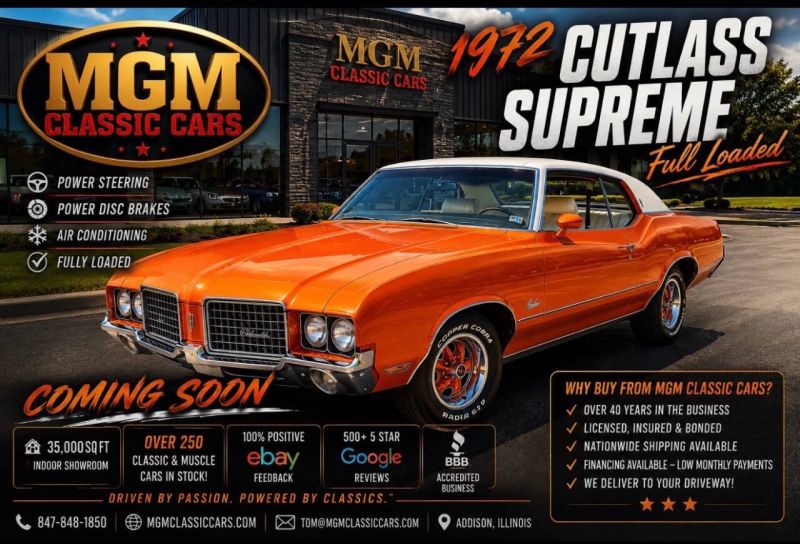
The two-door body came in two structural forms that get confused constantly. The hardtop coupe has no B-pillar, so the side glass drops completely and the door frames disappear when the windows are down. The pillared coupe, sold under the Cutlass S badge for much of this run, keeps a fixed post between the front and rear glass. It is a cheaper, stiffer structure, and it is the body Oldsmobile leaned on for the 4-4-2 performance package in several of these years, since a fixed pillar body flexes less under hard cornering than an open hardtop.
Cutlass S also served as the visual base for the 4-4-2, and the badge's status shifted more than once across this generation. From 1968 through 1971 the 4-4-2 was its own standalone model series, with its own body tag designation, not an option checked on a Cutlass S build sheet. That changed in 1972, when the 4-4-2 was folded back into the lineup as an appearance and handling option (RPO W-29) layered onto the Cutlass S coupe rather than a separate model. That distinction matters at a swap meet, since the correct way to confirm which era a given car belongs to is to read the body tag rather than assume the badge alone settles the question.
Four doors: sedans and the Vista Cruiser wagon
The four-door body is where the Cutlass line quietly did its heaviest lifting in terms of raw sales volume, even though it gets a fraction of the attention coupes and convertibles receive today. Sedans came as pillared four-doors, and for part of the run Oldsmobile also offered a four-door hardtop with no center post, a body style the entire industry would abandon by the mid-1970s under mounting rollover and roof-crush standards.
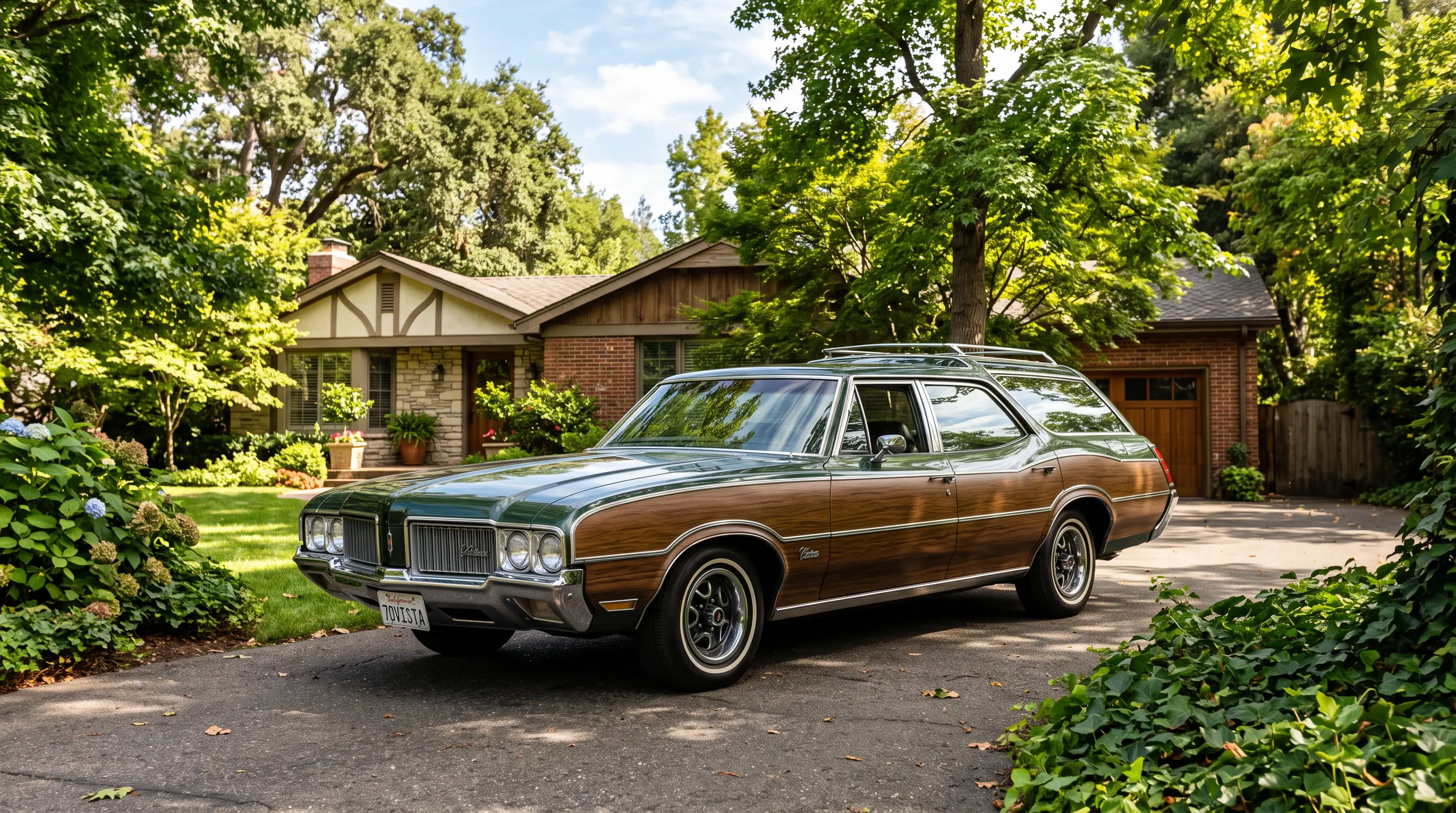
The wagon variant carried its own separate identity as the Vista Cruiser, built on the longer 116-inch wheelbase shared with the sedans and fitted with the raised roof and rear skylight glass that gave the model its name. It is technically part of the Cutlass family tree and shares the same drivetrains, but Oldsmobile marketed it almost as its own nameplate, and restorers today generally treat Vista Cruiser parts and trim as their own research category rather than folding it into general Cutlass coupe knowledge.
| Body style | Wheelbase | Notable trait |
|---|---|---|
| Two-door hardtop | 112 in | No B-pillar, full drop glass |
| Two-door post coupe (Cutlass S) | 112 in | Fixed pillar, common 4-4-2 base |
| Convertible | 112 in | Reinforced frame rails, power top standard on upper trims |
| Four-door sedan / hardtop sedan | 116 in | Highest production volume of the family |
| Vista Cruiser wagon | 116 in | Raised roof, rear skylight glass |
The convertible variant, and why it did not last
Every A-body Cutlass generation from this era offered a convertible, and it deserves its own note here because its story does not end the way the coupes and sedans do. Regulatory pressure around rollover protection, combined with softening demand as air conditioning made hardtops more comfortable to live with, pushed convertible production down across nearly every American make by the early 1970s. Oldsmobile was no exception. The Cutlass convertible has a well-documented final chapter, and the next story in this set walks through exactly when and why the drop-top disappeared from the lineup.
What ties every body style in this generation together is the frame and suspension work Oldsmobile did to differentiate itself from its GM siblings, work that first showed up when Oldsmobile brought the muscle formula into the Cutlass line. If you want the full context on how that performance identity got started before the styles diverged into coupes, sedans, wagons and convertibles, the muscle-era Cutlass is the place that history actually begins.
"The build sheet does not lie about body style the way memory does. I have had owners swear up and down their car left the factory as a hardtop, and the cowl tag says post coupe every time. Read the tag before you read the nostalgia."
— Tom Ramirez
Reading the cowl tag correctly
Every Cutlass from this generation carries a body identification tag on the cowl, under the hood at the base of the windshield, and it is the single most reliable source for body style confirmation. The tag encodes the plant, the model year, the body style number, the trim code and the paint and interior codes in a compressed string that looks intimidating until you have decoded a handful of them. The body style number is the field that actually answers the "what am I looking at" question, and it is worth cross-referencing against a factory-style guide rather than trusting a seller's description, because reproduction badges and trim swaps are common enough on fifty-plus-year-old cars that badging alone should never be the final word.
Production records from Oldsmobile's assembly plants back up the cowl tag system, and matching the two is standard practice for anyone documenting a car seriously, whether that documentation is headed toward a judged show or simply toward an honest for-sale listing. Getting the body style right is not a small detail. It changes value, it changes parts sourcing, and on cars like the 4-4-2 package builds, it changes the entire story of what the car actually was when it left the factory.
Sources and notes
- Oldsmobile 442, Wikipedia
- Olds FAQ: 442, ClassicOldsmobile.com
- 1966-1972 Oldsmobile RPO Codes, Descriptions, and Applications, Automotive Mileposts
- 1968 Oldsmobile Cutlass Specifications & Dimensions, conceptcarz.com
- Oldsmobile Cutlass overview, Wikipedia
- The Convoluted History Behind The Oldsmobile 442 Name, Jalopnik