
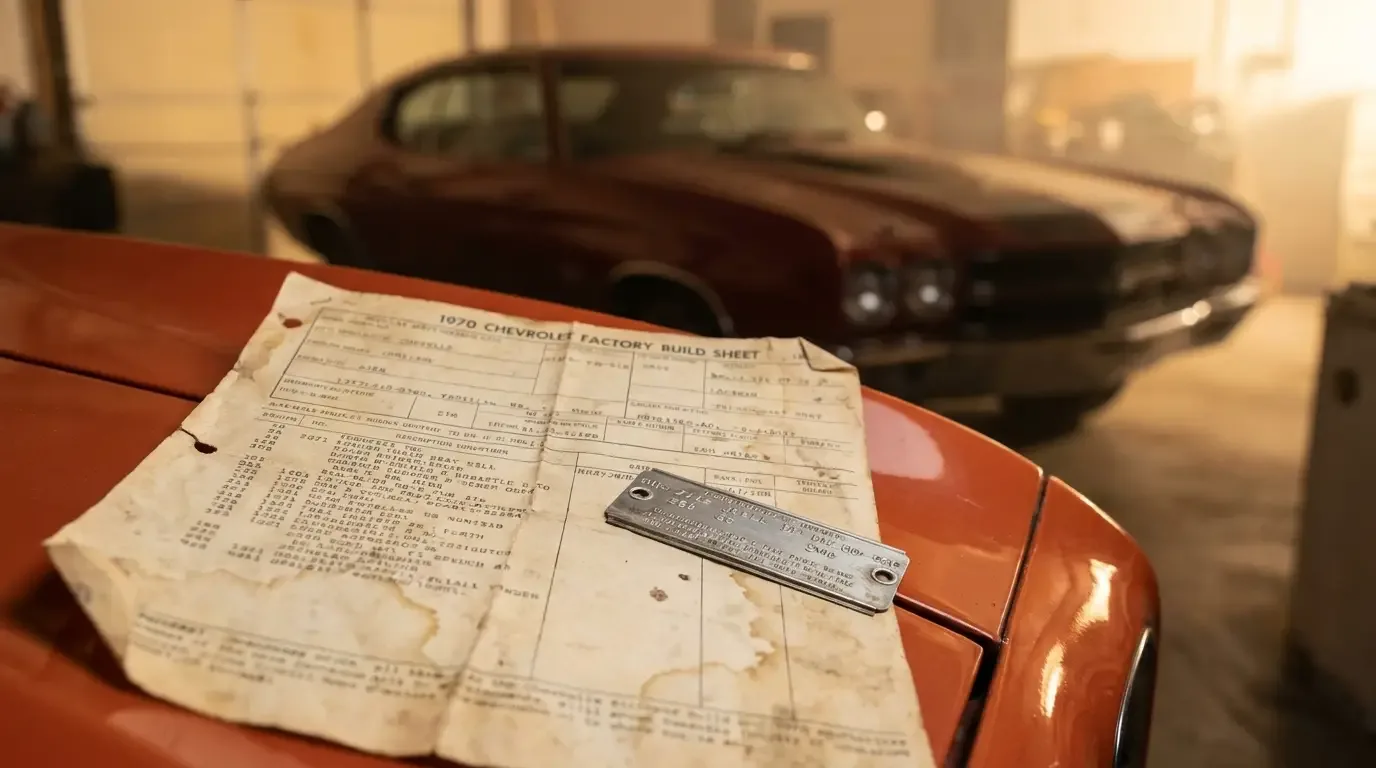
I've spent a lot of time with old dealer paperwork, and one thing becomes clear fast: the LS6's reputation was built on the showroom floor before it was ever built on a dyno chart. The factory rated the engine at 450 hp at 5,600 rpm and 500 lb-ft of torque at 3,600 rpm, and that number is what's on the window sticker and the factory literature. But the legend, the thing that made this specific option code stick in the memory of anyone who was around a Chevrolet dealership in 1970, came from somewhere else. It came from what a salesman said when he dropped the hammer on a test drive, what a service writer heard idling in the bay, and what got repeated at the next gathering of people who were there.
Car Features
7 min read
Dealer Lore and Exhaust Notes: How the LS6 Became Legend
How dealership stories, period road tests, and a distinctive idle turned the LS6 into a legend, and what parts of that story are actually documented.
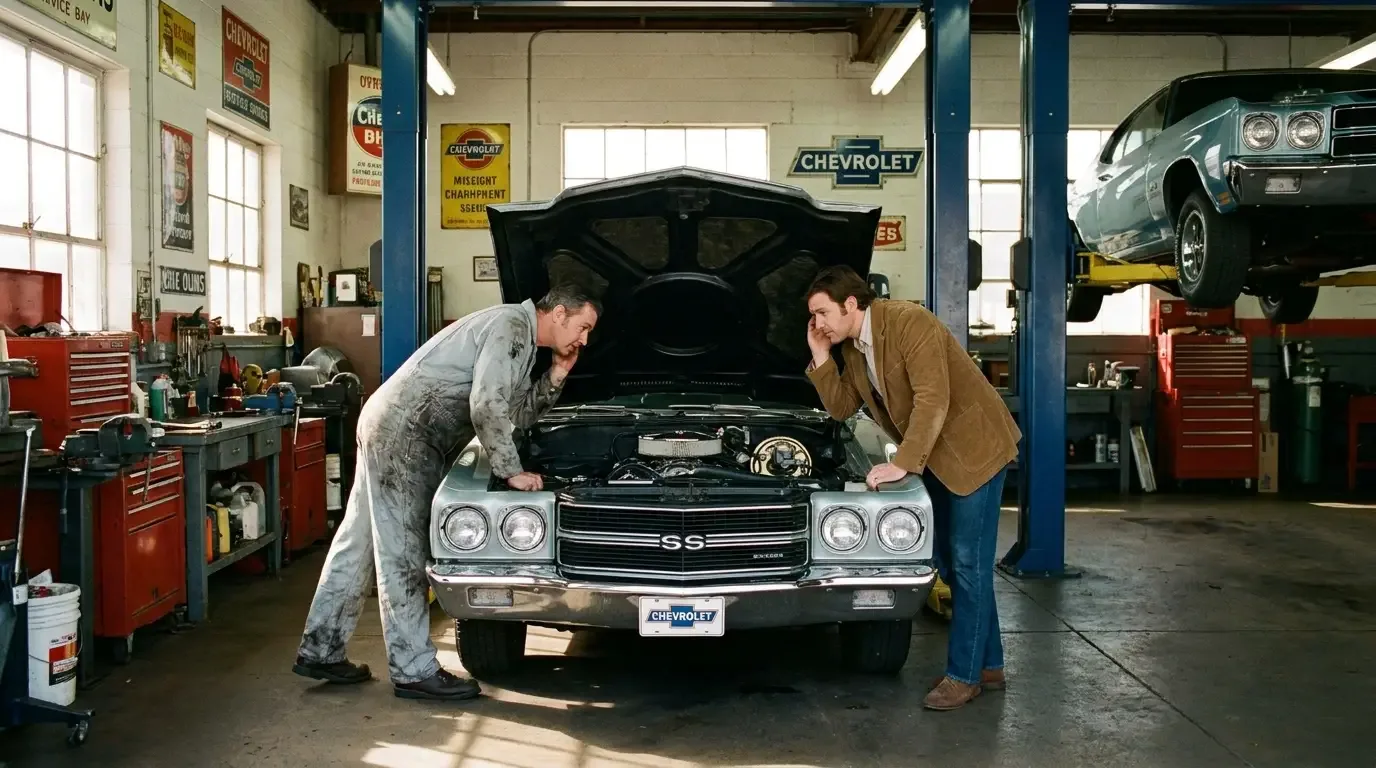
None of that is a knock on the engine. If anything, it says something that the factory-documented numbers weren't enough on their own to explain why this particular 454 became the one people still talk about fifty-some years later. The lore did real work building the reputation, and separating what's documented from what's folklore is worth doing carefully, because both parts matter to how this car is remembered.
The dealer floor stories that started the myth
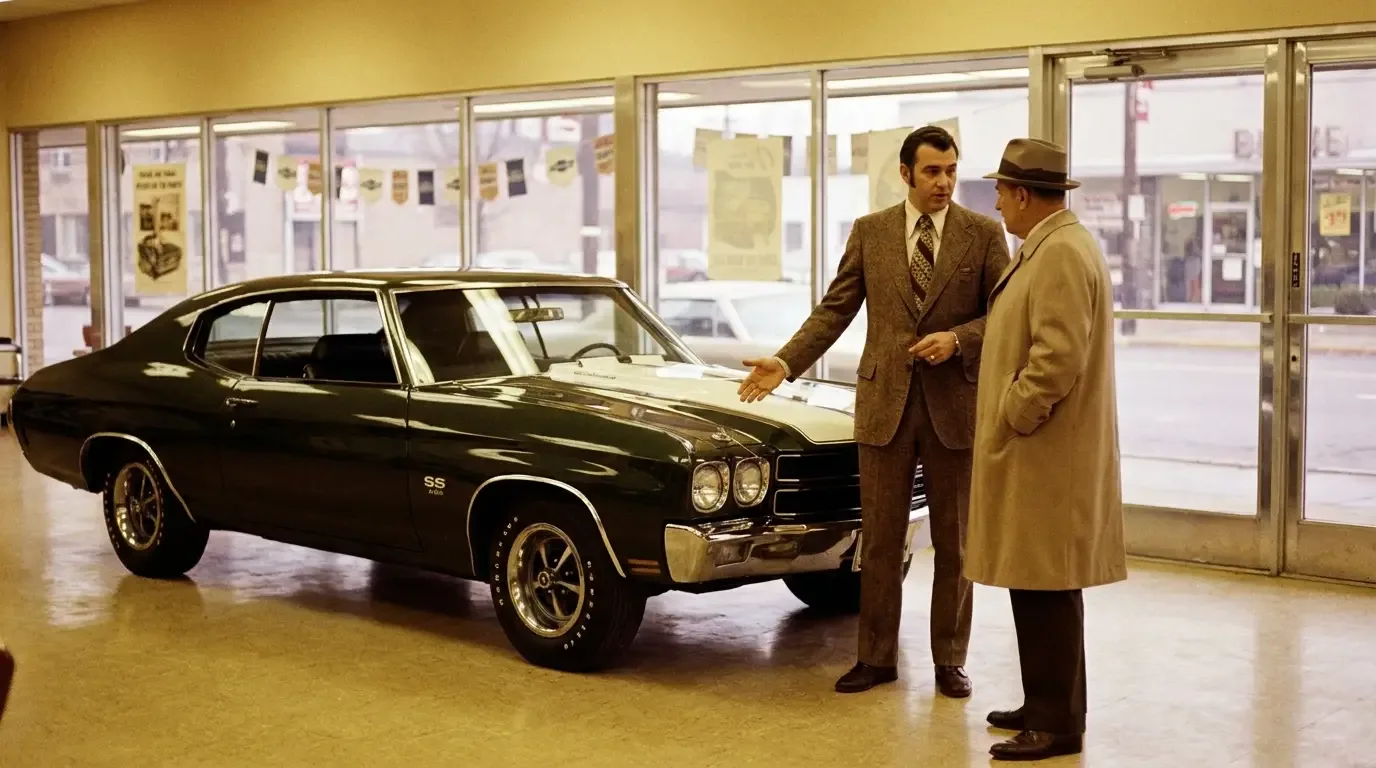
Every big-block muscle car from this era has a version of the same story: a salesman who took a customer around the block and came back grinning, a service department that kept "the fast one" parked where they could hear it start up, a local dealership that quietly became known as the place to find the highest-optioned examples. What's specific to this option is how consistently the same details show up across independent accounts from different dealerships in different parts of the country. That's not proof of anything in a legal sense, but it's the kind of pattern a factory historian pays attention to. Independent, unconnected sources landing on the same details tends to mean there's something real underneath the exaggeration.
What I can't do, and won't pretend to, is verify every specific dealer anecdote that's made it into enthusiast forums and club newsletters over the decades. Some of it is accurate. Some of it has grown in the retelling the way every good car story does. I can tell you what the factory documentation supports, and I can tell you where the gap between documentation and legend actually sits, which is usually smaller than people assume once you look at it directly.
What period road tests actually documented
Contemporary magazine road tests from 1970 are where a lot of the specific performance claims trace back to, and they're worth reading as primary sources rather than secondhand summaries. The published numbers from the era's test drivers, run at their tracks with their fuel and their driving technique, are the closest thing to an independent check on the factory rating that exists from the period. They're not perfect. Test conditions varied, cars varied, and every magazine had its own house style for how aggressively they'd run a borrowed press car. But they're real data, gathered close to the time the cars were new, and they carry more weight than anything reconstructed decades later from memory.
The exhaust note as its own piece of marketing
Nobody at Chevrolet wrote "distinctive idle" into the factory brochure, but the exhaust note on a correctly built, solid-lifter, high-compression big-block does something a milder engine simply doesn't do at a stoplight. It has a lope to it at idle that comes directly from the cam profile and valve overlap, and that sound became part of how people identified the car before they ever saw the badge. Dealers and buyers both picked up on this quickly. A car that sounds different sells itself differently, and word of a specific, recognizable idle spread through car culture the same way any distinctive detail does, by people describing it to other people who then went looking for it themselves.
Why the club circuit kept the story alive
Factory documentation explains what left the assembly line. It doesn't explain why a specific option code stayed in circulation as a story for five decades while plenty of other rare 1970 options faded into footnotes. That's a function of the owner community, not the factory. Once these cars started showing up at regional meets and swap meets in the seventies and eighties, the people who'd bought them new, or bought them cheap a few years later when nobody wanted a big-block with an insurance surcharge attached, started comparing notes. A guy who'd had one since new would tell a newer owner what a dealer had told him, that owner would repeat it at the next show, and the story picked up detail and confidence with every retelling even when nobody added a new source document to back it up.
I've sat through enough of those conversations at meets to recognize the pattern immediately. Somebody states a number or a story as settled fact. Someone else repeats it a year later with more confidence than the first person had. By the third or fourth retelling, nobody in the group remembers it started as a secondhand account from a dealer nobody can name anymore. That's not dishonesty. It's just how oral history works in any hobby, and this one has had fifty years for the process to run.
Sorting fact from lore without dismissing either
The honest answer, and I'll say this plainly because it's true and because I'd rather say it than perform false certainty, is that some corners of this car's reputation can be traced to a specific factory document and some corners can't be traced anywhere except to a story that's been told enough times that everyone assumes it's documented. Both kinds of history matter. The documented parts tell you what the engine was rated to do and what period tests measured. The lore tells you why people cared enough to keep telling the story for half a century. A car doesn't become the LS6 legend on spec sheets alone. It becomes a legend because real people had real experiences with it that got passed down, sharpened, and occasionally exaggerated along the way.
"I'd rather tell you which parts of a story I can trace to a document and which parts I can't, than pretend the whole legend came stamped on a build sheet. Some of it did. Some of it came from a service bay conversation nobody wrote down."
Tom Ramirez
The dealer lore is a good story. The production numbers behind it are a better one, and often a more surprising one, which is exactly what next: Why So Few gets into.
Sources and notes
- Chevy Hardcore: Muscle Cars You Should Know: 1970 Chevelle SS 454 LS6
- California Speed Shop, 1970 Chevelle SS 454 LS6 Identification, Specifications, and Guide
- Sports Car Market, 1970 Chevrolet Chevelle SS 454 LS6 profile
- Team Chevelle forum: How Many LS6 Convertibles (owner records and dealer accounts)
- LS6 Registry: Chevelle/Corvette LS6 documentation
Related Reading
Have a
Chevrolet Chevelle
for Sale?
Reach thousands of serious classic car collectors across the US.
Sell It Here →
Are You a Classic Car Dealer?
List your full inventory and connect with targeted classic car buyers.
Join as a Dealer →
#Chevelle SS 454
#big-block Chevrolet
#LS6 legend
#dealer history
#muscle car lore
#period road tests

About the author
Tom Ramirez
Corvette researcher and historian based in Bowling Green, Kentucky. Two decades documenting Corvette production history from original factory records.
Related Listings - Chevrolet Chevelle
Comments
Be the first to comment on this article.