
Solid lifters are not a spec sheet bullet point. They're a maintenance schedule you sign up for. The LS6's valvetrain is mechanical, meaning there's a deliberate gap between the rocker tip and the valve tip that has to be set by hand, checked periodically, and adjusted when it drifts. Miss that maintenance and you don't get a check-engine light. You get burned valves, a rattle that gets worse every thousand miles, or a valve that floats at the top of the rev range and stops making power right when the engine's supposed to be waking up. That's the deal Chevrolet made when it put a mechanical cam under the LS6's intake.
Car Features
6 min read
Solid Lifters, Big Attitude: The LS6 Valvetrain
Why the LS6's mechanical valvetrain trades convenience for high-rpm power, and what lash maintenance a buyer actually needs to know.
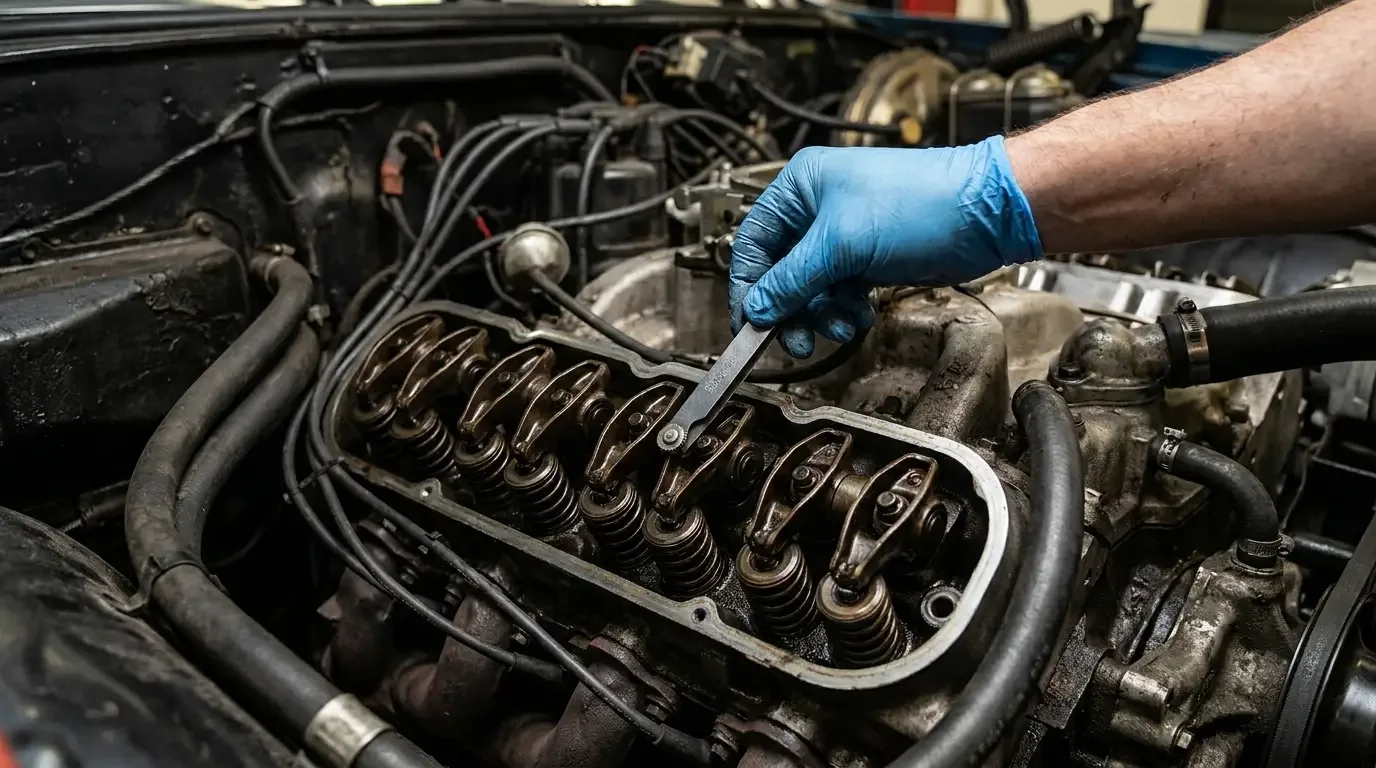
I get asked constantly why anyone would choose that over a hydraulic lifter that self-adjusts and never needs a wrench. The answer is simple and it's the same reason racers still spec solid lifters on engines that see real rpm: a mechanical lifter doesn't pump up at high engine speed. Hydraulic lifters ride on an oil cushion, and past a certain rpm that cushion collapses or the lifter can't follow the cam profile fast enough. A solid lifter has a fixed clearance and follows the lobe exactly, every time, at whatever rpm you're willing to spin it to. That's the whole trade. You give up quiet and low maintenance. You get an engine that keeps making power where a hydraulic-lifter big-block starts running out of breath.
What "solid" actually changes mechanically
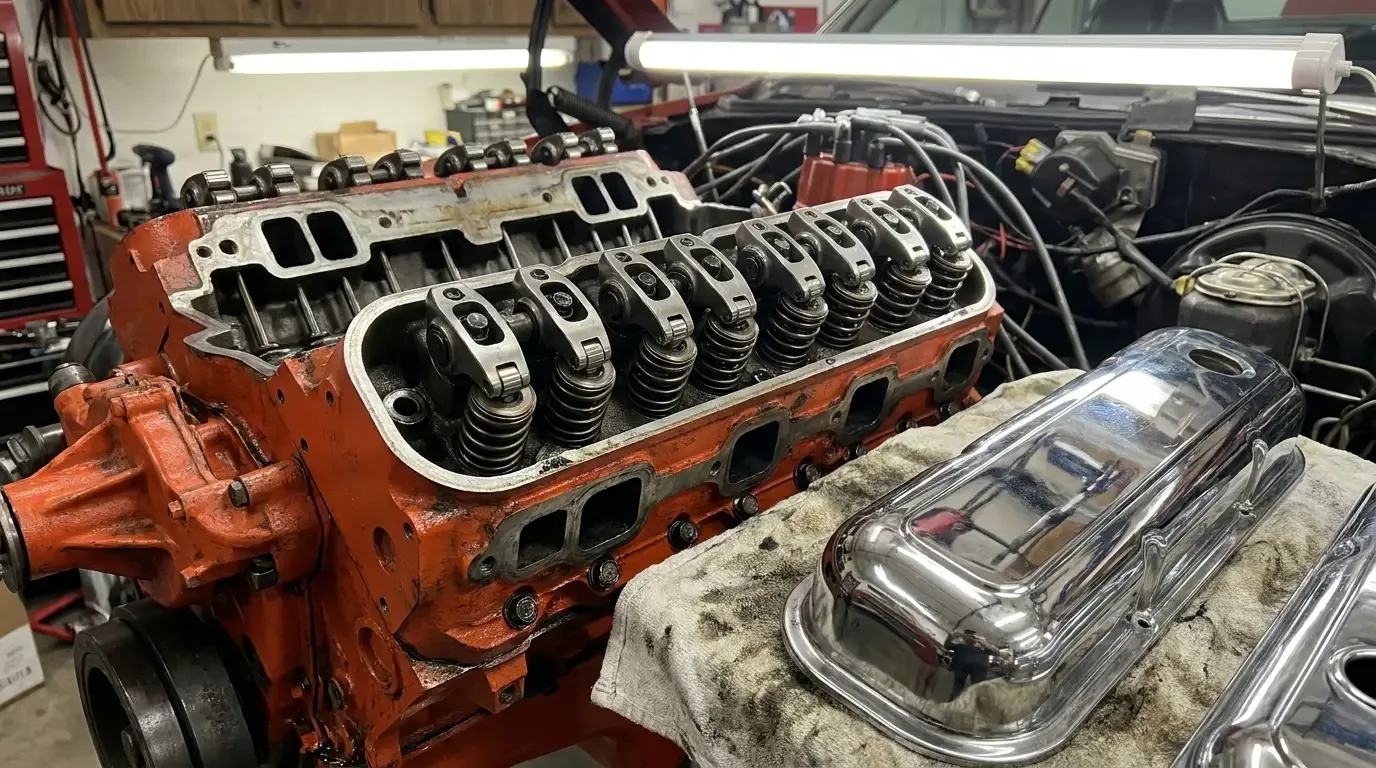
The LS6 cam is ground with more aggressive lift and duration than the hydraulic-lifter big-blocks in the same Chevrolet lineup, because the valvetrain can handle it without the lifter losing contact with the lobe. That's paired with rectangular-port cylinder heads carrying larger valves than the standard big-block castings, and an 11.25:1 compression ratio that only makes sense with premium fuel and a cam this aggressive working together. The heads carry 2.19-inch intake valves and 1.88-inch exhaust valves, sized to move real air through the rectangular ports at the rpm this cam wants to see. None of these pieces are independent decisions. The cam profile, the valve size, the compression, and the solid lifters are one package built around each other. Swap one piece for a milder version and the rest of the combination stops making sense.
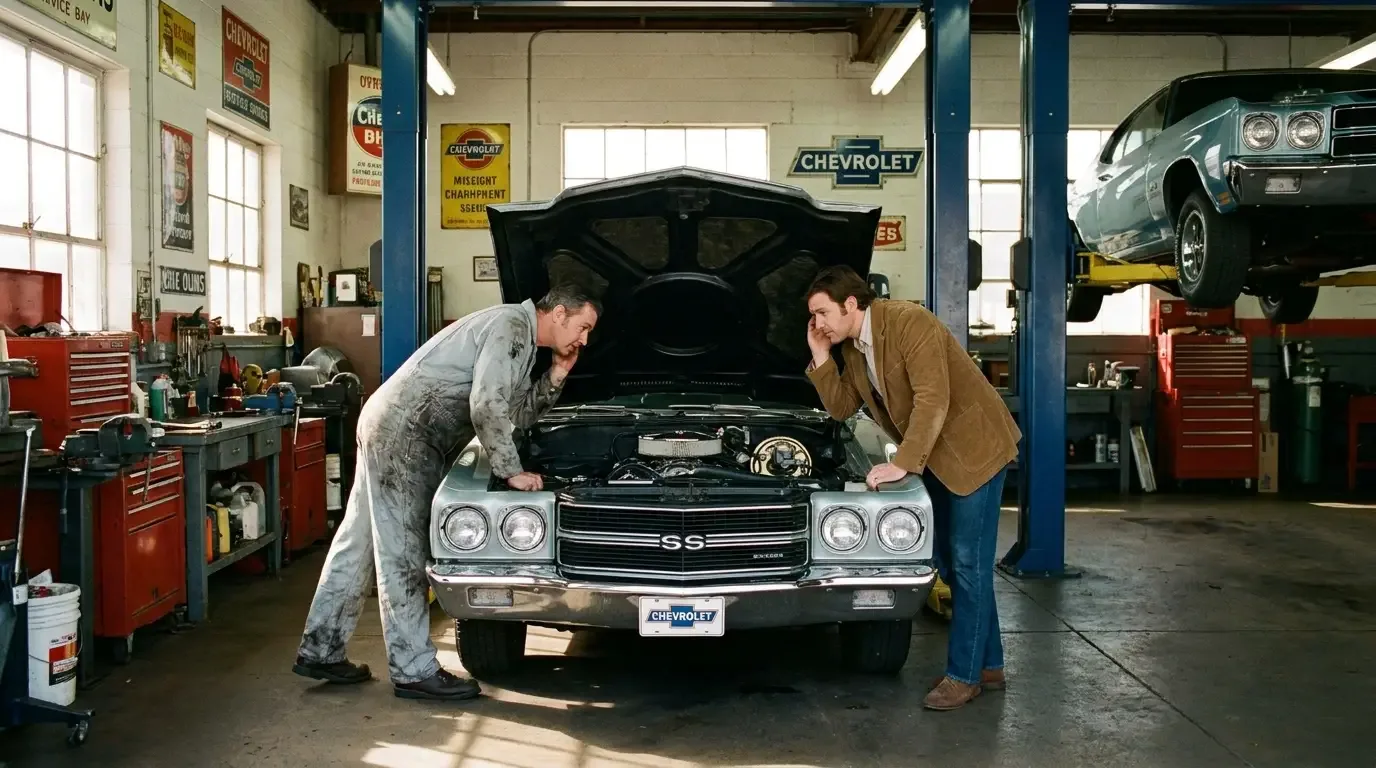
The rocker arms are adjustable, which is the other half of "solid." You set lash with the engine at operating temperature, using a feeler gauge, on the correct cylinder in the firing order with the lifter on the base circle of the cam. Get that wrong and the whole valvetrain calculation is wrong with it. This isn't a five-minute job you do once. It's a recurring check, and how often depends on how hard the engine's been run and how well the valve seats are holding up.
The maintenance reality nobody wants to hear at purchase time
Buyers who fall for the LS6's numbers and skip the maintenance conversation end up disappointed fast. Lash drifts as the valve seats wear in, more on a fresh valve job than on one that's settled, but it drifts on all of them eventually. Tight lash burns valves because the valve doesn't fully seat and close, which means it can't dump heat into the seat the way it's supposed to. Loose lash means valvetrain noise, a mechanical clatter that gets worse under load, and eventually accelerated wear on the rocker tips and pushrod ends. Neither direction is free. The fix is checking lash on a schedule, not waiting for a symptom to tell you it's overdue.
That's a different ownership experience than a hydraulic-lifter engine that you can drive for years without touching the valvetrain. It's also why a numbers-matching LS6 with a documented maintenance history is worth real money to the right buyer, and why one with an unknown maintenance record is a bigger risk than the same car with a hydraulic-cam big-block underneath it. The engine rewards attention and punishes neglect in a way that shows up specifically, not vaguely.
Why this valvetrain still matters to how the car drives
You can hear a solid-lifter engine before you can feel what it's doing. There's a mechanical ticking at idle that a hydraulic-cam engine doesn't have, more pronounced when the engine's cold, quieter once everything's up to temperature and clearances close up slightly. That noise isn't a defect. It's the valvetrain doing exactly what it's built to do. Buyers coming from modern cars, or even from milder classic Chevrolets, sometimes hear that tick and assume something's wrong. Usually it isn't. It's just what a mechanical cam sounds like, and it's one of the fastest ways to confirm a car actually has the solid-lifter valvetrain it claims on paper instead of a mild-cammed clone dressed up to look the part.
| Element | LS6 specification | Why it matters |
|---|---|---|
| Lifter type | Mechanical (solid) | No hydraulic pump-up at high rpm, requires periodic lash adjustment |
| Rocker arms | Adjustable | Lash set by hand, not self-compensating |
| Cylinder heads | Rectangular-port, 2.19in/1.88in valves | Matched to the cam's higher lift and duration |
| Compression | 11.25:1 | Requires premium fuel, part of the same combination as the cam |
If you're shopping specifically for a car with this valvetrain intact and documented, you want to find a solid-lifter LS6 Chevelle with maintenance records that back up the mechanical spec, not just a build sheet claiming it. Paper says what left the factory. It doesn't say what happened to the lash settings over the next fifty years.
"Everybody wants to talk about the power number. Nobody wants to talk about the feeler gauge. But the feeler gauge is the reason the power number is real fifty years later instead of a memory of what the engine used to do before somebody let the lash walk out on it."
Dan Reeves
This attention to a specific mechanical detail is a running theme with this engine. It shows up again in the LS6 454 legacy, and it shows up in how the car earned its reputation in the first place, which is exactly where next: Dealer Lore and Exhaust Notes picks up the story.
Sources and notes
- Chevy Hardcore: Muscle Cars You Should Know: 1970 Chevelle SS 454 LS6
- California Speed Shop, 1970 Chevelle SS 454 LS6 Identification, Specifications, and Guide
- Chevy Hardcore: Bringing a Classic LS6 454 Back to Factory Specs
- Sports Car Market, 1970 Chevrolet Chevelle SS 454 LS6 profile
- LS6 Registry: Chevelle/Corvette LS6 documentation
Related Reading
Have a
Chevrolet Chevelle
for Sale?
Reach thousands of serious classic car collectors across the US.
Sell It Here →
Are You a Classic Car Dealer?
List your full inventory and connect with targeted classic car buyers.
Join as a Dealer →
#solid lifters
#Chevelle SS 454
#big-block Chevrolet
#LS6 valvetrain
#engine maintenance
#mechanical cam

About the author
Dan Reeves
Performance engine builder from North Carolina's motorsports corridor, focused on swaps, forced induction and making real, repeatable power.
Related Listings - Chevrolet Chevelle




Comments
Be the first to comment on this article.