
Ask five people how many 1970 LS6 Chevelles Chevrolet built and you'll get five different numbers, and at least three of them will be stated with total confidence. The figure most often cited, and the one that traces back to GM's own production data, is 4,475 LS6 engines built for the 1970 model year. But that number covers every vehicle that left the Tonawanda engine plant with an LS6 under the hood, Chevelle hardtops, Chevelle convertibles, and the El Camino, not just the two-door Chevelle most people picture when they hear "LS6." Split out by body style, the number gets murkier fast, because Chevrolet's own paperwork from that era didn't survive in a form that lets anyone reconstruct the exact split with certainty. What isn't in dispute is that the LS6 was a rare order relative to the rest of the SS 454 lineup, and the reasons it stayed rare are more interesting than the argument over the last digit of the production count.
Why So Few: 1970 LS6 Production Numbers
The disputed production count behind the 1970 Chevelle LS6, and the real cost, insurance, and fuel reasons the option stayed rare.
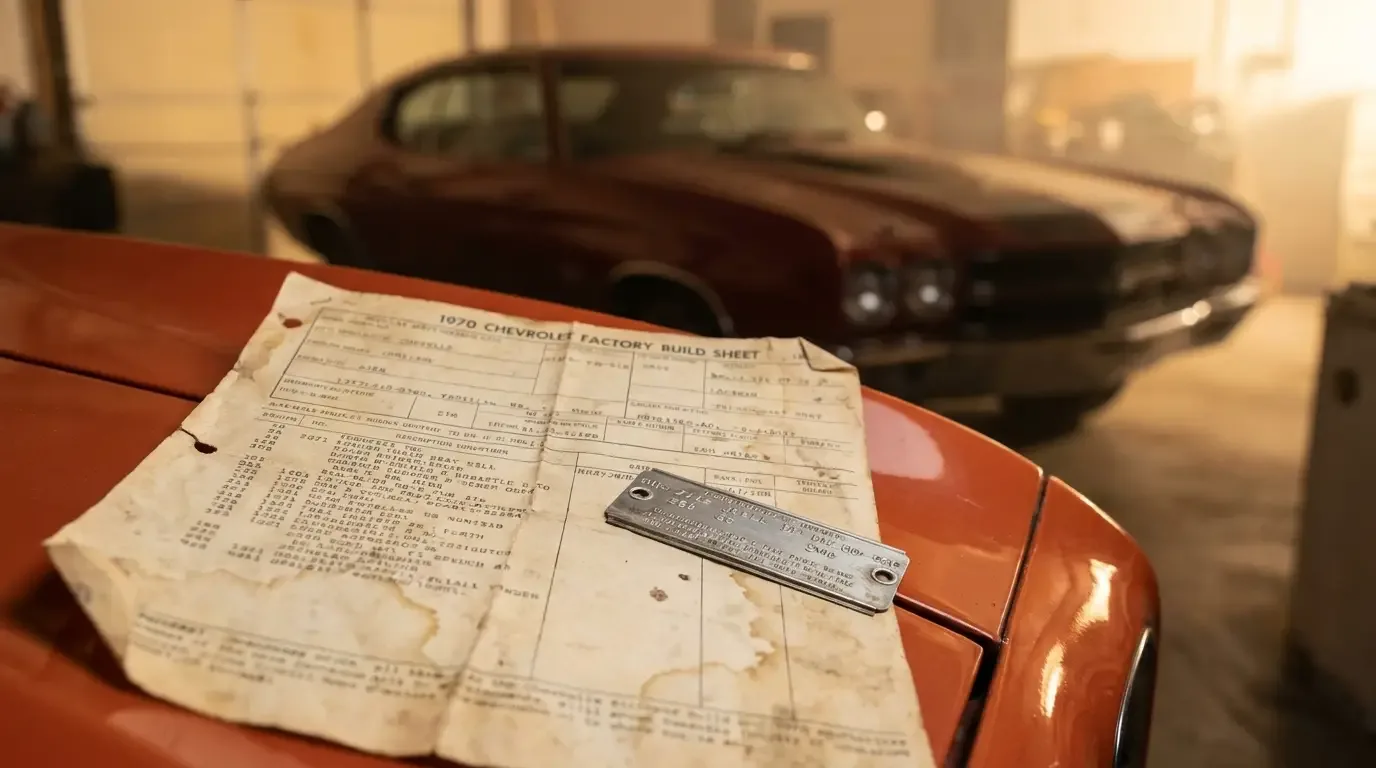
This isn't a case of a car being artificially scarce because the factory held back inventory to build hype. Nobody was doing that math in 1970. The LS6 was rare because ordering one meant clearing a specific set of hurdles that a lot of buyers either couldn't or wouldn't clear, and once you look at what those hurdles were, the low number stops being a mystery and starts being a straightforward story about cost, insurance, and what a dealer actually had to do to move one off the order sheet.
The number everyone argues about
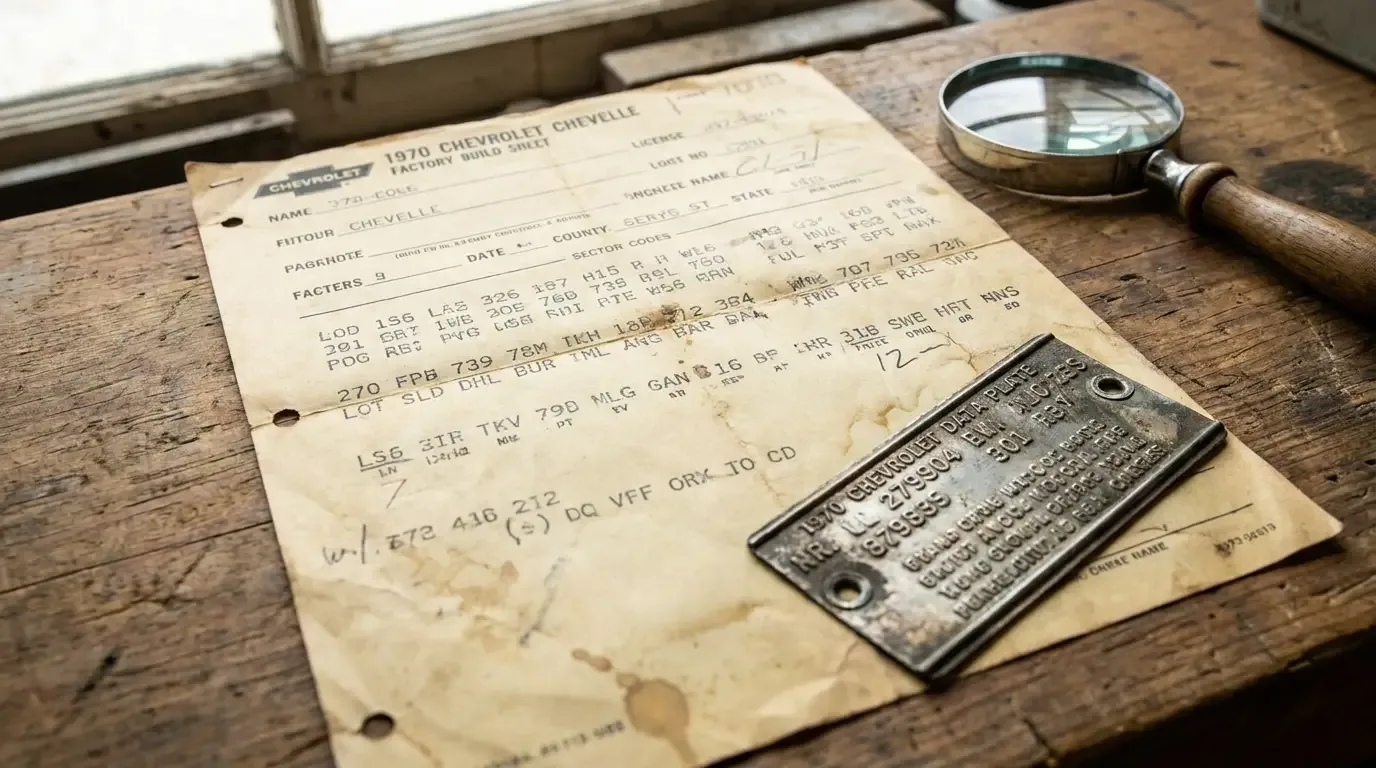
Total 1970 Chevelle SS 454 production ran into the tens of thousands, but the LS6-specific slice of that is a much smaller subset, roughly 4,475 engines across every LS6 body style combined, and different sources have never fully agreed on how that figure splits by model. Some of that disagreement comes down to how records were kept and reconstructed after the fact rather than any conspiracy about the real number. Factory build data from this era wasn't digitized the way it would be a decade later, and reconstructing exact option-code counts means working from surviving documentation, dealer records, and registry data that wasn't always complete to begin with. Convertibles and El Caminos with the LS6 are especially thin on documentation, with most tallies putting each of those body styles somewhere around a dozen to a few dozen cars, which is part of why a documented survivor in either configuration draws serious money at auction. I'd rather tell you the number has a real range attached to it below the headline total than hand you a false-precision figure that sounds authoritative and isn't.
Why it was expensive to order in the first place
The LS6 wasn't a cheap box to check. The Z15 SS 454 package itself ran $503.45 on top of a base Chevelle, and the LS6 engine upgrade added another $263.30 to that. Add the M22 close-ratio four-speed most serious buyers ordered alongside it, another $221.80, and a well-optioned LS6 Chevelle pushed toward $5,000 out the door, which put it in the same neighborhood as a new Corvette that year. That premium stacked on top of whatever other options a buyer was already adding, power steering, air conditioning, a decent stereo, the stuff that made a muscle car livable as a daily driver. A buyer walking onto a dealer lot in 1970 who wanted the LS6 was making a deliberate performance decision and paying extra for it, not defaulting into it because it happened to be what was on the lot. That alone filters the buyer pool down from "anyone who wants a fast Chevelle" to "anyone willing to pay Corvette money for the fastest Chevelle available."
Insurance and the buyer who actually showed up
Insurance surcharges on high-horsepower engines were real and getting worse through 1970, and a car rated at 450 hp sat at the top of whatever rate table an insurer was using for muscle cars that year. That pushed the true cost of ownership well past the sticker price, and it pushed a chunk of the buyer pool toward the LS5 instead, a car that still delivered big-block performance without the insurance number that came with the highest-rated option on the sheet. The buyer who actually signed for an LS6 was someone who'd already decided the insurance hit was worth it, which is a smaller group than the group that just wanted a quick Chevelle.
What restraint at the order desk actually looked like
It's worth walking through what actually happened when a buyer said yes to the LS6 anyway, because that's where the number gets small fast. The buyer had to check the LS6 box, absorb the price premium, then go back to their insurance agent and get a real quote before signing anything, because a dealer wasn't going to eat the finance risk on a car the buyer couldn't actually afford to insure and drive home. Some buyers who started the order process with an LS6 in mind walked it back to an LS5 once the agent came back with a number. That's not speculation about buyer psychology. It's the same filtering that happens with any high-performance option carrying a rate-table surcharge, and it happened at the order desk before the car was ever built, not after.
Add to that the simple reality that a dealer had limited allocation to work with and limited incentive to push the most expensive, hardest-to-insure option on a customer who hadn't already asked for it by name. Nobody was upselling a nervous buyer into the LS6. It sold to people who came in wanting it specifically, which is a much smaller number than the total pool of Chevelle SS 454 buyers that year.
One year, then gone
Chevrolet didn't carry the LS6 in the Chevelle lineup past 1970, which caps the entire production run to a single model year and removes any chance of the number growing through a multi-year run the way some option codes do. Whatever got built in that one year is the entire population that exists, aside from whatever's been lost to accidents, rust, and the decades since. That single-year window is a big part of why the exact count matters so much to collectors now. There's no second chance for the number to be revised upward by a following year's production run.
| Factor | Effect on volume |
|---|---|
| Price premium over standard SS 454 | Filtered out casual buyers |
| Insurance surcharge on top-rated engine | Pushed buyers toward the LS5 instead |
| Premium fuel requirement | Added ongoing cost beyond the sticker |
| Single model year offered | Capped the total population permanently |
None of these factors are exotic. They're the same reasons any expensive, high-maintenance performance option ends up rare in any era. The LS6 wasn't held back to be a future collectible. It was a hard sell in 1970 for real, practical reasons, and the low number is the direct result of that, not a factory conspiracy dressed up in retrospect. For where this fits into the big-block Chevelle story, the scarcity is part of the reputation, but the reputation was earned on the road first.
"Rare isn't the same as good, and good isn't the same as rare. The LS6 happens to be both, but the rarity came from buyers doing math on insurance premiums, not from Chevrolet trying to manufacture a future collectible."
Dan Reeves
If you want the full arc of the model this engine lived in, the Chevelle's complete history covers the generations around it, and if you're hunting an actual survivor, you can browse rare 1970 LS6 Chevelles to see what's actually on the market right now. For the engine it's most often cross-shopped against, next: LS6 vs LS5 lays out exactly what that price and insurance gap bought a 1970 buyer.
Sources and notes
- Chevy Hardcore: Muscle Cars You Should Know: 1970 Chevelle SS 454 LS6
- LS6 Registry: Chevelle/Corvette LS6 production documentation
- ChevyWorld.net: LS5/LS6 Production Numbers
- Sports Car Market: 1970 Chevrolet Chevelle SS 454 LS6 profile
- Team Chevelle forum: How Many LS6 Convertibles (owner-documented production discussion)
- ChevelleStuff.net: 1970 Chevelle/Monte Carlo Production Numbers by Series/Model
Related Reading

Performance engine builder from North Carolina's motorsports corridor, focused on swaps, forced induction and making real, repeatable power.
Related Listings - Chevrolet Chevelle
Comments
Be the first to comment on this article.