
A Mustang tips up onto two wheels and threads itself through a narrow Las Vegas alley. Ask people who grew up on Bond films about the Diamonds Are Forever Mustang and that is the shot they describe, usually with their hands tilted at an angle. It has outlived most of the plot around it.
Car Features
7 min read
Diamonds Are Forever: The Two-Wheel Mach 1
Ford's one condition, the two-wheel Las Vegas alley stunt and its famous goof, Bill Hickman's jump, and what a 1971 Mach 1 really was.
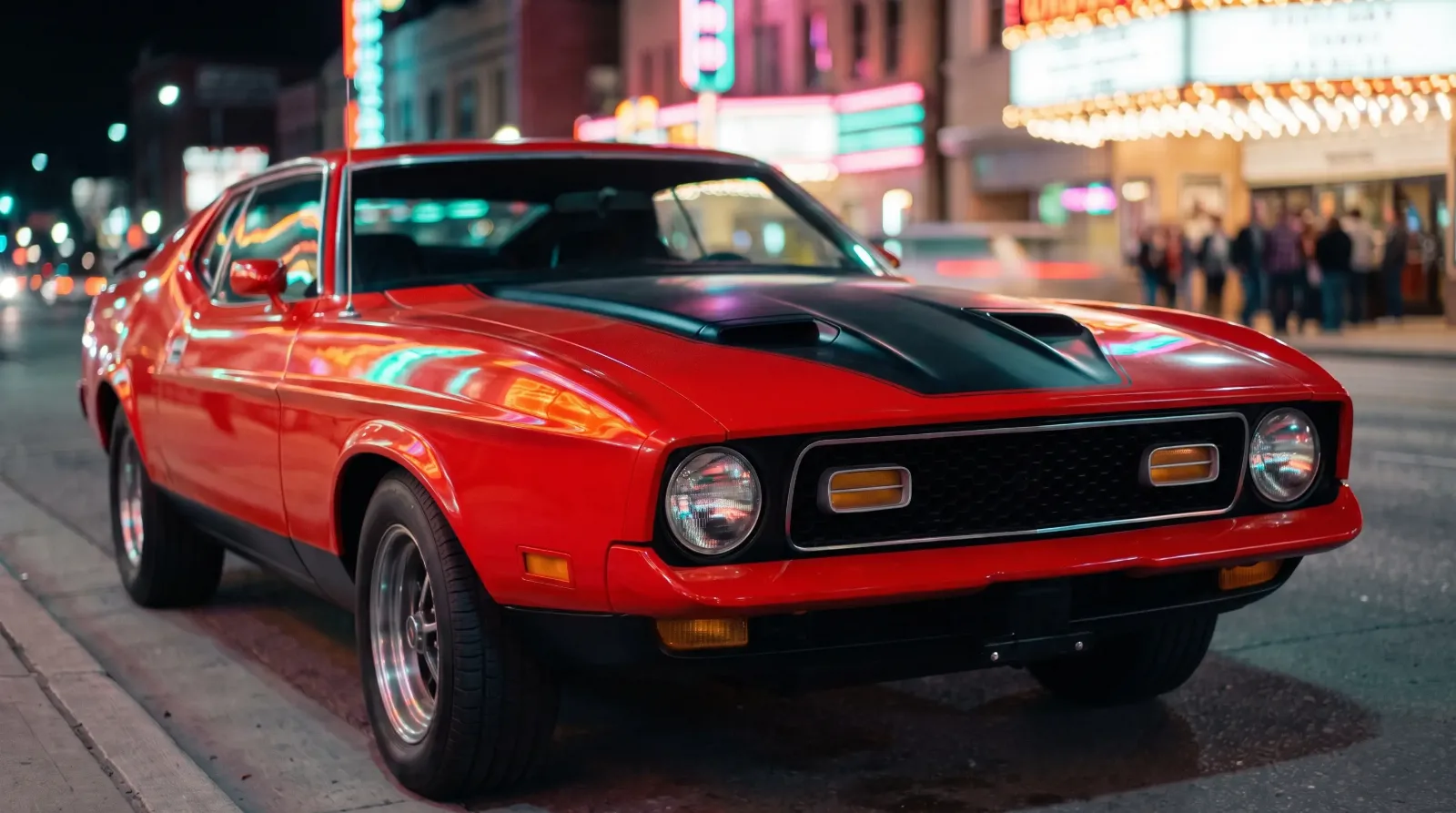
The car was a 1971 Mustang Mach 1, and it was in the film because Ford wanted it there. What follows is what the record actually shows about that car and its big moment: how the deal worked, what happened in the alley, who did the driving that went wrong and right, and what a 1971 Mach 1 was when the cameras were not rolling. It is one of the famous Mustangs of the screen, and some of what gets said about it is more legend than record.
How a Mach 1 got a Bond film role
Diamonds Are Forever was a Ford product placement deal, and the record says Ford set exactly one condition: Sean Connery had to drive the Mach 1. Not a stunt double in every shot, not a supporting character. The star. Ford wanted its newest performance Mustang seen with Bond himself at the wheel, and that is the deal it got.
In the story the car belongs to Tiffany Case. So the Mach 1 is hers, and Bond ends up driving it. That small arrangement satisfied Ford's condition and kept the car tied to a lead character rather than parked in the background.
The timing was tight. Filming ran from April 5 to August 13, 1971, which means the production was shooting the current model, the one sitting in showrooms that year. The 1971 Mustang had just grown bigger, about 3 inches wider than before, to fit the 429 V8 without extensive suspension redesign. It was a long, low, wide car, and the film was about to send it through a gap that did not leave much room for any of that width.
The film cars were red, with a black and red interior, and the chase that ends in the alley runs at night through downtown Las Vegas, along Fremont Street. How many Mach 1s the production used is less settled. One detailed account of the shoot counts five, all painted the same red; a Bond vehicle database says eight. Treat any confident number you hear as a story until someone shows a source.
The Diamonds Are Forever Mustang on two wheels
Here is the stunt as the record describes it. Bond drives the Mach 1 up onto two wheels and through a narrow Las Vegas alley, a space a car on four wheels simply would not fit. It is a clean, simple idea, and it plays well because the audience can see the problem before the car solves it.
Then comes the part fans love to point out. The car enters the alley on its right-side wheels and comes out on its left. That is a continuity error, and it is in the film as released. The entry and the exit were shot separately, by different stunt crews according to one Bond vehicle database, and the editors added a close shot of Bond and Tiffany inside the car as it rolls onto its other side. No amount of driving skill flips a car from one side to the other in a straight alley, and once you have seen it you cannot unsee it.
The error has done the car no harm at all. If anything it made the scene more famous. People who could not tell you the villain's plan can tell you which wheels were in the air going in. That says something about how audiences watch car scenes: they look at the car.
The ramp jump and Bill Hickman
The production had stunt trouble beyond the alley. For a ramp jump, the first stunt driver failed and wrecked several cars. Bill Hickman then did the jump in one take. The source does not say which car made that jump, and I am not going to guess.
Hickman's name will ring a bell with Mustang people. He drove the Charger in Bullitt in 1968, the car on the other end of the most famous Mustang chase ever filmed. Three years later he was on a Bond set, landing a stunt someone else could not.
To my eye, later screen Mustangs owe something to this one. The Mach 1 showed that a Mustang could carry a big set piece in a big film, and it set a pattern later productions kept using, all the way to John Wick's car decades later. The cars got older on screen as the films got newer. The Mustang kept getting cast.
"Everybody remembers the wrong-side-wheels goof, and I think that is the best thing that ever happened to this car. A clean stunt gets forgotten. A mistake gets argued about in bars and car shows for fifty years, and the Mach 1 is in every one of those arguments."
Patrick Walsh
What a 1971 Mach 1 actually was
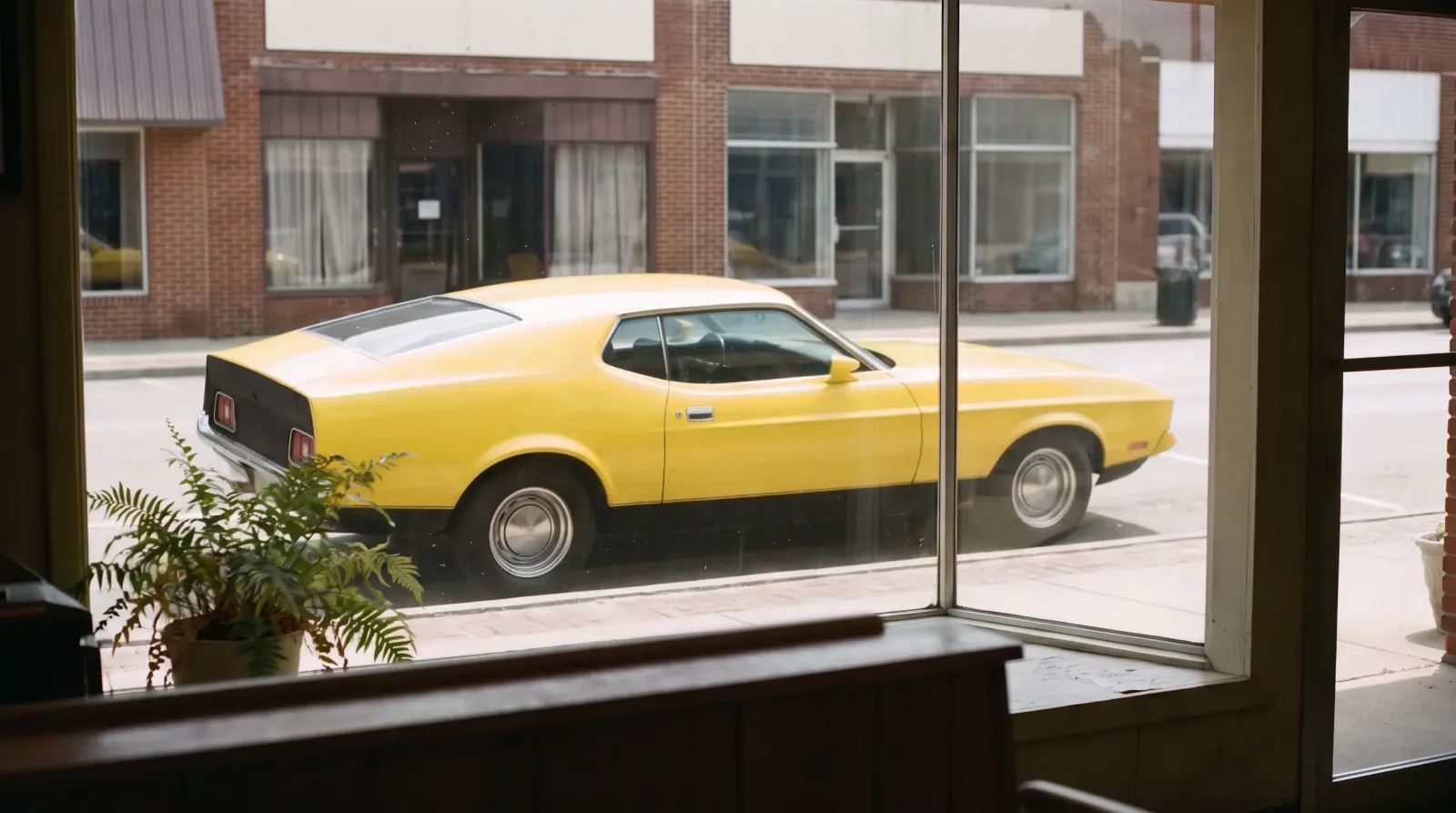
Off screen, the 1971 Mach 1 was a SportsRoof with a wide range of engines under the hood. The base engine was the F-code 302 two-barrel, rated at 210 hp. At the top sat the 429 Cobra Jet and the Super Cobra Jet, a one-year-only pair. The NACA-duct hood was a no-cost option with the base engine, and the scoops were functional only with Ram Air. Engines varied across the film cars. One detailed account says the hero car had a C-code 429 Cobra Jet with a C6 automatic, while at least two of the others appear to have carried 351s, so do not assume every movie car was a big-block.
| Item | 1971 Mustang Mach 1 |
|---|---|
| Base engine | 302 two-barrel V8 (F-code), 210 hp |
| 429 Cobra Jet (C-code) | 370 hp at 5,200 rpm, 450 lb-ft at 3,400 rpm, SAE gross |
| 429 Super Cobra Jet (J-code) | 375 hp at 5,200 rpm, 450 lb-ft at 3,400 rpm, SAE gross; via the Drag Pack |
| Hood | NACA-duct scoops, functional only with Ram Air |
| VIN body code | 05 (1970 to 1973 Mach 1) |
| Door-tag body code | 63R (1971 to 1973) |
| Body | About 3 inches wider than 1970, to fit the 429 |
| Production | 36,499 |
The 429 Cobra Jet and the Boss 351 were both gone after 1971, killed by emissions rules. So the Mach 1 that Bond drove came from the last year of the big-engine Mustang. For how the Mach 1 fits next to the Boss cars, see our Boss and Mach 1 guide.
Spotting a real Mach 1 after the film
A car this recognizable invites copies, and the Mach 1 look is easy to fake with decals and a hood. The paperwork tells the truth where the stripes cannot. A real 1970 to 1973 Mach 1 carries body code 05 in the VIN, and a 1971 car carries 63R on the door tag.
If the film sends you browsing 1971 Mustangs for sale, check those two codes before the stripes, the hood or the story that comes with the car. A seller's "just like the one in the Bond movie" is a line, not a document. With 36,499 Mach 1s built for 1971, there are real ones out there, and they do not need to borrow anything from the film.
Connery drove a Mustang for one film and Ford got what it paid for: the star, the car, and a stunt people still talk about. The goof only helped. Fifty-five years on, the alley shot is still the first thing most people mention when the 1971 Mach 1 comes up, and nothing in the spec table above has ever done that for it.
Sources and notes
- Diamonds Are Forever (film): Ford placement, the alley continuity error, Bill Hickman's jump, filming and release dates (Wikipedia)
- Street Muscle: the five Mach 1s from Diamonds Are Forever
- The James Bond Vehicle Library: Ford Mustang Mach 1, Diamonds Are Forever
- James Bond Lifestyle: Tiffany Case's red Mustang Mach 1 and the Fremont Street chase
- Ford Mustang Mach 1: 1971 engines, NACA hood and codes (Wikipedia)
- MustangSpecs: 1971 Ford Mustang specifications and production
Related Reading
#Ford Mustang
#Mach 1
#1971 Mustang
#James Bond
#mustang in film
#Diamonds Are Forever
#Bill Hickman

About the author
Patrick Walsh
Automotive journalist covering classic car shows, events, and the enthusiast community across North America.
Related Listings - Ford Mustang




Comments
Be the first to comment on this article.